DD
MM
YYYY

PAGES

DD
MM
YYYY

spot_img

PAGES

Home Blog Page 2993

Internationalizing Nigerian Banking and Building A Resilient Local Economy

1

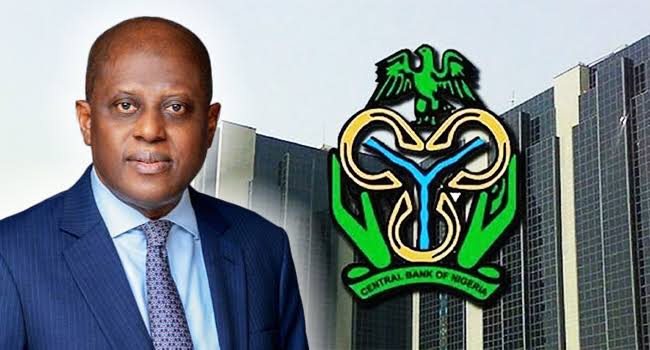
Anything it will take to internationalize Nigerian businesses must be done if we expect to avoid further economic paralysis: “The Central Bank of Nigeria (CBN) has formalized partnerships with countries hosting Nigerian banks’ subsidiaries by signing Memoranda of Understanding (MoUs) to bolster regulatory coordination and ensure the safe and compliant operation of these institutions both locally and internationally.”

But it is important to note that the solution is not just regulatory. The Nigerian state must improve the platforms upon which companies can do business and grow. With insecurity, political rascality, and FX shifts, these banks even as they go global will continue to struggle at the global arena.

One bank in South Africa, Standard Bank Group, can buy all the banks in the Nigerian stock exchange, and still have a change. But why is Standard Group thriving? It has a relatively modernized economy with layers of deeper economic productivity. To position our banks and our economy, Nigeria’s central bank must work to see how Nigeria can evolve into that level.

A few years ago, American banks around Goldman Sachs came together and said they would invest and seed companies that would become their customers in decades. I want Nigeria’s apex bank to pay attention to how SMEs in Nigeria can grow to bigger companies.

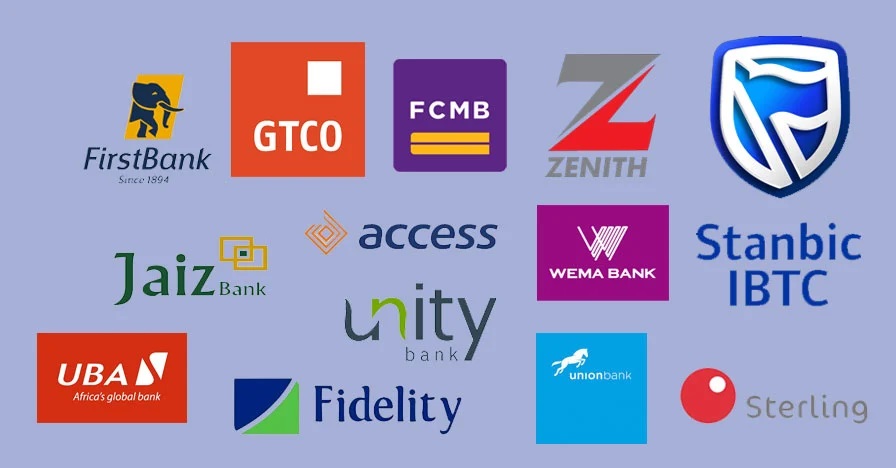
Nigeria’s market is untapped and that means we must not be sold on the illusion that because we’re seeing our banks’ logos outside Nigeria that they have arrived.  They need to do big things in the nation and hold titles for rebuilding an economy that seems to be on an economic miry clay. How we regulate to get banks and other sectors to do that is the job of the moment in Nigeria.

CBN Signs MoUs with Host Countries to Regulate Nigerian Banks’ Subsidiaries Abroad

CBN Signs MoUs with Host Countries to Regulate Nigerian Banks’ Subsidiaries Abroad

0

The Central Bank of Nigeria (CBN) has formalized partnerships with countries hosting Nigerian banks’ subsidiaries by signing Memoranda of Understanding (MoUs) to bolster regulatory coordination and ensure the safe and compliant operation of these institutions both locally and internationally.

This was disclosed in a statement issued by Mrs. Hakama Sidi-Ali, the Acting Director of Corporate Communications, on Tuesday, further underlining CBN’s commitment to fostering stable financial institutions beyond Nigerian shores.

The MoUs, according to Sidi-Ali, are designed to enhance regulatory collaboration between the CBN and foreign regulators, thereby enabling robust oversight of Nigerian banks operating abroad. This ensures that these subsidiaries adhere to international banking standards, safeguarding their stability and the funds of depositors both at home and abroad.

This measure also aligns with the CBN’s broader mandate to support the stability and soundness of the Nigerian banking sector, which has seen significant expansion across Africa and beyond.

The partnerships come at a critical time, as Nigerian banks continue to play a pivotal role in the financial sectors of numerous African countries and other regions around the world. The CBN’s approach signals its intention to not only maintain stringent control over domestic financial operations but also to regulate the international operations of Nigerian banks, which have expanded rapidly into new territories.

The CBN’s statement reiterated its dedication to upholding stability in the financial system, a fundamental responsibility given the sector’s central role in the broader economy. It highlighted ongoing efforts to ensure deposit security, citing initiatives such as regular stress testing of banks, the deployment of early warning systems, and the adoption of risk-based supervision to anticipate potential vulnerabilities.

“The Central Bank of Nigeria (CBN) wishes to reassure the public of its unwavering commitment to ensuring the stability and reliability of the Nigerian financial system,” the statement read. “The CBN recognizes the crucial role that confidence plays in banking operations and wants to affirm that all deposits in Nigerian banks are secure.”

This proactive regulatory stance is particularly important as global economic uncertainties persist, and Nigerian banks increasingly expand their presence across new markets, both within Africa and globally.

Nigerian Banks’ Growing International Presence

The rapid expansion of Nigerian banks into other African countries and beyond has positioned them as influential players in the global financial industry. Leading banks like First Bank of Nigeria, Zenith Bank, Access Bank, and United Bank for Africa (UBA) operate subsidiaries in multiple countries, enhancing their reach and influence.

For instance, First Bank of Nigeria has subsidiaries in the Republic of Congo, Ghana, The Gambia, Guinea, Sierra Leone, and Senegal, while Zenith Bank operates in Ghana, Sierra Leone, The Gambia, and South Africa. Access Bank Plc, which has made significant strides in expanding its operations, is present in the Democratic Republic of Congo, Ghana, Kenya, Rwanda, South Africa, and the United Kingdom, among others.

Meanwhile, UBA operates in countries like Benin, Burkina Faso, Cameroon, Ivory Coast, Kenya, and Uganda, covering a substantial portion of Africa’s financial markets.

In a recent development, Access Bank announced the acquisition of a license to establish a subsidiary in Namibia. This expansion adds to its existing footprint in Southern Africa, where the bank already operates in Angola, Botswana, Mozambique, South Africa, and Zambia. The bank’s CEO, Roosevelt Ogbonna, described this expansion as a crucial step in bolstering intra-African trade and fostering a robust banking network across Southern Africa, positioning the bank as a key player in the region’s financial market.

The Role of Nigerian Banks in Africa’s Financial Sector

Nigerian banks, particularly Tier-1 institutions, have been noted for their significant role in shaping Africa’s financial services industry. With their subsidiaries spread across the continent, these banks have contributed to deepening financial inclusion, supporting local economies, and promoting trade. For example, the President of Congo recently remarked that four major commercial banks in the country are owned by Nigerians, underscoring the influence of Nigeria’s banking sector in the wider African context.

This influence also highlights the importance of CBN’s MoUs with countries hosting Nigerian bank subsidiaries. As these banks expand, regulatory coordination becomes vital to ensure that their operations are secure, transparent, and compliant with both local and international banking regulations. This will not only protect the interests of depositors and stakeholders but also foster confidence in Nigeria’s growing international banking presence.

With the MoUs in place, the CBN aims to ensure that these banks operate within well-regulated environments that support long-term financial stability.

Access Bank Secures Provisional License From Namibia’s Central Bank

0

Nigerian multinational commercial bank, Access Bank, has obtained a provisional banking license from the Central Bank of Namibia (BON), marking a crucial step in the bank’s Africa expansion.

Effective as of October 4, 2024, the license authorizes Access Bank to conduct banking operations in Namibia for six months.

The strategic move comes as Access Bank’s plan to broaden its plan to diversify its revenue streams and leverage opportunities created by the African Continental Free Trade Area (AfCFTA). With ambitions to expand its presence to 26 countries over the next five years, Access Bank is targeting markets in Africa, the United States, France, Hong Kong, and Malta. The entry into Namibia enhances the bank’s substantial presence in Southern Africa, where it already operates in Angola, Botswana, Mozambique, South Africa, and Zambia.

Namibia presents a promising market for Access Bank, given its growing economy and robust banking sector. The arrival of Nigeria’s largest bank by assets is expected to intensify competition within this sector. Access Bank CEO Roosevelt Ogbonna emphasized that the expansion into Namibia is a vital step in

the bank’s mission is to promote intra-African trade and build a strong banking network throughout Southern Africa.

In his words,

“We are confident that our investments in Namibia will benefit shareholders, customers, and the communities we serve”. He further highlighted the bank’s commitment to providing seamless access to banking and financial opportunities for businesses and individuals.

Access Bank’s expansion to Namibia, comes after it successfully satisfied all legal and regulatory requirements in September 2024, to complete its acquisition of African Banking Corporation (Tanzania) Limited. This milestone also builds on Access Bank’s acquisition of the consumer, private, and business banking operations of Standard Chartered Bank Tanzania.

Access Bank, a wholly owned subsidiary of Access Holdings Plc, is a leading full-service commercial bank operating through a network of more than 700 branches and service outlets spanning 3 continents, 23 countries and over 60 million customers. The Bank services its various markets through three key business segments: Corporate and Investment Banking, Commercial Banking, and Retail Banking.

The Bank has enjoyed what is arguably Africa’s most successful banking growth trajectory in the last 22 years, becoming one of the continent’s largest retail banks. As part of its continued growth strategy, Access Bank is focused on mainstreaming sustainable business practices into its operations.

The Bank strives to deliver sustainable economic growth that is profitable, environmentally responsible, and socially relevant, helping customers to access more and achieve their dreams.

Brazil’s Supreme Court Lifts Ban On X Following Its Compliance With Regulatory Orders

0

Brazil’s Supreme Court has lifted its ban on Elon Musk’s social media platform, X, after more than a month of suspension over allegations of spreading disinformation and failing to comply with court orders.

The decision was announced on Tuesday by Judge Alexandre de Moraes, following the settlement of over $5.2 million in fines and compliance with regulatory demands, marking a significant moment in the ongoing battle between corporate freedom and responsibility.

“I authorize the immediate return of the activities of the social platform,” he said.

The judge’s decision came after confirming that X had fulfilled the court’s conditions. He also gave Brazil’s communications regulator 24 hours to restore access to the platform.

X, in its response, expressed its satisfaction with the ruling. In a post on its Global Government Affairs handle, the platform stated, “X is proud to return to Brazil. Giving tens of millions of Brazilians access to our indispensable platform was paramount throughout this entire process. We will continue to defend freedom of speech, within the boundaries of the law, everywhere we operate.”

As of Tuesday, Musk had not yet publicly commented on the lifting of the ban.

Backstory: A Clash of Power and Principles

The conflict between Moraes and Musk could be traced to happenings in the wake of Brazil’s October 2022 elections, where far-right President Jair Bolsonaro lost his re-election bid to Luiz Inácio Lula da Silva. During the heated campaign and its aftermath, platforms like X (then Twitter) became hubs for misinformation and conspiracy theories, particularly among Bolsonaro’s supporters.

The tensions escalated after the January 2023 riots in Brasilia, where Bolsonaro supporters stormed federal buildings in a scene reminiscent of the January 6th Capitol riots in the United States. During this period, Moraes became the face of Brazil’s judiciary crackdown on disinformation, especially targeting those who threatened the democratic process, including Bolsonaro’s digital army, often called digital militias.

X was drawn into the controversy when it allegedly failed to curb these misinformation networks. Moraes accused the platform of supporting a criminal organization that incited violence and spread defamatory fake news, specifically targeting Supreme Court justices.

In late August 2024, things came to a head when Judge Moraes ordered the complete suspension of X in Brazil, citing its refusal to appoint a legal representative in the country and failure to deactivate the accounts of Bolsonaro’s supporters who were spreading disinformation. The suspension of the platform shocked many, especially given Brazil’s substantial X user base—around 40 million people, or nearly one-fifth of the country’s population, accessed the platform at least once a month.

Moraes justified his drastic decision, saying, “Freedom of expression must not serve as a shield for criminal actions and disinformation that threaten democracy.” His tough stance emphasized the need for corporate platforms like X to bear responsibility for the content allowed to be disseminated on their services.

Musk’s Fury and X’s Compliance

Elon Musk, known for his outspoken defense of free speech, was enraged by the ban and lashed out at Moraes. He called the judge an “evil dictator” and likened him to Voldemort, the villain from the Harry Potter series, claiming the move was an assault on freedom of expression. Musk also refused to yield to the judiciary’s demands, sparking a months-long feud with Moraes.

During this period, Musk and X attempted to navigate the legal minefield. In mid-September, X briefly returned to Brazil via a technical workaround, but the platform was quickly taken down again after Moraes threatened further penalties for non-compliance.

Finally, after weeks of standoff, X caved in. The platform settled its fines of over $5.2 million and complied with all of Moraes’s demands, including appointing a legal representative in Brazil and deactivating the problematic accounts.

The Implications: Free Speech and Disinformation

Moraes’s ruling and the protracted battle between the judiciary and Musk raise broader questions about freedom of expression and the rule of law. The row highlighted the increasing global scrutiny over social media platform’s role in spreading misinformation and incitement.

For Moraes, who has been a staunch defender of Brazilian democracy, the stakes were high. He had made clear from the beginning that platforms like X could not be allowed to fuel disinformation that posed existential threats to democratic institutions.

At the core of this issue is Brazil’s fragile democratic environment following years of political polarization and a deeply divided society. Moraes’s firm stance, even in the face of powerful figures like Musk, sent a strong signal about the country’s determination to control disinformation and hold social media platforms accountable.

However, X’s return comes as a relief for many Brazilians. The platform plays a significant role in political discourse and everyday communication in the country. Even though some, including President Lula, migrated to alternative platforms like Threads and Bluesky during the suspension, none managed to capture X’s influence.

Now that X has returned to Brazil, it remains to be seen how the platform will navigate future regulatory pressures. Brazil is X’s largest market in Latin America, and maintaining its presence is vital for the platform’s business.

Shiba Inu Jumps 20% in a Week, PEPE Coin and WIF See Double-Digit Growth Too as Rexas Finance (RXS) Closes Presale Stage 3 with Remarkable Success

0

There have been some major movements in the cryptocurrency market in the last few days with popular tokens such as Shiba Inu (SHIB), PEPE Coin, and WIF being among the top gainers. Amid such trends, Rexas Finance (RXS) is also in the limelight as it winds up presale Stage 3 to an appreciable success. While the tokenization of assets continues to develop, there is Rexas Finance that serves a foremost role in the crypto space.

Shiba Inu (SHIB) Price Forecast

For me, it seems that direct investment, one thing that stands out most in this place – is in Shiba Inu coin which has quite an increase of almost 20% in a week. This is not the first time the Shiba Inu digital currency has done this. However, in the last week prices built over the first support of $0.00001278 which was then breached to prices at $0.00001650 and above. The fact that SHIB has remained above these levels has caused market participants in the overall sentiment to become more optimistic about the particular token. In any case, as the interest in meme coins is getting stronger, it seems like SHIB’s growth is just a precursor to a much broader movement, that overcomes many of the altcoins.

PEPE and WIF Increased In Value As Well

Most of all, it should be noted that PEPE Coin has also come into the limelight as it gained an astonishing 73.28% increase to trade at $0.00001187 after managing to hold the level of $0.000006848 above which it has not been able to trade. This resurgence is characteristic of the underlying strength of the token and its community. So WIF at some point was in the clustering stage and broke out increasing 76.08% to $2.60 from $1.48 where it was being consolidated. These double-digit gains across various tokens are clear signs of returning confidence in the crypto market and fertile grounds for budding projects.

Rexas Finance (RXS) Successfully Completes Level

Within this outlook, Rexas Finance is as well done with the presale Stage 3 with pump. Starting from a presale of $0.030, Rexas Finance has now a price of $0.06 having moved from stage 1 to 4 stage thus translating to 100% growth in price. This presale stage 3 was able to raise $2,750,000 by completely selling out 65,000,000 RXS tokens in total. Given that the expected price of the token upon its launch in early 2025 is $0.20, early adopters can expect returns of up to 240%. This sudden surge in investment has been because people are starting to understand more about Rexas Finance being the first of its kind to tokenize physical assets.

The Commitment of Rexas Finance (RXS)

Rexas Finance (RXS) intends to connect the market of traditional assets with the advantages of using blockchain technology. Therefore, it is the content of the platform that extends the level of participation by enabling the tokenization of the tried and tested asset classes like real estate, commodities, and even pieces of art. Such strong weapons as the Rexas token builder allow even the coders to create their digital tokens, without coding.Also, the Rexas Launchpad provides possibilities for project creators to attract investments for their tokenized projects raising the limits of ownership and investment into such projects. Considering the total addressable market for acquiring real-world assets is in trillions of dollars, it is safe to say that Rexas Finance is at the helm of a paradigm shift as far as the management and trade in those assets are concerned.

Conclusion

The future of cryptocurrency appears bright, given the rapid expansion of tokens such as Shiba Inu, PEPE Coin, or WIF. At the same time, Rexas Finance (RXS) will also achieve great success and quite finish presale stage 3 with remarkable success. At a rapid pace of development of innovation in the field of tokenization of real assets, Rexas Finance expands its capabilities in geographies and markets of activities. For the time being, Rexas Finance is, however, still very attractive to anyone who is itching to invest in this emerging convergence of blockchain technology and investment businesses.


For more information about Rexas Finance (RXS) visit the links below:

Website: https://rexas.com

Win $1 Million Giveaway: https://bit.ly/Rexas1M

Whitepaper: https://rexas.com/rexas-whitepaper.pdf

Twitter/X: https://x.com/rexasfinance

Telegram: https://t.me/rexasfinance