DD
MM
YYYY

PAGES

DD
MM
YYYY

spot_img

PAGES

Home Blog Page 3

Crypto Hacks Drain Over $3.1 Billion Since 2025, Led by Bybit’s Record $1.4 Billion Exploit

0

Crypto platforms have lost more than $3.1 billion to hacks and exploits since the beginning of 2025, according to data from CoinGecko’s 2026 State of Crypto Security Report.

The single largest incident remains Bybit’s February 2025 breach, in which attackers drained approximately $1.4 billion, mostly in Ethereum from the exchange’s multisig wallets, marking the biggest cryptocurrency theft on record.

Bybit’s CEO and co-founder, Ben Zhou, revealed in a livestream announcement that hackers managed to drain 401,346 ETH from one of the company’s cold wallets.

Cold wallets, which are designed to store cryptocurrency offline and away from internet exposure, are considered the most secure way to hold digital assets.

The breach, which was described as a sophisticated attack, sent ripples throughout the digital currency world, raising fresh concerns over the security of even the most well-established crypto exchanges.

After Bybit, the next largest incidents include KelpDAO at roughly $292 million, Drift Protocol at $285 million, and Cetus at $223 million.

KelpDAO Hack

On April 18, 2026, attackers linked to North Korea’s Lazarus Group stole $292 million (116,500 rsETH) from KelpDAO’s LayerZero bridge.

The attackers compromised internal RPC nodes and DDoS’d external nodes to feed false data to a single-point-of-failure verification network (a 1-of-1 DVN setup). This tricked the Ethereum contract into releasing funds based on a phantom token “burn” on the source chain.

Rapid intervention prevented further damage. KelpDAO successfully paused contracts to block a second $95 million theft, and the Arbitrum Security Council, coordinating with law enforcement, froze over 30,000 ETH of the attacker’s downstream funds.

Drift Protocol Hack

Solana-based decentralized finance platform Drift Protocol was drained of $285 million on April 1, 2026, in one of the largest exploits in crypto history.

Beginning in the 1st of April 2026, an attacker gained admin control of the Drift protocol and proceeded to drain an estimated $285 million from its vaults over the following hours, wiping out more than 50% of its total value locked (TVL).

Strong signals from Drift’s investigation so far indicate that the attack is linked to actors associated with the Democratic People’s Republic of Korea (DPRK), though this is yet to be confirmed.

Cetus Hack

On May 22, 2025, the decentralized exchange Cetus Protocol suffered a major security breach, losing approximately $223 million in under 15 minutes.

The exploit was caused by a rounding/overflow bug in a third-party shared math library (integer-mate and its checked_shlw function) used for pricing and liquidity calculations.

The hacker used flash loans and deposited small amounts of spoof/fake tokens to manipulate price curves and reserve calculations, allowing them to drain real assets like SUI and USDC far beyond what was deposited.

Together, the top ten exploits represent more than 70 percent of all recorded stolen funds during the period covering 2025 through mid-2026.

Many of the biggest breaches targeted infrastructure and operational security rather than pure smart-contract code. Compromised private keys, supply-chain attacks on wallet software, and failures in multisignature approval processes proved especially damaging.

Even platforms that had undergone security audits were not immune; audited protocols still accounted for the large majority of total losses, underscoring the limits of conventional code reviews when the attack surface extends to keys, interfaces, and third-party systems.

Centralized exchanges proved particularly vulnerable to key-compromise incidents, while decentralized applications suffered significant smart-contract exploits totaling hundreds of millions.

Overall incident volume has risen in 2026, yet the average size of each breach has declined compared with the outsized Bybit event that defined 2025. Insurance coverage on-chain has also contracted during the same period, leaving less of a financial backstop for users and protocols.

The pattern points to a persistent structural challenge. As the industry scales, attackers continue to find high-value targets in both centralized and decentralized infrastructure.

The Bybit case, widely attributed to sophisticated actors linked to North Korea’s Lazarus Group, illustrated how a single well-executed compromise of signing infrastructure can produce losses measured in the billions.

Subsequent large exploits against DeFi protocols have reinforced that the threat is not confined to any one segment of the market. While recovery efforts, improved monitoring, and emergency liquidity have mitigated some immediate damage for certain platforms, the cumulative toll continues to climb.

Outlook

Looking ahead, crypto security is likely to remain a major challenge as the industry expands and increasingly valuable assets move across exchanges, DeFi protocols, bridges, and digital wallets.

The growing sophistication of attackers means that security strategies will need to extend beyond traditional smart-contract audits to include stronger key management, transaction monitoring, multisignature controls, infrastructure protection, and third-party risk assessments.

Michael Saylor’s Strategy Hits $4.93 Billion Unrealized Bitcoin Gain

0

Strategy, formerly known as MicroStrategy and led by Executive Chairman Michael Saylor, currently holds an unrealized gain of approximately $4.93 billion on its massive Bitcoin investment, according to a recent report.

The company has positioned itself as the world’s largest corporate Bitcoin holder. As of the latest disclosures, it controls 845,050 BTC, acquired at an average cost of roughly $75,412 per coin for a total outlay of about $63.73 billion including fees and expenses.

The figure reflects the difference between the current market value of the strategy’s Bitcoin and its cumulative acquisition cost since the firm began aggressively accumulating the asset in 2020.

This stake represents more than 4% of Bitcoin’s fixed 21 million supply. The unrealized gain of nearly $5 billion was calculated against Bitcoin prices in the low $80,000s around the time of the update, illustrating how even moderate price recovery can produce multi-billion-dollar swings given the scale of the position.

The company’s Bitcoin treasury strategy has been defined by consistent accumulation funded largely through equity sales, alongside periods of volatility.

Earlier in 2026, Bitcoin’s sharp correction put significant pressure on Strategy’s massive Bitcoin treasury. The company had accumulated hundreds of thousands of BTC at an average purchase price well above the market during the downturn. As of February 1, Strategy held 713,502 BTC at an average cost of about $76,052 per Bitcoin.

When Bitcoin subsequently fell into the mid-$50,000s to low-$60,000s, the market value of those holdings dropped substantially below their acquisition cost.

At roughly $62,560 per BTC, for example, Strategy’s 843,706-BTC position was estimated to be worth about $52.6 billion against a cost basis of approximately $63.8 billion, creating an unrealized loss of around $11.2 billion.

The important point is that these were paper losses rather than realized losses. Strategy had not necessarily sold the Bitcoin at those prices, the loss represented the difference between what the company paid for its holdings and what those holdings were worth at prevailing market prices.

Strategy responded by selling limited amounts of Bitcoin totaling several thousand coins to support preferred stock obligations and build dollar reserves, then resumed purchases, including a notable addition of 4,603 BTC for about $370 million in late August.

Net leverage has been managed toward zero, with substantial USD assets maintained to cover dividends and other needs. An accompanying visualization of the profit-and-loss trajectory since 2020 shows the investment’s dramatic path: early modest results, sharp gains during prior bull runs, deep drawdowns, and the latest rebound into positive territory.

Holdings have grown from an initial tens of thousands of BTC to the current level through more than 100 purchase events, even as the average cost basis rose with continued buying at higher prices.

The result underscores both the potential and the volatility of treating Bitcoin as a primary corporate treasury asset. Last month, the company resumed its accumulation with a significant purchase of 4,603 Bitcoin.

It acquired the coins between August 24 and August 30 for approximately $369.7 million, at an average price of $80,318 per bitcoin, according to an SEC filing.

This marked Strategy’s first bitcoin purchase since late June, ending a roughly two-month pause during which the firm focused on strengthening its balance sheet.

Recently, reports revealed that Strategy hit billions of dollars in reserve capital, second only to Berkshire Hathaway.

As of September 1, 2026, the firm holds $66 billion in total reserve capital, placing it second only to Berkshire Hathaway among financial services companies in the S&P 500. Berkshire leads with $364 billion, while Strategy’s figure stands well ahead of traditional powerhouses that report negative balances under the same metric.

While the company’s current unrealized profit marks a recovery from earlier 2026 lows, it remains paper only, subject to further price movements and does not account for financing costs, preferred dividends, or other corporate expenses.

Saylor has long framed the approach as a long-term commitment to Bitcoin as digital capital rather than a short-term trade. As Bitcoin continues to fluctuate in the high $70,000s to low $80,000s range, Strategy’s balance sheet remains one of the most closely watched corporate expressions of conviction in the asset.

Looking ahead, Strategy’s financial performance will remain closely tied to Bitcoin’s price trajectory. If Bitcoin sustains its recovery and moves decisively above the company’s average acquisition cost, the firm could see its unrealized gains expand significantly.

Notably, it could potentially strengthen investors’ confidence in its Bitcoin treasury model, supporting further capital raises for additional acquisitions

Citadel Explores U.S. Oil Acquisitions as Hedge Fund Expands Into Physical Energy Assets

0

Citadel has held talks to acquire U.S. oil production assets as the hedge fund and commodities trading giant considers expanding its ownership of physical energy resources, five people familiar with the matter told Reuters.

The firm founded by Ken Griffin was among the bidders for WildFire Energy, an Eagle Ford shale producer in South Texas that was put up for sale earlier this year by private equity firms Warburg Pincus and Kayne Anderson, four of the sources said.

Magnolia Oil & Gas ultimately won the auction, agreeing to acquire WildFire for $4.06 billion.

Citadel’s interest in WildFire was part of a broader series of discussions the firm has held in recent weeks with private equity groups that own exploration and production companies, according to the sources. The discussions have focused on acquiring oil-weighted assets, they said.

The potential acquisitions would mark a further expansion of Citadel’s physical commodities strategy at a time when geopolitical tensions are reshaping the economics of energy production and trading.

U.S. oil and gas assets have become attractive as crude prices rise and disruptions in the Middle East increase the value of supplies that can reach global markets without passing through vulnerable chokepoints such as the Strait of Hormuz.

Citadel is already one of the world’s major commodities traders, with operations spanning oil, natural gas, electricity and other markets.

Owning physical production provides a different source of exposure to those markets.

For a commodities trading firm, producing physical barrels can act as a natural hedge against financial positions. When supply disruptions or geopolitical shocks drive crude prices higher, the value of physical production can rise at the same time that certain derivatives positions may come under pressure.

Physical assets can also provide traders with greater control over supply, storage, transportation and market timing. That combination has made ownership of energy infrastructure increasingly attractive to financial firms and commodity merchants that historically focused on futures, options and other financial instruments.

Citadel’s interest also comes after a period of strong performance across the U.S. oil sector. U.S. crude reached a six-week high on Thursday as tensions in the Middle East intensified, while many oil producers reported some of their strongest quarterly earnings in years.

Industry executives have warned that even if hostilities were to end, tight supply conditions could take months to unwind. The environment increases the potential value of producing assets while making U.S. shale particularly attractive because its output is not dependent on the same maritime routes exposed to Middle East disruptions.

WildFire Would Have Offered More Than Oil Wells

The appeal of a company such as WildFire extends beyond its existing production. Acquiring an established exploration and production platform gives a buyer producing assets, an operating infrastructure, and an experienced management team capable of running the business and pursuing additional acquisitions.

That is significant because building a U.S. oil operation from scratch would require considerable technical expertise, personnel and infrastructure. A platform acquisition can instead provide an immediate base from which to consolidate additional acreage and production.

Citadel has already used a similar strategy in natural gas.

The company entered U.S. natural gas production last year by acquiring Paloma Natural Gas from EnCap Investments in February 2025 and renaming it Apex Natural Gas. Apex subsequently expanded its asset base through acquisitions, including assets from Comstock Resources and Azul Resources, which is backed by Carnelian Energy Capital.

The pursuit of oil assets suggests Citadel could be seeking to replicate that model in crude production.

Commodity Traders Push Deeper Into Physical Assets

Citadel is not alone in pursuing greater ownership of energy production. Other major commodity traders have also been moving deeper into physical oil and gas assets as they seek to capture returns across both the trading and production sides of the market.

Vitol agreed in July to sell its VTX Energy Partners U.S. shale venture, while Reuters reported last week that Gunvor was in talks to acquire more than $1 billion of assets in the Haynesville shale.

The broader trend marks a shift in the role of commodity trading firms.

Trading businesses traditionally make money by identifying price differences across locations, time periods, and financial instruments. Owning production adds another source of earnings and gives traders greater access to physical supply. It can also improve their ability to understand and manage the physical market, including production costs, transportation constraints and regional pricing.

The renewed interest in U.S. oil assets is also being driven by a changing global energy industry. The Strait of Hormuz remains one of the world’s most important energy chokepoints, carrying a large share of global oil and liquefied natural gas shipments. Prolonged disruption emanating from the U.S.-Iran conflict has already increased freight costs, insurance premiums, and crude prices.

U.S. shale production offers a degree of insulation from those risks because barrels produced in the United States do not need to pass through the strait before reaching domestic refineries and export terminals. But that does not make U.S. production immune to global shocks. American crude prices remain linked to international markets, and disruptions abroad can still affect domestic prices, drilling economics, and export demand.

However, ownership of U.S. production can give a financial firm direct exposure to rising commodity prices without relying exclusively on financial derivatives.

The potential acquisition strategy could therefore serve several objectives simultaneously for Citadel: generate returns from oil production, hedge commodity trading positions, secure physical supply and establish a platform for additional acquisitions.

That is a materially different proposition from simply taking a bullish position on crude prices. The firm would be building an integrated energy business in which trading expertise and physical ownership reinforce one another.

The WildFire bid also shows the scale at which Citadel may be willing to operate. Although it ultimately lost the auction to Magnolia, its participation indicates that established U.S. shale producers are within the range of assets the firm is prepared to consider.

If Citadel continues pursuing acquisitions, the distinction between hedge fund, commodities trader and energy producer could become increasingly blurred. The move would fit a broader industry shift in which access to physical assets is becoming strategically valuable as energy markets become more volatile, supply chains more fragmented and geopolitical disruptions more frequent.

Tesla Launches Cybercab Robotaxi, Attracts Federal Probe Over Its Driverless Design

0

Tesla has officially put its long-awaited Cybercab robotaxi into service, nearly two years after unveiling the vehicle, but the commercial debut has been quickly overshadowed by a federal safety investigation into the car’s unconventional driverless design.

The electric-vehicle maker said on its website that customers can now request autonomous rides through its Robotaxi app on iOS and Android. The service is available across Austin, Dallas, Houston, Miami, Orlando and Tampa, although the purpose-built Cybercab initially appears to be operating only in Austin.

Even in Austin, riders cannot specifically select a Cybercab. The vehicle is assigned based on passenger numbers and availability, meaning Tesla’s initial deployment remains tightly controlled rather than representing a full-scale launch of its dedicated robotaxi fleet.

“Hail your car and use it for errands, commuting and more,” Tesla said on its website.

The launch marks a significant step in Elon Musk’s long-running effort to turn Tesla from an automaker into an autonomous transportation company. But the following safety probes indicate that the company’s ability to scale the service will depend not only on its autonomous-driving technology but also on regulatory approval, vehicle certification, safety performance and its ability to demonstrate that a car designed without conventional driver controls can meet federal safety requirements.

The National Highway Traffic Safety Administration has opened an audit query covering about 1,000 Cybercabs following Tesla’s start of commercial service.

According to NHTSA, Tesla began operating a small number of Cybercabs commercially on Thursday after self-certifying that the vehicles comply with applicable Federal Motor Vehicle Safety Standards. Tesla has indicated that it intends to expand the number of vehicles and operate the robotaxis in additional locations.

“The vehicles lack permanently attached, conventional manual controls, such as a brake pedal, gas pedal, steering wheel and mirrors,” NHTSA said in its notice.

The agency said it is examining the process and technical information Tesla used to certify the vehicle, including whether the company determined that certain federal safety standards did not apply to the Cybercab because of its unusual design.

The investigation does not by itself establish that the Cybercab violates federal safety standards. Rather, it highlights the regulatory challenge created by Tesla’s decision to develop a vehicle specifically for autonomous operation instead of adapting a conventional passenger car with a steering wheel and pedals.

Tesla has registered hundreds of autonomous vehicles in Texas. Reuters reported that the company has registered 420 autonomous vehicles in the state, including 45 Cybercabs. It remains unclear how many of those Cybercabs are carrying paying passengers and how many are being used for testing and development.

Tesla is also operating robotaxi services in Dallas, Houston, Miami, Orlando and Tampa using Model Y vehicles, giving the company a broader operational footprint while its purpose-built Cybercab remains in a much smaller-scale deployment.

Unlike the Model Y, the Cybercab has no steering wheel or conventional brake pedal. The vehicle has been designed around the premise that there will be no human driver controlling it. Inside, it features bench-style seating for two passengers and a large central touchscreen. The vehicle also provides cargo space for luggage, scooters, and other large items.

Tesla currently owns the Cybercabs operating in Austin, but Musk has previously described a much larger business model in which customers could eventually purchase multiple Cybercabs and place them into Tesla’s autonomous ride-hailing network.

The vehicles are not yet available for individual purchase. Tesla is, however, accepting inquiries from companies interested in helping it “build its robotaxi network,” suggesting that its first sales could be directed toward fleet operators rather than individual consumers.

That model is central to Tesla’s broader autonomous-vehicle strategy. Instead of relying solely on vehicle sales, the company wants to create a transportation network in which autonomous vehicles generate recurring revenue through passenger trips. If Tesla can eventually operate such a network at scale, the economics could be materially different from those of conventional vehicle manufacturing.

For now, however, the Cybercab’s limited availability underscores the gap between that long-term vision and the current state of the business.

No Room for Kids, and When There’s a Crash

Safety requirements are particularly visible in Tesla’s rules for passengers. Children younger than 13 are not currently permitted to ride in the Cybercab, while minors between the ages of 8 and 17 can ride in Tesla’s Robotaxi Model Y vehicles. Tesla requires passengers under 18 to be accompanied by an adult.

The Cybercab also does not have the standard LATCH anchors commonly used to secure child seats. Tesla says child seats can instead be secured with the vehicle’s seat belts.

The company has also provided detailed procedures for what happens if a Cybercab is involved in a crash.

If a collision occurs, the vehicle is designed to deploy its airbags, unlock the doors, activate hazard and interior lights, disable its high-voltage battery, move its windows into a vent position, apply the brakes, and stop and park. Its infotainment system will then establish a two-way connection with Tesla’s rider-support team.

The automatic unlocking of the doors is notable given Tesla’s continuing scrutiny over electronic door latches.

Tesla has faced criticism in the United States and China over electronic door-opening systems and concerns that they could complicate escape following a crash. The company agreed last month to recall 3 million vehicles in China as part of a broader investigation involving electronic door latches that could potentially trap occupants after collisions.

The Cybercab nevertheless includes a physical interior release that is more readily accessible than those found in some other Tesla vehicles. Its doors primarily use electronic latches and can open automatically at the beginning or end of a trip, while an exterior button can also be used to open them.

Inside the vehicle, the manual emergency release is positioned on the armrest of each door, giving occupants a mechanical means of opening the doors if the electronic system becomes unavailable.

Tesla has also adopted a brake-by-wire system in the Cybercab. Rather than relying on a conventional hydraulic system that uses brake fluid and physical lines to transmit pressure, electronic actuators control the brake calipers.

“Having electric brakes avoids the complexity of a hydraulic system: no need to rout [sic] plumbing all around the car,” Musk wrote in a post.

The approach is consistent with Tesla’s broader push toward reducing mechanical components in its vehicles. The company previously introduced steer-by-wire technology in the Cybertruck, eliminating the traditional physical connection between the steering wheel and front wheels.

The Cybercab also has some less consequential but unusual design limitations. Its windows cannot currently be fully opened, according to Tesla’s documentation, although the company has not explained why.

The vehicle includes USB-C charging ports capable of delivering up to 90 watts, according to influencer Jeremy Judkins. That would provide considerably more power than the USB charging outlets typically found in passenger vehicles.

The more important question for Tesla, however, is whether its technology and vehicle architecture can move beyond a limited commercial demonstration.

The Cybercab launch represents a test of several Tesla claims at once: that its autonomous-driving technology can safely operate without a human driver, that a purpose-built vehicle without conventional controls can satisfy regulators, and that autonomous ride-hailing can ultimately become a scalable and profitable business.

The NHTSA investigation puts particular focus on the second question. Tesla has effectively asked regulators to accept a fundamentally different vehicle architecture in which components traditionally required for human driving are removed because the vehicle is intended to operate autonomously. That could eventually lower manufacturing costs and simplify the vehicle, but it also increases the regulatory burden because failures in autonomous systems cannot simply be mitigated by handing control back to a human driver.

However, a successful deployment could provide Tesla with a foundation for a global autonomous ride-hailing network and a new source of recurring revenue. But a regulatory setback, safety incident or prolonged inability to scale the fleet, by contrast, would expose the distance between Tesla’s autonomous-driving ambitions and the practical requirements of deploying driverless vehicles on public roads.

The Cybercab is finally carrying passengers, but its first real test may be whether Tesla can convince regulators and the public that a vehicle without a steering wheel or brake pedal is ready to become a mainstream form of transportation.

AMC CEO Adam Aron Attacks Robinhood Over Tokenized Shares, Raises Regulatory Concerns

0

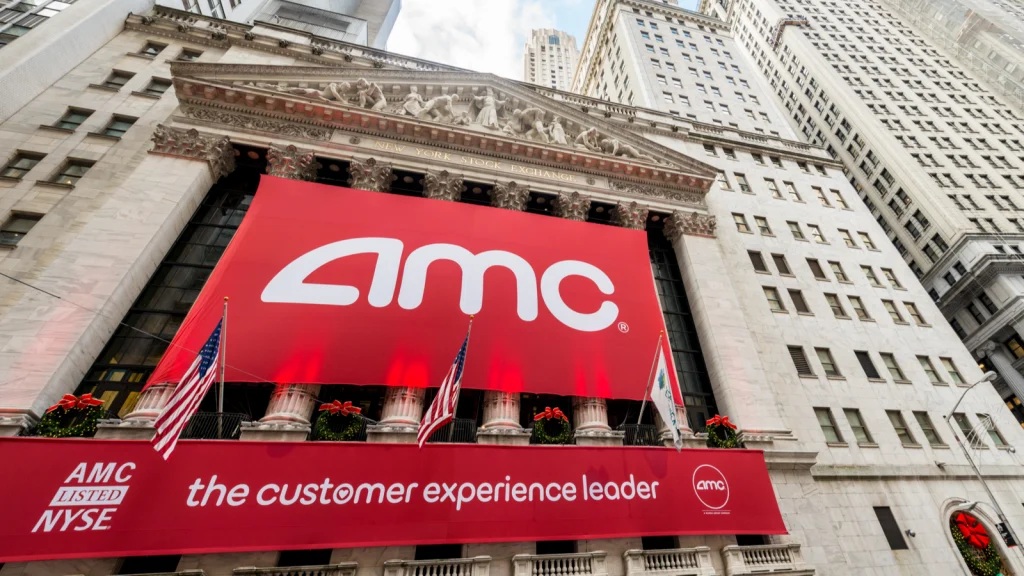
AMC Entertainment CEO Adam Aron has launched a sharp attack on Robinhood over its decision to offer tokenized versions of AMC shares, noting that the products could undermine U.S. securities regulations and create a synthetic market that operates outside the conventional framework governing publicly traded stocks.

“The list of concerns is almost existential,” Aron said in a lengthy post on Friday, escalating a dispute with Robinhood CEO Vlad Tenev over the brokerage’s rapidly expanding tokenized-stock business.

Aron’s tirade came after Tenev responded to an earlier post from the AMC chief that highlighted Robinhood’s offshore entity responsible for issuing the stock tokens.

“What’s the concern?” Tenev asked.

Aron replied by questioning why a U.S. financial company would establish an operation in Jersey, a British Crown Dependency, to issue and market digital instruments representing U.S.-listed securities without being subject to the same U.S. securities framework.

“In good conscience, how can Robinhood as a U.S. company set up an operation in far offshore Jersey, an island 3000 miles away, and market a security sort of posing as AMC in some shape or fashion, and not comply with U.S. securities laws. That is shocking and shameful,” Aron said.

Robinhood launched tokenized versions of popular U.S.-listed stocks and exchange-traded funds as part of a broader push to bring traditional financial assets onto blockchain-based infrastructure and make them available around the clock.

Stock tokens are digital assets designed to track the value of an underlying security, generally on a one-to-one basis. Unlike conventional shares, which trade through regulated exchanges during established market hours, tokenized versions can be transferred and traded on blockchain networks, potentially allowing investors to gain exposure to equities outside traditional market infrastructure.

In Robinhood’s case, the situation is different because the stock tokens are not offered to U.S. customers and are not registered under U.S. securities law. Robinhood’s token issuer is registered in Jersey, according to documents published by the company. The offshore structure allows Robinhood to offer the products internationally while keeping them outside the U.S. market.

That structure is at the heart of Aron’s objection.

The AMC chief argued that tokenized versions of company shares could create what he described as a “fictitious synthetic equity market,” raising questions about how such instruments interact with the actual shares issued by a company.

His concern goes beyond the trading of AMC tokens itself. If digital instruments can provide economic exposure to a publicly traded company’s stock without necessarily passing through the same market infrastructure as the underlying shares, companies and regulators may have to determine how those instruments affect price discovery, liquidity, shareholder rights, and the relationship between a company’s capital structure and the markets in which its securities trade.

Tokenized stockholders may also not have the same rights as holders of the underlying shares. Depending on the structure of a token, investors could receive economic exposure to price movements without directly owning voting rights or having the same legal status as registered shareholders.

For companies such as AMC, the distinction matters because the ability to raise capital depends heavily on the integrity and functioning of the market for its securities.

Aron said he had several concerns about Robinhood’s activities and called on the brokerage to voluntarily stop trading AMC stock tokens.

“These are but a few of my concerns about your actions. I hereby call on you and Robinhood to voluntarily CEASE AND DECIST the trading of AMC stock tokens. If you don’t, our high priced securities counsel has been asked to see whether we can force you to stop,” Aron said.

The confrontation highlights a larger debate emerging as financial institutions increasingly experiment with tokenization.

Supporters of tokenized securities believe that blockchain technology could reduce settlement times, extend trading hours, broaden international access and make financial markets more efficient. Robinhood has framed its stock tokens as a way to provide international investors with exposure to U.S. equities while modernizing the financial system.

But critics are concerned that moving securities-related products onto blockchain networks could create fragmented markets with different regulatory protections, disclosure requirements, and investor rights.

The issue becomes even more complicated when the token represents shares in a company that has not authorized the product.

Robinhood faced a similar backlash last year after announcing plans to allow users to trade tokens linked to shares of OpenAI, the privately held creator of ChatGPT. OpenAI quickly distanced itself from the offering, saying: “We did not partner with Robinhood, were not involved in this, and do not endorse it.”

The episode demonstrated the potential disconnect between a tokenized asset’s marketing and the company whose name or equity it references. An investor could potentially assume that a token has been issued or endorsed by the underlying company even when the company has no involvement in the product.

Robinhood has defended the broader concept.

“We stand firmly behind our Stock Tokens and their ability to provide international exposure to US equities, modernize the financial system and expand opportunities for ownership globally,” a Robinhood spokesperson said.

The disagreement with AMC therefore reflects a much larger question for financial regulators: when a digital asset tracks a conventional security, how closely should it be regulated like the security itself?

Traditional securities markets rely on established rules governing disclosure, custody, settlement, market manipulation, investor protection and corporate rights. Tokenization does not necessarily eliminate those functions; instead, it can move them into new legal and technological structures that may operate across jurisdictions. That creates particular challenges for regulators when an American company offers a token representing a U.S. security through an entity incorporated outside the United States and makes the product available to investors elsewhere.

The dispute also comes at a critical point for the broader tokenization industry. Major financial institutions have increasingly explored blockchain-based versions of stocks, bonds, funds and other assets, betting that tokenization could eventually become part of mainstream financial-market infrastructure.

Industry leaders believe that the success of that transition will depend in part on whether regulators can establish clear rules around ownership, redemption, custody, disclosure and market oversight.

However, Aron’s challenge to Robinhood is expected to accelerate that debate. His demand to stop trading AMC tokens forces a question that the industry will increasingly have to confront: if a digital asset closely tracks a company’s publicly traded shares, where should the boundary lie between a new financial product and the security it represents?