DD
MM
YYYY

PAGES

DD
MM
YYYY

spot_img

PAGES

Home Blog Page 3

Ceuta Migration Crisis Puts EU Border Policy Under Renewed Pressure

0

The renewed migration pressure on Europe’s southern frontier has reignited one of the European Union’s most sensitive political debates: how to balance humanitarian responsibilities with border security.

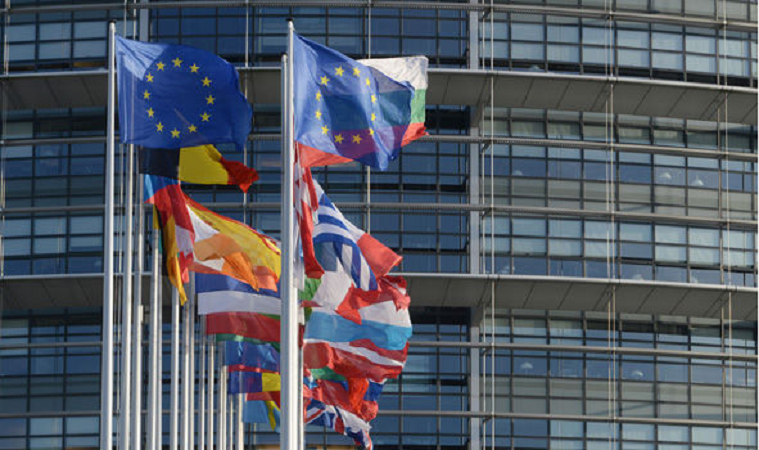
German Foreign Minister Johann Wadephul recently urged the European Commission to make the protection of the EU’s external borders an “absolute priority” after tens of thousands of migrants reportedly reached the Spanish enclave of Ceuta from neighboring Morocco.

His comments reflect growing concerns among European governments that irregular migration could once again dominate the continent’s political agenda, placing pressure on institutions already struggling to deliver a unified migration policy.

Ceuta occupies a unique position in European migration. Although geographically located on the northern coast of Africa, it is Spanish territory and therefore part of the European Union. Along with Melilla, it represents one of the only land borders between Africa and the EU.

For years, the enclave has been a focal point for migrants seeking entry into Europe, often triggering diplomatic tensions between Spain and Morocco whenever crossings increase dramatically.

The latest influx has prompted calls for stronger coordination between Brussels and member states. Wadephul argued that securing the EU’s external borders must remain a top priority to preserve public confidence in the bloc’s migration system.

His position reflects a broader view shared by several European governments that effective border management is essential not only for security but also for maintaining political stability across the union. Migration remains one of Europe’s most divisive issues.

Countries on the Mediterranean frontier, including Spain, Italy, and Greece, have long argued that they bear a disproportionate share of the burden because they serve as the first point of entry for many asylum seekers.

They have repeatedly called for greater financial assistance, stronger border protection, and a more equitable distribution of migrants among EU member states. Human rights organizations caution against policies that focus exclusively on deterrence.

They argue that many migrants are fleeing conflict, persecution, poverty, or climate-related disasters and deserve access to fair asylum procedures under international law. Humanitarian groups have consistently urged European governments to ensure that border security measures do not undermine the rights and dignity of vulnerable individuals, including women and children.

The situation also underscores the strategic importance of Morocco in Europe’s migration policy.

Rabat has long cooperated with the European Union in controlling migration flows, with the EU providing financial and technical support for border management. Migration has occasionally become intertwined with diplomatic disputes, demonstrating how closely migration policy is linked to broader geopolitical relationships between Europe and its neighboring countries.

The challenge is balancing competing priorities. Strengthening border surveillance, expanding the capabilities of the European Border and Coast Guard Agency, and accelerating asylum processing may improve border management.

Long-term solutions will also require addressing the root causes of migration through economic development, conflict prevention, and partnerships with countries of origin and transit.

The debate is likely to intensify as migration continues to shape domestic politics across Europe.

Rising support for nationalist and anti-immigration parties has increased pressure on mainstream governments to demonstrate effective control over external borders while remaining committed to humanitarian obligations and international law.

Johann Wadephul’s appeal highlights the difficult choices confronting the European Union. Protecting external borders is undeniably important for maintaining the integrity of the Schengen Area and preserving public confidence in European institutions.

Yet border security alone cannot resolve the complex drivers of migration. A durable European strategy will require stronger external partnerships, coordinated asylum policies, legal migration pathways, and sustained investment in addressing the economic and political conditions that compel people to leave their homes.

Only through a comprehensive and balanced approach can the European Union effectively manage migration while upholding the values upon which it was founded.

Why Gen Z Is Turning to Birdwatching to Escape the Digital World

0

For decades, birdwatching was widely viewed as a pastime reserved for retirees, nature enthusiasts, and hobbyists with plenty of spare time.

It carried the stereotype of being an old man’s hobby, far removed from the interests of younger generations immersed in smartphones, social media, and digital entertainment.

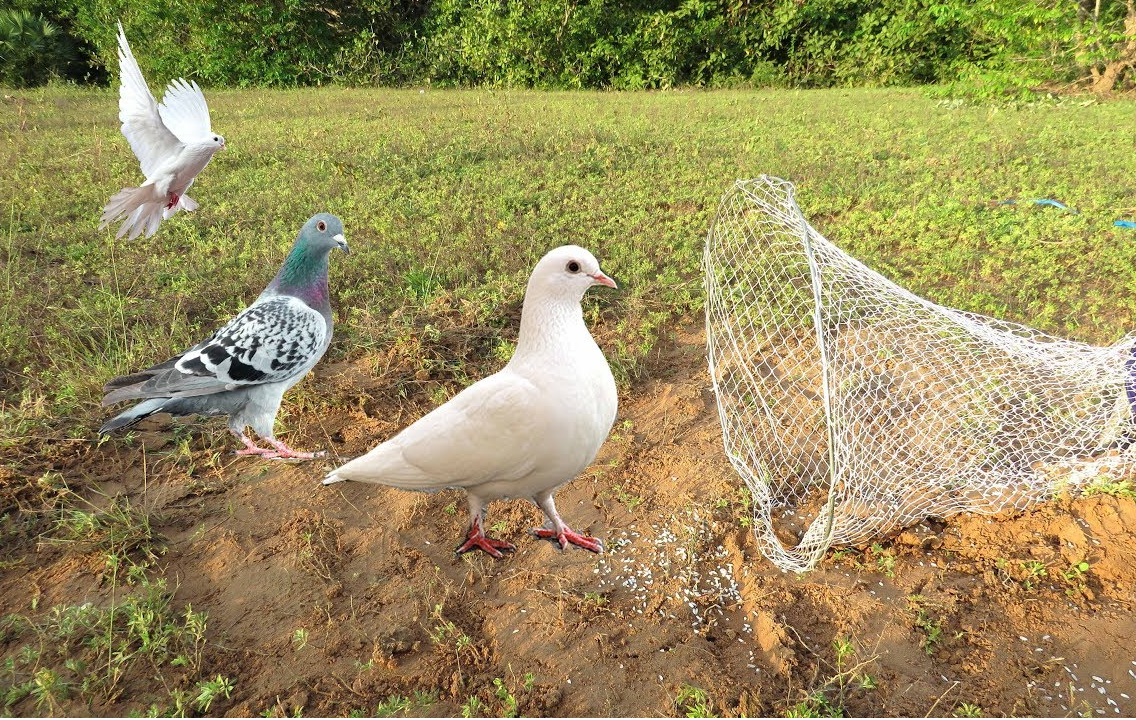
However, that perception is changing rapidly. Across the globe, members of Generation Z are discovering the joys of birdwatching, transforming it into one of the fastest-growing outdoor hobbies.

What was once considered old-fashioned is now becoming a refreshing antidote to excessive screen time, daily stress, and the fast-paced demands of modern life. Young people today spend an unprecedented amount of time online.

Whether studying, working, or socializing, much of their daily routine revolves around digital devices. While technology offers countless benefits, constant connectivity has also contributed to increased anxiety, burnout, and mental fatigue.

Endless scrolling, online comparisons, and information overload have left many searching for healthier ways to disconnect. Birdwatching provides exactly that—a chance to slow down, observe nature, and enjoy moments of peace without notifications or digital distractions.

Unlike many hobbies that require expensive equipment or specialized training, birdwatching is highly accessible. A local park, forest, or even a backyard can become an exciting destination for discovering different bird species.

Many beginners start with nothing more than a smartphone camera or a basic pair of binoculars. Free bird identification apps and online communities have also made it easier than ever to learn about local wildlife while encouraging outdoor exploration rather than endless screen use.

Birdwatching also offers significant mental health benefits. Spending time in nature has been linked to lower stress levels, improved concentration, and better emotional well-being.

Watching birds encourages mindfulness because it requires patience, careful observation, and an appreciation of small details. Instead of rushing from one task to another, participants learn to remain present in the moment.

For many Gen Z enthusiasts, this quiet connection with nature has become a form of meditation that helps reduce anxiety and improve overall happiness. Social media has surprisingly played a role in birdwatching’s resurgence.

Platforms like TikTok, Instagram, and YouTube are filled with creators sharing rare bird sightings, photography tips, and educational content about wildlife. Rather than replacing the outdoor experience, these platforms inspire more young people to step outside and explore nature themselves.

Birdwatching clubs, guided walks, and citizen science projects have also become increasingly popular, creating opportunities for young people to build friendships through shared interests. Beyond personal wellness, birdwatching is fostering greater environmental awareness.

As participants learn about bird species and their habitats, they become more conscious of issues such as climate change, habitat destruction, and biodiversity loss.

Many young birdwatchers go on to support conservation efforts, volunteer with environmental organizations, or participate in bird population surveys that contribute valuable scientific data. Their hobby evolves into meaningful action for protecting ecosystems and wildlife.

The growing popularity of birdwatching among Generation Z demonstrates that meaningful leisure activities do not have to involve screens or constant digital stimulation. Instead, many young people are finding fulfillment in slowing down, reconnecting with nature, and appreciating the beauty that exists just outside their doors.

As concerns about mental health, environmental sustainability, and digital overload continue to grow, birdwatching represents more than a hobby—it symbolizes a broader cultural shift toward balance, mindfulness, and a deeper appreciation for the natural world.

What once carried an outdated image is now inspiring a new generation to look up, listen closely, and rediscover the simple pleasures of life.

AI Spending Boom Faces Growing Scrutiny with Investors Predicting Weakening Capital Investment

0

The artificial intelligence investment boom that has powered global equity markets over the past two years is facing increasing scrutiny, with some strategists warning that signs of slowing corporate capital spending could undermine one of the market’s strongest growth narratives.

While technology giants continue to commit hundreds of billions of dollars to AI infrastructure, investors are becoming more focused on whether those investments can continue expanding at the pace that has fueled the sector’s extraordinary valuation gains.

Jim Paulsen, former chief investment strategist at the Leuthold Group, believes two recent market developments suggest investors are beginning to prepare for slower AI spending growth.

The first is the underperformance of AI-related stocks, which have struggled even after reporting strong earnings and maintaining aggressive capital expenditure plans. The second is a sharp decline in U.S. core capital goods orders, a closely watched measure of business investment that excludes defense and aircraft purchases and serves as a leading indicator of future corporate spending.

According to Paulsen, the combination suggests financial markets are increasingly questioning whether the AI investment cycle can maintain its current momentum.

“As oil prices, bond yields and the U.S. dollar have surged, investors have already been pricing in a core capital spending slowdown,” Paulsen wrote.

“Should U.S. core capital spending decline in the coming six months or even simply trend sideways, this would force a major readjustment in the mindsets of many investors who have embraced the AI spending story.”

The warning comes as second-quarter earnings from major technology companies reveal an increasingly demanding environment for AI leaders. Rather than rewarding companies simply for increasing AI investments, investors are now seeking evidence that those enormous expenditures are translating into faster revenue growth, stronger profitability and sustainable competitive advantages.

That shift in sentiment has been evident across recent earnings releases.

Several technology companies have reported robust revenue growth and reaffirmed aggressive AI investment plans, yet their shares have come under pressure as investors questioned whether returns on those investments will justify the unprecedented level of spending.

The reaction suggests markets are entering a new phase of the AI cycle, where execution matters more than announcements.

The world’s largest technology companies have committed record sums to AI infrastructure over the past year. Cloud providers including Microsoft, Amazon and Alphabet have significantly increased spending on data centers, advanced semiconductors and networking equipment to meet surging demand for AI services.

Chipmakers such as Nvidia, AMD and memory manufacturers have benefited directly from this spending wave, while equipment suppliers and infrastructure providers have experienced a parallel boom. Collectively, hyperscale technology companies are expected to invest hundreds of billions of dollars this year, making AI infrastructure one of the largest corporate investment cycles in modern technology history.

Macroeconomic Headwinds Emerging

Paulsen believes that broader macroeconomic conditions could begin challenging that investment trajectory. Higher oil prices raise operating costs, elevated Treasury yields increase financing costs, and a stronger U.S. dollar tightens financial conditions globally.

Together, those factors could prompt businesses to become more selective about future capital expenditures, even if they remain committed to AI over the long term.

The recent weakness in core capital goods orders may therefore indicate that corporate investment appetite is beginning to moderate after an extended period of rapid expansion. While one month’s data does not establish a trend, sustained weakness could have broader implications for sectors that have benefited from AI-driven investment.

Importantly, a slowdown in capital spending would not necessarily signal the end of the AI boom. Instead, it could indicate that the market is transitioning from an explosive build-out phase to a more measured period focused on improving utilization, generating returns and optimizing existing infrastructure.

Many analysts continue to hold the belief that AI adoption remains in its early stages and that long-term demand for computing power, cloud services and AI software will continue expanding.

However, after years of accelerating investment, even a moderation in spending growth could pressure richly valued AI-related stocks, whose valuations often assume sustained double-digit growth in infrastructure spending for years to come.

The market’s recent reaction highlights an important shift in investor priorities. During the early stages of the AI boom, announcements of larger capital expenditure budgets were typically viewed as positive signals of future growth.

Now, investors are increasingly asking a different question: when will those investments generate meaningful financial returns?

That evolving narrative suggests future market leadership within the AI sector may depend less on which companies spend the most and more on which companies demonstrate the strongest monetization, productivity gains, and earnings growth from their AI investments.

Fehmarn Belt Tunnel Reaches Another Milestone with 220-Metre Concrete Section Placed on Baltic Sea Bed

0

The construction of the Fehmarn Belt Tunnel has achieved another significant milestone with the successful placement of a 220-metre-long concrete tunnel element onto the floor of the Baltic Sea.

The latest installation marks continued progress on one of Europe’s most ambitious infrastructure projects, designed to create a permanent fixed link between Denmark and Germany. Once completed, the tunnel will transform transportation across northern Europe by providing a faster, more reliable connection for both road and rail traffic.

The Fehmarn Belt Tunnel stretches beneath the Baltic Sea, linking the Danish island of Lolland with the German island of Fehmarn.

Unlike many underwater tunnels that are drilled through rock, this project uses the immersed tunnel method. Massive prefabricated concrete sections are constructed on land, carefully sealed, floated to their designated location, and then slowly lowered into a prepared trench on the seabed.

Engineers then connect each new section to the previously installed element with remarkable precision before sealing the joints to create a continuous underwater passage.

The recently submerged 220-metre concrete section represents another major engineering achievement.

Lowering such a large structure requires months of planning, advanced navigation systems, specialized vessels, and favorable weather conditions. During the operation, engineers closely monitor every movement to ensure the element settles accurately on the seabed.

Even the slightest deviation could affect the alignment of the entire tunnel, making precision a critical aspect of the construction process. The completed Fehmarn Belt Tunnel will become the world’s longest immersed road and rail tunnel.

It will significantly reduce travel times between Scandinavia and Central Europe. A journey that currently involves a ferry crossing of approximately 45 minutes will instead take just about 10 minutes by car and around seven minutes by train.

This dramatic reduction in travel time is expected to strengthen economic ties, encourage tourism, and improve the movement of goods across European markets. The tunnel is expected to deliver substantial environmental benefits. By replacing ferry services with an electrified rail and road connection.

The project aims to reduce carbon emissions associated with cross-border transportation. Faster rail links could encourage more passengers and freight operators to choose trains over road transport, supporting Europe’s broader climate goals and sustainable mobility initiatives.

The project has become a showcase for modern engineering and international cooperation. Thousands of workers, engineers, architects, and construction specialists from multiple countries are contributing their expertise to deliver a project of unprecedented scale.

Advanced digital technologies, innovative construction techniques, and rigorous safety standards have played an essential role in ensuring steady progress despite the technical challenges involved.

Although the tunnel has faced delays, environmental reviews, and logistical complexities since construction began, each successfully installed tunnel element demonstrates that the project continues to move steadily toward completion.

Every new section brings Denmark and Germany one step closer to establishing a permanent transportation corridor that will serve millions of travelers and businesses for decades. The sinking of another 220-metre concrete section is more than just another construction milestone.

As additional tunnel elements are installed over the coming years, the Fehmarn Belt Tunnel is steadily taking shape beneath the Baltic Sea, promising to redefine connectivity between Northern and Central Europe while standing as one of the greatest engineering accomplishments of the 21st century.

Hedera At $0.069, Cronos Behind Citadel’s $400M, and BlockDAG Launching A Self-Owned Exchange

0

Where a coin’s trading demand comes from shapes its future, and three crypto coins to watch answer that question in sharply different ways. Hedera positions around institutional tokenization, with HBAR near $0.068 to $0.070 and fresh developer tooling aimed at regulated players. Cronos is tied directly to a major exchange, Crypto.com, which just drew a $400M investment from Citadel Securities at a $20 billion valuation, though CRO sits around $0.054.

BlockDAG is launching its own exchange in August 2026 rather than depending on outside listings, keeping the user relationship, product design and trading revenue in-house. Three coins, three sources of demand: enterprise adoption, a partner exchange and a self-owned venue.

For anyone ranking the best cryptocurrencies to invest in, controlling the venue where your token trades is a meaningful edge, and it is the lever that separates these best cryptos to buy candidates this month.

Hedera (HBAR): Institutional Positioning, Cautious Price

Hedera’s demand case is built around enterprises and tokenized assets rather than exchange volume. Changelly and CoinGabbar data put HBAR near $0.068 to $0.070 in early August, caught in a descending channel after a late-July high around $0.074.

The fundamentals point to institutions. Hedera released its Agent Lab system to simplify development for AI tools tied to blockchains, timed ahead of new European rules starting August 2026 that require traceable outputs. The network’s Chief Policy Officer has pushed publicly on tokenization standards, framing Hedera as a governance-ready option for regulated players. The chart stays cautious, but that enterprise positioning keeps HBAR among crypto coins to watch for those betting on institutional adoption over retail trading flow.

Cronos (CRO): Demand Tied to an Exchange

Cronos shows what exchange linkage can do, since it is the native token of the Crypto.com ecosystem. CoinMarketCap and Crypto.com data placed CRO near $0.054 to $0.055 in early August, down about 5% on the week.

The backing is significant. Citadel Securities invested $400M in Crypto.com at a $20 billion valuation, a strong signal from traditional finance. Crypto.com holds a UAE license allowing residents to pay Dubai government fees in crypto, and a Cronos-focused ETF filing sits with the SEC. CRO’s demand flows through the exchange it is attached to, with utility across gas, staking, and DeFi on the Cronos chain. That direct exchange relationship keeps CRO among the best cryptocurrencies to invest in for exchange-linked exposure.

BlockDAG (BDAG): Owning the Venue, Not Renting It

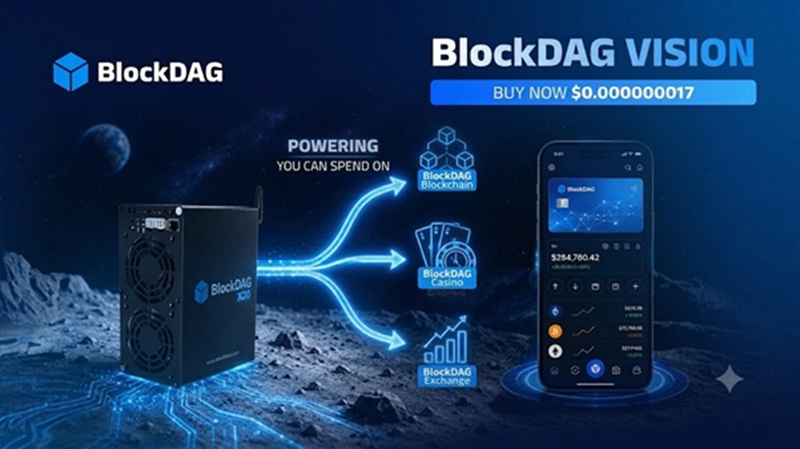
BlockDAG’s approach flips the usual model. Instead of waiting to be listed on someone else’s platform, BlockDAG is launching BlockDAG Exchange, a BlockDAG-owned trading venue for BDAG and major assets, in August 2026. Owning the exchange means keeping the user relationship, the product design, and the trading revenue in-house rather than handing them to a third party.

That ownership creates direct token utility. The exchange can offer fee discounts paid in BDAG, VIP tiers based on BDAG balances or staking, and exclusive access to campaigns and launches. Each of those gives holders a concrete reason to acquire and keep the token, generating demand that the project itself controls. The launch is set to be unveiled at the project’s keynote, positioned as the formal reveal to the community.

The strategic logic runs deeper than one product. Independent listings still matter for global access, but a native exchange broadens BlockDAG from a blockchain audience to the entire crypto trading market, and the resulting fee revenue can fund security, liquidity, and development. Cronos shows the value of exchange linkage; BlockDAG is building that linkage itself rather than depending on an outside partner. For readers weighing crypto coins to watch, a project that owns its own trading venue holds a lever most tokens never touch.

BDAG can be bought directly from the website at an entry rate of $0.000000017 alongside a $0.025 BuyBack price, with a project buyback event scheduled for October 1. Alternatively, participants using Live Swap can secure tokens at a 22% discount below the current CoinMarketCap rate.

Last Call

Hedera builds demand through enterprise and tokenization, with HBAR near $0.069 and Agent Lab tooling timed to Europe’s August 2026 rules. Cronos draws demand from its ties to Crypto.com, backed by Citadel’s $400M investment, a UAE license, and a pending Cronos ETF filing, though CRO trades around $0.054.

BlockDAG is launching its own exchange in August 2026 to control demand at the source, offering fee discounts paid in BDAG, VIP tiers on balances and exclusive launches, with the reveal set for the project’s keynote. Among crypto coins to watch, the split is between borrowed venues and an owned one: Hedera and Cronos plug into demand others help create, while BlockDAG is building the venue itself.

Owning the exchange broadens BlockDAG from a blockchain audience to the whole trading market, and August brings that venue to the front of the best cryptocurrencies to invest in debate.

Presale: https://purchase.blockdag.network

Website: https://blockdag.network

Telegram: https://t.me/blockDAGnetworkOfficial

Discord: https://discord.gg/Q7BxghMVyu