DD
MM
YYYY

PAGES

DD
MM
YYYY

spot_img

PAGES

Home Blog Page 3

Kalshi Doubles Valuation to $22 Billion as Wall Street Rushes Into Prediction Markets

0

Prediction market platform Kalshi has raised $1 billion in a new funding round that values the startup at $22 billion, marking the explosive growth of event-based trading markets as institutional investors increasingly treat them as a new financial asset class.

The Series F round, announced Thursday, doubles Kalshi’s valuation from the $11 billion mark it reached just five months ago during its previous fundraising.

The financing was led by Coatue, with participation from heavyweight technology investors including Sequoia, Andreessen Horowitz, and Paradigm.

Kalshi said the fresh capital would be used to accelerate adoption among hedge funds, proprietary trading firms, asset managers, and insurance companies, a sign that prediction markets are evolving far beyond their early image as speculative retail betting platforms.

The company is also expanding institutional-focused products, including block trading services, broker integrations, and risk-management tools aimed at attracting large pools of capital.

“Kalshi is building the leading platform for trading in real-world events,” said Philippe Laffont, founder of Coatue. “Consumers have already embraced it, and we believe institutions will follow.”

The speed of Kalshi’s ascent has drawn comparisons to the early stages of the artificial intelligence boom, particularly as investors search for new high-growth financial technology sectors capable of generating large-scale network effects.

“There are few categories in recent history that have scaled this quickly outside of AI,” said Kalshi co-founder and CEO Tarek Mansour. “Event contracts could become a trillion-dollar market, and we’re still in the early stages of that transition.”

The company told Bloomberg that its annualized revenue has surpassed $1.5 billion, a figure that would place it among the fastest-growing financial technology firms globally.

Kalshi’s rise marks a broader transformation in financial markets, where investors are increasingly trading probabilities tied to political outcomes, economic indicators, weather events, corporate decisions, and geopolitical developments. Prediction markets allow users to buy and sell contracts tied to real-world outcomes, with prices effectively representing the market’s collective probability estimate of an event occurring.

Once viewed as niche products sitting somewhere between gambling and forecasting, prediction markets have gained growing legitimacy as sophisticated investors use them to hedge risks and gauge sentiment. The sector expanded dramatically during the U.S. election cycle and amid heightened geopolitical volatility linked to conflicts in the Middle East and global economic uncertainty.

Kalshi, alongside rival Polymarket, helped drive mainstream interest in the category by allowing users to trade on events ranging from election outcomes and central bank decisions to sports and pop culture moments.

Industry analysts say the rapid institutionalization of prediction markets could fundamentally alter how financial firms manage uncertainty. Instead of relying solely on traditional derivatives or macroeconomic models, firms are increasingly experimenting with event contracts as tools for pricing geopolitical risk, regulatory outcomes, and market-moving developments in real time.

Insurance companies, for example, could potentially use prediction markets tied to climate risks or natural disasters, while hedge funds may deploy them to hedge exposure to elections, wars, or monetary policy shifts.

That institutional interest appears to be accelerating quickly. Kalshi said trading activity from institutional clients has surged 800% over the past six months, while the company claims to account for roughly 90% of prediction market activity in the United States.

The firm’s regulatory positioning has also given it a significant advantage. Unlike some offshore competitors, Kalshi operates under oversight from the Commodity Futures Trading Commission, allowing it to legally offer event contracts in the U.S. market. That distinction became especially important after regulatory restrictions hampered Polymarket’s U.S. operations following a 2022 ban.

Still, the rapid growth of prediction markets is also drawing scrutiny from regulators and policymakers concerned about market manipulation, gambling risks, and the potential politicization of financial speculation. It is argued that highly liquid markets tied to elections, conflicts, or disasters could create incentives for disinformation campaigns or attempts to influence outcomes for financial gain.

While some warn that the blending of trading and entertainment could increase speculative behavior among retail users, particularly younger investors already active in cryptocurrency and meme-stock markets, others counter that prediction markets often aggregate information more efficiently than traditional polling or analyst forecasts, producing more accurate real-time probability assessments.

The debate is likely to intensify as companies like Kalshi expand deeper into institutional finance.

U.S. Oil Inventories Fall Sharply as America Steps Up as Global Supplier Amid Iran War Disruptions – EIA

0

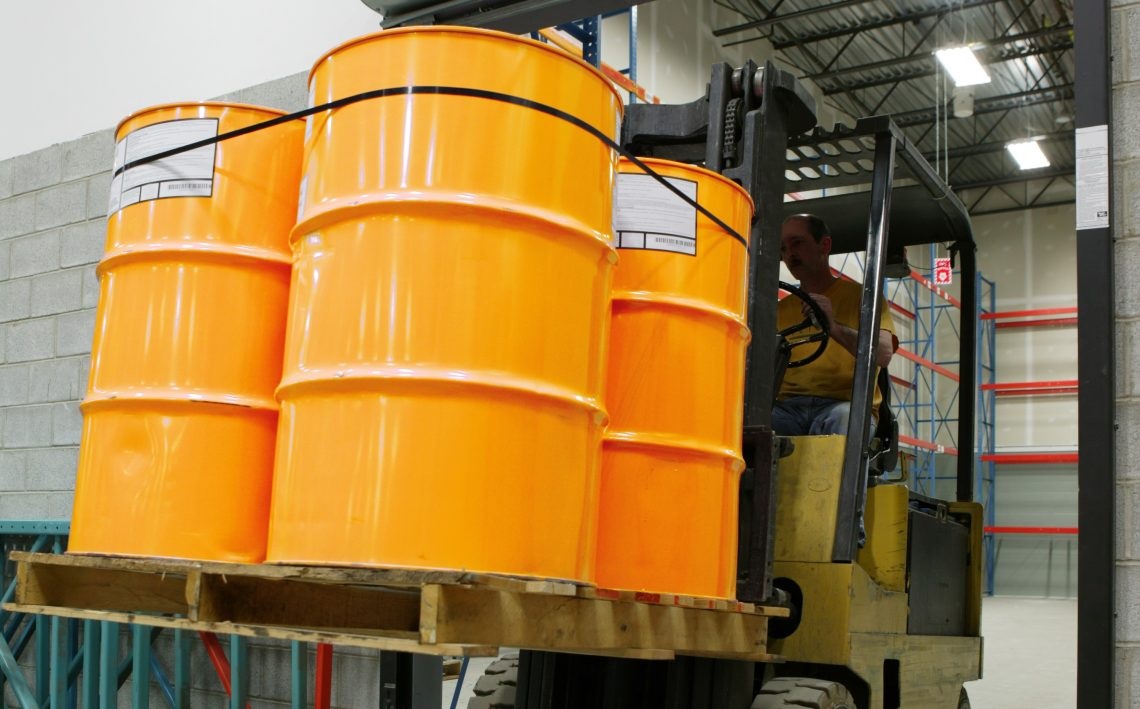
U.S. crude oil and refined product inventories saw significant draws last week as the country continued to ramp up exports to offset major supply disruptions caused by the ongoing war with Iran, according to the latest weekly data from the Energy Information Administration (EIA) released on Wednesday.

Crude oil stocks fell by 2.3 million barrels to 457.2 million barrels in the week ended May 1. While the decline was meaningful, it was smaller than the 3.3 million-barrel draw analysts had expected in a Reuters poll. Stocks at the critical Cushing, Oklahoma, delivery hub dropped another 648,000 barrels.

The data is seen as a boost to a new structural reality in global oil markets: with the Strait of Hormuz largely blocked and Middle Eastern supply chains under severe pressure, the United States has stepped in as the world’s swing producer and supplier of last resort.

“We see a continued liquidation of refined product and crude oil inventories as the U.S. supplies other regions of the world because of Middle East disruptions,” said Andy Lipow, founder of Lipow Oil Associates.

Refined product inventories also tightened considerably. Gasoline stocks declined by 2.5 million barrels to 219.8 million barrels, exceeding expectations for a 2.1 million-barrel drop. Distillate inventories (including diesel and heating oil) fell 1.3 million barrels to 102.3 million barrels — their lowest level since 2005.

Analysts had anticipated a steeper 2.4 million-barrel decline.

Distillate fuel oil exports surged to a record high of 1.9 million barrels per day, up from 1.6 million bpd the previous week. This export strength is putting sustained pressure on domestic stockpiles.

“Distillate stockpiles are down 20% since February 6, and that draw is expected to continue as we go into the planting season in the Midwest,” Lipow noted.

Diesel is critical for agricultural operations, trucking, and heavy industry, making these low levels particularly noteworthy heading into peak seasonal demand.

Phil Flynn, senior analyst at Price Futures Group, said the market is relatively unfazed by the draws because they are primarily export-driven rather than a reflection of unexpectedly strong domestic consumption.

“While the drawdown is a concern, the market is less concerned because it’s driven by exports rather than domestic demand,” he said.

Total product supplied, a proxy for U.S. demand, fell 1.647 million bpd to 19.48 million bpd, with gasoline consumption dropping 291,000 bpd to 8.81 million bpd. Refinery crude runs eased slightly by 42,000 bpd, while utilization rates ticked higher by 0.5 percentage points to 90.1%. Net crude imports rose 1.42 million bpd, while crude exports eased from the prior week’s record to 4.75 million bpd.

Oil futures extended losses following the report. Brent crude was trading at $101.96 per barrel, down nearly $8, while West Texas Intermediate fell more than $7 to $95.13 around mid-morning. The price reaction suggests traders viewed the inventory draws as largely anticipated and already priced in, especially given the export-driven nature of the tightness.

The EIA data highlights the significant strain the Iran conflict has placed on global energy supply chains. As long as the Strait of Hormuz remains disrupted, the U.S. Gulf Coast refining complex, the largest and most sophisticated in the world, is effectively acting as a global stabilizer. This role brings economic benefits through strong refining margins and export revenues, but also carries risks, including accelerated inventory depletion and potential domestic shortages if the situation escalates.

Distillate inventories reaching their lowest level since 2005 are particularly of concern. The U.S. typically builds distillate stocks ahead of summer driving and hurricane season, but this year, the opposite is occurring due to record exports. Any prolonged tightness could support diesel cracks and increase costs for American farmers and logistics companies during the critical planting and harvest periods.

For U.S. refiners, the current environment is largely positive. High utilization rates combined with strong export demand have supported healthy crack spreads. However, if domestic inventories fall too low, companies may eventually have to choose between fulfilling export commitments and maintaining adequate domestic supplies.

Looking ahead, the pace of inventory draws is growing into a huge cause for concern, shifting attention to events in the Middle East. Should the geopolitical situation improve and Middle East flows resume, U.S. exports could moderate, allowing inventories to rebuild. Conversely, analysts expect prolonged disruption to accelerate draws and keep pressure on product prices upward.

AI in Responsible Gambling: Enhancing Safety and Security in Online Casinos

0

Online gambling operators are quietly accelerating their adoption of artificial intelligence to detect harmful play, prevent fraud and tighten security across their platforms — a shift industry analysts say is being driven less by altruism than by regulators who increasingly expect operators to spot at-risk customers before financial damage is done. Major behavioural-analytics suppliers including Mindway AI, Future Anthem and Neccton have rolled out machine-learning systems that scan thousands of micro-signals in real time, from deposit velocity and bet size to time-of-play and session length, flagging accounts long before a player would self-identify as in trouble.

The trend is visible across regulated markets, including Canada, where the post-2022 liberalisation of single-event sports betting has brought new scrutiny to how operators handle player protection. Comparison platforms such as Online Casino Canada, an editorial guide that reviews the country’s licensed iGaming operators, have documented a steady rise in AI-driven safer-gambling tools across the Canadian market. The Alcohol and Gaming Commission of Ontario (AGCO), which oversees the country’s largest regulated online gambling jurisdiction, has signalled that operators are expected to use technology to identify markers of harm — not simply rely on customer self-disclosure.

Why operators are turning to AI

The push toward machine learning is partly economic. Britain’s Gambling Commission has issued a string of record settlements against operators in recent years, with enforcement notices repeatedly citing failures to act on visible signs of harm despite the data being available. Compliance teams cannot manually review millions of player accounts; algorithms can. Data published by the UK Gambling Commission shows that problem gambling rates remain a persistent regulatory concern, and operators face mounting pressure to demonstrate proactive intervention rather than reactive disciplinary action.

Industry suppliers say the value of AI lies in its ability to surface ambiguous cases. A player betting larger amounts is not necessarily in distress; one whose session length, deposit frequency, time-of-play and chasing behaviour all shift simultaneously may be. Models can weigh dozens of variables and produce a risk score that operators route to customer-care teams or to automated intervention pathways.

How AI detects problem gambling behaviour

Behavioural analytics platforms typically ingest events such as deposits, withdrawals, bet sizes, game type, session duration, win-chasing patterns and self-exclusion history. They compare a player’s recent activity against their own historical baseline and against population norms. Sudden departures — for example, a player whose deposits triple in a week and whose play extends past 3 a.m. for the first time — generate alerts.

Mindway AI’s GameScanner, used by several European operators, applies a model trained with input from clinical psychologists. Future Anthem and Optimove offer similar real-time monitoring designed to integrate with operator CRM systems. The output is not a diagnosis; it is a probabilistic flag that prompts a human review or an automated nudge — a pop-up reminding a player how long they have been on site, an offer of deposit limits, or, in higher-risk cases, a mandatory pause on further wagering.

The pattern parallels what is happening in adjacent industries. Major payments firms are restructuring whole divisions around AI-driven fraud and risk detection, as seen in the latest moves at PayPal, where the company has placed AI at the centre of its fraud, customer-service and operational redesign. The underlying logic — using algorithms to surface anomalies in high-volume transactional data — is essentially the same problem set facing online casinos.

Security, fraud and identity

The same machine-learning infrastructure underpins much of the security stack at modern online casinos. Operators use AI for know-your-customer (KYC) checks, anti-money-laundering screening, and detection of bonus abuse, multi-accounting and account takeovers. Behavioural biometrics — measuring how a user types, moves a mouse, or holds a phone — increasingly supplement passwords as a second factor that is harder to spoof at scale.

Deepfake detection has become a particular focus. As generative AI lowers the cost of forging identity documents and selfies, casinos have responded with liveness checks and document-authenticity models that examine micro-features invisible to human reviewers. Comparison sites operating in the Canadian market routinely include responsible-gambling and security features as part of their review criteria, alongside game variety and bonus terms.

The regulatory and ethical questions

Adoption is not without friction. Data-protection regimes — particularly Europe’s GDPR and Canada’s Personal Information Protection and Electronic Documents Act (PIPEDA) — require operators to justify the volume and granularity of behavioural data they collect. Players have a right to challenge automated decisions that materially affect them. False positives, where accounts are flagged as at-risk but are not, can damage customer relationships and raise discrimination concerns if models inherit biased training data.

Regulators have begun publishing more explicit guidance. The Malta Gaming Authority and Sweden’s Spelinspektionen now expect operators to document the design and oversight of automated risk-detection tools. The AGCO’s Registrar’s Standards similarly require that operators identify and respond to indicators of harm using whatever methods, automated or otherwise, are reasonably available — an approach that effectively normalises AI as part of the compliance toolkit.

The road ahead

For all the activity, the industry is some way from a settled standard. Models vary; thresholds are operator-defined; intervention pathways differ. Researchers at independent harm-reduction bodies have called for transparent evaluation of how well AI tools translate into measurable reductions in player harm — evidence that, today, remains limited and largely held within proprietary operator data.

What is clearer is the direction. As regulators sharpen expectations and operators face higher compliance costs, the use of artificial intelligence to police play and protect platforms is moving from experiment to expectation. For Canadian players and the platforms that review the market on their behalf, the most consequential question is no longer whether AI will be used in responsible gambling — but how transparently it is deployed, and to whom operators are accountable when it gets things wrong.

Nvidia Deepens AI Infrastructure Push With Multibillion-Dollar Bet on Data Center Operator IREN

0

Nvidia is tightening its grip on the artificial intelligence infrastructure boom, striking another strategic partnership designed to extend its influence far beyond semiconductors and deeper into the physical backbone powering the global AI economy.

Shares of Australian data center operator IREN surged 13% in extended trading on Thursday after the company announced a sweeping infrastructure alliance with NVIDIA aimed at scaling AI computing capacity worldwide.

Under the agreement, Nvidia and IREN will deploy up to five gigawatts of Nvidia’s DSX-branded AI infrastructure systems across IREN’s global data center footprint, a massive buildout that underscores how rapidly hyperscale AI demand is transforming the economics of power, networking, and cloud infrastructure.

The deal also gives Nvidia the right to purchase up to 30 million IREN shares over five years at an exercise price of $70 per share, representing a potential $2.1 billion investment in the company.

The structure of the agreement highlights how Nvidia is increasingly using equity-linked partnerships to lock in long-term infrastructure relationships as competition intensifies across the AI sector.

“AI factories are becoming foundational infrastructure for the global economy,” Nvidia CEO Jensen Huang said in a statement. “Deploying these systems at scale requires deep integration across the full stack — compute, networking, software, power and operations.”

The phrase “AI factories” has become central to Huang’s vision for the next phase of the technology industry. Nvidia increasingly argues that AI data centers should be viewed less as traditional server facilities and more as industrial-scale production systems generating intelligence as an economic output.

That framing is important because it helps explain Nvidia’s broader strategy. The company is no longer simply selling graphics processors. It is attempting to control the entire AI infrastructure stack, including chips, networking, software frameworks, server architectures, cooling systems, and increasingly the physical data center ecosystem itself.

The IREN agreement follows a string of infrastructure-focused partnerships Nvidia has announced in recent months as the company races to secure supply chains and expand the global AI compute footprint.

Nvidia has already signed multibillion-dollar agreements with companies including Coherent, Lumentum, and Corning to strengthen critical components used in AI data centers, particularly high-speed optical connectivity systems required to move enormous volumes of data between GPUs.

The latest partnership also reflects how AI demand is reshaping the data center industry itself. Operators that once focused primarily on crypto mining or conventional cloud workloads are rapidly repositioning toward AI infrastructure, where power availability, cooling capacity, and access to Nvidia hardware have become strategic assets.

IREN is a prominent example of that shift.

The company originally built its reputation around Bitcoin mining infrastructure powered by renewable energy. But as AI workloads exploded globally following the rise of generative AI systems like ChatGPT, the company pivoted aggressively into high-performance computing and AI data center services.

That transformation mirrors a broader industry trend in which former crypto infrastructure operators are repurposing energy-intensive facilities for AI computing. The transition has been accelerated by the much larger and more stable economics of enterprise AI demand compared with the volatility of cryptocurrency markets.

The scale of the planned deployment is especially notable. Five gigawatts of AI infrastructure would place the project among the largest compute buildouts globally. To put that in perspective, major hyperscale cloud campuses often consume hundreds of megawatts individually, while the most ambitious AI infrastructure projects are increasingly being measured in gigawatts due to soaring demand from large language models and AI training systems.

The buildout also comes amid growing investor concern about whether the AI boom is evolving into a broader infrastructure supercycle. Wall Street has increasingly rewarded companies tied to AI compute, networking, cooling, fiber optics, and energy systems, viewing them as essential beneficiaries of the race among technology giants to expand AI capacity.

Nvidia remains at the center of that ecosystem. The company’s dominance in AI accelerators has allowed it to evolve from a chip supplier into arguably the most influential infrastructure company in the global technology industry. Its systems now underpin the AI ambitions of cloud giants, startups, sovereign governments, and enterprise customers worldwide.

But maintaining that dominance requires enormous coordination across hardware manufacturing, energy access, and supply chain logistics. That challenge is becoming more acute as AI training clusters grow larger and more power-intensive. Analysts increasingly warn that electricity availability, transmission constraints, and cooling infrastructure may become major bottlenecks for the next generation of AI systems.

The IREN partnership appears partly designed to address those concerns by aligning Nvidia more closely with operators capable of delivering large-scale power and data center capacity. The alliance provides validation from the most important company in the AI ecosystem and could materially strengthen IREN’s competitive position in attracting enterprise AI customers.

Roche Bets Bigger on AI-Driven Cancer Diagnosis With $1 Billion PathAI Deal

0

Swiss pharmaceutical and diagnostics giant Roche is deepening its push into artificial intelligence-powered healthcare, agreeing to acquire U.S.-based PathAI in a transaction valued at up to $1.05 billion, as global drugmakers race to embed AI deeper into disease detection and personalized medicine.

Under the agreement announced Thursday, Roche will pay $750 million upfront for the Boston-based company, alongside additional milestone payments that could raise the total value of the deal by another $300 million.

The acquisition expands a partnership between the two companies that began five years ago and was broadened in 2024 to focus on AI-enabled companion diagnostics, an increasingly important area in oncology where software tools help determine which patients are most likely to benefit from specific treatments.

Roche said PathAI will become part of its diagnostics division once the deal closes in the second half of 2026.

The move signals how rapidly AI is becoming central to the future of cancer diagnostics, drug development, and precision medicine. For decades, pathology has relied heavily on manual analysis of tissue samples by specialists using microscopes, a process that can be labor-intensive, time-consuming, and vulnerable to variability between clinicians.

Digital pathology seeks to change that by converting tissue slides into high-resolution digital images that can be analyzed by machine-learning systems trained to identify disease patterns, biomarkers, and subtle abnormalities that may be difficult for the human eye to consistently detect.

Roche said the acquisition would strengthen its position in a market increasingly viewed as one of the most commercially promising applications of healthcare AI.

“Digital pathology has the potential to improve precision diagnosis of cancer and enable physicians to offer better tailored treatment regimens,” said Matt Sause, CEO of Roche Diagnostics.

Industry analysts say the transaction also highlights a shift in the pharmaceutical sector, where major healthcare companies are no longer treating AI as an experimental support tool but as core infrastructure underpinning diagnostics, clinical trials, and treatment selection.

The timing is notable because AI adoption in healthcare has accelerated sharply over the past two years, particularly in oncology, where pharmaceutical companies are under pressure to improve treatment precision while reducing the cost and time associated with developing new medicines.

Companion diagnostics have become especially valuable as cancer therapies grow more targeted and genetically specific. Drugmakers increasingly need tools capable of identifying the exact patients likely to respond to expensive therapies, both to improve outcomes and satisfy regulators and insurers demanding evidence of effectiveness.

PathAI has emerged as one of the more prominent players in that space, developing AI systems designed to assist pathologists in diagnosing diseases and identifying biomarkers from pathology images. The company has worked with multiple pharmaceutical firms and research institutions to apply machine learning to cancer diagnostics and clinical research workflows.

The acquisition boosts Roche’s longstanding strategy of combining pharmaceuticals with diagnostics, a model that has helped distinguish the company from many rivals. The company already maintains one of the world’s largest diagnostics businesses, spanning molecular testing, laboratory systems, and cancer screening technologies. It appears to be positioning AI-driven pathology as the next major layer in that ecosystem.

The deal also underscores intensifying competition among healthcare giants to secure ownership of AI platforms before the technology becomes deeply entrenched across hospital systems and drug development pipelines.

Companies including Pfizer, Johnson & Johnson, and AstraZeneca have all expanded AI investments in recent years, targeting areas ranging from clinical trial optimization to automated diagnostics and drug discovery. It comes at a time when regulators globally are still grappling with how to oversee AI-based medical systems, particularly around accuracy, bias, transparency, and patient safety.

Healthcare providers have also raised concerns about integration costs, data privacy, and whether hospitals in lower-income regions will have sufficient infrastructure to fully adopt digital pathology systems. Still, momentum behind AI diagnostics continues to build as healthcare systems face mounting pressure from aging populations, rising cancer rates, and shortages of specialized medical professionals.

Analysts say AI-assisted pathology could help ease bottlenecks in cancer diagnosis, particularly in regions where trained pathologists remain in short supply. The acquisition may also strengthen Roche’s ability to compete in the emerging market for fully integrated oncology platforms that combine diagnostics, data analytics, and therapeutics into unified treatment ecosystems.

For investors, the transaction is another indication that AI spending is no longer confined to Silicon Valley and cloud computing giants. The technology is increasingly reshaping sectors once considered slower-moving, including pharmaceuticals and clinical medicine, where the commercial stakes tied to precision treatment and early disease detection are enormous.