DD
MM
YYYY

PAGES

DD
MM
YYYY

spot_img

PAGES

Home Blog Page 3

OpenAI Introduces Health Mode in ChatGPT for Trusted Wellness Guidance

0

OpenAI has introduced a new Health feature for ChatGPT, marking another major step in the integration of artificial intelligence into everyday healthcare experiences.

The feature is designed to help users better understand health-related questions, navigate symptoms, access reliable wellness information, and prepare for conversations with healthcare professionals.

While it is not intended to replace licensed medical providers, the launch reflects the growing role of AI as a supportive tool in personal health management.

The Health feature arrives at a time when millions of people already turn to AI chatbots for answers about common illnesses, medications, nutrition, mental wellness, and preventive care.

OpenAI’s latest update aims to improve the quality and safety of these interactions by providing more structured, medically informed responses while emphasizing the importance of seeking professional care for emergencies or serious medical conditions.

The feature is designed to educate users and guide them toward appropriate healthcare decisions. A key objective of the Health experience is to reduce misinformation. Health-related searches on the internet often produce conflicting advice, outdated recommendations, or unverified claims from unreliable sources.

By refining ChatGPT’s medical responses, OpenAI hopes to present information that is easier to understand, balanced, and aligned with established medical knowledge. Users can ask about symptoms, medications, preventive measures, chronic conditions and  vaccinations.

The rollout also demonstrates how artificial intelligence is becoming increasingly personalized. Users may receive explanations that are easier to follow, organized in a conversational format rather than dense medical terminology.

This can be especially valuable for individuals preparing for doctor’s appointments, trying to understand laboratory results, or learning about treatment options after receiving a diagnosis.

By simplifying complex medical concepts, the Health feature has the potential to improve health literacy among a broad audience. OpenAI has emphasized that safeguards remain central to the feature.

The Health experience is expected to provide clear disclaimers whenever users describe potentially serious symptoms, encouraging immediate medical attention instead of relying solely on AI guidance.

The system is also designed to avoid giving dangerous recommendations, promoting harmful treatments, or replacing emergency medical services. These protections reflect broader industry efforts to deploy AI responsibly in sensitive fields such as healthcare.

Healthcare professionals may benefit indirectly from the feature. Patients who arrive with a clearer understanding of their symptoms and treatment options may have more productive consultations, allowing clinicians to focus on diagnosis and personalized care rather than basic explanations.

Medical experts continue to caution that AI systems can make mistakes, reinforcing the need for human oversight in healthcare decisions. The launch further highlights the expanding relationship between artificial intelligence and the healthcare sector.

Technology companies are increasingly investing in AI-powered medical assistants, diagnostic support tools, and administrative solutions that can improve efficiency across hospitals and clinics. OpenAI’s Health feature represents another milestone in this broader trend, positioning conversational AI as an accessible companion for everyday health education.

As AI continues to evolve, features like Health could transform how people access medical information worldwide. If implemented responsibly, they have the potential to bridge information gaps, improve health awareness, and make trustworthy guidance more widely available.

The success of such tools will depend on maintaining high standards of accuracy, transparency, and safety while ensuring that professional medical expertise remains at the center of healthcare decisions.

Okin Biscuits: Revitalising a Legacy, Rebranding for the Future

0

When a product disappears from the shelves, it often fades quietly into memory. Yet some products linger, not just as snacks or commodities, but as cultural touchstones. Okin Shortcake is one of those rare names that has lived on in the hearts of Nigerians long after its absence. Its return is not simply a business decision. It is a story of nostalgia, trust, and the delicate balance between product revitalisation and rebranding.

Revitalisation is about breathing new life into a product without losing its soul. For Okin, the soul lies in the recipe. Consumers have been emphatic in their demands. They want the same deep brown colour, the same rich milky taste, and the same satisfying thickness. These details are not trivial. They are the very essence of Okin’s identity. Revitalisation here means honouring that essence, proving that true taste never changes. Unlike many revitalisation efforts that rely on innovation, Okin’s strength lies in restoration. The market is already crowded with coaster biscuits, but none replicate the unique shortcake that Okin once offered. This gap is an opportunity, and revitalisation is the key to filling it.

At the same time, revitalisation alone cannot carry the brand forward. A product must also speak to the present, and that is where rebranding comes in. Rebranding is about refreshing the image and positioning the product for a new generation. For Okin, this means balancing nostalgia with modern relevance. Packaging design should nod to the past while embracing today’s standards, such as eco?friendly materials and contemporary fonts. Storytelling campaigns can draw directly from consumer memories. Tales of biscuits tucked into school uniforms, of shortcake paired with 7Up during childhood illnesses, and of family breakfasts sealed with Okin are not just anecdotes. They are powerful narratives that position Okin as more than a snack. They make it a cultural bridge between generations.

The voices of consumers reveal a powerful emotional bond. They are not passive buyers. They are guardians of the brand. They warn against excess sugar, they demand quality, and they insist on authenticity. Some even say they are “here to censor it,” a striking reminder that Okin’s revival is under public scrutiny. This is both a challenge and an opportunity. If Okin listens and delivers, it will not only regain trust but deepen it. Revitalisation must therefore be accompanied by clear communication that reassures consumers of the brand’s fidelity to its roots.

Distribution is another critical piece of the puzzle. Nostalgia cannot thrive if the product is inaccessible. Lagos, Ilorin, Sokoto, and other cities are waiting. Rebranding must therefore include a clear rollout strategy that ensures the biscuit is widely available. Accessibility reinforces trust, and trust fuels loyalty. A product that is remembered fondly but difficult to find risks becoming a myth rather than a living brand.

The dual path of revitalisation and rebranding is delicate. Revitalisation demands fidelity to the original recipe, colour, and texture. Rebranding demands fresh storytelling, modern packaging, and digital engagement. The synergy lies in bringing back the old while presenting it in a new way. Okin’s success depends on reassuring loyalists while attracting younger consumers who never experienced the original. This dual strategy ensures that Okin is not just a throwback but a relevant choice in today’s market.

For consumers, Okin’s revival is a chance to relive cherished memories and share them with their children. It is an opportunity to pass down a taste that defined their childhood. For the company, it is a reminder that brand equity is built not just on taste but on trust and emotional connection. Deliver the biscuit exactly as remembered, then wrap it in a modern story that resonates with today’s market.

In the end, Okin Shortcake’s return is more than a product launch. It is a cultural event. Revitalisation ensures the biscuit tastes exactly as it did decades ago. Rebranding ensures it speaks to today’s consumers in a language of nostalgia and modern relevance. If Okin can strike this balance, it will not just sell biscuits. It will sell memories, trust, and continuity, proving that some tastes truly never leave your memory.

The revitalisation and rebranding is not only about Okin. It is a lesson for any company seeking to revive a legacy product. Listen to the consumers who remember. Honour the product’s essence. Refresh the brand’s image. Balance the old with the new. In doing so, a company does more than relaunch a product. It rekindles a relationship, restores trust, and reclaims a place in the cultural fabric of society.

AI We Use, the AI We Gain From, and the AI We Discard

0

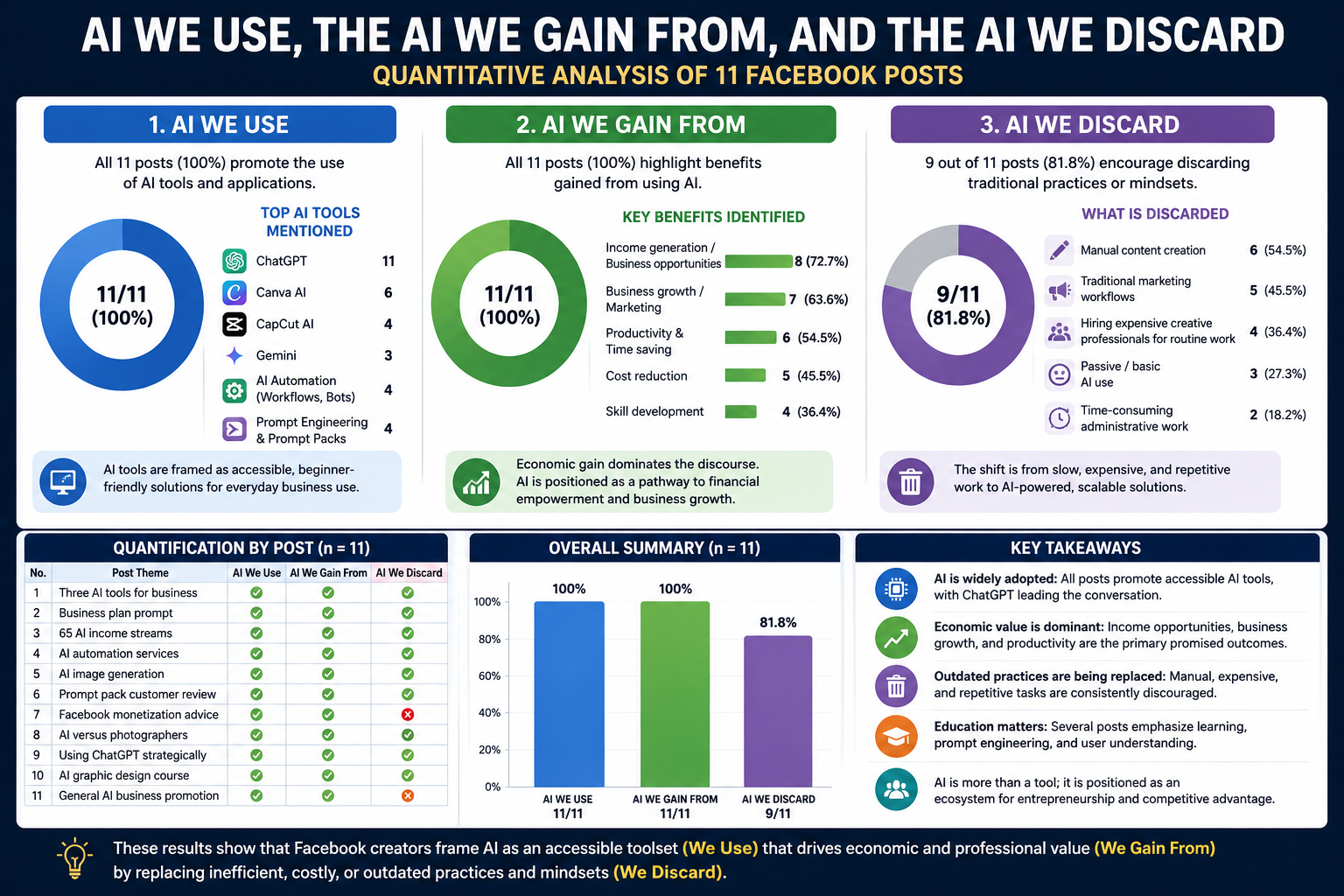
Artificial intelligence has rapidly evolved from a niche technology into a central feature of digital entrepreneurship. On Facebook, AI educators, digital marketers, and business coaches increasingly present AI as an essential business companion rather than an experimental innovation. Their posts do more than introduce new tools. They shape how entrepreneurs understand technology, opportunity, and success. Examining these messages through the framework of the AI we use, the AI we gain from, and the AI we discard reveals not only the technologies being promoted but also the values, assumptions, and business practices that accompany the growing AI economy.

The first dimension, the AI we use, focuses on the technologies that creators encourage their audiences to adopt. Across the Facebook posts, accessible applications such as ChatGPT, Canva AI, CapCut AI, and Gemini dominate the conversation. These tools are recommended for writing marketing copy, designing promotional materials, editing videos, developing business plans, generating realistic product images, and automating routine business activities. Rather than emphasizing technical complexity, creators consistently portray these platforms as beginner friendly solutions that anyone with a smartphone or laptop can start using immediately. The message is reassuring. AI is no longer reserved for software engineers or technology companies. It has become a practical resource for small business owners, freelancers, and aspiring entrepreneurs.

Yet these creators rarely stop at demonstrating how AI works. Their central message quickly shifts toward the second dimension, the AI we gain from. In these posts, AI is presented as a pathway to economic opportunity, increased productivity, and business growth. Followers are encouraged to see ChatGPT not simply as a chatbot but as a virtual business assistant capable of writing proposals, creating content, generating business ideas, and supporting strategic planning. Canva AI becomes more than a design platform because it promises to eliminate the cost of hiring graphic designers for routine marketing materials. Similarly, CapCut AI is framed as a way to produce professional video content without investing in expensive editing expertise.

Economic empowerment is the dominant narrative. Several creators promote AI as the foundation for entirely new careers. Posts advertising AI automation services argue that businesses are actively seeking professionals who can build automated content workflows, customer support systems, email sequences, and data reporting solutions. The emphasis is not on replacing human workers entirely but on positioning AI knowledge as a premium skill that organizations are willing to pay for. In this narrative, financial success depends less on simply using AI and more on understanding how AI can solve real business problems.

The same perspective appears in promotions for prompt engineering, AI image generation, and digital products. Instead of selling software, creators increasingly sell knowledge about how to maximize AI tools. Prompt packs, AI courses, and automation training become products in their own right because they promise to transform ordinary users into professionals capable of generating income. AI therefore becomes both the product and the mechanism through which new products are created. Knowledge of AI is treated as an economic asset that can be packaged, marketed, and sold.

The third dimension of the framework, the AI we discard, offers perhaps the most revealing insights. These Facebook messages consistently encourage audiences to move away from traditional business practices that are portrayed as slow, expensive, or inefficient. Hiring photographers for every marketing campaign, paying graphic designers for routine promotional materials, manually responding to customer inquiries, and spending hours drafting business documents are all presented as practices that AI can significantly reduce or replace. The creators argue that businesses can achieve similar outcomes more quickly and at a fraction of the cost by integrating AI into their operations.

However, what is being discarded extends beyond specific business activities. Many of the posts challenge a mindset rather than a technology. Several creators criticize those who use ChatGPT only to answer simple questions or generate generic social media captions. Instead, they encourage audiences to think strategically by viewing AI as a business system capable of creating long term value. Success, they argue, belongs to those who integrate AI into their workflows rather than those who treat it as a novelty. This shift reflects a broader transformation in digital entrepreneurship where competitive advantage increasingly depends on combining AI with business strategy instead of relying on AI alone.

Despite the optimism that characterizes these posts, the discussions reveal important limitations. AI is consistently portrayed as a source of efficiency, creativity, and financial opportunity, yet relatively little attention is given to its risks. Questions surrounding data privacy, copyright ownership, algorithmic bias, misinformation, platform dependency, and workforce displacement remain largely absent. Likewise, the continuing importance of human creativity, ethical judgment, critical thinking, and industry expertise receives limited discussion. The impression created is that technological capability alone is sufficient for business success, even though sustainable competitive advantage often depends on qualities that AI cannot fully replicate.

One post provides an important exception. A creator recounts how a customer left a negative review after purchasing an AI prompt pack, only to discover that the customer misunderstood the nature of the product and did not know how to access or use it. Rather than blaming the technology, the creator recognized that the problem lay in inadequate user understanding and responded by developing a step by step tutorial. This episode highlights an often overlooked aspect of AI adoption. Technology alone does not create value. Users must also possess the knowledge and confidence to apply it effectively. AI literacy therefore becomes just as important as AI availability.

Generally, the Facebook posts examined reveal far more than promotional tactics. They demonstrate how artificial intelligence is being constructed as a symbol of entrepreneurial ambition, economic mobility, and digital transformation. The AI we use reflects the growing accessibility of intelligent technologies. The AI we gain from captures the financial and professional opportunities that creators associate with these tools. The AI we discard illustrates the gradual replacement of traditional workflows and outdated assumptions about how businesses should operate.

As AI becomes increasingly embedded in everyday business practices, the conversation must evolve beyond enthusiasm alone. Business leaders, educators, and policymakers should encourage not only widespread adoption but also responsible and informed use. The future will not belong simply to those who embrace AI. It will belong to those who understand where AI creates value, where human expertise remains indispensable, and how technological innovation can be balanced with ethical responsibility.

Why Tokenized Equities Are Fueling Solana’s Explosive Growth in 2026

0

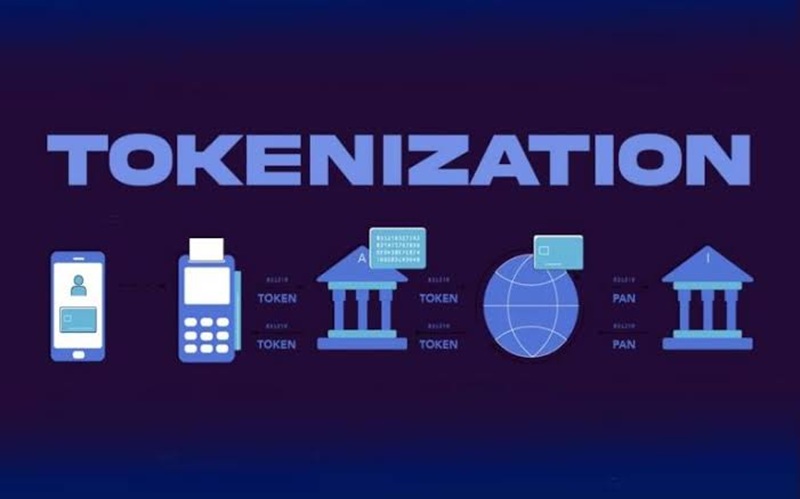
Tokenized equities are rapidly becoming one of the fastest-growing segments of the digital asset industry, and Solana has emerged as the dominant blockchain powering this transformation.

New market data shows that tokenized equity trading volume on Solana has surged from just $1.34 million to an astonishing $3.32 billion over the past year, highlighting the accelerating migration of traditional capital markets onto blockchain infrastructure.

The dramatic growth has drawn attention from investors, institutions, and industry leaders alike, with Bitwise co-founder Hunter Horsley describing the trend as compelling evidence that the future of financial markets is increasingly onchain.

The latest figures illustrate how quickly momentum has built throughout 2026. In April, tokenized equities on Solana represented approximately $670 million in value. Within only two months, that figure expanded to a record-breaking $3.3 billion, marking an all-time high for the ecosystem.

Such rapid growth reflects increasing confidence in blockchain-based financial products as investors seek faster settlement, greater transparency, and broader accessibility than conventional stock markets can provide.

Perhaps even more significant is Solana’s growing dominance in cross-chain activity. Reports indicate that the network now processes more than 95% of all cross-chain tokenized stock volume, placing it well ahead of competing blockchain ecosystems.

This leadership position underscores Solana’s reputation for high throughput, low transaction costs, and the ability to handle large volumes of financial activity without compromising efficiency. These characteristics have made it an attractive destination for platforms issuing and trading tokenized versions of publicly listed equities.

The broader tokenized stock market is experiencing extraordinary expansion as well.

During the first half of 2026, tokenized equities across all blockchain networks reached approximately $4.9 billion, representing a sixfold increase from the $775 million recorded during the second half of 2025. This remarkable growth suggests that tokenization is moving beyond experimentation and becoming an increasingly important component of modern financial infrastructure.

Tokenized equities offer investors several advantages over traditional securities markets. By representing shares as blockchain-based digital tokens, these assets can potentially trade around the clock instead of being limited to standard exchange hours.

Settlement can occur within minutes rather than days, reducing counterparty risk while improving liquidity. Investors also gain access through digital wallets and decentralized financial applications, lowering barriers that have traditionally restricted participation in global equity markets.

For financial institutions, tokenization represents an opportunity to modernize outdated market infrastructure. Legacy settlement systems often involve multiple intermediaries, lengthy processing times, and significant operational costs.

Blockchain technology simplifies many of these processes through programmable smart contracts that automate settlement, compliance, and recordkeeping. As more institutions recognize these efficiencies, demand for tokenized financial products is expected to continue rising.

Hunter Horsley’s observation that capital markets are moving onchain reflects a broader shift taking place across global finance. While cryptocurrencies initially demonstrated the potential of decentralized networks, tokenized real-world assets are now showing how blockchain technology can reshape traditional investment markets.

Stocks, bonds, commodities, and other financial instruments are increasingly being represented digitally, creating a more interconnected and efficient financial ecosystem.

Although regulatory frameworks continue to evolve, the rapid expansion of tokenized equities demonstrates growing confidence in blockchain-based capital markets.

Solana’s leadership in transaction volume and infrastructure positions it at the center of this transformation. If current growth trends continue, tokenized equities could become a mainstream investment vehicle, reshaping how investors access, trade, and own financial assets while accelerating the integration of traditional finance with decentralized technology.

Volkswagen Earnings Miss Highlights Challenges for European Automakers, as Germany Accelerates Digital Railway Revolution

0

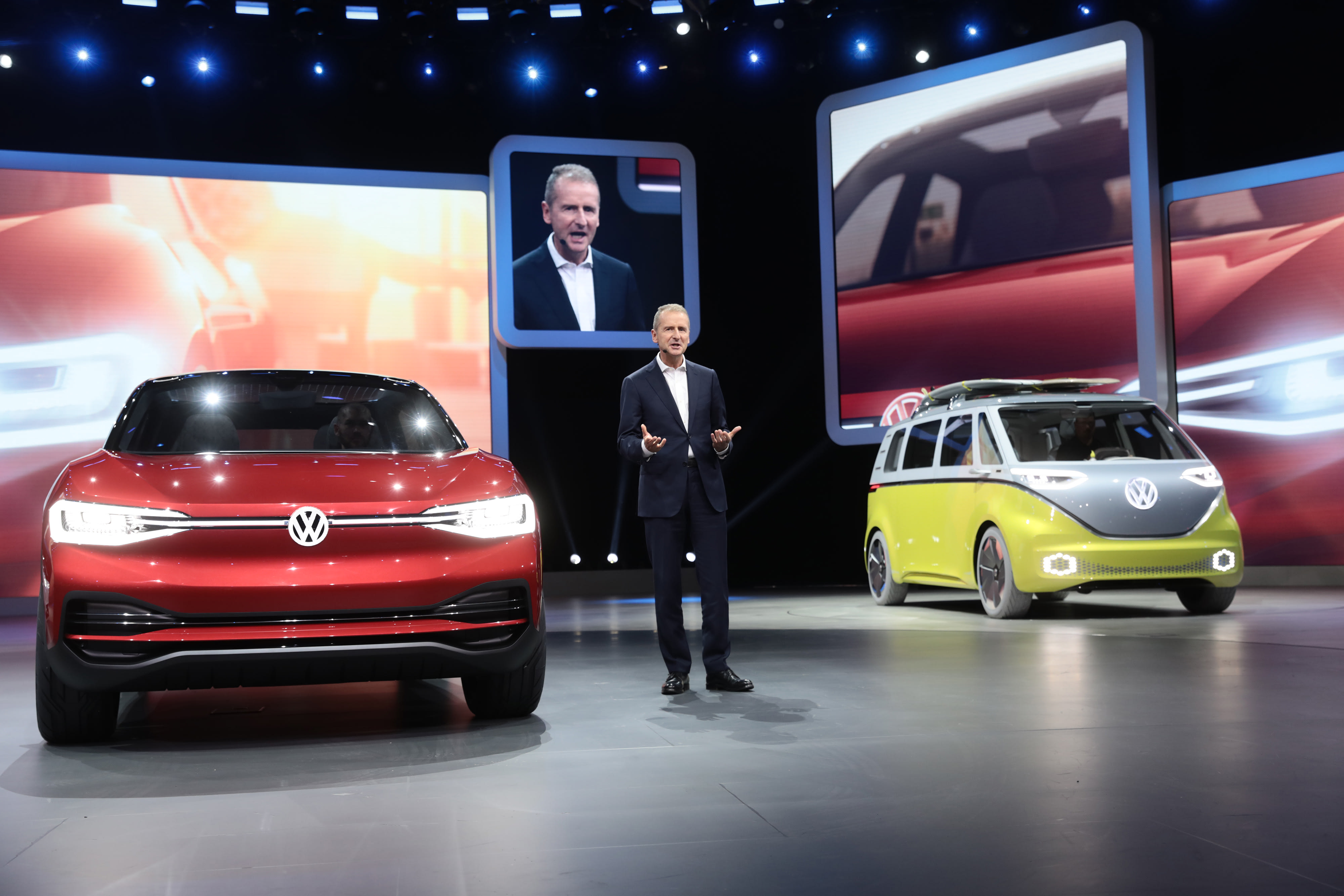
Volkswagen reported a sharp decline in second-quarter earnings, underscoring the growing challenges facing one of the world’s largest automakers.

The German automotive giant announced that its net profit fell 32.9% year-over-year to €1.54 billion ($1.8 billion), reflecting mounting pressure from weakening demand in China, rising competitive intensity, and the broader transformation of the global automotive industry.

The results highlight the difficult environment European car manufacturers face as they navigate slowing economic growth, shifting consumer preferences, and the accelerating transition toward electric vehicles.

China has long been Volkswagen’s most important market, accounting for a substantial share of its global vehicle sales and profitability. For decades, the company enjoyed a dominant position in the country through successful joint ventures and a reputation for quality engineering.

That advantage has gradually eroded as domestic Chinese automakers have rapidly expanded their market presence. Companies such as BYD, Geely, and several emerging electric vehicle manufacturers have captured growing market share by offering technologically advanced vehicles at competitive prices.

The slowdown in China’s economy has also contributed to weaker consumer spending on big-ticket purchases such as automobiles. Buyers have become more cautious amid concerns about economic uncertainty, property market weakness, and slowing income growth.

Aggressive price competition among automakers has squeezed profit margins across the industry. To remain competitive, Volkswagen has been forced to introduce discounts and promotional campaigns, reducing profitability even as it seeks to maintain sales volumes.

The company’s financial results illustrate the scale of these challenges. A decline of nearly one-third in quarterly net profit signals that Volkswagen is facing pressure not only from lower sales but also from increasing operational costs and significant investments in future technologies.

Automakers worldwide are spending billions of euros on electric vehicle development, battery technology, software platforms, and digital services to remain competitive in an industry undergoing its most profound transformation in decades.

Volkswagen continues to push forward with its electrification strategy despite the earnings setback. The company has committed substantial resources to expanding its electric vehicle lineup across multiple brands, including Volkswagen, Audi, Porsche, and Škoda.

It is also investing in battery production facilities, charging infrastructure partnerships, and next-generation software systems designed to enhance vehicle connectivity and autonomous driving capabilities.

These investments come during a period of slowing global electric vehicle demand in several regions. While EV adoption continues to grow, consumer enthusiasm has moderated due to higher financing costs, concerns about charging infrastructure, and reduced government incentives in some markets.

This has complicated manufacturers’ efforts to balance current profitability with long-term strategic investments. Europe presents its own set of challenges for Volkswagen. Inflation, elevated interest rates, and persistent supply chain pressures have affected vehicle demand across the region.

Meanwhile, stricter emissions regulations require continued investment in cleaner technologies while maintaining production efficiency. Balancing regulatory compliance with shareholder expectations has become increasingly difficult as operating conditions remain uncertain.

Despite the disappointing quarterly performance, Volkswagen retains significant competitive advantages. The company possesses a globally recognized portfolio of brands, an extensive manufacturing network, and decades of engineering expertise.

Management continues to emphasize cost discipline, operational efficiency, and strategic investments aimed at strengthening long-term competitiveness. Success in these areas will be critical as the company seeks to regain momentum in China while expanding its presence in other growth markets.

Volkswagen’s recovery will largely depend on its ability to adapt to rapidly changing market conditions. Revitalizing sales in China, improving profitability in its electric vehicle business, and successfully managing costs will be central to its strategy.

Although the second-quarter earnings decline represents a significant setback, Volkswagen’s continued commitment to innovation and global expansion suggests that the automaker remains focused on positioning itself for long-term success in an increasingly competitive automotive landscape.

Germany Accelerates Digital Railway Revolution with €1.7 Billion ETCS Funding

Germany is making one of its largest long-term investments in railway modernization, committing around €1.7 billion ($1.93 billion) through the end of 2030 to accelerate the rollout of the European Train Control System across its rail network.

The funding reflects the country’s determination to modernize rail infrastructure, improve safety, increase network capacity, and strengthen cross-border rail transport throughout Europe.

As railways become increasingly central to Europe’s climate and mobility goals, Germany’s commitment underscores the importance of digital technology in shaping the future of transportation.

The European Train Control System is a standardized digital signaling and train protection system developed under the European Rail Traffic Management System. Unlike traditional signaling methods.

ETCS enables continuous communication between trains and trackside equipment, allowing trains to operate more efficiently while maintaining high safety standards. The technology reduces reliance on physical signals by transmitting movement authorities directly to train drivers through onboard digital displays.

This results in more accurate train operations, lower risks of human error, and better management of railway traffic. Germany’s investment comes at a critical time. The country’s rail infrastructure has faced increasing pressure due to aging equipment, growing passenger demand, and expanding freight transport.

Delays, congestion, and maintenance challenges have highlighted the need for a comprehensive digital transformation. By allocating €1.7 billion over the next several years, the Federal Transport Ministry aims to equip trains with ETCS technology while supporting the broader modernization of the national rail network.

One of the biggest advantages of ETCS is its ability to increase railway capacity without requiring entirely new tracks.

Because trains equipped with digital signaling can safely operate with shorter distances between them, rail operators can run more services on existing infrastructure. This is particularly valuable in densely populated regions where constructing new rail lines is expensive, time-consuming, and often constrained by environmental or urban planning concerns.

Safety remains another major benefit. ETCS continuously monitors train speed and position, automatically intervening if a train exceeds speed limits or approaches danger zones. By reducing dependence on manual operations and conventional trackside signals, the technology significantly lowers the risk of accidents caused by human error.

This makes rail travel safer for passengers while also improving operational reliability for freight services. The investment also supports Germany’s broader environmental objectives. Rail transport produces significantly fewer greenhouse gas emissions than road or air travel.

Making it a cornerstone of Europe’s climate strategy. Improving railway efficiency and reliability encourages more passengers and businesses to choose trains over less sustainable transportation options. As governments across Europe work toward ambitious carbon reduction targets, digital rail infrastructure is increasingly viewed as an essential component of sustainable mobility.

Beyond Germany’s borders, ETCS promotes seamless international rail travel. Europe has historically operated multiple national signaling systems, creating technical barriers for trains crossing borders.

Standardizing digital train control through ETCS enables locomotives to move more easily between countries without requiring expensive modifications or multiple onboard systems. This improves freight logistics, strengthens supply chains, and makes international passenger rail services more efficient and competitive.

The funding is also expected to stimulate innovation within Germany’s railway and technology sectors. Equipment manufacturers, engineering firms, software developers, and infrastructure companies will all play key roles in deploying ETCS across the country’s rail network.

The modernization effort is likely to create skilled jobs while reinforcing Germany’s leadership in advanced transportation technologies. Challenges remain, including coordinating upgrades across thousands of kilometers of railway infrastructure, managing installation schedules without disrupting existing services, and ensuring interoperability between legacy systems.

The long-term benefits are expected to outweigh these complexities as Germany gradually builds a smarter, more resilient railway system. Germany’s €1.7 billion commitment represents more than an infrastructure upgrade.

It is a strategic investment in safer transportation, greater economic competitiveness, environmental sustainability, and deeper European integration.

As ETCS deployment expands over the coming years, Germany is positioning its rail network to meet the demands of a digital, connected, and climate-conscious future while setting an example for railway modernization across Europe.