DD
MM
YYYY

PAGES

DD
MM
YYYY

spot_img

PAGES

Home Blog Page 3

Yen Slips After Weak Growth Data; U.S. Dollar Steady Amid Fed Rate Speculation

0

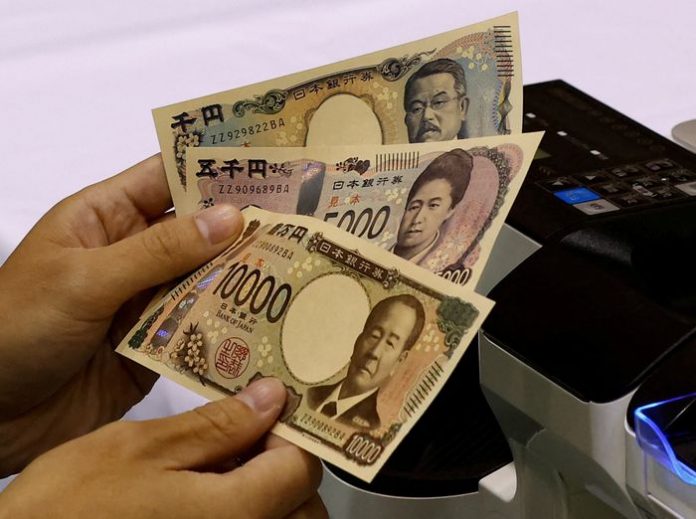
The Japanese yen weakened on Monday, falling 0.4% to 153.32 per U.S. dollar, following the release of meagre economic growth figures that underscored the challenges facing the government of Prime Minister Sanae Takaichi.

This came after the yen surged nearly 3% last week, marking its largest weekly gain in around 15 months, driven by investor optimism over Takaichi’s Liberal Democratic Party (LDP) election landslide.

Despite last week’s rally, Monday’s data revealed that Japan’s economy barely expanded in the fourth quarter of 2025, recording an annualized growth rate of just 0.2%. Economists said the sluggish expansion highlights structural challenges — including stagnant domestic consumption and a tight labor market — that could constrain the government’s ability to stimulate broader economic momentum.

“After the election, the political dust may be settling a bit, for the near term at least, and we are seeing the yen increasingly becoming sensitive to data,” Reuters quoted Mohamad Al-Saraf, FX and fixed income associate at Danske Bank, as saying.

Bank of Japan (BOJ) Governor Kazuo Ueda and Prime Minister Takaichi held their first bilateral meeting since the election on Monday. According to Ueda, the discussion was a “general exchange of views on economic and financial developments,” with no specific requests on monetary policy made by the prime minister.

The BOJ’s next policy meeting is scheduled for March, with market participants assigning around 20% probability for a rate hike. Economists have largely predicted that the central bank will wait until July before any additional tightening.

In December, the BOJ raised its key rate to 0.75%, the highest level in 30 years. Yet this remains well below interest rates in most major economies, contributing to a weaker yen and making the currency highly sensitive to both domestic data and foreign capital flows. Past periods of yen underperformance have even prompted direct interventions by the government and central bank to stabilize the currency.

U.S. Dollar and Fed Rate Speculation

Meanwhile, the U.S. dollar remained broadly steady on Monday, with the U.S. Dollar Index inching up 0.1% to 97.06, after falling 0.8% last week. The stability reflects investor confidence in the Federal Reserve’s measured approach following lower-than-expected January inflation data, which has reignited speculation that the central bank could cut interest rates later this year.

Money market traders are pricing in 62 basis points of rate easing across 2026, implying two quarter-point cuts and about a 50% chance of a third. Analysts predict the first reduction will likely occur in June, with the market assigning over an 80% probability to a 25-basis-point cut.

“The markets are flirting with pricing in a third cut,” said Kyle Rodda, senior financial analyst at Capital.com.

The lower inflation reading also influenced the U.S. Treasury market. The two-year Treasury yield, which closely tracks expectations for Fed policy, fell to its lowest level since 2022 on Friday, while the 10-year yield dropped by 4.8 basis points.

Global Currency Movements

Other major currencies showed mixed movement on Monday:

  • Euro: Slightly down 0.1% at $1.1854.
  • British Pound: Eased to $1.3638.
  • Swiss Franc: Marginally weaker at 0.7694 per dollar, with investors wary of intervention from the Swiss National Bank to curb appreciation.
  • Australian Dollar: Firmed 0.1% to $0.7076, just below last week’s three-year high of $0.71465.
  • New Zealand Dollar: Flat at 0.6037 ahead of the Reserve Bank of New Zealand’s policy meeting, where rates are widely expected to be held steady.

Liquidity is expected to remain thin through Monday, as markets in the U.S., China, Taiwan, and South Korea are closed for holidays. Analysts cautioned that volatility could return once trading resumes in full.

Yen Sensitivity and Global Implications

The combination of political shifts, weak domestic growth, and global monetary trends has made the yen increasingly data-sensitive, according to analysts. While Takaichi’s LDP victory initially boosted sentiment and prompted speculative inflows into Japanese assets, underlying economic stagnation has tempered the currency’s gains.

The yen’s performance also highlights Japan’s broader structural challenges, including an ageing population, low consumption, and dependence on external trade, which continue to influence investor perceptions. Meanwhile, the U.S. dollar’s relative stability and expectations for Fed rate cuts suggest that capital flows may continue to favor the U.S., potentially pressuring the yen further in the coming months.

“The market narrative is shifting from election optimism to economic fundamentals, and for the yen, that means heightened sensitivity to every data release,” said Al-Saraf.

As central banks globally navigate inflation, growth, and policy coordination, the yen-dollar exchange rate has become a key indicator of investor sentiment toward Japan’s economic trajectory and broader risk appetite in the foreign exchange markets.

Milan Prosecutors Investigate BFF Bank for Alleged False Accounting as Shares Plunge 12%

0

Milan prosecutors have opened an investigation into alleged false accounting at Italian specialist lender BFF Bank (BFF.MI), two sources with direct knowledge of the matter told Reuters on Monday.

BFF confirmed the probe in a statement, acknowledging that Milan prosecutors began investigating at the end of 2023.

“BFF has, from the very beginning, made itself available to cooperate with the public prosecutor’s office and to provide any information that may be of assistance to the investigating authorities,” the bank said.

The probe focuses on the accuracy of BFF’s financial statements, the sources said. Italian daily Milano Today Dossier first reported the investigation. BFF’s share price fell as much as 14% after the Reuters report and closed down 12%. The stock is now down nearly 60% year-to-date, having already lost 44% on February 2 alone when BFF announced it was booking extraordinary charges and restating 2024 accounts.

The investigation includes BFF’s market disclosure earlier this month of a €95 million ($113 million) one-off charge in 2025, the sources said. No individuals are currently under investigation. Background on BFF’s Business and Recent Troubles. BFF specializes in factoring—purchasing suppliers’ receivables (primarily from public sector entities) at a discount and then collecting the full amount when the debtor pays.

The business model relies heavily on accurate classification of overdue public-sector loans and realistic estimates of collection timelines. The Bank of Italy imposed a ban on BFF paying dividends to shareholders after its 2024 audit, challenging the bank’s classification of overdue public-sector receivables—particularly how it counted days in arrears. This regulatory action triggered a series of disclosures and restatements.

On February 2, 2026, BFF announced it had identified an error in booking €54 million in factoring proceeds prior to June 2023, leading to a restatement of 2024 accounts. The bank also disclosed it would book approximately €95 million in one-off charges in 2025, consisting primarily of provisions on receivables tied to negative court rulings under appeal, plus additional costs linked to longer-than-expected collection times. BFF described these measures as a management decision following internal evaluations.

Market and Investor Reaction

The combination of regulatory scrutiny, dividend ban, restatements, and extraordinary charges has severely eroded investor confidence. BFF’s shares have lost nearly 60% year-to-date, reflecting concerns about asset quality, provisioning adequacy, collection timelines, and potential further regulatory or legal consequences.

The 12% drop on Monday was the sharpest single-day decline since the February 2 disclosure, signaling that the market views the Milan prosecutors’ investigation as a serious escalation rather than a routine inquiry. The probe’s focus on financial statement accuracy raises questions about the reliability of past reporting and could lead to additional restatements, penalties, or management changes if material irregularities are found.

BFF’s business model—factoring public-sector receivables—has historically been profitable due to predictable cash flows from government and public-entity debtors. However, prolonged payment delays, court challenges to certain receivables, and changing regulatory interpretations of overdue classifications have created headwinds.

The Bank of Italy’s dividend ban and the ongoing Milan investigation highlight increasing regulatory scrutiny of Italian specialty lenders and public-sector exposure. Similar pressures have affected other factoring and specialty finance players in Europe, where public-sector debtors (hospitals, municipalities, regional governments) often face budgetary constraints and slow payment cycles.

The key risks for investors now include:

  • Potential further provisions or restatements if the investigation uncovers additional misclassifications.
  • Prolonged dividend suspension limiting shareholder returns.
  • Reputational damage and funding cost pressures if counterparties or rating agencies react negatively.
  • Possible management or governance changes if the probe escalates.

BFF’s statement emphasized full cooperation with authorities and portrayed the €95 million charge as a prudent, management-driven decision rather than an admission of wrongdoing. However, the market’s sharp reaction suggests investors are pricing in a higher probability of adverse outcomes.

The investigation is still in early stages, and no formal charges have been filed against the bank or individuals. Under Italian law, the opening of a probe does not imply guilt; it triggers a fact-finding process that may ultimately be closed without charges.

The outcome, however, could range from a quiet closure to more serious findings requiring additional provisions, governance changes, or strategic reevaluation.

Nigeria’s Inflation Shows Continued Easing to 15% in January 2026, but Consumers Feel Little Relief

0

Nigeria’s headline inflation rate moderated slightly to 15.10% year on year in January 2026, down from 15.15% in December 2025, according to the latest Consumer Price Index (CPI) report released by the National Bureau of Statistics.

The marginal decline of 0.05 percentage points continues a multi-month trend of easing inflation, offering a glimmer of hope that price pressures may be stabilizing. On a year-on-year basis, the January 2026 rate represents a dramatic improvement compared to 27.61% recorded in January 2025.

However, despite this consistent decline, many Nigerians report that they have yet to feel the benefits in their daily spending. Surveys and market observations indicate that the cost of essential goods and services—particularly in urban centers—remains high, with staple food items, transport, and household expenses continuing to strain household budgets. Analysts note that while headline figures signal moderation, the impact of past inflationary shocks, supply constraints, and imported cost pressures has prevented these improvements from translating fully to consumer affordability.

Inflation Trends and Key Drivers

Month-on-month, Nigeria experienced a contraction in prices, with inflation falling by 2.88% in January, compared to a 0.54% increase in December 2025. This 3.42 percentage point drop indicates that the general price level fell during the month, with some relief particularly in agricultural produce and select manufactured goods. Yet, broader inflation remains elevated: the twelve-month average CPI for the period ending January 2026 stands at 21.97%, up 4.37 percentage points from the same period a year ago, highlighting persistent underlying price pressures.

Food inflation, which accounts for the largest share of household expenditures, declined sharply to 8.89% year on year in January 2026, from 29.63% in January 2025. Month-on-month, food prices fell by 6.02%, a steep decline from –0.36% in December 2025. Staples such as water yams, eggs, green peas, groundnut oil, soya beans, palm oil, maize grains, guinea corn, beans, beef, melon (egusi), cassava tubers, and cowpeas recorded notable price reductions. The twelve-month average food inflation rate stood at 20.29%, signaling sustained easing over the past year.

Core inflation, which strips out volatile food and energy prices, moderated to 17.72% year on year, down from 25.27% in January 2025. Month-on-month, core prices declined 1.69%, reflecting slower growth in non-food items such as housing, education, healthcare, and transport. The twelve-month average core inflation dropped to 22.84%, illustrating that although headline pressures have moderated, significant cost pressures remain in the broader economy.

Urban and Rural Disparities

Urban areas saw inflation decline to 15.36% year on year, a fall of 14.09 percentage points from January 2025. Month-on-month, urban prices fell 2.72%, indicating some easing in cities. Nonetheless, the twelve-month average urban inflation remained elevated at 22.30%, suggesting that high prices in key consumption categories continue to affect households.

Rural inflation mirrored the downward trend, with year-on-year inflation at 14.44%, down from 25.04% a year prior. Month-on-month, rural prices fell 3.29%. The twelve-month average rural inflation decreased to 21.03%, indicating that while rural households have seen price pressures ease, cost-of-living challenges persist, particularly for staple foods and agricultural inputs.

Why Consumers Are Still Feeling the Pinch

Despite the encouraging moderation in headline and food inflation, many Nigerians lament that the numbers do not fully capture their lived experience. Transport costs, fuel-related price adjustments, and imported goods have kept overall household expenses elevated. Analysts note that while the CPI provides a macroeconomic snapshot, it may understate regional disparities, supply chain disruptions, and the residual impact of inflation from 2025.

The perceived disconnect has raised questions about the real-world impact of monetary policy interventions. The Central Bank of Nigeria (CBN) has maintained tight liquidity and high-interest rates to curb inflation, a policy economists say has a negative impact on the economy as it makes borrowing difficult, especially for SMEs.

However, economists highlight that January’s easing trend is nevertheless a positive signal for the first quarter of 2026. It suggests that supply-side pressures may be easing and that policy measures—such as targeted subsidies, import facilitation, and improved agricultural output—are beginning to have some effect. Still, they caution that for inflation to have a meaningful impact on household consumption, price reductions must become widespread, sustained, and reflected in the cost of goods and services that matter most to Nigerians.

Looking ahead, analysts expect that the central bank will respond to the decline by easing interest rates as soon as the next Monetary Policy Committee meeting. While the headline inflation moderation is a welcome development, it has ignited a discussion about ensuring that price relief reaches Nigerian consumers, which is deemed critical for sustaining confidence in the economy and supporting broader economic recovery.

CZ All-In Podcast Doesn’t Address its Footprint on FTX Bankrun 

0

Changpeng Zhao (CZ), the co-founder and former CEO of Binance, recently provided his most detailed public account to date regarding Binance’s early investment in FTX.

This came during an appearance on the All-In Podcast. He traced the origins of the relationship back to January 2019, when he first met Sam Bankman-Fried (SBF). At that time, SBF was still primarily running Alameda Research and FTX had not yet launched—FTX was founded shortly afterward in early 2019 as an incubation project from Alameda.

CZ described Alameda as a major trading client on Binance at the time, with initially friendly relations. He met SBF at one of the Singapore conferences organized by Binance. Binance later made a strategic investment in FTX in late 2019, acquiring roughly 20% equity stake in the derivatives-focused exchange.

The investment involved an undisclosed amount (reports from the time and later suggest around $80-100 million equivalent), plus positions in FTX’s native token (FTT). CZ noted positive views on FTX’s team and growth potential initially.

However, Binance exited the investment about a year to 1.5 years later (completed in July 2021), selling the stake back to FTX for approximately $2.1-2.2 billion including premiums and extras demanded during negotiations, paid largely in FTT, BNB, and stablecoins like BUSD.

CZ emphasized that the exit was driven by growing discomfort with Alameda/SBF’s operations, including SBF’s public comments in Washington and other factors like high salary offers to poach talent. He highlighted that Binance initiated the exit process well before FTX’s 2022 collapse and denied having any inside knowledge of FTX’s issues.

Binance’s 2019 investment was framed as a partnership to grow the crypto derivatives market, but tensions grew, leading to the buyback. Later events like Binance’s 2022 liquidation of FTT holdings accelerated FTX’s downfall, though CZ has consistently positioned the early involvement and exit as unrelated to FTX’s eventual fraud revelations.

Note that FTX’s bankruptcy estate has pursued legal action against Binance and CZ; a 2024 lawsuit seeking to claw back ~$1.8 billion from the 2021 repurchase, alleging fraudulent transfer, but CZ has brushed off such concerns in the past, leaving them to legal teams.

CZ describes himself as strictly passive: “Because of the competitive nature in the businesses… I never really… ask them for financial statements… I’m a very passive investor.” CZ alleges SBF badmouthed Binance in Washington DC regulatory circles while FTX aggressively poached Binance staff—offering 5x salaries to VIP client managers, who then contacted Binance whales with better rates.

CZ says he confronted SBF directly: “Can’t you stop doing this? We’re your shareholders.”
Early 2021: FTX eyes massive funding round ~$32B valuation. Binance held veto rights over new financing but chose not to block it. Instead, CZ proposed: “Why don’t we exit, actually?” to enable full business competition.

CZ publicly announces Binance will liquidate remaining FTT holdings “due to recent revelations” the CoinDesk Alameda balance-sheet exposé. This contributed to the bank run, but CZ has long maintained it was market-driven risk management, not sabotage. FTX sought emergency liquidity from Binance.

He rejects narratives that Binance “caused” FTX’s fall. SBF was convicted in 2024 of fraud; investigations pinned collapse on internal issues at FTX/Alameda. Binance’s 2022 FTT sale accelerated liquidity crisis but followed public red flags. No public evidence has contradicted CZ’s unawareness claim.

FTX bankruptcy estate’s $1.76B clawback lawsuit (filed 2024, targeting the 2021 repurchase as alleged “fraudulent transfer” funded by insolvent Alameda) remains active. Binance/CZ call it “meritless” and filed a motion to dismiss in Aug 2025 (jurisdiction, improper service, and substantive grounds: relationship ended long before issues).

Podcast doesn’t address it directly, so no immediate shift. A resolution could be a catalyst for Binance but is dragging as a “constant drag on capital.” Strong “redemption arc” for CZ post-4-month prison term (2024) and Trump pardon. He humanizes himself (lives in a leaky second-hand house, no flashy spending habits, focuses on new ventures like education/AI).

Podcast frames him as survivor who learned from regulatory battles. Positive in pro-crypto circles; critics on X call it a “whitewash” or “paid narrative” that avoids deeper accountability. Chinese crypto media heavily shares positive summaries. Reinforces Binance as the “stable survivor” vs. FTX’s cautionary tale. Bolsters narrative that 2022 was FTX-specific fraud, not systemic to big CEXs.

CZ reiterates 2026 Bitcoin supercycle outlook, contributing to ongoing bull sentiment. No immediate price volatility tied to the podcast—crypto markets continued broader trends. Helps restore some post-FTX trust in centralized platforms. Skeptics recirculate 2022 “CZ triggered the bank run” memes. Polarized but not market-moving; podcast viewed as polished PR in some overseas circles.

CZ’s account doesn’t rewrite history but solidifies his side—that Binance was an arms-length investor who got out cleanly amid growing red flags, with FTX’s downfall purely self-inflicted. It aids his personal comeback story without resolving the lingering lawsuit or fully silencing critics.

In a maturing crypto industry, this helps narrative control for Binance amid renewed bull-market optimism. Ongoing legal outcomes will matter more for long-term impacts than any single podcast.

It’s Official – BlockDAG Begins Trading On March 4! Traders Pile Up $0.00016 BDAG Amidst DOGE & ADA’s Modest Predictions

0

February’s crypto market is currently navigating a period of extreme indecision, with the Fear & Greed Index hitting lows not seen in years. Veteran traders and newcomers are reassessing their portfolios as liquidity thins across the market.

The Dogecoin price today reflects this uncertainty, as its recent climb to $0.1195 faces immediate threats from a potential bearish reversal pattern. Simultaneously, the latest Cardano price prediction remains cautious, with ADA struggling to reclaim key moving averages despite the anticipation surrounding its new upgrades.

In contrast to these established assets, BlockDAG (BDAG) is generating massive hype, accelerating toward its high-stakes market debut on March 4. Having already secured a record $450M in funding and with only 125M tokens remaining in its final accumulation window, the project is rapidly becoming the primary focus for strategic early movers looking to front-run the upcoming live trading.

Dogecoin Price Today Hits $0.1195 Despite Reversal Fears

The Dogecoin price today has staged a notable recovery, climbing to $0.1195 as the broader crypto market cap surged to $2.42 trillion. This rally followed a decline in US inflation, which bolstered investor appetite for risky assets and pushed 24-hour trading volumes above $2.7 billion. While Bitcoin’s move over $70,000 provided a strong tailwind, the Dogecoin price today remains 63% below its September highs.

Technical indicators suggest this move might be a bull trap rather than a permanent trend shift. The Dogecoin price today currently faces stiff resistance at its 50-day Exponential Moving Average and remains confined within a descending channel. Experts anticipate a potential retracement toward the $0.10 support level.

Hedera Price Today Holds Near Key $0.10 level

Hedera price today is trading around $0.1006 after a 2.3% drop in the last 24 hours, with volume down roughly 27% and the Altcoin Season Index at 31, showing weaker risk appetite for altcoins. On the 4?hour chart, price recently bounced from the February low near $0.0715 and then stalled in the $0.105–$0.108 resistance zone, while local support is around $0.095, followed by $0.090 if that level breaks.

Momentum indicators show the rally cooling as RSI eases from recent highs and MACD flattens, which fits the current consolidation under resistance. If Hedera price today can hold above $0.095 and reclaim $0.104, a move back to $0.108 and possibly the low $0.11 region is possible, but a drop below $0.095 would quickly put $0.090 in play as the next downside target this week.

Traders Rush to Final 125M BlockDAG Before Private Access Ends Forever!

BlockDAG’s historic $450M+ presale has closed, and now the team is fully focused on its high-intensity market rollout ahead of the March 4 Genesis trading launch. Exchange listings are finalized, and RPC nodes are live across 15 major exchanges, meaning the core infrastructure is already in place. Right now, traders still have a final chance to secure BDAG at the fixed entry price of $0.00016 before open market pricing takes over.

To keep up with surging interest, the team injected an extra 100M BDAG into this last accumulation phase, with a total of only 125M BDAG available. Over 35,000 airdrop claims have already been processed, signaling accelerating demand as the supply pool rapidly shrinks. The BlockDAG ecosystem is backed by more than $450M in funding and over 312,000 holders, positioning it strongly ahead of spot trading on March 4 and a subsequent push into futures as liquidity deepens.

Once this remaining 125M BDAG allocation sells out, the “private” access window closes for good, and latecomers will be forced to battle market bots and high-frequency traders on the open market.

For anyone searching for the best crypto to buy right now, this phase offers fixed pricing, airdrop eligibility, and early positioning before market-driven re-ratings potentially reshape BDAG’s valuation. Secure your $0.00016 BDAG entry, claim your airdrop, and prepare for the March 4 Genesis event. When the market takes over, speed and early positioning will be the only metrics that matter.

Key Takeaways

The Dogecoin price today shows signs of a potential bull trap despite its recent $0.1195 recovery. Hedera price today remains under pressure, struggling to maintain its footing near the $0.10 level. Both tokens are currently testing trader patience as they face significant technical hurdles.

On the other hand, BlockDAG is cementing its status as the best crypto to buy right now, backed by over $450M in funding and a massive base of 312,000 holders. With only 125M tokens left before the March 4 Genesis launch, the window to secure the $0.00016 entry price is closing at an unprecedented pace.

This is the final moment to front-run the massive exchange rollout across 15 platforms before private access vanishes forever.

Private Sale: https://purchase.blockdag.network

Website: https://blockdag.network

Telegram: https://t.me/blockDAGnetworkOfficial

Discord: https://discord.gg/Q7BxghMVyu