DD
MM
YYYY

PAGES

DD
MM
YYYY

spot_img

PAGES

Home Blog Page 3

Zoom Brings AI Assistant to Web with Unveiling of Companion 3.0

0

Zoom has unveiled AI Companion 3.0, a sweeping update that redefines the platform as a comprehensive, AI-first productivity ecosystem extending far beyond its video conferencing origins.

The release introduces a dedicated web surface for the AI assistant and, critically, democratizes access to core AI features for users on the free Basic tier. The company positions the AI Companion 3.0 as a solution for “conversation to completion,” aiming to eliminate the friction between discussion and actionable outcomes.

The AI Companion is now accessible via a new, permanent conversational work surface at ai.zoom.us on a desktop web browser, establishing the assistant as a central hub for daily work outside of live meetings. This expansion is supported by a strategic freemium model designed to drive adoption.

Basic plan holders gain access to the AI Companion in up to three meetings per month for free. During these sessions, they can utilize high-value features such as meeting summary, in-meeting question answering, and AI note-taking. Additionally, free users can ask up to 20 questions each month via the side panel or the new web surface to retrieve highlights or action items from past meetings.

Full, unrestricted access to the AI Companion is available as a $10 per user per month add-on plan, which can be purchased without needing a separate paid Zoom Workplace license. An advanced Custom Companion tier is also offered for enterprise users, providing deeper customization, personalized knowledge collections, and integrations with their proprietary data sources.

Agentic Capabilities and Cross-Platform Orchestration

The most significant advancement in AI Companion 3.0 is its shift toward “agentic” capabilities, allowing it to perform multi-step actions and retrieve information across silos, turning scattered work conversations into continuous intelligence.

This intelligent assistance covers the entire workflow. The AI Companion features agentic retrieval capabilities, enabling it to pull information not only from all data stored within the Zoom ecosystem (meetings, chats, notes) but also from connected third-party platforms.

It currently supports Google Drive and Microsoft OneDrive, with planned, imminent support for Gmail and Microsoft Outlook, allowing the assistant to pull in email and document context for more informed responses. The system can even take notes for meetings held on Microsoft Teams and Google Meet, addressing the reality of mixed-platform work environments.

The assistant proactively manages the workday by generating a Daily Reflection Report, which summarizes meetings, tasks, and updates. It also automates post-meeting work with the Post-Meeting Follow-Up prompt template, which generates next steps, tasks, and drafts follow-up email messages. Custom AI agents, currently in beta for power users, allow a low-code design of personal workflows that automate routine tasks like summarizing chat threads every morning.

A new Agentic Writing Mode empowers users to draft, edit, and refine business documents using context derived directly from meeting discussions and documents. Users can start collaborative projects within the companion interface and seamlessly shift them to Zoom Docs, supporting exports to MD, PDF, Microsoft Word, and Zoom Docs formats.

Zoom, founded by CEO Eric Yuan, is actively competing with productivity behemoths like Microsoft (Copilot) and Google (Gemini) by leveraging its massive base of meeting data and an independent, platform-agnostic approach.

Lijuan Qin, head of AI product at Zoom, emphasized that the company’s independence and access to deep contextual meeting data give it a crucial advantage. Zoom’s technical core is its federated AI approach, which strategically combines the power of Zoom’s own custom Large Language Models (LLMs) and Small Language Models (SLMs) with the best models from third-party partners like OpenAI, Anthropic, and open-source models like NVIDIA Nemotron.

This hybrid approach dynamically routes tasks to the most suitable model for a given function, optimizing for performance, cost efficiency, and accuracy. This system has reportedly shown superior performance on certain benchmarks compared to reliance on a single frontier model.

By offering its AI assistant with limited free access and focusing on cross-platform functionality, Zoom is banking on a freemium strategy that captures new users and positions the AI Companion as an indispensable, neutral productivity layer across the entire enterprise stack, regardless of a company’s core software provider.


Netflix Pitches Warner Bros. Deal as Job-Saver and Growth Bet as Hollywood Braces for a Streaming Mega-Merger

0

Netflix’s co-chief executives, Ted Sarandos and Greg Peters, have moved to calm internal anxiety and external skepticism over the company’s audacious plan to acquire Warner Bros. Discovery’s core streaming and studio assets, framing the proposed $72 billion deal as a rare consolidation that strengthens Hollywood rather than hollowing it out.

In a letter sent to employees on Monday — and filed publicly with the U.S. Securities and Exchange Commission — the executives argued that a combined Netflix–Warner Bros. would be “pro-consumer, pro-innovation, pro-worker, pro-creator, and pro-growth,” directly countering fears that the transaction could accelerate job losses and further erode traditional film and television models.

“We see this as a win for the entertainment industry, not the end of it,” Peters and Sarandos wrote, addressing a growing chorus within Hollywood that has warned the merger could mark a tipping point in the industry’s long shift toward streaming dominance.

The reassurance comes as Netflix faces not only cultural resistance but an intensifying corporate battle. Earlier this month, the streaming giant unveiled its plan to buy Warner Bros. Discovery’s streaming and studio businesses — a deal that would be Netflix’s largest acquisition ever and one that would fold franchises such as DC, Harry Potter, and HBO’s vast content library into its ecosystem. Days later, Paramount Skydance countered with a hostile bid for all of Warner Bros. Discovery, valuing the company at roughly $108 billion and escalating the stakes into a full-blown takeover fight.

In their letter, Peters and Sarandos said the rival bid was “entirely expected” but insisted Netflix’s proposal is the stronger option for shareholders, consumers, and workers. They emphasized that, unlike a Paramount-Warner Bros. tie-up, Netflix’s deal would not involve merging two traditional studios with overlapping operations — a key argument aimed at deflecting fears of mass redundancies.

That distinction matters in Hollywood, where “synergies” — the cost savings typically promised in mergers — often translate into layoffs. Paramount has estimated potential synergies of around $6 billion if its bid succeeds, compared with Netflix’s projection of $2 billion to $3 billion. Netflix has pitched that gap as evidence that its approach would preserve more jobs across production, marketing, and distribution.

Still, suspicion toward Netflix runs deep in parts of the industry. For years, the company’s streaming-first philosophy and limited theatrical release strategy have clashed with the preferences of major talent and cinema operators.

Sarandos has previously described long, exclusive theatrical windows as not “consumer-friendly,” arguing they are likely to continue shrinking. Aware of the sensitivity, the co-CEOs used the letter to make an explicit commitment: Warner Bros. films would continue to receive full theatrical releases.

“Theatrical is an important part of their business and legacy,” they wrote, adding that recent Warner Bros. hits such as Minecraft and Superman would still have debuted on the big screen under Netflix ownership.

They acknowledged that Netflix historically deprioritized theatrical distribution because “that wasn’t our business,” but said the acquisition would put the company squarely in that space.

Regulatory approval looms as the central obstacle. Both Netflix and Paramount have publicly argued that their respective deals pose minimal antitrust risk, but they rely on very different definitions of the market. Paramount’s David Ellison has said a Netflix–Warner Bros. combination would concentrate too much power in paid streaming, where Netflix already leads. Netflix, by contrast, is urging regulators to look at total television viewing time, including free platforms such as YouTube.

In the letter, Peters and Sarandos leaned heavily on that broader framing, citing Nielsen data showing that a combined Netflix–Warner Bros. would account for about 9% of U.S. viewing time, behind YouTube at 13% and a hypothetical Paramount–Warner Bros. combination at 14%.

“We believe the facts speak for themselves,” they wrote, signaling readiness for a prolonged regulatory fight.

Politics adds another layer of uncertainty. President Donald Trump, who has taken a keen interest in high-profile corporate deals, looms as a wild card. Paramount Skydance chief David Ellison and his father, Oracle billionaire Larry Ellison, are close to Trump, while Sarandos has longstanding ties to prominent Democrats. Trump has publicly praised both Netflix and Sarandos, yet has also said a Netflix–Warner Bros. combination “could be a problem” given its scale.

Behind the scenes, Netflix has been lobbying the administration by positioning itself as a stabilizing force in an industry battered by cord-cutting, strikes, and shrinking linear TV revenues. The company’s argument is that absorbing Warner Bros.’ assets would shore up one of Hollywood’s most storied studios rather than dismantle it.

For employees, the letter sought to shift focus away from deal drama and back to Netflix’s core growth ambitions heading into 2026. Peters and Sarandos stressed that a small, specialized internal team is handling the transaction, allowing the broader workforce to stay focused on organic expansion. They also pointed staff to internal and public communication channels designed to counter what they described as speculation and misinformation.

Whether the pitch resonates beyond Netflix’s walls remains uncertain. To critics, the deal still represents another step toward a streaming duopoly dominated by Netflix and a handful of tech-backed giants. To Netflix, it is a strategic bet that scale, libraries, and global distribution are now essential for survival — and that Hollywood’s future lies not in resisting that reality, but in reshaping itself around it.

Thrive Capital Spins Up AI-Driven IT Services Platform, Appoints Former Palantir CIO Jim Siders as CEO of Shield

0

Thrive Holdings, the operating arm launched this year by Thrive Capital founder Josh Kushner, said on Monday it has appointed long-time Palantir executive Jim Siders as chief executive officer of Shield Technology Partners, a newly formed business focused on modernizing IT services through artificial intelligence.

Siders joins Shield after spending more than 12 years at Palantir, one of the most prominent beneficiaries of the AI boom. He most recently served as the data analytics company’s chief information officer, where he oversaw global IT operations, enterprise systems, and infrastructure supporting Palantir’s rapid growth. His career at the firm began at the ground level as an IT helpdesk engineer, giving him what he describes as a “full-stack” view of how technology organizations scale from early-stage operations to global enterprises.

Palantir’s trajectory has made Siders’ background particularly notable. The company’s shares have surged nearly thirtyfold since late 2022, as governments and enterprises embraced its AI-driven data platforms. That experience, Thrive believes, positions Siders well to lead Shield’s ambition to bring advanced AI capabilities to a fragmented and often under-digitized IT services industry.

Thrive Capital, an early investor in OpenAI and Stripe, launched Thrive Holdings in April as a distinct division designed to own and operate businesses rather than simply invest in them. The idea is to identify traditional service companies that could be transformed by technology, acquire meaningful ownership stakes, and then actively drive operational change using AI, engineering talent, and modern software tools.

Shield Technology Partners was created in June as part of that strategy through a partnership between Thrive Holdings and investment firm ZBS Partners. The venture launched with more than $100 million in initial funding and focuses on acquiring stakes in IT services providers, particularly those serving small and mid-sized businesses. Shield aims to help these firms grow faster and operate more efficiently by giving them access to cutting-edge AI models, automation tools, and shared engineering resources that would typically be out of reach.

“If we’re doing this right, we’re going to see a lot of value created all the way up the chain, from end customer all the way through to us here at Shield,” Siders said in an interview.

He described the companies Shield works with as “great businesses” that are poised to benefit disproportionately as AI reshapes how IT services are delivered.

As of December, Shield works with seven portfolio companies and is expected to generate more than $100 million in revenue this year, according to Thrive. While its current footprint is concentrated in IT services, the platform has ambitions to expand its portfolio and scale aggressively over the coming quarters, as consolidation and technology disruption accelerate across the sector.

Shield’s structure is designed to align incentives between the platform and the companies it backs. Rather than fully absorbing its partners, Shield allows IT services firms to retain equity in their businesses, a model intended to encourage founders and management teams to buy into the long-term transformation effort rather than pursue short-term exits.

The Shield appointment also comes as Thrive deepens its ties with OpenAI. Earlier this month, OpenAI disclosed that it had taken an ownership stake in Thrive Holdings, a move that goes beyond a typical commercial partnership. Under the arrangement, OpenAI will embed engineering, research, and product teams directly within Thrive’s operating companies, including Shield’s portfolio.

“We said, ‘The way in which we’re going to achieve the best results for our customers is if OpenAI is an owner in Thrive Holdings alongside us,’” said Anuj Mehndiratta, a member of Thrive Holdings’ founding team.

He added that ownership enables OpenAI to focus on long-term outcomes rather than short-term deployments, aligning its incentives with Thrive’s operating model.

The immediate priority for Siders, who officially began his role as Shield CEO on Monday, is to understand Shield’s existing partners and identify new acquisition targets. He signaled that the platform plans to move quickly, describing the next few quarters as a period of ambition and expansion.

“There’s a whole industry out there, people who’ve spent their careers trying to deliver this value for everybody’s benefit,” Siders said. “This is a unique and special thing to attack that.”

The appointment denotes how investors closely tied to the AI ecosystem are now pushing beyond software and models into the harder work of transforming legacy service industries, betting that ownership, scale, and deep integration with AI developers like OpenAI can unlock value that traditional private equity and venture capital approaches have struggled to capture.

Meta Internal Documents Reveal Platforms Made Billions From Chinese Scam Ads

0

Internal Meta documents, spanning its finance, engineering, safety, and lobbying divisions over the past four years, reveal a stark conclusion: the social media giant was deriving a significant portion of its revenue from fraudulent advertisers originating in China, who were defrauding users across Facebook, Instagram, and WhatsApp worldwide.

According to Reuters, though China’s government prohibits its citizens from using Meta’s social media platforms, it permits Chinese companies to purchase ads to target foreign consumers. This policy has made China a crucial revenue source for Meta, with annual advertising sales from the country reaching over $18 billion in 2024, representing more than a tenth of the company’s global revenue.

The Scale of Illicit Revenue

Meta’s internal analysis revealed the uncomfortable reality that roughly 19% of its revenue from China—more than $3 billion—was derived from ads promoting scams, illegal gambling, pornography, and other banned content. Furthermore, Meta believed that China was the country of origin for approximately a quarter of all ads for scams and banned products across its global platforms.

The victims of this fraud were geographically diverse, ranging from investors in the United States and Canada who were swindled out of their savings to shoppers in Taiwan who purchased bogus health supplements.

Internal presentations from April 2024 warned Meta leaders that the company needed to “make significant investment to reduce growing harm.” The documents reflect a long-standing internal tension: a desire to police its platforms clashing with a reluctance to implement fixes that could sharply undermine its vital revenue stream.

Enforcement Efforts and Results

Responding to the mounting scale of the problem, Meta created a dedicated anti-fraud team to scrutinize problematic advertising activity originating from China. By utilizing stepped-up enforcement tools—which went beyond previous monitoring efforts—Meta successfully slashed the percentage of problematic Chinese ads by nearly half during the second half of 2024, reducing the figure from 19% to 9% of total advertising revenue from China.

Several technological and geopolitical factors compound the ability for fraudulent advertisers to thrive on Meta’s platforms:

  • Ease of Account Creation: To place an ad, an advertiser only needs to establish a basic user account with a name and birthdate. The widespread availability of fake or stolen accounts makes it easy for fraudulent advertisers to quickly disguise their true identities.
  • Evasion Tools: Chinese technology firms actively sell tools designed to obscure the advertisers’ real locations, mask their identities, and disguise fraudulent ads as innocuous content.
  • AI-Generated Documents: Fraudsters are leveraging artificial intelligence to generate fake documentation, allowing them to evade verification attempts by Meta’s systems.
  • “Ad Optimization Specialists”: An entire specialized industry of “ad optimization specialists” has emerged to exploit weaknesses in Meta’s enforcement systems. These specialists manage sophisticated, often large-scale, shady advertising campaigns funded by “informal” sources, including loan sharks.

The investigation by Propellerfish consultants highlighted a major geopolitical factor enabling the fraud: because the harmful advertising targets only overseas audiences, China’s government generally “turns a blind eye”, concluding that the violations do not interfere with Chinese citizens. This lack of domestic enforcement means crooked domestic advertisers face “little or no risk” of prosecution within China, allowing the abusive ecosystem to flourish.

The records also indicate that Meta’s own enforcement practices often prioritized revenue. For instance, the company typically only banned advertisers when automated systems predicted a 95% likelihood of fraud, a high evidentiary standard. Furthermore, some internal documents suggested that likely scammers scoring under that 95% threshold were sometimes not banned but were instead charged higher ad rates—a practice that effectively monetized suspicious activity.

FTC and 21 U.S. States Escalate Legal Fight With Uber Over Subscription Billing and Cancellation Practices

0

U.S. regulators have intensified their legal challenge against Uber, accusing the ride-hailing and delivery giant of deceptive billing and cancellation practices tied to its Uber One subscription service, in a case that deepens scrutiny of how large tech platforms monetize recurring payments.

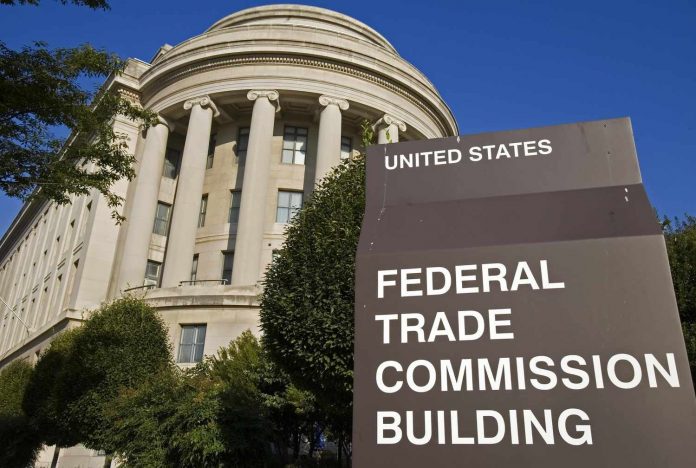
The Federal Trade Commission (FTC) said on Monday that it, alongside attorneys general from 21 states and the District of Columbia, has filed an amended complaint against Uber in the U.S. District Court for the Northern District of California. The revised filing expands on allegations first brought in April, claiming Uber charged consumers for subscriptions without their consent, failed to deliver promised benefits, and erected significant hurdles for users trying to cancel.

News of the expanded lawsuit weighed on investor sentiment, with Uber shares falling more than 3% following the announcement.

At the center of the case is Uber One, the company’s paid monthly or annual subscription offering. Uber markets the service as providing $0 delivery fees on eligible orders and up to $25 in monthly savings across its ride-hailing and food delivery platforms. Regulators, however, said many consumers reported being charged delivery fees despite the promise of free delivery and failing to receive the advertised savings.

The amended complaint alleges that Uber enrolled some users in Uber One without their knowledge, including customers who signed up for free trials. According to the filing, some users were charged automatically before their trial periods expired, a practice the FTC says violates the Restore Online Shoppers’ Confidence Act as well as a range of state consumer protection laws.

The lawsuit also takes aim at Uber’s cancellation process, describing it as intentionally burdensome. Regulators allege that users attempting to cancel their subscriptions were forced to navigate as many as 23 screens and complete up to 32 separate actions before successfully exiting the service. Such friction, the FTC argues, discouraged cancellations and kept consumers paying for subscriptions they no longer wanted.

Uber has strongly disputed the allegations. In an emailed statement, the company said it does not sign up or charge consumers without their consent and rejected the characterization of its cancellation process. Uber said the majority of cancellations take 20 seconds or less and can be completed directly in the app at any time. The company acknowledged that prior to December 2024, customers who were within 48 hours of their next billing cycle were required to contact customer support to cancel, adding that this condition was disclosed during the sign-up process.

The expanded lawsuit seeks civil penalties, signaling that regulators are pursuing not just behavioral changes but also financial consequences if the court finds violations. The participation of a broad coalition of states — including California, New York, Texas, and Illinois — underscores the growing bipartisan focus on so-called “dark patterns” in digital subscriptions, where companies are accused of making it easy to sign up but hard to opt out.

The case also places Uber alongside a growing list of major tech and consumer platforms facing enforcement actions over subscription practices. Regulators in the U.S. and Europe have increasingly targeted auto-renewals, free-trial conversions, and complex cancellation flows, arguing they erode consumer trust in the digital economy.

The lawsuit comes at a sensitive moment for Uber, which has been pushing to deepen customer loyalty and recurring revenue through Uber One as competition intensifies in food delivery and ride-hailing. Subscriptions offer a steadier income stream and encourage more frequent use, but the FTC’s action highlights the regulatory risks attached to aggressive growth tactics.

The legal battle is still at an early stage, and Uber is expected to mount a robust defense. But the amended complaint raises the stakes, both financially and reputationally, and adds to the broader pressure on large platforms to simplify subscription terms and put clearer limits on how consumers are billed and retained.