President Donald Trump is expected to unveil an expanded electricity affordability initiative on Thursday aimed at preventing American households from bearing the cost of the country’s rapidly growing artificial intelligence industry.
The move comes as his administration accelerates efforts to cement U.S. leadership in AI while addressing mounting concerns over the sector’s impact on the nation’s power grid.
The updated Ratepayer Protection Pledge broadens an initiative first introduced in March, committing utilities, governors, lawmakers and data center developers to ensure that companies building and operating AI data centers pay electricity rates above standard tariffs so that infrastructure and energy costs are not shifted onto residential consumers.
According to a White House official, Trump will announce the expanded pledge alongside Energy Secretary Chris Wright, Environmental Protection Agency Administrator Lee Zeldin and several governors who endorsed the original agreement. The White House said the voluntary, nonbinding pledge will now apply to electricity systems serving approximately 80% of the power delivered to U.S. homes and businesses, substantially expanding its geographic reach.
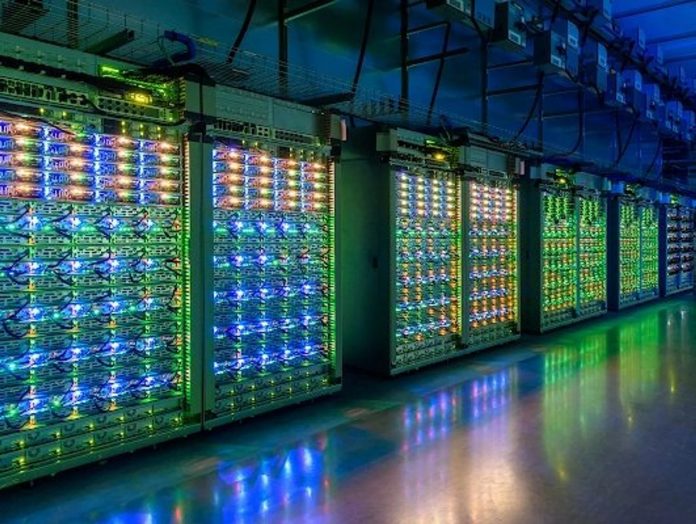
The initiative comes as the explosive growth of artificial intelligence places unprecedented pressure on America’s electricity infrastructure. Technology companies including Microsoft, Amazon, Google, Meta and OpenAI-backed infrastructure projects are investing hundreds of billions of dollars in new AI data centers, facilities that consume enormous amounts of electricity to power advanced semiconductors and cooling systems.
Industry analysts estimate that AI-related electricity demand could become one of the fastest-growing sources of power consumption in the United States over the next decade, forcing utilities to accelerate investments in generation, transmission and grid modernization. The rapid expansion has raised concerns among consumer advocates, regulators and policymakers that households could ultimately shoulder part of the financial burden if utilities recover the costs of new infrastructure through higher electricity rates.
Trump’s expanded pledge seeks to address those concerns by reinforcing the principle that hyperscale data center operators should bear the incremental costs associated with their exceptionally large electricity demand rather than spreading those expenses across ordinary residential customers.
The challenge is acute because America’s electricity network was not designed to accommodate the unprecedented concentration of demand created by modern AI facilities.
Large AI data centers can consume as much electricity as medium-sized cities, requiring new substations, transmission lines and generating capacity. In many regions, utilities are struggling to connect these facilities quickly as electricity demand begins to grow after years of relatively flat consumption.
Those pressures are becoming increasingly visible across regional electricity markets.
The PJM Interconnection, the nation’s largest regional transmission organization, which supplies electricity to about 67 million people across 13 states and the District of Columbia, has become one of the clearest examples of the mounting strain on the grid. Transmission congestion costs in PJM surged 81% to $3.2 billion in 2025, highlighting growing bottlenecks as existing infrastructure struggles to accommodate rising electricity demand.
The challenges intensified last week when PJM’s latest annual capacity auction produced record-high clearing prices, reflecting tightening electricity supplies and growing concerns about whether sufficient generation capacity will be available to meet future demand.
The Federal Energy Regulatory Commission (FERC) is scheduled to meet Thursday to discuss PJM’s increasingly fragile supply-demand balance, an issue that has become central to the national debate over AI-driven electricity consumption.
Energy policy analysts argue that the existing structure of the U.S. electricity market may be ill-equipped to accommodate the needs of both traditional consumers and hyperscale computing facilities.
“Today’s electricity system forces almost everyone, from homeowners to hyperscale data centers, to depend on the same network,” Travis Fisher, director of energy and environmental policy studies at the Cato Institute, recently wrote.
“That one-size-fits-all model increasingly does not serve either group well. Large customers may wait a decade or longer for service, while ordinary ratepayers worry that expanding the grid for massive new industrial loads will ultimately increase their own bills.”
Those concerns have fueled calls for new regulatory approaches, including dedicated transmission infrastructure, direct power purchase agreements and behind-the-meter generation that would allow large data centers to secure electricity supplies without placing additional pressure on shared distribution systems.
The data center industry, however, argues that it is being unfairly blamed for electricity price increases that stem from broader structural challenges.
Industry groups contend that AI investment is catalyzing long-overdue upgrades to America’s aging electricity infrastructure while pointing to several other factors driving higher power costs, including the retirement of conventional power plants, delays in building new transmission lines, rising construction costs and increasing demand from electrification across multiple sectors of the economy.
Supporters also believe that the billions of dollars flowing into data center construction are stimulating local economies through investment, employment and tax revenues while strengthening America’s competitive position in artificial intelligence.
The enormous energy requirements of AI are creating new challenges for electricity markets, utilities and regulators. The Trump administration now has to ensure that affordable electricity remains available for households while enabling rapid expansion of AI infrastructure, making it a key component of its industrial and technology strategy.
Although the expanded Ratepayer Protection Pledge is voluntary and does not create legally enforceable obligations, the White House hopes it will establish an industry standard that encourages utilities and data center developers to structure electricity contracts in ways that insulate residential customers from AI-related infrastructure costs.