DD
MM
YYYY

PAGES

DD
MM
YYYY

spot_img

PAGES

Home Blog Page 3

OpenSea Treasure Chests Wave 6 Unlocks, Ends on 22nd of April

0

OpenSea Treasure Chests is part of the platform’s gamified Rewards program, where users level up chests through on-platform activity like trading NFTs, completing swaps, making accepted offers, and finishing Voyages/quests.

At the end of each wave (rewards period), chests unlock to reveal Treasures (progress-based rewards) plus possible crypto tokens or NFTs from a community Rewards Pool. Higher-level chests with better progress offer improved chances at bigger prizes.

Wave 6 Treasure Chests became unlockable on or after April 2, 2026. All participating users from the prior wave get a Treasure; those with significant progress may also receive additional crypto and NFT prizes. There are 14 tiers of Treasure in Wave 6, based on your progress.

You must open your Wave 6 chest within 20 days by April 22, 2026 at 1:30pm ET. Previous waves’ chests can no longer be opened. Go to your Rewards profile on OpenSea usually at opensea.io/rewards or accessible via the Rewards tab after connecting your wallet. You’ll need enough of the chain’s native gas token in your wallet to cover claim transaction fees. Activity from linked wallets (across supported chains) contributes to progress.

12 main levels, each with 3 tiers/stars for finer progress. Complete Voyages; on-chain quests of varying rarity: Common to Legendary, trade NFTs, use swaps, etc. Actions earn XP that fills your chest. Every chest at wave end contains a Treasure; higher chests = better loot odds and bigger shares from the Rewards Pool.

The program ran in multiple waves, often tied to building engagement ahead of OpenSea’s SEA token considerations though timelines shifted. Past waves followed similar unlock patterns shortly after each period ended. For the most accurate steps or to check your specific chest, log into OpenSea with the wallet you used for activity and visit the Rewards section directly.

Wave 6 which ran roughly February 18 to March 30, 2026 was explicitly the last rewards wave. No additional waves are planned. This means Wave 6 represents your final chance to accumulate progress-based Treasures through on-platform activity. Treasures you’ve already earned from prior waves especially 3–6 remain in your account unless you take certain actions.

Every participant who had activity in Wave 6 receives at least one Treasure; there are 14 tiers based on your progress level. Higher-tier Treasures from better chest levels improve your odds and size of additional crypto or NFT prizes drawn from the Rewards Pool. Treasures themselves are not direct $SEA tokens, but they are meaningfully considered by the OpenSea Foundation when determining any future $SEA token distribution.

This is the biggest current decision point for most users: Starting April 2, 2026, OpenSea offers an optional refund of platform fees you paid during Waves 3–6; only the portion OpenSea retained, not fees spent on rewards or certain beta activities. If you claim the refund: You forfeit all Treasures earned in Waves 3–6.

Those Treasures are removed from your account and will no longer receive consideration for $SEA at TGE. If you skip the refund: You keep your Treasures, which remain eligible for future $SEA consideration. You do not get the fee money back. The refund is an all-or-nothing choice for Waves 3–6 — you can’t pick and choose individual waves.

Waves 1 and 2 are not eligible for this refund. Many users with low or zero fees paid are skipping the refund to preserve their Treasures for potential $SEA value. The $SEA TGE has been delayed multiple times due to market conditions, with no new confirmed date. Treasures from the rewards program including Wave 6 serve as one signal for potential airdrop eligibility and sizing.

Historical on-chain activity on OpenSea may also be factored in separately by the Foundation. Opening your chest and keeping Treasures keeps you in the running for any eventual distribution. Taking the refund removes you from that consideration for the affected waves. There is no guarantee of a large or any $SEA airdrop — it depends on the Foundation’s final decisions.

0% platform fees on token trading is currently live for a 60-day window which is separate from the refund. Claiming rewards requires gas fees on the relevant chain(s). If your chest is low-tier, the immediate prizes may be modest, but the Treasure itself still carries potential long-term signaling value for $SEA.

Community sentiment is mixed: some users are frustrated with the refund structure, while others prioritize keeping Treasures for the unknown upside of $SEA. Check your specific Treasure tier, any immediate prizes, and the refund amount offered. If your refund is very small or zero, most participants are choosing to keep the Treasures.

Riot Platforms Sold 3,778 BTC Approximately $289.5M in Q1 2026

0

Riot Platforms (NASDAQ: RIOT), a major Bitcoin mining company, announced in its Q1 2026 production and operations update that it sold 3,778 BTC for net proceeds of approximately $289.5 million.

Bitcoin produced in Q1 2026: 1,473 BTC down 4% from 1,530 BTC in Q1 2025. Bitcoin sold: 3,778 BTC no sales reported in Q1 2025 for comparison. Average net sale price: $76,626 per BTC. Bitcoin holdings at quarter-end: 15,680 BTC down 18% from 19,223 BTC a year earlier; this includes 5,802 restricted BTC.

The sales exceeded production by roughly 2.6x, meaning Riot drew from its treasury. Other operational highlights:Deployed hash rate grew 26% to 42.5 EH/s. All-in power cost improved to 3.0¢/kWh, with $21M in power credits. This is not Riot’s full earnings release which typically comes later and includes broader financials like revenue and net income.

It’s an operational update focused on mining metrics. Miners like Riot often sell Bitcoin to generate cash for operations, debt service, equipment purchases expanding hash rate or shifting toward AI/data centers, or other capital needs—especially when Bitcoin prices allow profitable realization.

The sale has drawn attention because:It adds short-term selling pressure in the broader Bitcoin market; miners as a group can influence flows when liquidating treasury holdings. It contrasts with periods when miners held more aggressively or accumulated. Bitcoin miners’ treasury management varies—some treat BTC as a core asset and minimize sales, while others are more active sellers to fund growth.

Riot’s move aligns with the latter amid hash rate expansion and cost management. Stock reaction and full Q1 financials will provide more color on how the proceeds were or will be used. The sale roughly 2.6× Q1 production of 1,473 BTC added notable supply to the market at an average net price of $76,626 per BTC.

This contributed to broader miner and corporate selling flows amid weaker apparent BTC demand; some on-chain data showed negative demand in recent periods. Miner liquidations, including from peers, have coincided with hashrate fluctuations, energy cost pressures, and post-halving dynamics, adding to downward or sideways price pressure in the near term.

However, daily BTC trading volume dwarfs any single miner’s sales, so the isolated impact is limited unless it signals a wider capitulation trend. Holdings declined 18% YoY to 15,680 BTC including ~5,802 restricted, showing active monetization rather than accumulation. Sales generated substantial cash ($289.5M) to cover operations, especially since mining revenue alone estimated around $132M in some analyses wouldn’t fully fund aggressive growth.

Lower all-in power costs; down 21% to 3.0¢/kWh and $21M in power credits improved efficiency. Deployed hash rate rose 26% to 42.5 EH/s, signaling continued scaling of mining infrastructure. Many reports frame the sales as funding Riot’s Power First strategy — shifting from pure Bitcoin mining toward high-performance computing (HPC), AI data centers, and large-scale infrastructure at sites like Corsicana, Texas.

This reflects a broader industry trend: miners leverage cheap and curtailed power and existing facilities for non-mining revenue streams as Bitcoin mining margins tighten post-halving and amid energy volatility. Bullish long-term if successful; diversifies away from pure BTC correlation, but it risks diluting the “Bitcoin treasury” narrative that attracts some investors.

RIOT stock dropped following the update and related news; ~5% on a smaller subsequent ~500 BTC sale reported via on-chain data, with some analyst downgrades or price target cuts citing softer mining economics and higher expenses. Sentiment in parts of the crypto community views this as potential miner capitulation — historically a precursor to cycle lows, though context matters; Riot is expanding hash rate, not shutting down.

OpenAI Acquires Technology Business Programming Network (TBPN)

0

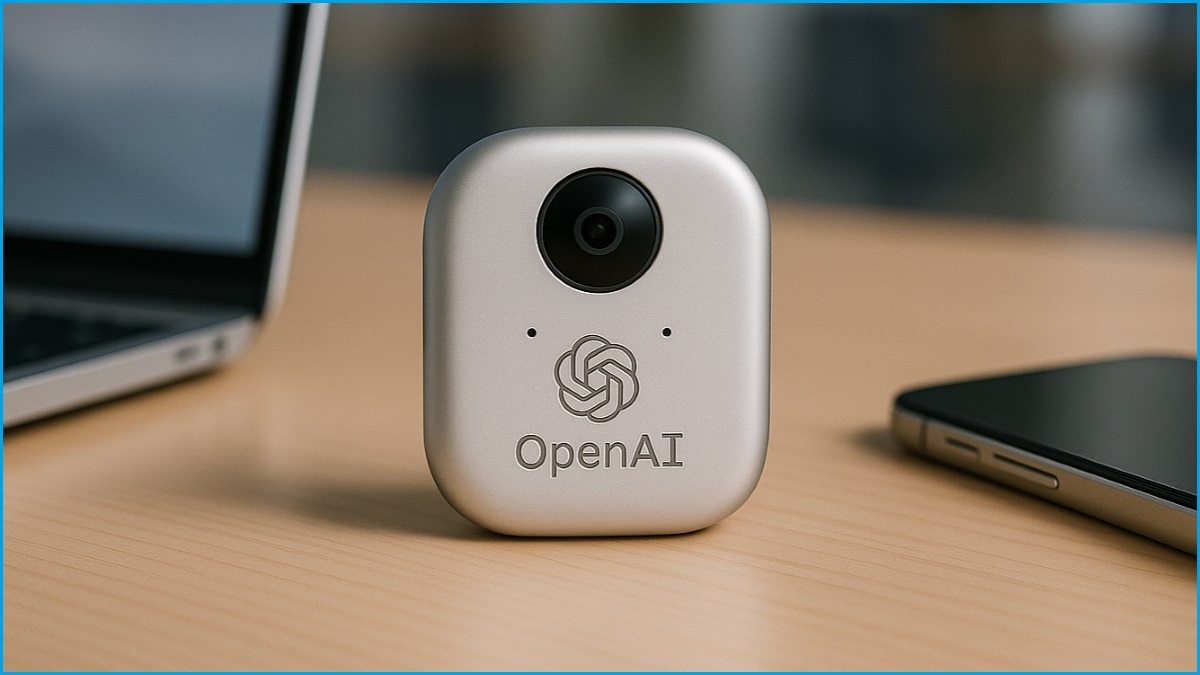
OpenAI has acquired TBPN (Technology Business Programming Network), a popular daily live tech talk show and podcast often referred to as TPBN.

TBPN is a fast-growing, founder-led live video and audio show hosted by John Coogan and Jordi Hays. It airs weekdays from 11 AM–2 PM PT on platforms like YouTube, X (formerly Twitter), and streams as a podcast afterward on Spotify and Apple Podcasts.

The show covers technology news, business, AI, and interviews with major figures like Mark Zuckerberg, Sam Altman, Mark Cuban, Satya Nadella. It’s known for its irreverent, high-energy style and has been called Silicon Valley’s newest obsession by The New York Times. Launched in late 2024, it has built a cult following with around 70,000 viewers per episode and is on track for over $30 million in revenue this year.

Financial terms: Undisclosed, but reports suggest the purchase price is in the low hundreds of millions—potentially one of the largest deals for a podcast and show in the medium’s history. TBPN will maintain editorial independence and continue its regular programming with a lot more resources.

The hosts and team are joining OpenAI. The show will report to OpenAI’s chief political operative, Chris Lehane, and assist with communications and marketing efforts. The company wants to accelerate global conversations around AI, support independent media, and create spaces for constructive dialogue with builders. OpenAI’s head of applications, Fidji Simo, highlighted that standard PR approaches don’t fit the company’s needs.

This marks OpenAI’s first acquisition of a media company and signals a push into owning distribution channels for tech/AI conversations, amid competition with rivals like Anthropic and ongoing scrutiny of the AI giant’s image and influence. Some coverage frames it as OpenAI buying positive news coverage or expanding its influence machine, especially as it navigates public perception challenges.

Others see it as a smart move for direct engagement with the tech community. Sam Altman himself praised the show, saying he doesn’t expect it to go easier on OpenAI. The hosts have emphasized that the world is changing quickly but TBPN will stay the same—just with more backing. OpenAI’s acquisition of TBPN represents a notable evolution in how leading AI companies approach communications, moving beyond traditional PR, press releases, and social media toward owning distribution channels and narrative spaces.

Fidji Simo and the company explicitly framed the deal as a response to the limitations of conventional comms strategies. They argue that OpenAI isn’t a typical company—it’s driving a massive technological shift toward AGI, which carries a responsibility to foster constructive conversation centered on builders, users, and real-world impacts rather than just hype or defensiveness.

Instead of recreating such a platform internally, OpenAI opted to acquire and scale an existing one with proven audience engagement and editorial instincts. The hosts and team will also contribute their comms and marketing instincts more broadly, while the show reports into OpenAI’s strategy organization specifically under chief political operative Chris Lehane.

Sam Altman echoed support, noting he doesn’t expect the show to go easier on OpenAI. AI leaders increasingly treat media and audience engagement as strategic assets, similar to how they invest in compute or models. Owning a recurring, high-engagement format gives OpenAI a daily touchpoint with Silicon Valley influencers, founders, VCs, and tech executives—bypassing gatekeepers in traditional media.

This could help shape discussions around AI adoption, policy, ethics, and competition in a more controlled yet authentic way.  Standard playbooks often feel mismatched for fast-moving, high-stakes AI. TBPN offers a live, irreverent, builder-focused space that can normalize AI conversations, highlight positive use cases, and address concerns in real time.

It signals a broader trend: AI companies investing in owned media to build direct relationships with key audiences rather than relying solely on earned coverage. Critics and analysts note risks here. Even with promises of editorial independence, guests especially from competitors like Anthropic, Google, or Meta may hesitate to appear on a show now tied to OpenAI, potentially limiting access and making it feel more like an in-house platform over time.

Perception of bias could erode the show’s cult following if bookings soften or criticism appears muted. Some coverage frames this as OpenAI buying positive news coverage amid ongoing public scrutiny over AI’s societal impacts, labor concerns, energy use, and competitive tactics. This move could encourage other AI players to explore similar investments in media, podcasts, or content networks.

In an era of fragmented attention and declining trust in legacy media, owning distribution helps control messaging velocity and tone. It also aligns with OpenAI’s pattern of expanding beyond core model development into user interfaces, enterprise tools, and now narrative infrastructure. With OpenAI’s resources, TBPN could grow significantly—more episodes, better production, global reach, or integration with AI tools.

This might accelerate AI literacy for broader audiences while giving OpenAI subtle advantages in talent attraction, partnerships, and policy influence. It democratizes high-quality tech discourse, funds independent-style journalism, and creates space for nuanced debate on AGI’s opportunities and risks, with builders at the center. It risks concentrating influence, where a dominant AI lab shapes elite conversations in its favor, potentially crowding out truly independent voices and complicating competitive dynamics.

Media ownership by tech giants isn’t new, think past examples from Google, Meta, or Amazon, but applying it to fast-evolving AI adds unique stakes around transparency and power. This acquisition highlights how communications in AI is becoming as strategically important as technical breakthroughs. It’s less about spin and more about infrastructure for ongoing dialogue in a polarized, high-velocity space.


BlockDAG at $0.000022 Direct Access Still Open, While Avalanche & Solana Face Stagnation

0

The first quarter of the year is proving difficult for digital assets. Currently, AVAX is lingering near $9, which is significantly lower than its 200-day moving average of about $18. Similarly, SOL has dropped roughly 40% from its peak in January 2025, now trading in the low $80s with minimal technical momentum. While both ecosystems offer genuine utility, current valuations suggest a market focused on liquidating positions rather than analyzing long-term potential.

This disconnect between value and price creates a unique opening. BlockDAG (BDAG) is transforming that gap into a major opportunity. With BDAG valued over $0.35 on CoinMarketCap and a forecasted $10 billion market cap, the official launch on April 8 is approaching quickly. This leaves a very narrow window to secure the direct-purchase rate of $0.000022, offering an 85x instant ROI for those acting now. 

Avalanche Price Under Pressure from Constant Market Sell-Offs

Recent Avalanche price data shows the token dropping 7.02% to the $9 mark. It is currently trading under its 20-day MA ($9.53) but remains slightly above the 50-day MA ($9.26). However, the distance from the 200-day MA ($16.04) confirms heavy long-term bearish sentiment. The Avalanche price is hitting resistance at the $9.49 Ichimoku Kijun, suggesting a volatile trading corridor between $8.10 and $9.90.

To counter this, the Avalanche Foundation has committed 4 million AVAX to the Multiverse initiative to stimulate DeFi, gaming, and NFT subnets. Despite institutional progress, including a Nasdaq-listed firm and a pending spot ETF, the selling trend persists. Technical indicators are leaning bearish in the short term, implying that the Avalanche price may struggle to find a floor without a significant breakthrough of resistance.

Solana Hits Major Support Levels Amid Growing Uncertainty

Latest Solana news today indicates SOL slipped 5.13% to $86.12, falling past the $90 threshold as volume spiked 18% above average. This dip followed wider market anxiety after failed geopolitical negotiations sent oil prices above $93, raising inflation concerns for Bitcoin and other risky assets. Despite the price drop, Solana news today confirms the network still leads in activity, handling over 825 million transactions weekly, a 44% global share, even as revenue figures soften.

On the charts, SOL is testing the $85–$87 support range after failing to stay above $93. Experts suggest that maintaining this level could spark a recovery, though a further drop might send the token toward deeper price clusters. Solana news today highlights that global economic factors and buyer resilience will be the primary drivers of its immediate price direction.

BlockDAG Provides $0.000022 Entry Opportunity Until April 8

Occasionally, a project captures the market’s imagination, and BlockDAG is currently that project. The argument for it being one of the top cryptos to buy before its April 8 debut gets more compelling daily. The statistics are hard to ignore: BDAG is maintaining a price above $0.35 on CoinMarketCap, surpassing the initial $0.3 to $0.4 targets set by analysts.

Forecasters are now eyeing a $1 price target, supported by a $10 billion market cap goal that would place BlockDAG among the top 30 global coins. This optimism stems from a robust market structure just nine days before live trading begins. The price disparity makes it the top crypto to buy; while it trades higher on trackers, direct entry is still $0.000022, providing an 85x instant ROI. This special pricing expires when the exchange doors open on April 8.

Beyond the numbers, BlockDAG boasts high developer engagement and confirmed listings on P2B and BitMart. With rising wallet deposits and massive global demand, it stands out among the top cryptos to buy for those seeking established infrastructure and high growth potential.

Final Thoughts

Currently, AVAX and SOL are grappling with a tough reality: strong networks being dragged down by macroeconomic weight. BlockDAG, however, is operating on a different trajectory. While it holds above $0.35 on CoinMarketCap, the $0.000022 direct price (offering 85x instant ROI) remains available until April 8.

For investors hunting for the top crypto to buy, the timing for BlockDAG appears perfectly aligned for the upcoming launch.

After Sale: https://purchase.blockdag.network

Website: https://blockdag.network

Telegram: https://t.me/blockDAGnetworkOfficial

Discord: https://discord.gg/Q7BxghMVyu

4 Top Crypto Coins That Could Deliver Massive Returns in 2026: BlockDAG, Litecoin, Bonk Coin, & Solana!

0

With thousands of different options available in the crypto market, it can be hard to figure out which ones actually have a bright future. Some projects focus on being a digital version of gold, while others are built for lightning-fast payments or fun community rewards.

To help you navigate this crowded market, this article highlights the most promising projects currently making waves. This guide breaks down everything you need to know about Litecoin, Bonk Coin, Solana, and BlockDAG. Each of these assets brings something unique to the table, ranging from long-term stability to brand-new technology. For those searching for the best places to put their money, these are the top crypto coins.

1.  BlockDAG: Hits $0.40 on CoinMarketCap and $1 in Sight

BlockDAG is quickly becoming the talk of the crypto world as expert analysts now predict the price will hit $1 soon. This prediction isn’t just a guess; it’s based on some really big wins the project has already had. For instance, the price recently jumped to $0.40 on CoinMarketCap, which is exactly what market experts said would happen! Because the project has hit every goal so far, people are starting to believe that the $1 milestone is the next logical step.

Another reason for all the hype is that BlockDAG (BDAG) has reached over $10 billion market cap. This huge amount of money proves that big traders really trust this network. It’s also getting listed on major exchanges like BitMart, Coinstore, and BTCC, making it easy for people all over the globe to join in.

Despite this explosive growth on public exchanges, a final strategic window remains open for the community to secure BDAG coins at the exclusive presale price of $0.000022. This massive gap between the live $0.4 market valuation and the $0.000022 entry point offers a unique advantage before live trading officially starts on April 8. With the $1 goal getting closer every day, this is the final chance to be part of what is quickly becoming the top crypto coin of the year!

2.  Litecoin (LTC): Proven Speed and Low Fees

Litecoin remains a pillar of the digital asset world, often referred to as the silver to Bitcoin’s gold. Designed for speed and efficiency, its network generates blocks every 2.5 minutes, ensuring lower fees and faster confirmations for users worldwide. In 2026, LTC continues to thrive as a preferred medium for daily transactions and a testing ground for innovations like the Lightning Network. Its fixed supply of 84 million coins provides a deflationary appeal that attracts conservative investors looking for long-term stability.

While it lacks the explosive volatility of newer tokens, its longevity and deep liquidity make it a reliable choice for those diversifying their portfolios with top crypto coins. It remains a battle-tested asset for practical, real-world use.

3.  Bonk Coin (BONK): High-Beta Growth for Retail Traders

As the premier community-driven meme coin on the Solana blockchain, Bonk has evolved far beyond its viral origins. By 2026, it has become a central liquidity hub within its ecosystem, integrated into numerous DeFi protocols and NFT marketplaces. Its appeal is bolstered by real utility, driving engagement through various decentralized applications and community rewards.

While inherently volatile, BONK benefits from the massive retail interest surrounding high-speed networks. Investors are drawn to its high-beta nature, which allows for significant price swings during bullish market cycles. Because of its established presence on major exchanges and strong community backing, many traders view it as a standout performer among the top crypto coins for high-growth potential.

4.  Solana (SOL): Scalable Infrastructure for Global DeFi

Solana continues to dominate as the high-performance blockchain of choice for developers requiring immense scalability. With the full implementation of Firedancer on the mainnet in 2026, the network has achieved unprecedented speeds and client diversity. It serves as the primary home for decentralized physical infrastructure (DePIN), gaming, and real-world asset tokenization.

Its low transaction costs and high throughput make it a formidable competitor to older, slower networks. Institutional interest in SOL has reached new heights, evidenced by record-breaking Total Value Locked (TVL) and frequent technical upgrades. Solana is an essential asset for any modern portfolio, offering a robust foundation for the future of decentralized finance and maintaining its status among the top crypto coins.

Wrapping Up 2026’s Top Crypto Coins!

Choosing the right digital asset requires a careful balance of stability, utility, and growth potential. While Litecoin offers a proven track record, Bonk Coin provides community-driven excitement, and Solana delivers world-class infrastructure, none currently match the explosive trajectory of BlockDAG.

With its recent jump to $0.40 on CoinMarketCap and a market cap exceeding $10 billion, the project is well on its way to the predicted $1 milestone. This is the final window for the community to secure coins at the $0.000022 presale price before the April 8 live trading launch. For those prioritizing growth, security, and technological superiority, BlockDAG stands as the top crypto coin to buy right now.