DD
MM
YYYY

PAGES

DD
MM
YYYY

spot_img

PAGES

Home Blog Page 3

Iran War Drives Eurozone Inflation Fears

0

The conflict involving Iran has become one of the most significant economic risks facing Europe in 2026, reigniting concerns that the eurozone could experience another period of elevated inflation just as policymakers believed price pressures were finally coming under control.

While the war’s direct effects are concentrated in the Middle East, its economic consequences are being felt across Europe through higher energy costs, disrupted supply chains, and growing uncertainty among businesses and consumers. At the center of these concerns is energy.

Europe remains heavily dependent on imported oil and liquefied natural gas, much of which travels through the strategically important Strait of Hormuz. Any threat to this shipping route immediately raises fears of supply shortages and sends commodity prices higher. Recent reports show oil prices approaching $100 per barrel as geopolitical tensions intensified, while natural gas prices have also surged amid concerns about future deliveries.

The impact on inflation is already becoming visible. Inflation across the eurozone has remained above the target level set by the European Central Bank, with rising fuel and transportation costs beginning to filter through the broader economy.

Economists warn that energy-driven price increases rarely remain confined to gasoline and electricity bills. Instead, they gradually affect manufacturing, logistics, food production, and consumer goods, creating widespread inflationary pressure.  The challenge for Europe is that inflation is returning at a time when economic growth remains fragile. Several indicators suggest that business activity across the eurozone has slowed as firms face rising input costs and weaker demand.

Manufacturing surveys show companies struggling with higher commodity prices and longer delivery times, while business confidence has deteriorated amid uncertainty surrounding the conflict. This combination of slowing growth and rising prices has revived fears of stagflation—a particularly difficult economic environment for policymakers. Officials at the ECB have openly acknowledged these risks.

ECB President Christine Lagarde has warned that the Iran conflict could have a material impact on inflation, particularly if disruptions to oil and gas supplies persist. Under more severe scenarios, ECB projections suggest inflation could climb substantially above current forecasts, forcing the central bank to consider tighter monetary policy even as growth weakens.  European consumers are also beginning to feel the effects.

Higher fuel prices reduce household purchasing power, leaving families with less disposable income for other goods and services. Businesses face a similar challenge as rising energy bills squeeze profit margins and force difficult decisions regarding investment, hiring, and production. Surveys across the region indicate declining consumer confidence as households prepare for the possibility of sustained price increases.

Looking ahead, the duration of the conflict will likely determine the severity of the inflation threat. If energy markets stabilize and supply routes remain open, Europe may avoid the worst-case scenario.

However, a prolonged disruption could push inflation higher, weaken economic growth, and force the ECB into difficult policy choices. For a region still recovering from previous energy shocks and inflationary episodes, the Iran war has become a stark reminder of how geopolitical conflicts can rapidly reshape economic realities far beyond the battlefield.

Tether Brings Google TurboQuant to Everyday Devices, Giving Local AI Data Center-Sized Memory

0

Tether’s AI Research Group announced the production release of its open source implementation of TurboQuant, the Google Research memory compression algorithm that drew comparisons to “Pied Piper” from Silicon Valley for its ability to dramatically reduce the memory large AI models need to run. With TurboQuant, Google made a breakthrough in research.

Tether is bringing it to life in production with its open-source local/edge AI engine QVAC Fabric, started as a llama.cpp, now Fabric incorporates several breakthroughs that push the boundaries of local on-device intelligence. The release turns TurboQuant from a paper into open source software that developers can use, test, and adapt across laptops, consumer GPUs, mobile chips, edge devices, and decentralized inference networks.

It includes a full quantization pipeline, adapters for common inference frameworks, developer documentation, and workload-tuned profiles designed for real deployment outside hyperscale data centers.

The change matters because memory is one of the biggest reasons useful AI tasks still get pushed to the cloud. When someone uses an AI assistant, the model not only needs memory to load but it also needs working memory to remember the conversation, document, codebase, or instructions it has already seen. That working memory is called the KV cache, and it grows as the session gets longer. A short prompt may be easy to handle.

A full contract, financial filing, research report, book, code repository, or several hours of conversation can push memory requirements beyond what most laptops, phones, and consumer GPUs can support. At roughly 262,000 tokens, the scale of several hours of conversation or a few hundred pages of text, the KV cache for a 4B model can use about 8 GB of memory on its own. Four sessions at that size can push the cache alone to around 32 GB before accounting for the memory needed to load the model itself.

That is why many AI experiences still rely on remote data centers, even when users would prefer to keep their work local. TurboQuant changes that equation by compressing the KV cache up to 5x while maintaining output quality close to an uncompressed model. In practical terms, this means local AI can handle longer conversations, larger files, more context, and heavier workloads on the hardware people already own.

For users, this can mean asking an AI assistant on a laptop to read and analyze a hundred-page legal document without uploading the full file to a cloud provider.

It can mean a student using an on-device tutor that retains an entire study session rather than losing context after a few messages. It can mean a developer running a local coding assistant that understands more of a codebase at once. It can mean a journalist, doctor, researcher, or small business owner using AI on sensitive files while keeping more of that work on the device.

For developers and startups, it means larger AI products can be built without assuming access to expensive GPU clusters. Instead of designing around short context windows, strict memory limits, or cloud-only deployment, teams can use TurboQuant to support longer sessions, larger workloads, and more flexible deployment across consumer hardware, edge devices, and peer-to-peer networks.

Google’s research showed that AI memory could be compressed far more efficiently than most people assumed. Our work brings that breakthrough into production software that developers, startups, and users can actually build with, said Paolo Ardoino, CEO of Tether. “If long context AI only works inside the largest data centers, then AI will be shaped by whoever owns the most hardware. TurboQuant changes what local AI can do by making memory less of a wall.”

People should be able to ask an AI assistant to read a long document, remember a project, help with code, or work through private information without every task being forced through a remote data center, he added. This is what bringing TurboQuant to production makes possible. It gives local AI more memory, more context, and more room to become useful in everyday life.

Tether’s implementation is designed for environments where production AI often runs into limits: constrained device memory, mixed hardware, long sessions, latency pressure, and deployment outside centralized cloud infrastructure.

Rather than requiring teams to rebuild the research themselves, the open-source release provides the AI developer community with a shared foundation for testing, improving, and adapting TurboQuant across different systems. TurboQuant will be included in QVAC SDK 0.12.0, making it available directly through Fabric, one of the core building blocks in that stack. QVAC SDK is the recommended integration path for developers building within Tether’s AI ecosystem.

At the same time, the SDK brings together the full set of QVAC tools, libraries, and runtime components needed to build local AI applications across devices and environments. The release also advances Tether’s broader AI strategy. The company is building toward AI that can operate closer to users, across personal devices, local networks, and decentralized infrastructure, rather than relying solely on centralized APIs and hyperscale data centers.

Large compute will remain important, but Tether believes the next phase of AI will also be defined by software efficiency, portability, and the ability to run capable models where people actually use them.

“It Is Not Worth $1tn Let Alone $2tn:” Michael Burry Takes Aim at AI and SpaceX IPO, Warns They Run Far Ahead of Reality

0

Investor Michael Burry, whose prescient bet against the U.S. housing bubble earned him fame during the 2008 financial crisis, has emerged as one of the most prominent skeptics of the latest wave of technology exuberance, casting doubt on whether two of the world’s most celebrated private companies, SpaceX and Anthropic, deserve valuations approaching or exceeding $1 trillion.

In comments posted on his Substack discussion forums over the weekend, Burry questioned the fundamentals underpinning both companies, arguing that investors are increasingly being driven by hype, momentum, and artificial intelligence enthusiasm rather than traditional valuation metrics.

His remarks come at a pivotal moment for global markets, with AI-related stocks, infrastructure providers, and private technology companies commanding some of the richest valuations seen since the dot-com era. The debate is particularly relevant as both SpaceX and Anthropic are widely expected to pursue public listings in the coming months, potentially creating some of the largest technology IPOs in history.

For SpaceX, Burry’s skepticism centers on the growing gap between financial performance and investor expectations.

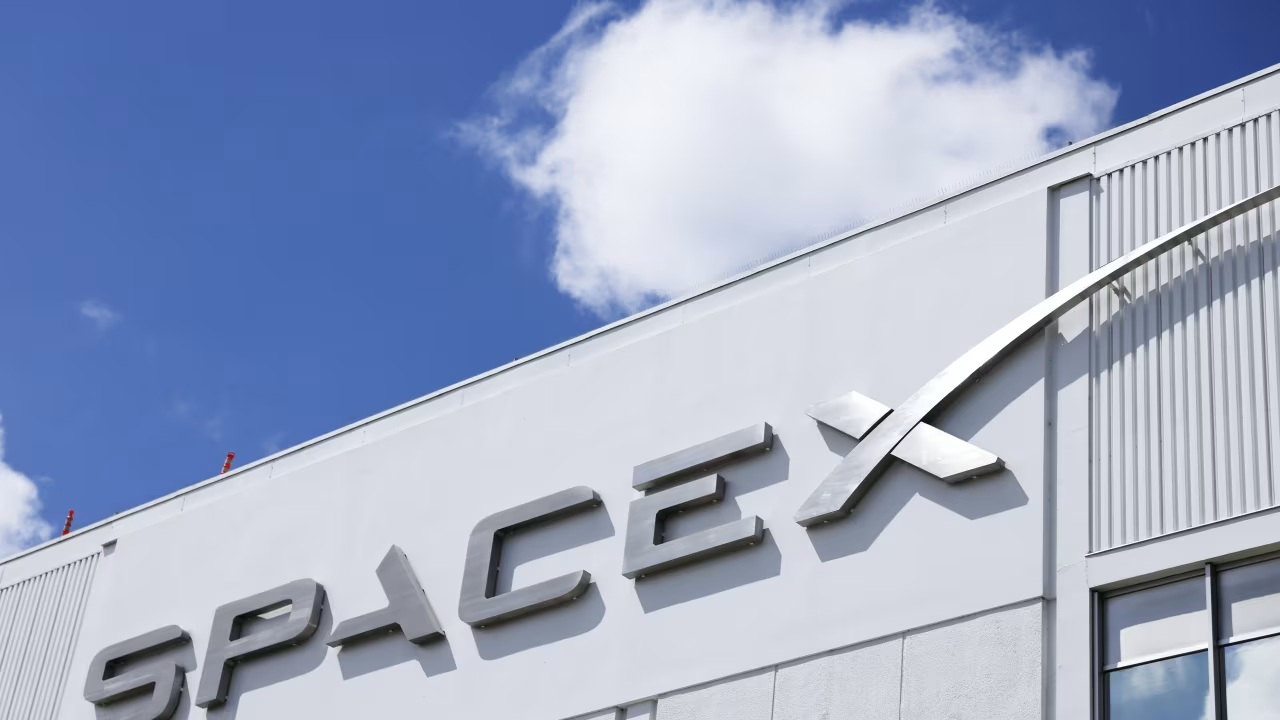
The Elon Musk-led company recently disclosed in its IPO filing that it generated $18.7 billion in revenue last year while posting a net loss of $4.9 billion. Despite those losses, the company is reportedly targeting a valuation of roughly $2 trillion, a figure that would instantly place it among the most valuable corporations in the world.

Burry was unconvinced.

“Any move up will be on hype and technicals,” he wrote. “Nothing in that S-1 suggests it is worth $1 trillion let alone $2 trillion.”

His comments strike at the heart of a growing debate among institutional investors about how to value companies operating in industries with enormous long-term potential but relatively limited current profitability.

SpaceX occupies a unique position in global markets. It dominates commercial rocket launches through its Falcon program, controls the rapidly expanding Starlink satellite network, and is increasingly viewed as a strategic infrastructure provider for governments and enterprises. Many investors argue that its valuation reflects not only current earnings but also future monopolistic advantages in space transportation, satellite communications, and defense technologies.

Yet Burry’s concerns highlight a familiar warning from previous market cycles: transformative businesses do not automatically justify unlimited valuations.

His criticism also arrives as some market participants expect SpaceX shares to receive unusually rapid inclusion into major indexes following its eventual public debut. Such inclusion would trigger billions of dollars in automatic purchases by passive funds and ETFs, creating substantial demand regardless of underlying fundamentals.

Some analysts have argued that this dynamic could fuel further gains after listing. Burry’s assessment suggests he views those potential gains as technically driven rather than supported by intrinsic value.

Anthropic Too

His concerns extend beyond SpaceX and into the heart of the artificial intelligence boom. Burry was equally dismissive of Anthropic’s recently announced $965 billion valuation, which places the Claude developer among the most highly valued private technology companies ever created.

“There is no guarantee, and not even a strong likelihood, that Anthropic is long-term worth anywhere near $1 trillion,” Burry wrote.

The warning comes as investors pour unprecedented sums into frontier AI companies. Anthropic recently secured a massive funding round and has become one of the leading competitors to OpenAI, benefiting from surging enterprise adoption of generative AI systems and growing demand for advanced models.

However, Burry believes the economics of the AI industry may ultimately prove less attractive than many investors currently assume.

He argued that developing cutting-edge AI models remains extraordinarily expensive and dependent on massive computing resources, making the business vulnerable to future commoditization.

“Far too expensive, too much brute force,” he wrote, describing the current AI model-development race.

His argument reflects a concern raised by a minority of investors and industry observers: while today’s AI leaders enjoy strong demand, the underlying computing power that fuels AI could eventually become a commodity rather than a source of durable competitive advantage.

Burry suggested the current scramble for AI infrastructure may be sending misleading signals to investors.

“What is happening now is a false demand signal,” he wrote.

That statement directly challenges one of the dominant investment narratives of the past two years. Technology companies have committed hundreds of billions of dollars toward AI infrastructure, data centers, advanced chips, and cloud capacity. Nvidia, AMD, Microsoft, Alphabet, Amazon, and numerous private-equity firms have all expanded spending to secure computing resources.

Burry’s concern is that companies may be overbuilding capacity based on temporary demand conditions rather than sustainable long-term requirements. He warned that the current rush for computing power is driving infrastructure construction and hardware orders that could eventually exceed what the industry actually needs.

Such concerns echo previous technology cycles where investors extrapolated rapid growth indefinitely, only to encounter periods of oversupply and declining returns. The telecom boom of the late 1990s and portions of the cloud-computing buildout during the 2010s offer historical examples where infrastructure investment initially outpaced eventual demand.

The implications of Burry’s critique extend well beyond SpaceX and Anthropic.

His comments arrive as markets are increasingly pricing AI as a transformative force capable of reshaping entire industries. Semiconductor stocks, cloud providers, data-center operators, and software companies have all benefited from investor expectations that AI spending will continue rising for years.

Indeed, many Wall Street firms remain overwhelmingly bullish. Goldman Sachs recently raised its S&P 500 target, arguing that AI infrastructure companies could drive roughly half of the index’s earnings growth. Major private-credit firms are assembling tens of billions of dollars in financing for AI-related projects, while companies such as Anthropic and OpenAI continue attracting capital at unprecedented valuations.

Burry’s stance, therefore, represents one of the clearest counterarguments to the prevailing market consensus.

While he is not predicting the collapse of AI itself, his comments suggest investors may be confusing technological importance with investment value. History has repeatedly shown that groundbreaking technologies can transform economies while still producing disappointing returns for investors who buy at excessive valuations.

Russia Bans Aviation Fuel Exports Until End of November as Ukrainian Strikes Compound Global Energy Strains

0

The Russian government announced on Monday a ban on aviation fuel exports until November 30, citing the need to ensure stability in the domestic fuel market as Ukrainian drone attacks continue to hammer the country’s refineries and broader energy infrastructure.

Russia primarily exports jet fuel by rail to Central Asian nations, including Kazakhstan, Kyrgyzstan, Tajikistan, and Uzbekistan. The decision will directly affect these neighboring economies, many of which depend heavily on Russian supplies for commercial and military aviation needs.

“The aim of this decision is to ensure stability in the domestic fuel market,” the government said in its official statement.

Russia had already imposed restrictions on gasoline exports earlier this year. While diesel exports have not yet been formally curtailed, Interfax reported last week that such measures are under active consideration. The latest ban on aviation fuel signals a broader defensive strategy to prioritize internal supply security amid sustained pressure on refining capacity.

This development is expected to further exacerbate strains on the global aviation sector, which has already been severely impacted by the ongoing US-Iran war and the resulting disruptions to shipping through the Strait of Hormuz. Russia is a major player in the international aviation fuel market, particularly for regional routes in Eurasia and parts of Asia.

With jet fuel supplies already tight due to higher oil prices and logistical challenges stemming from the Middle East conflict, the Russian export ban adds another layer of pressure to an industry still recovering from pandemic-era disruptions and now facing renewed energy volatility.

Airlines operating in Central Asia and parts of Europe could face higher fuel costs, potential supply shortages, and increased operational uncertainty in the coming months. Carriers worldwide are grappling with elevated crude prices above $100 per barrel and insurance premiums for routes near conflict zones. The cumulative effect, analysts have warned, could lead to higher ticket prices, reduced flight frequencies on marginal routes, and margin compression for an industry with historically thin profitability.

The ban also highlights Russia’s shifting energy export priorities. While the country remains a significant global oil and gas supplier, repeated Ukrainian strikes have exposed vulnerabilities in its refining infrastructure. By restricting aviation fuel exports, Moscow is attempting to safeguard domestic aviation needs and prevent shortages that could affect both civilian air travel and military operations.

Impact of Ukrainian Strikes on Russian Refining

Ukrainian drone attacks have significantly degraded Russian oil refining operations. Reuters data showed diesel production fell by about 10% in May, following a similar 10% decline in April. Despite reduced output, diesel exports actually increased during this period, as Russia sought to preserve foreign currency earnings even as domestic supplies tightened.

The cumulative impact has forced several major refineries to cut throughput or temporarily halt operations. This has strained Russia’s ability to meet both internal demand and export commitments, particularly for specialized fuels like jet fuel used in aviation.

Energy infrastructure has become one of the most contested domains in the conflict, with Ukraine targeting refineries, storage facilities, and export terminals to degrade Moscow’s ability to fund its military campaign. Russia, in turn, has sought to protect these assets while maintaining export revenues.

The energy sector remains a critical battleground more than three years into the war. Ukrainian strikes have proven effective at disrupting Russian refining capacity, forcing Moscow into reactive measures like export bans.

This latest restriction fits a pattern of incremental steps to manage domestic shortages, following earlier gasoline curbs and considerations for diesel.

While outright supply crises have been avoided globally so far, the cumulative effect of reduced Russian refining throughput contributes to tighter product balances, particularly for middle distillates like diesel and jet fuel. This dynamic supports prices in the near term, even as crude oil fluctuates based on ceasefire speculation.

Goldman Sachs Estimates China’s Major Index Rebalancing to Unleash $48bn in Passive Flows

0

China’s semi-annual index rebalancing, set to take effect later this month, is expected to trigger an estimated $48 billion in two-way passive investment flows, according to Goldman Sachs, as major benchmarks adjust their constituents to better reflect the country’s evolving economic priorities and strategic industries.

The adjustments, announced after the market close on Friday by the China Securities Index Co and the Shenzhen Securities Information Co, will reshape influential indexes including the large-cap CSI 300, mid-cap CSI 500, small-cap CSI 1000, SSE 50, SSE 180, STAR 50, Shenzhen Component Index, ChiNext Index, Shenzhen 100 Index, and ChiNext 50 Index. Changes to the CSI series will be implemented at the close of trading on June 12, while Shenzhen index adjustments take effect on June 15.

Goldman Sachs described the scale of the rebalancing in a note saying: “Overall, we expect the major CSI and CNI index rebalancing to generate over $48 billion in gross two-way passive flows.”

This substantial capital movement highlights the growing influence of passive investing in China’s equity markets, where index funds and ETFs increasingly drive trading volumes and stock performance. The rebalancing is not merely technical; it carries strategic weight, as China Securities Index Co stated the changes are designed to better align benchmarks with national development priorities, including advanced manufacturing, technology self-sufficiency, and high-quality growth sectors.

Winners and Losers in the Rebalancing

Stocks expected to see significant net inflows include companies in high-tech and strategic sectors. Goldman highlighted potential beneficiaries such as Huagong Tech Co, Yuanjie Semiconductor Technology Co, and Hua Hong Semiconductor Ltd. Other notable names poised for gains include GigaDevice, VeriSilicon, Piotech, and Zhejiang Century Huatong.

Conversely, stocks facing the largest passive outflows due to deletions or reduced weighting include Beijing-Shanghai High Speed Railway, Hengtong Optic-Electric Co, Shaanxi Coal, and Haier Smart Home Co.

The adjustments are expected to meaningfully increase the representation of information technology, telecommunications, and industrial companies within the major indexes. This shift aligns with Beijing’s broader industrial policy push toward technological independence, semiconductor advancement, and high-end manufacturing — areas that have received strong state support amid U.S.-China tensions and supply chain security concerns.

This rebalancing occurs at a sensitive time for Chinese equities. After a period of volatility driven by regulatory tightening, property sector woes, and global trade frictions, the index changes signal a continued official emphasis on “new productive forces” — Beijing’s term for innovation-driven, high-tech industries.

By tilting benchmarks toward these sectors, the adjustments could attract more domestic and international passive capital into strategically important areas, potentially supporting valuations and liquidity.

For foreign investors, particularly those tracking MSCI or FTSE Russell indexes that often mirror or overlap with domestic benchmarks, the changes could influence fund flows into China. Analysts note that the $48 billion estimate from Goldman underscores the mechanical power of passive investing: as assets under management in China-focused ETFs and index funds grow, rebalancing events increasingly move markets independently of company fundamentals.

The move also reflects China’s efforts to deepen its capital markets and improve their efficiency in allocating resources toward national priorities. In recent years, Chinese authorities have encouraged greater integration between the stock market and industrial policy, using index composition as one tool to guide capital toward semiconductors, new energy, advanced materials, and other key sectors.

However, the rebalancing is not without risks. Stocks deleted from major indexes often experience sustained selling pressure from passive funds, potentially amplifying volatility in affected names. On the other hand, additions can create short-term momentum but may face challenges if underlying fundamentals do not support the increased attention.

As the adjustments take effect in mid-June, market participants are expected to closely monitor trading volumes, liquidity shifts, and any signs of front-running or positioning ahead of the changes. The event could provide a near-term catalyst for technology and industrial stocks, particularly those aligned with China’s self-reliance agenda in semiconductors and high-end manufacturing.

For global investors, analysts believe the rebalancing underpins the unique dynamics in China’s equity markets, where policy direction, index mechanics, and state priorities often play as significant a role as traditional company fundamentals. The $48 billion highlights the scale of passive capital at work and its potential to influence sentiment and pricing in key sectors.