DD
MM
YYYY

PAGES

DD
MM
YYYY

spot_img

PAGES

Home Blog Page 3

UNC Memecoin Gains Virality on Solana Amid Ether Rock #81 Remarkable Sale

0

UNC memecoin on Solana is seeing a sharp, viral surge, typical of Pump.fun-launched tokens riding meme momentum. It’s a community-driven Solana meme coin tied to Gen Z internet slang often unc is seen as in cool uncle vibes or casual elder meme culture, with no heavy utility—just pure degen hype, a sunglasses mascot in some variants, and fast trading action.

Recent reports show explosive short-term moves: one tracking noted a +180-200%+ daily pump in the last 24 hours as of mid-April 2026, with market caps swinging from low millions into the $20M+ range in some updates, and 24h volumes hitting $15M+. Trading is hyper-active on Solana DEXes, with thousands of transactions. Multiple contract addresses float around, common in the memecoin meta—always verify the exact CA via DexScreener.

Some traders are calling out early entries from sub-$20K caps leading to big multiples. It’s classic Solana meme season behavior: low barriers via Pump.fun, social virality, and liquidity flowing back into high-risk plays. Expect extreme volatility—pumps can reverse fast on profit-taking or fading hype. No official site/whitepaper for the main ones; it’s all about the chart and community sentiment right now

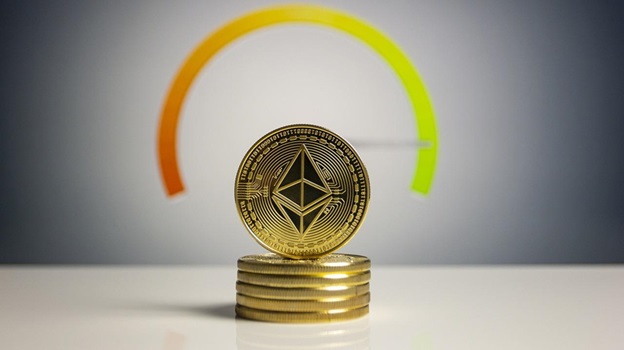
On the Ether Rock NFT sale: This aligns with recent activity in the OG Ethereum NFT space. EtherRocks launched 2017, only 100 total—simple pixel/clipart rocks with different backgrounds are nostalgia plays, basically the CryptoPunks of rocks. They have zero utility beyond bragging rights and historical scarcity. A Wrapped Ether Rock #81 recently traded for 54 ETH ~$125,500 USD on OpenSea. This fits the six figures description and echoes past hype cycles where individual rocks hit $100K–$1.3M during 2021 mania.

These sales highlight collector interest in blue-chip, early NFTs amid market thawing—pure meme + provenance value, not fundamentals. Similar sales popped up in early 2024 too. Both stories scream crypto silly season vibes: absurd valuations on memes and nostalgia assets when liquidity rotates in. Solana memes like UNC thrive on speed and virality; EtherRocks on Ethereum’s OG status.

The UNC token rocketed +200%+ in 24 hours, pushing its market cap from ultra-low levels; one whale bought heavily at $6K MC to $20M–$21M briefly, with $15M+ in 24h trading volume—making it the top-volume token on Solana that day. Price hovered around $0.019–$0.020 recently.

A trader scooped up ~37% of supply early, then airdropped ~34% to over 2,000 on-chain addresses including known traders. This distributed bags widely, sparked massive social buzz, and turned it into a watch play in Solana meme circles. Some early holders saw life-changing multiples from sub-$10K caps.

Boosted overall meme activity and DEX volume on Solana which was seeing quieter meme flows recently. It highlights the chain’s speed for Pump.fun-style launches and degen plays. However, as a pure meme with no utility, it risks sharp reversals—typical volatility where hype fades fast and liquidity can dry up. Fuels meme season narratives, drawing retail and degens back to high-risk Solana tokens. Positive for SOL price indirectly via network usage, but also a reminder of speculative froth.

Sales like Wrapped Ether Rock #81 for 54 ETH ($125K) or similar recent ones underscore renewed collector interest in 2017-era Ethereum NFTs. These ultra-scarce rocks only 100 exist trade on pure provenance and meme history, often called the CryptoPunks of rocks. Individual high sales generate hype and social noise lifting short-term visibility for OG collections.

They can nudge floor prices temporarily. However, analysts note these are often isolated collector moves with minimal impact on overall Ethereum NFT volume, ETH price, or the wider market—more nostalgia play than ecosystem revival signal. Reinforces cycles where liquidity rotates into silly or historical assets during thawing markets. Encourages whale activity in blue-chip NFTs but doesn’t shift fundamentals.

Both events embody crypto’s meme/nostalgia rotation: UNC drives fast, chaotic Solana degen energy; Ether Rocks offer slow, provenance-driven Ethereum bragging rights. They add fun volatility and attention but carry high risk—pumps can dump hard. Always verify contracts and wallets, watch for rugs and snipers, and size positions tiny if gambling. The market’s heating up with these narratives—classic cycle noise.

The Ongoing Middle East Escalation Has Been Devastating for Markets and Civilizations

0

Iran war also referred to as Operation Epic Fury by the US and related Israeli operations which began with large-scale US-Israeli airstrikes on February 28, 2026 has been catastrophic for global markets, and has caused many devastating effects on civilizations.

B1 Bridge in Karaj

The B1 Bridge also called Bilqan B1 Bridge in Karaj, Alborz Province—described as the tallest bridge in the Middle East at around 136 meters high—was struck on April 2, 2026. US forces conducted the attack with precision-guided munitions reportedly including 2,000-pound bombs in a double-tap pattern. The bridge was unfinished or recently constructed and served as a key section of a major highway linking Tehran to northern routes.

US and Israeli officials stated it functioned as a dual-use logistical route for the IRGC, facilitating the transport of missiles, drones, and related components. Iranian sources reported civilian casualties; figures vary: 8 killed and ~95 injured in some accounts, up to 13 killed in others with people picnicking nearby during a holiday. The strike partially collapsed sections of the structure but left some pillars standing. Trump publicly referenced the action and warned of further strikes.

Assassination of IRGC Intelligence Chief

On April 6, 2026, Israel conducted an airstrike in Tehran that killed Maj. Gen. Majid Khademi, the head of IRGC Intelligence. Israel confirmed responsibility, describing it as a significant blow to the IRGC’s command structure. Khademi had assumed the role relatively recently after the prior chief was also killed by Israel in 2025. Iranian state media and the IRGC condemned it as a terrorist attack and held funerals in Tehran. This fits a pattern of targeted killings of senior IRGC figures during the conflict.

Broader Strikes on Infrastructure

US and Israeli forces have conducted multiple strikes on Iranian petrochemical complexes, which officials say produce chemicals, explosives, and propellants used in ballistic missiles and other weapons: Mahshahr (Bandar Imam and related facilities in Khuzestan) — struck around April 4, targeting utility plants like Fajr 1 and 2 that support production.

South Pars (Asaluyeh, Bushehr Province) — hit on or around April 6, described by Israel as Iran’s largest petrochemical site accounting for ~50% of production. Facilities like Mobin, Damavand, and Zagros were affected; these supply components for missile propellants. Additional sites near Shiraz and others were reportedly targeted, with Israel claiming these account for the bulk of Iran’s petrochemical exports and weapons-related output. Strikes often focused on power, gas, and utility infrastructure to disable entire complexes.

Airports in Tehran Province— Mehrabad, Sepehr, Shahid Aryafor and others like Shiraz saw strikes on military aircraft, helicopters, and airbases co-located there. The IDF reported hitting Iranian Air Force assets. Shipyards and naval-related sites have been part of the campaign, though specific IRGC fast-attack boats details are less prominently reported in open sources compared to the above; broader port and maritime infrastructure has been pressured amid the US naval blockade of Iranian shipping in the Strait of Hormuz.

This is part of a systematic US-Israeli effort to degrade Iran’s missile production, air defenses, command networks, and dual-use industrial base. Iran has retaliated with missiles, drones, and proxies including actions involving Hezbollah and Houthis while closing or threatening the Strait of Hormuz, spiking global oil prices. A temporary ceasefire was agreed around April 7–8, 2026 but it has been strained by disputes over reopening the strait, ongoing Israeli actions in Lebanon, and failed talks in Islamabad.

As of mid-April 2026, the US maintains a naval blockade, and tensions remain high with threats of escalated strikes on energy and infrastructure. Casualty figures are disputed: Iran reports thousands of deaths including civilians, while the US has acknowledged wounded personnel. Strikes have drawn criticism for civilian impacts and de-development effects, alongside Iranian claims of disproportionate targeting.

Both sides frame their actions as necessary self-defense or preemption against existential threats, Iran’s nuclear and missile program and proxy network from Israel’s/US perspective; sovereignty and retaliation from Iran’s. The situation is fluid, with diplomacy including potential new US-Iran talks ongoing alongside military pressure. Independent verification remains challenging due to fog of war, internet blackouts in Iran, and competing narratives.

Julius Malema Sentenced to 5 Years Imprisonment for Unlawful Possession of Firearm 

0

Julius Malema, leader of South Africa’s Economic Freedom Fighters (EFF) opposition party, was sentenced today to an effective five years in prison by the Regional Court in KuGompo City formerly East London in the Eastern Cape.

The case stems from a 2018 incident at the EFF’s fifth-anniversary rally at Sisa Dukashe Stadium in Mdantsane. Malema was accused of unlawfully possessing a firearm and ammunition, discharging the rifle into the air in a built-up and public area, failing to take reasonable precautions to protect people or property, and reckless endangerment. He was convicted on these five charges in late 2025.

Details of the Sentence include: Count 1; unlawful possession of firearm equals 5 years imprisonment. Other counts included additional imprisonment terms and fines such as R20,000 or six months, and reportedly a total R60,000 fine, but they run concurrently, making the effective sentence five years direct imprisonment. He was also declared unfit to possess a firearm.

Magistrate Twanet Olivier reportedly emphasized that Malema deliberately violated firearm laws and that the act was not justified as mere celebration at the rally attended by thousands. Prosecutors had pushed for a harsher term up to 15 years, the maximum for some of these Firearms Control Act offenses, while the defense argued for leniency, citing him as a first-time offender with political and family responsibilities.

Malema showed little emotion in court while wearing a dark suit and red tie. If the sentence is upheld after appeals which Malema’s team is expected to pursue, and he is likely to remain out on bail or pending appeal, it could disqualify him from serving as a Member of Parliament. Under South African rules, a sentence of this length typically bars someone from holding office, at least for a period.

This would be a significant blow to the EFF, a far-left party with strong youth support, particularly among those frustrated by ongoing inequality and unemployment post-apartheid The EFF has described the case as a politically motivated attack on the party and its leader. Malema has previously framed potential imprisonment as a badge of honour in the struggle.

Supporters and critics on social media are reacting strongly, with some calling it unfair or selective prosecution, while others view it as accountability under gun laws that apply to everyone. Under Section 47(1)(e) of the South African Constitution, a sentence of more than 12 months’ imprisonment without the option of a fine disqualifies a person from serving as a Member of Parliament (MP) or holding public office.

This disqualification only takes effect once all appeals are exhausted or the time for appeal expires. Malema’s legal team has already signaled they will appeal the conviction and sentence, potentially up to higher courts, including the Constitutional Court. While appeals are pending, he can likely retain his seat and continue political activities.

If the sentence is ultimately upheld, Malema would be barred from Parliament and public office for five years after completing the sentence. The Economic Freedom Fighters (EFF), a vocal far-left opposition party with strong youth support, would lose its most charismatic and central figure. Malema is the party’s founder and dominant leader; his absence could create leadership uncertainty, internal divisions, or a need for rapid succession planning.

Analysts suggest it might not fully destroy the party but it could weaken its cohesion, parliamentary performance, and ability to mobilize, especially ahead of future elections. A diminished or sidelined EFF could shift the balance in South Africa’s fragmented multi-party politics, potentially benefiting the ANC, DA, or other parties depending on how voters and coalitions realign.

The EFF frames the case as politically motivated persecution. Supporters may see imprisonment as a badge of honour in the struggle against inequality, possibly energizing the base short-term. Critics argue it demonstrates accountability under gun laws that apply equally. The case reinforces firearm control enforcement, even for high-profile figures, amid ongoing debates about selective prosecution versus equal application of justice.

Malema is expected to apply for bail pending appeal, allowing him to remain free in the short term. The five-year effective term leaves room for appeal arguments on proportionality, first-offender status, and mitigating factors. No immediate imprisonment likely occurs today; the process will drag on through appeals. This remains a fast-moving story. Long-term effects will hinge heavily on the speed and outcome of appeals. The sentence underscores tensions around political accountability, gun control, and post-apartheid inequality debates in South Africa.


Brent Off $100+ High, DXY Hovering Near 98.00 Amid Gold and Silver Serving as Safe Haven

0

Brent is trading right around $96.28–$96.38/barrel, the DXY is hovering near 98.00–98.20, and spot gold is sitting at roughly $4,830–$4,834/oz. Brent off the $100+ highs: It peaked well above $100 earlier this year touching $118 in Q1 and still over $110 as recently as early April, but has pulled back ~6–7% in the past month. Still up over 41% year-on-year.

Dollar sliding to 98: The DXY has been trending lower and is now in the low-98 range — a clear softening from the 100–102 zone it occupied for much of the past year. Gold at $4,830 (+44% YOY): This is an extraordinary level. It’s up massively from ~$3,200–$3,300 territory a year ago, continuing a parabolic run that began accelerating in late 2025.

These three aren’t moving in isolation — they’re tightly linked: Weaker dollar = tailwind for commodities. A lower DXY makes dollar-priced assets (oil, gold) cheaper for foreign buyers and boosts returns for non-USD investors. That’s classic supportive fuel for both gold and crude right now.

Gold’s rocket ride: At these prices, gold is screaming safe-haven + inflation hedge + de-dollarization all at once. Central-bank buying especially from emerging markets, persistent geopolitical risk, and lingering inflation concerns have kept the metal in a structural bull market. The fact that it’s still climbing even as oil has cooled a bit shows investors are prioritizing monetary and insurance plays over pure cyclical energy demand.

Oil’s more measured tone. Brent has given back some ground despite the weaker dollar. That suggests the market is pricing in adequate supply (OPEC+ production discipline + possible US output response) or softer demand signals in parts of the global economy. Still, the 40%+ YOY gain shows the commodity complex broadly remains in an uptrend.

This setup — soft dollar + sky-high gold + solidly elevated but not euphoric oil — points to a world where: Inflation and or currency-risk worries are still very much alive (gold’s message). Growth isn’t collapsing, but isn’t ripping either (oil’s moderation). The US dollar is losing some of its relative shine.

Silver is trading around $79–$80 per ounce, showing strong momentum in the near term. Recent daily moves have been volatile: it climbed sharply mid-week reaching ~$79.67 on April 15 with a +3% session after dipping earlier in the month around the $73–$75 zone, and it’s now testing 4-week highs while holding well above $75. Silver has delivered an explosive rally: Up ~144–147% year-over-year from early 2025 levels near $29–$32/oz.

It surged through $70 late in 2025, hit an all-time high above $121/oz intraday in late January 2026, then corrected sharply before consolidating in the $70–$85 range through Q1. Year-to-date in 2026, it’s up roughly 12–15% depending on the exact entry point, but remains in a clear structural uptrend from pre-2025 levels (gains exceeding 180% since January 2025 in some measures).

This performance has outpaced gold’s ~44% YOY gain you mentioned earlier, causing the gold and silver ratio to compress significantly — now hovering around 60–64:1, down from much higher levels in prior years. Historically, ratios in this zone have sometimes preceded periods where silver outperforms gold on a relative basis.

Silver’s move combines monetary and industrial forces — unlike gold, which is more purely a safe-haven and monetary play: The market is heading into its sixth consecutive year of shortfall in 2026 projected 46–67 million ounces or more. Mine production is largely flat, much of it is a byproduct of copper, lead and zinc mining and doesn’t ramp quickly with price, while recycling has risen but not enough to close the gap. Above-ground stocks continue to erode.

Overall industrial offtake remains historically elevated even as some thrifting using less silver per unit occurs due to higher prices. A modest 1–3% dip is expected in 2026, but the baseline is far above pre-pandemic levels. Weakening dollar, safe-haven flows amid geopolitical risks and inflation concerns, and retail and central bank interest in precious metals. Silver benefits from both fear like gold and growth and green transition narratives.

Sharp corrections have been triggered by profit-taking, shifting Fed expectations, or temporary dollar strength. Physical premiums and liquidity squeezes in some markets have added to the swings. With Brent pulling back from $100+ highs to ~$96, a softer dollar, and gold near $4,830 (still +44% YOY), silver is behaving as a leveraged play on the broader precious metals and commodity complex.

The weaker dollar supports both, while silver’s industrial component gives it extra torque when growth signals aren’t collapsing. The compressed gold and silver ratio suggests silver has been catching up — and recent sessions where it outperformed gold align with that. Consensus for 2026 leans bullish but with wide dispersion: Many see averages in the $80–$90 range.

Year-end targets commonly fall between $85–$120, with some more aggressive calls pushing toward or above $100–$150 if deficits widen or industrial demand holds resilient. Continued deficits, solar/EV/AI demand resilience, and any further dollar weakness or geopolitical spikes could drive new highs.

A deeper global growth slowdown, stronger dollar, or sharp recession could trigger pullbacks. Higher prices are already prompting some substitution and thrifting. Silver has broken out of its long-term trading range and entered a new price-discovery phase, driven more by structural fundamentals than pure speculation. It’s more volatile than gold, so moves can be dramatic in both directions.

Silver’s multi-year supply and demand imbalance provides a supportive floor that wasn’t there in prior cycles. Gold’s surge is the loudest signal here — when it’s making new all-time highs this aggressively while oil pulls back modestly, the market is telling you to keep an eye on real yields, central-bank policy divergence, and any fresh geopolitical flare-ups.

DeepL Takes the Leap from Text to Voice, Launching Real-Time Translation Tools That Could Reshape Global Conversations

0

DeepL, the company that built its reputation on delivering some of the most natural-sounding text translations in the business, has now moved decisively into spoken language.

On Tuesday, it rolled out a full voice-to-voice translation suite aimed at everything from Zoom meetings and mobile chats to group workshops for frontline workers. At the same time, the company opened up an API so developers and businesses can build their own applications on top of the technology, including custom setups for call centers.

“After spending so many years in text translation, voice was a natural step for us,” DeepL CEO Jarek Kutylowski told TechCrunch in an interview. “We have come a long way when it comes to text translation and document translation. But we thought there wasn’t a great product for real-time voice translation.”

The timing makes sense. Companies have been wrestling for years with clunky real-time tools that either lag badly or butcher nuance. Kutylowski pointed straight to the central engineering headache: finding the sweet spot between low latency and rock-solid accuracy. Right now, DeepL’s system still follows the classic route, speech-to-text, then translation, then text-to-speech—but the company owns the entire stack, something it believes gives it a clear quality advantage built on years of refining its text engine.

Down the road, DeepL plans to develop a true end-to-end voice model that skips the text middleman altogether, which should make conversations feel even more immediate.

For everyday users, the new tools are straightforward and practical. Add-ons for Zoom and Microsoft Teams let listeners hear translated audio in their own language while others speak normally, or simply read real-time subtitles on screen. The features are in early access for now, and organizations can join a waitlist.

There’s also a mobile and web version for one-on-one or small-group talks, whether everyone is in the same room or halfway across the globe. In larger settings like training sessions or workshops, participants just scan a QR code to join the multilingual conversation.

The system can learn custom vocabulary on the fly, industry jargon, company names, even personal names, so it doesn’t stumble over the specialized language that matters in real workplaces. That adaptability is especially useful for customer service teams. Kutylowski noted that AI is reimagining what customer support will look like in the coming years, with a translation layer letting companies serve customers in languages where hiring fluent staff is both difficult and expensive.

DeepL is betting it can deliver the kind of reliability that has made its written translations stand out by controlling the full pipeline. The voice push builds directly on a Voice API, which it quietly released back in February, giving developers another building block for multilingual apps.

Of course, DeepL is not alone in this space. Several well-funded rivals are already carving out niches. Sanas, which raised $65 million last year, focuses on smoothing out accents in real time for call-center agents. Dubai-based Camb.AI specializes in dubbing and localizing video content for media and entertainment companies, often working with Amazon Web Services. Palabra, backed by Reddit co-founder Alexis Ohanian’s Seven Seven Six fund, is working on a real-time engine that tries to keep both the original meaning and the speaker’s actual voice intact—putting it in the most direct head-to-head with what DeepL is building.

What sets DeepL apart is its deliberate, step-by-step evolution. It didn’t rush into voice; it spent years perfecting text first. That patience has given it a foundation of linguistic nuance that many pure-play voice startups lack.

The implications, especially for global businesses, are: smoother cross-border meetings, more inclusive training programs, and customer support that scales without massive hiring budgets. Developers get an API that lets them embed high-quality translation wherever it’s needed, from internal collaboration tools to public-facing services.

The bigger picture is, however, the following: As companies operate across more languages and time zones, the cost of misunderstanding—or simply waiting for a human interpreter—has become a real drag on productivity. DeepL’s new suite aims to remove that friction without sacrificing the quality users have come to expect from its text products.