

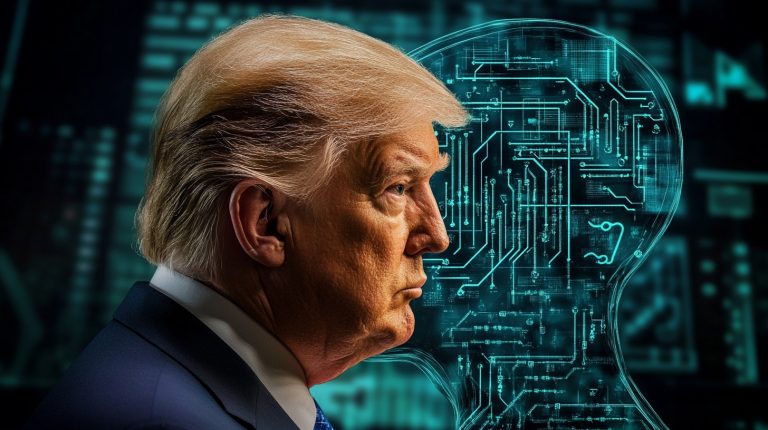
President Donald Trump has signed a scaled-back executive order that creates a voluntary framework for frontier artificial intelligence companies to share advanced models with the U.S. government before public release.
The executive order, which highlights Washington’s growing struggle to balance national security concerns with the desire to maintain America’s technological lead over China, follows a faceoff with Anthropic.
The order, signed privately on Tuesday, marks a significant shift from earlier proposals that would have subjected cutting-edge AI systems to a much longer government review process. Instead of the previously discussed 90-day review window, companies will now have the option of providing federal agencies access to powerful AI models up to 30 days before launch.
Register for the next Tekedia Mini-MBA.
Register for Tekedia AI in Business Masterclass.
Join Tekedia Capital Syndicate and co-invest in great global startups.
The shorter review period underscores the administration’s recognition that lengthy regulatory hurdles could slow innovation at a time when competition among American AI developers has intensified dramatically. The White House has repeatedly emphasized that maintaining U.S. leadership in artificial intelligence remains a strategic priority amid fierce competition from China.
Trump himself signaled those concerns last month when he publicly questioned whether stronger oversight could inadvertently undermine U.S. competitiveness.
“We’re leading China. We’re leading everybody,” Trump told reporters on May 21. “And I don’t want to do anything that’s going to get in the way of that lead.”

The executive order arrives as policymakers grapple with a new generation of AI systems that are becoming increasingly capable of identifying software vulnerabilities, generating sophisticated code, and potentially enabling offensive cyber operations.
The emergence of so-called frontier models, the most advanced AI systems currently being developed by companies such as OpenAI, Anthropic, Google DeepMind, and other leading developers, has been at the center of those concerns.
Recent advances have alarmed cybersecurity experts because AI systems are increasingly capable of automating tasks that once required highly skilled human researchers. These capabilities can be used defensively to discover vulnerabilities before attackers do, but they can also potentially be used to identify and exploit software weaknesses at unprecedented speed and scale.

Anthropic’s handling of its powerful Mythos model illustrates the industry’s growing caution. The company disclosed earlier this year that it had restricted the release of Claude Mythos after internal testing revealed cybersecurity capabilities that exceeded the firm’s comfort level for a broad public rollout.
The startup subsequently indicated that it was developing additional safeguards before making Mythos-level systems more widely available, reflecting a broader industry debate over how quickly capable models should be deployed. The new model was a bone of contention between Washington and Anthropic as the former sought the use of Mythos for defense purposes. In March, the Pentagon formally designated the company a supply-chain risk, intensifying the rift and forcing Anthropic to sue.
The administration’s new order appears designed to address precisely those challenges. By encouraging companies to voluntarily share models before release, federal agencies gain an opportunity to evaluate emerging risks without imposing mandatory licensing requirements or lengthy approval processes that could slow development cycles.
The voluntary nature of the framework is particularly noteworthy. Unlike regulatory approaches being explored in some other jurisdictions, the U.S. government is seeking cooperation rather than direct control over model releases. That approach is likely intended to preserve goodwill with major AI developers, many of whom have warned that overly restrictive regulation could hamper innovation and push research activity overseas.
AI regulation has been immersed in a political tussle. The technology has become a key arena in the broader geopolitical contest between the United States and China, leading policymakers to weigh security concerns against economic and strategic considerations.
Many technology executives have argued that American leadership in AI depends on rapid deployment, large-scale investment, and the ability to commercialize breakthroughs quickly. From that perspective, a mandatory review system could create competitive disadvantages for U.S. firms relative to foreign rivals.
Yet cybersecurity officials worry that the same capabilities driving economic growth could also create new national security risks. Advanced AI models are becoming capable of accelerating vulnerability discovery, malware analysis, penetration testing, and other tasks traditionally performed by cybersecurity professionals.
The order therefore represents an attempt to thread a difficult needle: obtaining greater visibility into emerging AI risks without erecting barriers that industry leaders fear could slow innovation. Its effectiveness will ultimately depend on how many companies choose to participate and how much information they are willing to share with federal agencies.