DD
MM
YYYY

PAGES

DD
MM
YYYY

spot_img

PAGES

Home Blog Page 3

S&P 500 Rally Lifts Bets On Fresh Record Highs As Traders See 8,000 Within Reach

0

The S&P 500 paused on Wednesday after a blistering four-session rally of more than 5.5%, but the brief pullback has done little to dent growing conviction that U.S. equities still have room to climb.

Instead, the benchmark index’s march to successive record highs is reshaping expectations across Wall Street and prediction markets, with traders increasingly betting that the bull market has further to run.

Speculators on prediction market platform Kalshi now assign roughly a two-in-three probability that the S&P 500 will trade above the 8,000 level at some point in 2026. Based on Wednesday’s close, the benchmark is only about 3.6% away from reaching that milestone, revealing how quickly sentiment has shifted after a period of heightened geopolitical and macroeconomic uncertainty.

The contracts, which are settled using Google Finance data, allow traders to wager on whether the S&P 500 will exceed specific price thresholds during the calendar year. Beyond the 8,000 target, optimism is broadening. Kalshi traders now see roughly a one-in-three chance that the index could surpass 8,200 before the end of this year, reflecting growing confidence that the latest rally is more than a short-term rebound.

The renewed optimism comes after a volatile few months for U.S. equities. The S&P 500 rebounded sharply in April and May following steep declines triggered by the U.S.-Iran conflict, but momentum faded through late June and July as investors rotated out of the high-flying artificial intelligence stocks that had powered much of the market’s gains over the past year.

Rather than signaling the end of the AI-led bull market, however, that rotation has increasingly been viewed as a healthy broadening of market leadership. Investors shifted into financials, industrials, healthcare and other cyclical sectors, allowing the broader market to continue advancing even as several mega-cap technology stocks consolidated after outsized gains.

The latest four-day surge was driven by several powerful catalysts. Easing geopolitical tensions in the Middle East, particularly optimism that the Strait of Hormuz could reopen, helped push oil prices lower and reduced concerns over inflation and supply-chain disruptions. At the same time, another round of stronger-than-expected corporate earnings boosted confidence that U.S. companies continue to generate resilient profit growth despite elevated interest rates and ongoing global uncertainties.

Technology giants have remained central to that narrative. Strong quarterly results from companies including Amazon, Microsoft and other AI infrastructure leaders reassured investors that demand for cloud computing, data centers and artificial intelligence services remains robust. Those results also eased concerns that hyperscalers might begin scaling back their massive AI spending, a fear that had weighed on sentiment earlier in the summer.

Market participants also pointed to the near-collapse of Leopold Aschenbrenner’s Situational Awareness fund as another factor that accelerated the rally. The unwinding of highly concentrated positions appeared to remove a source of selling pressure from parts of the technology sector, allowing investors to re-enter AI-related stocks with greater confidence.

Importantly, analysts say the current advance is being supported by healthier market internals than earlier phases of the rally. Market breadth has improved as gains spread beyond the “Magnificent Seven” technology companies, reducing concerns that the market is being driven by only a handful of mega-cap stocks. Broader participation has historically been viewed as a positive signal for the durability of bull markets.

“Our investment thesis remains intact,” Truist Wealth Chief Market Strategist Keith Lerner wrote in a note on Tuesday. “Earnings remain our north star. Estimates continue to trend higher, economic growth remains resilient, and market participation has improved. Those are not conditions typically associated with the end of a bull market.”

The resilience of the U.S. economy has also supported the constructive outlook. While investors continue to monitor inflation and Federal Reserve policy, recent economic data have pointed to steady growth rather than a sharp slowdown, supporting expectations that corporate earnings can continue expanding. That backdrop has encouraged investors to look beyond short-term geopolitical risks and focus on the longer-term earnings trajectory.

Germany Faces Dual Security Challenge as Drone Investigation and Russian Strike Raise Alarm

0

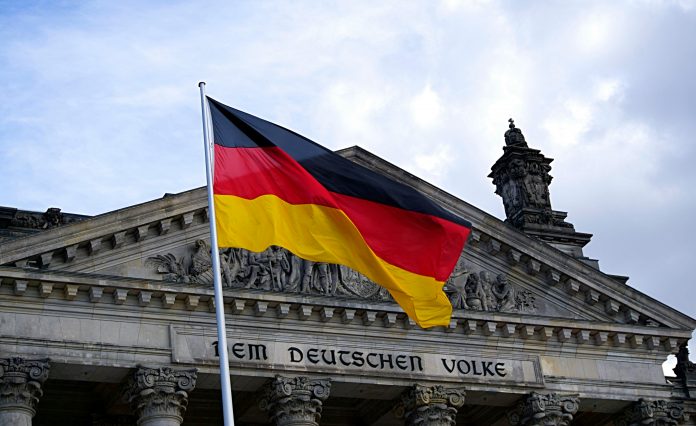
Germany is confronting two serious security-related developments that underscore the growing risks facing Europe amid heightened geopolitical tensions.

Authorities are intensifying investigations after discovering an explosive-laden drone at Leipzig/Halle Airport, while a German company’s warehouse in Ukraine has been damaged during a Russian missile strike on Kyiv.

The incidents highlight how modern conflicts increasingly blur the boundaries between military operations, critical infrastructure, and civilian economic interests.

Investigators are working around the clock after confirming that the drone found at Leipzig/Halle Airport contained Semtex, a powerful plastic explosive known for its stability and destructive capability.

According to reports, forensic specialists are carefully examining the device to determine its origin, intended target, and whether it was linked to a broader network or planned act of sabotage.

The use of Semtex significantly elevates the seriousness of the case, as the explosive has historically been associated with military and terrorist operations due to its reliability and difficulty of detection.

Leipzig/Halle Airport serves as one of Germany’s most important logistics and cargo hubs, making it a strategically significant location. Any successful attack on such infrastructure could have disrupted freight operations, supply chains, and transportation networks extending far beyond Germany’s borders.

Security agencies are therefore treating the discovery as a matter of national importance, with intelligence services and law enforcement coordinating efforts to identify those responsible.

The incident comes amid growing concerns across Europe over hybrid warfare tactics, including sabotage, cyberattacks, and the targeting of transportation infrastructure.

Several European governments have already strengthened security around airports, ports, and energy facilities following a series of suspicious incidents linked to escalating regional tensions.

The discovery of an explosive device at a major airport is likely to reinforce calls for even stricter surveillance and counter-terrorism measures. At nearly the same time, another event demonstrated how businesses with European roots remain vulnerable to the consequences of the war in Ukraine.

A warehouse belonging to German lubricant manufacturer Liqui Moly was struck during a Russian missile attack on Kyiv. Company spokeswoman Sina Ataei confirmed the damage, although details regarding the extent of the destruction or any injuries were not immediately available.

While Liqui Moly is best known for producing automotive lubricants and maintenance products, the attack illustrates how commercial facilities have become increasingly exposed as Russia continues its missile campaign against Ukrainian cities.

Foreign companies operating in Ukraine face significant operational risks despite efforts to maintain business continuity throughout the conflict. Damage to warehouses, manufacturing facilities, and logistics centers not only affects corporate operations but also disrupts supply chains serving customers across Europe.

The strike highlights the broader economic costs of the ongoing war.

International businesses continue balancing their commitment to supporting Ukraine with the realities of operating in an active conflict zone. Insurance costs, infrastructure damage, transportation disruptions, and employee safety remain persistent challenges for companies maintaining a presence in the country.

Although the airport investigation and the missile strike are separate events, they reflect a common reality facing Europe today: security threats are becoming increasingly interconnected.

From suspected sabotage targeting transportation infrastructure to missile attacks affecting international businesses, governments and corporations alike must adapt to an environment where geopolitical instability carries direct economic and security consequences.

As investigations continue in Germany and recovery efforts proceed in Kyiv, both incidents serve as reminders that the ripple effects of regional conflicts are being felt far beyond the battlefield.

BMW Commences Series Production of Neue Klasse i3, Strengthening EV Leadership

0

BMW has reached an important milestone in its transition toward electric mobility with the start of series production of the all-electric i3 at its main manufacturing facility in Munich.

Announced on Thursday, the development marks the first time a vehicle from BMW’s highly anticipated “Neue Klasse” family is being produced in series in Germany.

The launch represents far more than the introduction of a new electric vehicle; it signals the beginning of a new era for the German automaker as it accelerates its shift toward sustainable transportation and advanced automotive technology.

The Neue Klasse is BMW’s next-generation vehicle platform designed specifically for electric mobility. Inspired by the revolutionary Neue Klasse models of the 1960s that transformed BMW into a global premium automotive brand.

The new generation is expected to redefine the company’s future through cutting-edge battery technology, software-driven features, improved efficiency, and modern vehicle architecture. The all-electric i3 is the first production model built on this platform.

Producing the i3 at BMW’s flagship Munich plant carries symbolic and strategic importance. The facility has long served as the heart of BMW’s manufacturing operations and has traditionally produced some of the company’s most iconic combustion-engine vehicles.

By adapting the plant for the mass production of electric vehicles, BMW demonstrates its commitment to modernizing existing infrastructure rather than relying solely on new factories. This approach allows the company to preserve skilled jobs while supporting the transition to cleaner transportation.

The new i3 is expected to feature significant technological advancements compared to previous BMW electric models. The Neue Klasse platform introduces sixth-generation battery technology, promising longer driving ranges, faster charging speeds, and greater energy efficiency.

BMW has emphasized that the new architecture will support powerful computing systems capable of handling advanced driver assistance technologies, seamless software updates, and an enhanced digital driving experience. These innovations are designed to strengthen BMW’s competitiveness in an increasingly crowded electric vehicle market.

The timing of the launch is also significant. Global demand for electric vehicles continues to grow as governments tighten emissions regulations and consumers increasingly seek environmentally friendly transportation options.

European manufacturers are investing heavily in electric mobility to compete with industry leaders such as Tesla and rapidly expanding Chinese automakers. By bringing the Neue Klasse into full-scale production, BMW positions itself to capture a larger share of the evolving global EV market while reinforcing Germany’s reputation as a leader in automotive engineering.

Beyond its commercial significance, the production of the i3 reflects BMW’s broader sustainability goals. The company has pledged to reduce carbon emissions throughout its manufacturing operations and supply chains while increasing the use of recycled materials in vehicle production.

The Munich plant itself has undergone extensive modernization to improve energy efficiency and support environmentally responsible manufacturing processes. These efforts align with BMW’s objective of achieving climate neutrality across its business operations in the coming decades.

As the first Neue Klasse model rolls off the production line in Munich, BMW enters a defining chapter in its history.

The all-electric i3 represents not only a new vehicle but also a comprehensive transformation of the company’s design philosophy, manufacturing capabilities, and technological ambitions. With production now underway.

BMW is sending a clear message that the future of premium mobility will be electric, digitally connected, and built on innovation. The successful launch of the i3 could set the tone for an entire generation of BMW vehicles and strengthen the company’s position in the global race toward sustainable transportation.

SpaceX Faces First Insider Share Unlock as Early Investors Weigh Cashing Out After Post-IPO Slump

0

More than 911 million shares become eligible for sale as options traders bet the stock may be nearing a bottom despite a sharp decline from June peak

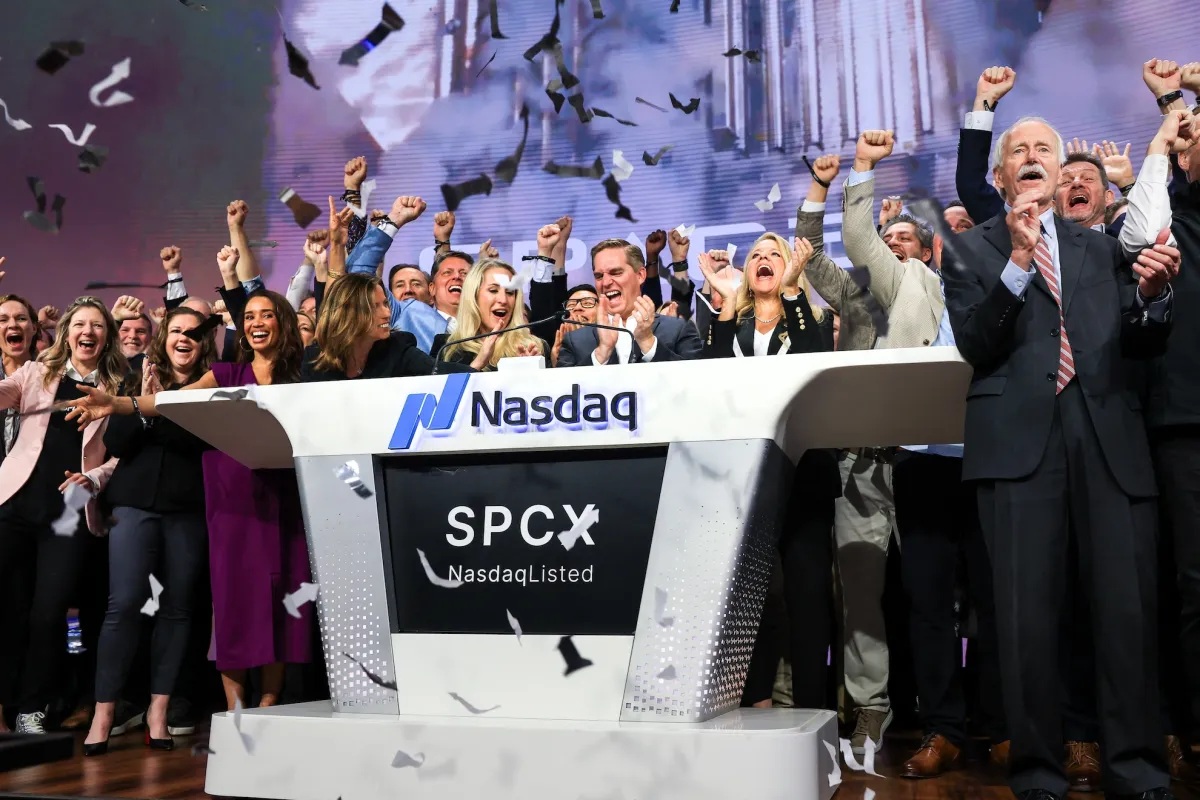
Early investors in SpaceX had their first opportunity on Thursday to sell portions of their holdings following the expiration of the company’s initial IPO lock-up period, a closely watched milestone that could test investor appetite for a stock that has lost more than half its value since its post-listing peak.

The expiration makes approximately 911 million shares eligible for trading, equivalent to about 7% of the company’s outstanding shares. The newly unlocked shares exceed the 639 million shares sold in SpaceX’s record-setting initial public offering, raising the prospect of a meaningful increase in market supply even if only a fraction of investors choose to sell.

The development comes after a volatile start to SpaceX’s life as a public company.

The reusable rocket maker debuted on Nasdaq in June with shares priced at $150. The stock quickly rallied above $225 as investors rushed to gain exposure to one of the world’s most valuable space and artificial intelligence companies.

That enthusiasm has since faded.

Shares closed Wednesday at $108.27, leaving the stock more than 50% below its mid-June high after investors reacted negatively to the company’s first quarterly earnings report as a listed company.

The sharp selloff followed SpaceX’s disclosure that capital expenditures during the quarter exceeded revenue by more than two times, highlighting the enormous investment required to expand its satellite network, launch infrastructure and artificial intelligence initiatives.

While the spending reflects the company’s aggressive long-term growth strategy, investors questioned how quickly those investments would translate into sustainable profitability.

Attention has now shifted from earnings to the potential impact of insider selling.

Greg Martin, co-founder of Rainmaker Securities, said the immediate direction of the stock could depend more on the expiration of lock-up restrictions than on the company’s operating performance.

“The near-term path” of the shares may be influenced more by the additional supply entering the market than by underlying fundamentals or corporate strategy, Martin told CNBC.

The current unlock represents only the beginning of a broader increase in tradable shares.

According to the company’s prospectus, another 319 million shares are scheduled to become eligible for sale on Aug. 20, followed by roughly 700 million additional shares in September and a similar amount in October.

The staggered release means investors are likely to monitor insider selling pressure for several months rather than focusing solely on Thursday’s expiration.

One important source of potential selling will remain absent.

Chief Executive Elon Musk, the company’s largest shareholder by a wide margin, owns more than 6 billion shares that remain locked until June 2027.

The continued lock-up of Musk’s holdings significantly limits the amount of stock that could reach the market compared with the company’s overall equity base.

Analysts at Mizuho cautioned investors against assuming that every newly eligible share will immediately be sold.

“While the step-up in potential supply is meaningful, we think investors should understand that shares becoming eligible for sale does not mean the full tranche will be offered into the market,” the firm said in a research note.

Lock-up expirations often create uncertainty because they expand the potential supply of shares without necessarily increasing actual selling activity. Some early investors may choose to realize gains after years of holding privately owned stock, while others may continue holding if they remain confident in the company’s long-term prospects.

Among those planning to sell is Atlanta Falcons safety Jessie Bates III. Bates said he invested approximately $150,000 in SpaceX shares in 2022, when the company was valued at about $127 billion.

With SpaceX now carrying a market capitalization of roughly $1.43 trillion, his investment has appreciated more than tenfold and could now be worth over $1.5 million.

In a statement released through his publicist, Bates said he intends to sell his entire stake to lock in profits.

His investment manager, Michael Ledo, chief executive of RISE Family Office, said Bates has also invested in several other high-profile private technology companies, including OpenAI, Anthropic, Databricks, Cart.com and Turo, as part of a broader strategy focused on long-term wealth creation.

Even as some shareholders prepare to exit, options markets suggest many sophisticated investors remain optimistic about the stock’s longer-term outlook.

Trading activity on Thursday indicated growing interest in strategies designed to benefit from price stabilization rather than continued declines. According to SpotGamma data, approximately $600 million in options premium had traded by midday, with puts accounting for $316 million.

The largest directional trade involved investors selling put options, a strategy that generally reflects confidence a stock will remain above a specified price.

Among the day’s biggest transactions was a large risk-reversal strategy executed shortly after the market opened. The trade involved the sale of roughly $12 million of June 2027 put options with a strike price of $90, generating about $7.7 million in net premium after simultaneously purchasing approximately $4.3 million of June 2027 call options with a $220 strike price.

The strategy effectively expresses two bullish views: first, that SpaceX shares are unlikely to fall another 20% over the coming 10 months, and second, that the stock has the potential to more than double if business fundamentals improve.

A second, smaller risk-reversal trade later in the session followed a similar structure, pairing sales of January 2028 put options with purchases of call options at significantly higher strike prices. Unlike the earlier trade, the investor paid a net premium, indicating an even stronger conviction that the stock could appreciate substantially over the longer term.

Market participants often view risk reversals as a strategy favored by institutional investors because they combine downside income generation with upside participation. The options activity contrasts with the speculative call buying that dominated trading following SpaceX’s IPO, a pattern that had often coincided with periods of weakness in the underlying shares.

Technical indicators also suggest selling pressure may be beginning to ease.

Although SpaceX fell to a fresh post-IPO low on Monday, one day before reporting earnings, the stock has largely stabilized around the $110 level since late July.

Momentum indicators have also improved. The 14-day Relative Strength Index, a widely used measure of price momentum, has recovered from oversold levels reached late last month, while implied volatility has fallen to its lowest level since June 30, suggesting traders expect smaller price swings in the near term.

Perhaps most notably, the shares traded higher on the day the first lock-up period expired, contrary to widespread expectations that the event would trigger a wave of selling.

While additional share unlocks over the coming months could continue to weigh on sentiment, Thursday’s trading indicates that investors are increasingly shifting their focus from near-term technical pressures to SpaceX’s long-term growth prospects in commercial space, satellite communications and artificial intelligence.

Argentina Renews $19bn China Currency Swap To 2031, Preserving Key Financial Backstop Despite U.S. Pressure

0
TOPSHOT - Argentine presidential candidate for the La Libertad Avanza alliance Javier Milei waves to supporters after winning the presidential election runoff at his party headquarters in Buenos Aires on November 19, 2023. Libertarian outsider Javier Milei pulled off a massive upset Sunday with a resounding win in Argentina's presidential election, a stinging rebuke of the traditional parties that have overseen decades of economic decline. (Photo by Luis ROBAYO / AFP) (Photo by LUIS ROBAYO/AFP via Getty Images)

Argentina has renewed its 130 billion yuan ($19 billion) currency swap agreement with China for another five years, extending a financial lifeline that has become a cornerstone of the country’s foreign reserve strategy, according to SCMP.

The move comes amid pressure from Washington, which has spent more than a year urging Buenos Aires to reduce its financial dependence on Beijing.

The extension, signed on Wednesday between the Argentine central bank and the People’s Bank of China (PBOC), comes just one day before the previous agreement was due to expire. The renewed arrangement will remain in place until 2031, marking the longest extension since the two countries first established the facility in 2009.

The agreement ends months of uncertainty over whether President Javier Milei, who campaigned on a pledge to distance Argentina from communist governments and has since become one of U.S. President Donald Trump’s closest allies in Latin America, would allow the facility to lapse.

Argentina’s central bank said the longer maturity would provide “greater predictability over the continuity of this tool,” underscoring the importance of the swap as the country continues rebuilding its foreign exchange reserves while navigating a fragile economic recovery.

The renewed agreement also signals that Milei’s government is balancing its increasingly close relationship with Washington against the practical need to maintain access to Chinese financial support, highlighting the constraints facing Argentina as it attempts to stabilize an economy still burdened by high debt, limited hard currency and recurring balance-of-payments pressures.

A currency swap functions as a standing credit line between central banks. Under the arrangement, Argentina can obtain yuan from the PBOC in exchange for pesos and repay the funds with interest at a later date. Although the full 130 billion yuan counts toward Argentina’s gross foreign exchange reserves, the funds only become available for spending once specific tranches are activated, at which point they become debt obligations.

The facility has become important for Argentina, accounting for roughly 40% of the country’s gross international reserves, although that share has declined from nearly 60% in 2023 as reserves have recovered.

Over the years, yuan drawn under the arrangement have financed imports from China, supported the peso during periods of intense market volatility and helped Argentina meet repayment obligations to the International Monetary Fund.

Neither central bank has disclosed the interest rate charged under the facility. However, research led by Harvard economist Carmen Reinhart estimated Argentina pays about 400 basis points above China’s Shanghai Interbank Offered Rate (Shibor), roughly double the cost faced by countries such as Turkey and Mongolia under similar arrangements.

The swap has evolved significantly since it was first established. Argentina became the first Latin American nation to sign a currency swap agreement with China when then-central bank governor Martín Redrado agreed to a 70 billion yuan facility with then-PBOC Governor Zhou Xiaochuan in July 2009, during the global financial crisis. The original agreement expired three years later without any funds being drawn.

The arrangement only became operational in 2014, when disbursements were linked to financing two hydroelectric dam projects in Patagonia awarded to China Gezhouba Group. Former President Mauricio Macri later expanded the facility to its current size in 2018.

Its role changed dramatically under former President Alberto Fernández. Rather than financing infrastructure, the swap became an emergency financial instrument. Then-Economy Minister Sergio Massa activated a $5 billion tranche in 2023, using the funds to repay the IMF and defend the peso ahead of Argentina’s presidential election.

Milei inherited that liability after taking office in late 2023, only weeks after campaigning on a promise that “we do not make pacts with communists, not with Cuba, not with Venezuela, not with North Korea, not with China.”

His stance shifted quickly once in office. Within days, Milei wrote to Chinese President Xi Jinping seeking assistance in maintaining access to the swap line. Beijing subsequently agreed to postpone repayment deadlines twice, first in 2024 and again in 2025.

By September 2024, Milei had significantly softened his rhetoric, describing China as “a very interesting trading partner” that “demands nothing.” Two months later, he met Xi during the G20 summit in Rio de Janeiro, further signaling a pragmatic approach to bilateral relations.

The extension also comes after sustained criticism from Washington over China’s expanding financial influence in Latin America.

Mauricio Claver-Carone, then Trump’s special envoy for Latin America, described Chinese currency swaps as “extortionate” in April 2025 and said Washington’s priority was ensuring Argentina’s IMF program did not “reinforce China’s position.”

“As long as it has the swap, Argentina is not free,” Claver-Carone said the following month.

U.S. Treasury Secretary Scott Bessent adopted a more measured tone during a visit to Buenos Aires, saying Argentina should eventually accumulate sufficient foreign currency reserves to repay the Chinese facility.

The Chinese embassy responded swiftly, accusing Bessent of making “malicious defamations and slander” and urging Washington to stop “obstructing or deliberately sabotaging the assistance provided by other countries.”

Even as Washington pressed Argentina to reduce its dependence on Beijing, the United States strengthened its own financial support. In October 2025, the U.S. Treasury signed a separate $20 billion swap arrangement with Argentina’s central bank and immediately used $2.5 billion to purchase pesos in an effort to stabilize the currency ahead of midterm elections. Argentina repaid those funds two months later.

A bilateral trade agreement signed in January committed Argentina to reducing its dependence on energy supplied by “non-market actors,” language widely interpreted as referring to China. By then, Argentina had repaid almost all of the funds previously drawn under the Chinese swap, reducing outstanding obligations from nearly $5 billion to approximately $679 million by mid-January.

The sharp decline in outstanding borrowing fueled speculation that Milei intended to abandon the arrangement altogether. Central bank Governor Santiago Bausili rejected those reports, insisting there was “no plan to eliminate” the facility and describing the relationship with the PBOC as “stable and quasi-permanent.”

He added that Argentina initially sought to renew the agreement under existing terms, which would have extended it only until 2029. Bausili later met PBOC Governor Pan Gongsheng in Shanghai during a central bankers’ symposium, discussions that ultimately paved the way for the new five-year extension.

The previously activated $5 billion tranche remains available under the renewed agreement and can be used “without additional authorizations,” Bausili has said.

The currency swap now forms one of three pillars of Argentina’s strategy to strengthen its external financial position ahead of the 2027 presidential election, alongside dollar futures operations and repurchase agreements with international banks.

Those efforts have contributed to a significant improvement in the country’s reserve position, with Argentina’s gross international reserves reaching $49.6 billion this week, their highest level since September 2019. The renewed Chinese facility provides an additional financial buffer as the government seeks to stabilize the peso, reassure investors, and reduce vulnerability to future external financing shocks while maintaining flexibility in managing relations with both Washington and Beijing.