DD
MM
YYYY

PAGES

DD
MM
YYYY

spot_img

PAGES

Home Blog Page 3

Coinbase CEO Brian Armstrong Calls on Senate to Pass CLARITY Act as U.S. Remains Crypto Regulation Outlier

0

Coinbase CEO Brian Armstrong has renewed calls for the U.S. Senate to pass the CLARITY Act, arguing that the United States risks falling behind other major economies in establishing a clear regulatory framework for cryptocurrencies.

He noted that the vast majority of G20 economies have established rules for crypto trading, with the United Kingdom having finalized its framework only months earlier.

By contrast, the United States has yet to enact comprehensive market-structure legislation, leaving the industry operating under a patchwork of agency actions and legal uncertainty.

In his words, he said,

“The vast majority of G20 countries already have a regulatory framework for crypto trading. The UK just got theirs a few months ago. The United States, the home of the world’s largest financial markets, is a major outlier here. It’s time to pass Clarity in the Senate on Sep 15th”

He argued that this lag puts American companies and investors at a disadvantage relative to jurisdictions that have already clarified the rules of the road.

His statement comes after prediction market Polymarket,  put the bill’s odds of passage at just 20%. The figure marks a steep drop of roughly 45 percentage points from earlier levels, according to recent Polymarket data highlighted by Cointelegraph.

The steep decline signals growing uncertainty over the legislation’s prospects as lawmakers face mounting challenges in advancing a long-awaited regulatory framework for the cryptocurrency industry.

The CLARITY Act aims to define the respective roles of the Securities and Exchange Commission and the Commodity Futures Trading Commission in overseeing digital assets.

The House of Representatives passed the bill in 2025 with bipartisan support. In the Senate, a procedural cloture vote is scheduled for September 15. That vote requires 60 senators to allow formal debate to begin.

Armstrong has expressed confidence that the measure can secure more than 60 votes and has described discussions as having entered their final stage.

Supporters of the legislation say clear statutory rules would protect consumers, reduce regulatory ambiguity, and prevent future administrations from easily reversing agency guidance.

Critics and some lawmakers remain focused on the details of how authority would be divided between the SEC and CFTC, as well as broader questions of investor protection and market stability.

If the Senate does not advance the bill, officials at the CFTC have indicated they are prepared to move forward with rulemaking under existing authorities as early as the following day.

CFTC Chair Michael Selig has repeatedly signaled that regulators will not wait indefinitely. In earlier comments, he warned that without legislation, agencies would end up “writing all the rules” for digital assets.

A CFTC spokesperson stated that the agency stands ready to protect America’s leadership in financial markets and ensure it remains the crypto capital of the world, citing the costs of prolonged regulatory uncertainty under previous administrations.

Armstrong’s comments come amid broader efforts by the crypto industry to secure lasting regulatory certainty. He has previously suggested that clarity is likely to arrive one way or another either through congressional action or through new rules from the SEC and CFTC.

The September 15 vote represents the more durable path, he has argued, because legislation would set a statutory foundation that is harder to unwind.

As the date approaches, attention remains fixed on whether enough senators will support moving the bill forward. For Armstrong and many in the industry, the choice is between the United States continuing as a regulatory outlier or aligning more closely with the frameworks already adopted by most of its G20 peers.

Outlook

The outlook for the CLARITY Act remains closely tied to whether Senate lawmakers can secure the 60 votes needed to advance the legislation on September 15.

Armstrong’s confidence that the bill can clear the procedural hurdle suggests continued optimism within the crypto industry, but Polymarket’s sharply reduced odds highlight the political uncertainty surrounding its passage.

If the bill advances, it could mark a significant step toward establishing a clearer and more predictable regulatory framework for digital assets in the United States.


Alibaba Launches $10.2 Billion Share Sale to Fund AI Expansion

0

Alibaba is raising HK$80 billion ($10.2 billion) through a share placement to accelerate investment in artificial intelligence, giving the Chinese technology giant one of the largest funding war chests for AI infrastructure outside the United States.

The offering, launched Sunday, would be the largest primary follow-on share sale ever by a company listed in Hong Kong and the world’s third-largest primary follow-on offering this year, behind transactions by Alphabet and Intel.

Alibaba said it will use all net proceeds to develop its “full stack” AI capabilities, spanning chips, computing infrastructure, AI models, and their deployment.

The scale of the fundraising indicates that the economics of the AI race are quickly moving from software development toward enormous infrastructure requirements. The priority for Alibaba is building enough computing capacity to meet demand for its AI services while expanding its ability to develop models and the hardware and infrastructure needed to run them.

A term sheet reviewed by Reuters showed Alibaba plans to sell 710 million ordinary shares at HK$112.70 each, representing a 3.6% discount to its latest closing price. The company did not provide a detailed breakdown of how the new capital would be divided among chips, data centers, computing capacity and model development.

The fundraising comes only days after Alibaba disclosed the financial cost of its AI push. The company said last week that it had already spent almost half of its three-year capital expenditure plan. It also said the expected payback period for its AI investments was improving to about 2.5 years from three years, driven by stronger-than-expected demand.

That improvement is central to Alibaba’s decision to accelerate spending.

The company reported a 75% decline in quarterly net profit from a year earlier as it increased capital expenditure related to AI. The deterioration in earnings highlights the immediate financial trade-off facing technology companies investing heavily in the sector: large amounts of cash must be committed today to build computing infrastructure in anticipation of future demand and revenue.

Alibaba CEO Eddie Wu said the investment was necessary to capture that growth.

“In order to be able to capture that future growth, we first need to make these capex investments to build out the necessary compute capacity,” Wu said on an earnings call.

The new share sale gives Alibaba additional funding without relying entirely on operating cash flow or increasing debt to finance its AI expansion. It also provides a significant indication of how investors view the company’s AI strategy. The offering attracted strong demand, including from sovereign wealth funds, according to people familiar with the transaction.

The deal was reportedly oversubscribed, prompting Alibaba to increase its size.

Morgan Stanley, HSBC, UBS and CICC are serving as joint bookrunners, according to people familiar with the offering.

The shares are being sold offshore and are not registered under U.S. securities laws, meaning American investors were not eligible to participate.

Alibaba’s decision to raise such a large amount of capital comes as the global AI infrastructure race enters a period of extraordinary spending.

Since the launch of ChatGPT in late 2022, technology companies have committed enormous sums to data centers, advanced processors, networking equipment and power infrastructure needed to train and operate increasingly sophisticated AI systems.

The spending is intense among the largest U.S. cloud companies. Microsoft, Amazon, Alphabet and Meta are expected to spend roughly $725 billion on capital expenditure in 2026, much of it related to AI data centers, chips and cloud infrastructure.

Alibaba is attempting to build a comparable strategic position in China’s AI ecosystem, although the two markets operate under very different technological and geopolitical constraints.

China’s access to the most advanced AI chips is restricted by U.S. export controls, forcing Chinese technology companies to place greater emphasis on domestic semiconductor development, alternative computing architectures and optimization of AI models to work with available hardware.

That makes Alibaba’s “full stack” strategy particularly significant. Rather than simply purchasing computing capacity from suppliers, the company is investing across several layers of the AI technology stack. Its ambitions include chips and infrastructure as well as the models that ultimately run on that infrastructure.

The strategy could give Alibaba greater control over costs and supply at a time when access to advanced computing hardware has become a strategic issue. It could also allow the company to integrate its AI models more closely with its cloud business. Alibaba Cloud is already one of China’s major cloud-computing providers, giving the company a distribution channel through which it can sell AI computing, models and applications to businesses.

The fundraising therefore has implications beyond Alibaba’s traditional e-commerce operations.

For years, Alibaba was primarily associated with online retail and digital commerce. Its cloud division has become increasingly important, while AI is now emerging as a central pillar of its long-term growth strategy.

The shift is also visible in the company’s capital allocation.

A 75% decline in quarterly profit shows that the AI expansion is placing significant pressure on near-term earnings. Investors are effectively being asked to accept lower profitability today in exchange for a larger position in what Alibaba believes will become a much bigger AI market.

The improving expected payback period provides some justification for that approach. If Alibaba can recover AI infrastructure investments in roughly 2.5 years, the company could potentially reinvest cash flows into additional capacity and create a self-reinforcing expansion cycle.

But that assumption depends heavily on demand continuing to grow.

According to industry analysts, the biggest risk for Alibaba and other AI infrastructure investors is that capital expenditure accelerates faster than monetization. If companies build too much computing capacity before AI applications generate enough revenue, returns on those investments could deteriorate.

The current global spending boom is already raising questions about how quickly AI infrastructure will translate into sustainable earnings. Alibaba’s decision to raise $10.2 billion nonetheless is seen as an indication that the company believes demand is strong enough to justify accelerating rather than slowing its investment.

Why Strategic Finance Consulting Matters During Periods of Rapid Growth

0
BHL Solution is a leader in consulting services

Rapid expansion can lift revenue, attract new customers, and strengthen market position. It can also expose weak forecasting, inconsistent controls, and delayed decisions. A company may report impressive sales while its bank balance declines. Payroll, inventory, facilities, technology, and outside funding each create financial pressure before returns appear. Sound financial leadership connects ambition with measurable capacity. With disciplined planning, management can preserve liquidity, allocate capital carefully, and address emerging strains before it disrupts operations.

Growth Changes Financial Demands

A growing company quickly outgrows basic bookkeeping. Historical records explain what happened, but leadership needs forward-looking insight before approving hiring, pricing changes, acquisitions, or expansion. Strategic finance consulting provides structured analysis for decisions that affect cash, margins, and future capacity. Experienced advisors can build forecasts, test assumptions, compare outcomes, and expose financial pressure that routine accounting reports may miss.

Cash Flow Needs Constant Attention

Profitability and cash availability are different measures. A profitable firm can still face a shortfall when customers pay slowly, suppliers request deposits, or staffing costs rise ahead of sales. A rolling cash forecast maps expected receipts against payroll, taxes, debt service, inventory, and operating bills. Management gains time to revise payment terms, postpone discretionary spending, or arrange financing before reserves become critically low.

Forecasting Creates Better Choices

A forecast becomes useful when it presents several credible scenarios. One model might reflect steady demand, while another accounts for aggressive recruitment, weaker sales, or a new market launch. Each case should include revenue timing, direct expenses, benefits, taxes, debt obligations, and working capital. Comparing these variables shows how sensitive the results are to changes in assumptions. Leaders can then adjust plans before actual performance exposes a gap.

Hiring Should Match Capacity

Expansion often prompts recruitment before management measures a sustainable workload. New employees may improve service delivery, but their true cost includes compensation, benefits, equipment, training, supervision, and workplace capacity. Financial analysis connects each proposed role with expected demand and contribution margin. This approach helps decision-makers rank essential positions. It can also show whether contractors, process changes, or staggered hiring would better protect cash.

Systems Must Keep Pace

Transaction volume can expose weaknesses in reporting systems. Manual spreadsheets, unclear approval paths, and disconnected applications invite duplicate entries, missed obligations, and unreliable figures. A finance review identifies where controls, data ownership, and reporting schedules need attention. Consistent close procedures create dependable monthly information. When records arrive on time, executives spend less energy correcting errors and more time evaluating performance, risks, and investment priorities.


Funding Plans Need Precision

External capital may support expansion, but every financing choice carries lasting consequences. Equity can reduce an owner’s stake, while borrowing adds repayment schedules, interest expense, and covenant requirements. A finance specialist can estimate capital needs, model repayment capacity, and compare funding structures. Reliable records also matter during lender or investor discussions. Credible reporting gives management stronger evidence when negotiating terms, valuation, or timing.

Performance Measures Should Guide Action

Revenue receives attention, yet several other indicators reveal operating health. Management should review gross margin, customer acquisition cost, retention, operating cash flow, collection time, inventory turnover, and cash runway. Every measure needs an owner, a target, and a defined review period. Data creates value when it prompts action. A declining margin might lead to pricing changes, vendor negotiations, service redesign, or closer examination of delivery expenses.

Outside Expertise Offers Flexibility

Some companies need senior financial judgment before they can support a full-time chief financial officer. An external advisor can provide forecasting, scenario analysis, board reporting, fundraising preparation, and decision support without adding a permanent executive salary. This model also brings experience from comparable growth situations. Support can increase during capital raising or expansion, then contract after critical projects finish and internal capability improves.

Timing Determines Strategic Value

Financial guidance has a greater impact before a decision becomes urgent. A cash shortage, failed launch, or funding deadline narrows the available responses. Earlier analysis gives management time to compare vendors, revise pricing, delay recruitment, or build reserves. Regular monthly or quarterly reviews keep assumptions connected to current results. They also establish accountability, since leaders can examine why forecasts changed and which corrective steps were followed.

Conclusion

Rapid growth rewards preparation, not sales volume alone. Companies that monitor cash, test forecasts, strengthen controls, and track operating measures gain greater freedom to act. Financial guidance connects daily decisions with long-term objectives during hiring, fundraising, expansion, or restructuring. That discipline helps protect liquidity without suppressing opportunity. With informed oversight, a growing company can respond to pressure, allocate resources responsibly, and establish a stronger financial base for its next stage.

Buffett, Not Abel, Appears to Be Calling Berkshire’s Biggest Stock Bets

0

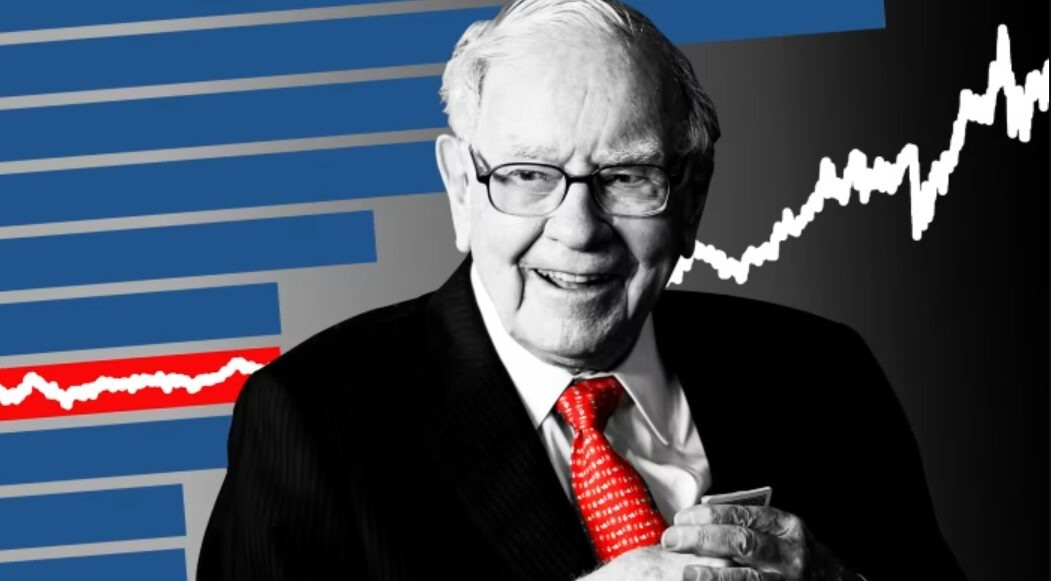
Warren Buffett appears to remain deeply involved in Berkshire Hathaway’s biggest stock-market decisions, even as Greg Abel takes over as chief executive and assumes responsibility for running the conglomerate’s sprawling operating businesses.

According to CNBC’s Warren Buffett’s Watch, the latest evidence comes from Berkshire’s second-quarter portfolio disclosures, which initially appeared to signal a major shift in how the company was deploying its enormous cash pile.

Two weeks ago, Berkshire reported that its cash reserves had fallen by billions of dollars during the second quarter, marking the first significant decline since early 2022. The move suggested that Abel, who became Berkshire’s CEO, was beginning to put a substantial portion of the company’s capital to work.

But Berkshire’s subsequent disclosure of its equity holdings has complicated that interpretation.

Barron’s Andrew Bary noted that Abel does not appear to have taken over responsibility for Berkshire’s major stock-picking decisions. Instead, Buffett, who is approaching his 96th birthday, still appears to be making some of the most consequential investment decisions involving Berkshire’s more than $350 billion equity portfolio.

The clearest example is Alphabet, the parent company of Google.

Buffett said in a CNBC interview last month that he had “initiated” Berkshire’s investment in Alphabet. The stock first appeared in Berkshire’s portfolio during the third quarter of last year, and the company substantially increased its position during the second quarter.

Berkshire purchased roughly $10 billion of Alphabet shares directly from the company during the quarter, according to Bloomberg News. The transaction followed what Bloomberg described as a “stealthy weekend call” from Goldman Sachs, which was arranging Alphabet’s large equity offering.

Abel reportedly gave a “rapid signoff” to the transaction, although Buffett presumably also approved the investment.

The episode illustrates the evolving division of responsibilities at Berkshire. Abel has formal authority as CEO and is responsible for managing the conglomerate’s operating businesses, but Buffett’s investment judgment remains a major part of Berkshire’s identity and capital-allocation strategy.

Buffett has also been careful to emphasize that the two men communicate regularly. He has said he and Abel would not make major decisions that the other did not approve.

This matters because Berkshire’s equity portfolio is one of the world’s largest pools of corporate capital. Decisions involving even a small percentage of that portfolio can translate into billions of dollars of stock purchases or sales.

The second-largest equity purchase during the second quarter, Delta Air Lines, appears more likely to have come from portfolio manager Ted Weschler, according to Bary.

Abel has no formal background as a portfolio manager and does not appear to have made notable stock-picking decisions since becoming CEO. His responsibilities instead include overseeing Berkshire’s numerous operating businesses and identifying potential acquisitions.

He has nevertheless begun deploying Berkshire’s cash through acquisitions. His $6.8 billion purchase of Taylor Morrison Home is one example, although the transaction did not close until after the second quarter ended.

The distinction between Berkshire’s public-equity investments and its operating-company acquisitions could become more important as Abel establishes his own capital-allocation record.

Buffett built Berkshire’s reputation around the ability to deploy large amounts of capital into businesses and securities when valuations and market conditions were attractive. Abel will now have to demonstrate that he can preserve that discipline while operating a company with an enormous balance sheet and hundreds of billions of dollars in investable assets.

Alphabet’s rise within Berkshire’s portfolio provides another illustration of how quickly the company’s investment rankings can change. Berkshire increased its Alphabet position by roughly $17 billion during the second quarter, making the technology company its third-largest equity holding as of June 30 and pushing Coca-Cola into fourth place.

At the end of the quarter, Berkshire’s Alphabet holdings were worth $37.77 billion, compared with $32.51 billion for Coca-Cola, giving Alphabet a $5.26 billion lead.

The gap has since almost disappeared.

Alphabet shares have fallen about 3.5% since June 30, while Coca-Cola has gained 12.1%. Based on Friday’s closing prices, Alphabet’s lead over Coca-Cola was only about $20 million.

Coca-Cola briefly overtook Alphabet at the close on July 30 and again on Aug. 20, demonstrating how closely the two positions are now matched.

The changes underline how Berkshire’s portfolio can shift in ranking even without Buffett or his investment managers buying or selling another share. Market movements alone can alter the relative size of its largest holdings by billions of dollars.

Berkshire is also dealing with a separate legal issue involving its HomeServices of America real estate subsidiary. A federal appeals court in St. Louis has upheld a 2024 settlement involving HomeServices and the National Association of Realtors in a class-action antitrust case over real estate commissions.

HomeServices agreed to pay $250 million as part of a settlement exceeding $1 billion. The agreement also required the National Association of Realtors to change rules governing the division of real estate commissions.

The underlying case followed a 2023 jury verdict that found the defendants liable for $1.78 billion in damages. Under U.S. antitrust law, that amount could have been tripled. Some plaintiffs objected to the settlement, arguing that they were receiving insufficient compensation, and sought to block the agreement.

The 8th U.S. Circuit Court of Appeals this week upheld a lower court’s approval of the settlement.

A lawyer representing some of the objectors told Reuters they could seek review by the Supreme Court.

“Everyone got next to nothing for the sake of settling. There’s something just not right about that,” the lawyer said.

HomeServices CEO Chris Kelly said the appeals court decision provides “additional certainty” for the company, its agents and customers.

The ruling does not resolve all of Berkshire’s exposure to litigation involving real estate commissions. Berkshire Hathaway Energy, which owns HomeServices, remains the target of a separate proposed antitrust class action after a judge ruled in April that the company was not covered by the HomeServices settlement.

The separate case follows the antitrust litigation against the National Association of Realtors and major brokerage companies.

A lawyer for plaintiffs targeting Berkshire Hathaway Energy previously described Berkshire as the “leader of the pack” and argued that targeting the conglomerate could put pressure on corporate America to change its practices.

For Berkshire, the investment and legal developments highlight two different challenges facing the company as Buffett’s era gives way to Abel’s leadership.

Abel has inherited responsibility for an enormous operating conglomerate and is beginning to make major acquisitions, but Buffett’s fingerprints remain visible on some of Berkshire’s largest stock investments.

That transition is likely to remain closely watched because Berkshire’s investment portfolio is not simply a source of returns. It is a central component of the company’s capital-allocation strategy, and the decisions made over the next several years will help determine how effectively Abel can establish his own record while maintaining the investment discipline that defined Buffett’s tenure.

Vast Cuts Jobs as Disney Overhauls Employee Benefits

0

Two very different corporate stories are emerging from the technology and entertainment industries, but both highlight how companies are adjusting their workforces and employee incentives while preparing for the next phase of growth.

Space-station startup Vast has cut approximately 4% of its workforce, while Disney is preparing a significant update to its employee benefits package, including a new stock-purchase program and changes to healthcare coverage.

Vast, the California-based company building commercial space stations, dismissed 46 employees this week as part of what management described as a performance-based decision following its mid-year review cycle.

The company said the affected workers were not meeting expectations and emphasized that the reductions do not represent a retreat from its broader growth strategy. The timing is notable.

Vast recently raised $500 million to accelerate development of its commercial space-station ambitions. The company is targeting the launch of Haven-1 in 2027 aboard a SpaceX rocket and has plans for the larger Haven-2, which could eventually contribute to the commercial infrastructure replacing the International Space Station.

Rather than signaling a broad hiring freeze, Vast says it continues to recruit, with hundreds of positions reportedly open. That suggests the company is attempting to reshape its workforce around the technical capabilities required for an increasingly ambitious space program.

Vast has expanded into satellite manufacturing and established partnerships involving the European Space Agency and national space agencies. The situation at Disney reflects a different kind of corporate adjustment.

The entertainment giant is preparing to introduce an Employee Stock Purchase Plan for eligible U.S. employees, potentially giving workers the opportunity to purchase Disney shares, likely at a discount.

The program is expected to launch in late 2027, subject to approvals, although eligibility and other details are still being finalized.

The proposed stock program arrives after Disney reduced some stock-based compensation for certain technology employees and conducted several rounds of workforce reductions. Offering broader access to company shares could therefore become an important tool for employee retention and morale, particularly as traditional compensation structures evolve.

Disney is also preparing changes to most of its medical plans beginning in 2027. Employees will generally need to actively select their coverage rather than having their existing plans automatically roll over. The company has attributed the changes to rising healthcare costs, while keeping the same insurer.

At the same time, Disney plans to expand its Employee Assistance Program by doubling available counseling sessions and consolidating certain well-being initiatives. These changes indicate an attempt to balance rising benefit costs with programs that employees increasingly value.

The developments at Vast and Disney illustrate a broader corporate trend: companies are becoming more selective about how they allocate labor and compensation. Vast is concentrating its workforce on high-priority space infrastructure projects/

While Disney is redesigning benefits to strengthen ownership, healthcare flexibility and employee support. For Vast, the immediate test is execution. For Disney, it is whether redesigned benefits can improve retention and engagement without significantly increasing costs.

In both cases, the message is similar: as companies enter uncertain and capital-intensive periods, workforce strategy is becoming as important as the products they are building.