DD
MM
YYYY

PAGES

DD
MM
YYYY

spot_img

PAGES

Home Blog Page 3

Judge Signals Setback for TikTok’s $400 Million U.S. Privacy Settlement

0

TikTok and its Chinese parent ByteDance have hit a setback in their proposed $400 million settlement with the U.S. Justice Department after a federal judge indicated he would reject a key part of the agreement involving a long-running privacy consent decree.

U.S. District Judge George H. Wu in Los Angeles said Friday that he was inclined to reject the companies’ request to terminate a 2019 consent decree imposed on TikTok’s predecessor, Musical.ly. He scheduled a hearing for Monday to consider the issue.

Wu said that, based on the information currently before the court, he could not determine that ending the decree would provide a “durable remedy” or that the proposed termination was appropriately tailored to the changes cited by the government.

The ruling does not, on its face, reject the entire $400 million settlement. But it puts a significant component of the agreement in doubt and could complicate TikTok’s effort to resolve allegations that it mishandled children’s personal information.

Under the proposed settlement reached in August, TikTok agreed to pay $300 million immediately and another $100 million if the court terminated the 2019 consent decree.

The decree dates back to Musical.ly, the short-video platform that was later folded into TikTok. In 2019, the Federal Trade Commission alleged that Musical.ly knew children under 13 were using the service but failed to obtain parental consent before collecting their names, email addresses, and other personal information.

Musical.ly paid $5.7 million to settle those allegations. The resulting consent decree imposed reporting and record-keeping requirements that remain in effect through 2029.

The latest dispute shows why the decree remains important to the Justice Department’s case. Terminating it would have provided TikTok with a way to close out a regulatory obligation that predates the current ownership and operating structure of its U.S. business.

The $400 million settlement itself stems from a Justice Department lawsuit filed in 2024. The government accused TikTok and ByteDance of violating U.S. children’s online privacy laws by collecting personal information from users under 13 without the required parental consent.

The government has argued that TikTok has undergone substantial changes since the lawsuit was filed, including changes to its ownership structure, management, compliance operations, and privacy practices. Those changes form part of the rationale for seeking an end to the older consent decree.

But Wu’s tentative position suggests that the court wants more evidence that those changes are sufficient to replace the protections and oversight contained in the existing order.

TikTok’s Broader U.S. Restructuring

The privacy case is unfolding alongside a much larger effort by ByteDance to restructure TikTok’s U.S. operations and address Washington’s concerns over the platform’s ownership and handling of American user data.

In January, ByteDance agreed to establish a majority American-owned joint venture intended to safeguard U.S. user data and help avert a potential U.S. ban. TikTok’s U.S. business has more than 200 million American users.

The joint venture has pointed to new safeguards designed to prevent children from accessing the platform. In a court filing, it said all users are required to provide their date of birth and that it has developed age-moderation systems designed to identify users under 13 who misrepresent their age.

Those measures are relevant to the Justice Department’s argument that TikTok’s privacy practices have changed significantly since the original allegations.

The judge’s response, however, indicates that the court may require a clearer connection between those changes and the proposed termination of the 2019 decree. That creates an unusual situation for TikTok. The company is attempting to resolve a new federal privacy case while simultaneously seeking to remove an older regulatory obligation that remains in force for several more years.

The settlement would have, for the Justice Department, provided a financial penalty and a resolution to the litigation while allowing TikTok to operate under its newer compliance framework. For TikTok, ending the consent decree would remove an additional layer of federal oversight inherited from Musical.ly.

The court’s decision could therefore determine whether the proposed settlement can proceed in its current form or whether the parties will need to renegotiate the arrangement.

The Monday hearing is expected to provide more clarity on whether the judge’s concerns can be addressed without reopening the broader settlement. Until then, the $400 million agreement remains subject to a significant legal hurdle, with the fate of the 2019 consent decree at the center of the dispute.

IMF Says AI Could Lift Europe’s Productivity 1% But Deepen Inequality and Energy Strain

0

Artificial intelligence could raise productivity across Europe by about 1% over the next five years, but the gains are likely to be uneven and could widen inequality, put additional pressure on electricity networks and deepen Europe’s reliance on foreign technology, according to an International Monetary Fund paper.

The paper, prepared for an informal meeting of European Union finance ministers in Dublin on September 18-19, said the economic impact of AI would vary significantly across countries, regions and groups of workers.

The IMF argued that completing the EU’s single market could help spread the benefits of AI more broadly by making it easier for capital, labor, energy and technology to move across the 27-member bloc.

The assessment adds to concerns already raised by former European Central Bank President Mario Draghi and the European Commission that fragmented European markets are limiting investment, innovation and the region’s ability to compete in emerging technologies.

Europe’s fragmented economic structure could become an issue as AI investment accelerates. Countries with stronger digital infrastructure, larger pools of skilled workers and better access to capital are positioned to adopt AI more rapidly, while economies with weaker infrastructure or smaller technology sectors could capture fewer of the gains.

AI Could Reshape Europe’s Labor Market

The IMF estimated that about 60% of workers in advanced European economies are employed in occupations that are highly exposed to AI.

Exposure does not necessarily mean job losses. Some workers could use AI tools to perform existing tasks more efficiently, increasing their productivity. Others, however, could face displacement as companies automate routine work.

The distribution of those effects will depend partly on whether AI complements workers or substitutes for them. Jobs involving tasks that can be automated more readily face greater disruption, while workers whose productivity can be enhanced by AI could benefit from the technology. That creates a potential divide within European economies. Workers with the skills needed to use increasingly capable AI systems could see productivity and earnings gains, while those performing more automatable tasks could face greater pressure.

The IMF said the differences could also emerge between countries. More advanced European economies are expected to benefit disproportionately because they are more prepared for AI adoption and have greater exposure to the technology.

Completing the single market could therefore serve as an important mechanism for spreading AI investment and expertise beyond Europe’s largest technology and financial centers.

AI Expansion Adds To Europe’s Power Challenge

The IMF also identified electricity infrastructure as a potential constraint on Europe’s AI ambitions.

European data centers already account for roughly 3% of the continent’s electricity consumption, according to the paper. That demand is expected to rise substantially as AI applications require more computing capacity.

The pressure is already concentrated in major technology and data-center hubs including Frankfurt, London, Amsterdam, Paris and Dublin. Clusters of data centers in those locations are placing additional demands on local electricity networks.

The IMF said Europe should respond by investing in cross-border electricity infrastructure and deepening integration of its energy market.

The recommendation reflects a broader issue facing the AI industry. Building more data centers requires not only semiconductor capacity and capital but also reliable supplies of electricity. Where local grids cannot accommodate new facilities, access to power can become a constraint on AI infrastructure investment.

For Europe, that challenge is complicated by the fact that electricity markets remain fragmented across national borders. Greater integration could allow power to move more efficiently to areas experiencing higher demand and make it easier to support new data-center capacity.

Europe Faces Another Technology Dependency

The IMF also warned that Europe’s AI expansion could create a new form of strategic dependence. The US and China currently dominate the development of leading AI models, leaving Europe reliant on technology developed elsewhere unless it builds a stronger domestic AI industry.

That dependence could extend beyond AI models to computing infrastructure, chips, cloud services and other parts of the technology stack.

The IMF said Europe would need significant investment in its own AI industry to reduce the risk of becoming dependent on foreign technology. Building that capacity, however, would require addressing some of the same constraints that currently limit European technology investment, including fragmented capital markets and differences between national regulatory and energy systems.

The productivity opportunity is therefore closely connected to Europe’s ability to remove barriers within its own economy.

The IMF’s estimate of a roughly 1% productivity increase over five years suggests that AI could make a measurable contribution to European economic growth, but the gains are unlikely to arrive automatically or evenly. Countries with stronger infrastructure, deeper technology ecosystems and more AI-exposed industries could capture a larger share of the benefits. Regions facing electricity constraints or lacking access to capital and skilled workers could fall further behind.

For European policymakers, the challenge is consequently not only how quickly businesses adopt AI, but whether the economic infrastructure around them can support that adoption. A more integrated single market, stronger cross-border electricity networks and greater investment in European AI capabilities are expected to be a determinant of how widely the productivity gains are distributed.

Without those changes, the IMF’s assessment indicates that AI could increase Europe’s productivity while simultaneously bolstering existing gaps between countries, regions and workers and creating new dependencies on technology developed outside the bloc.

AI Art Enters a New Era of Memory, Ecology and Onchain Culture

1

Artificial intelligence is no longer simply a tool for generating images. It is becoming a subject through which artists are questioning memory, ecology, identity, ownership and humanity’s responsibility toward technology.

A series of exhibitions and cultural events involving artists including Ryan Koopmans, Alice Wexell, Auriea Harvey and Refik Anadol illustrates how rapidly AI and digital art are moving into the center of contemporary culture.

At the Victoria and Albert Museum, a free conversation with Lumen Prize artists examines how AI, memory and ecology are reshaping ideas of responsibility and care in technology. The discussion reflects a broader shift in digital art.

Rather than focusing exclusively on what machines can create, artists are increasingly asking what societies should preserve, what technology should remember and how technological systems affect the natural world.

That conversation is particularly relevant as AI-generated media becomes increasingly sophisticated. The abundance of synthetic images, videos and data raises questions about cultural memory and authorship.

Artists are therefore exploring AI not merely as software, but as a framework for examining how humans construct and preserve meaning. In New York, Ryan Koopmans and Alice Wexell extend this conversation through The Wild Within at Leila Heller Gallery.

The exhibition combines motion works, archival pigment prints and wall sculptures, creating an environment where digital imagery and physical objects interact.

Their work occupies a space between photography, technology and constructed landscapes, encouraging viewers to reconsider the relationship between natural environments and digitally mediated experiences.

The title itself suggests a tension that has become increasingly important in contemporary art: the distinction between the natural world and the technological systems increasingly used to represent it.

As AI becomes capable of producing convincing simulations of places, organisms and environments, the question of what is authentic becomes increasingly complicated. Auriea Harvey approaches digital culture from another direction with Ready To Die.

A solo exhibition at Heft featuring 48 works spanning marble, ceramic, bronze and generative video.  The exhibition also includes Amulets recorded on Ethereum, connecting traditional sculptural practices with blockchain-based forms of provenance and ownership.

Harvey’s work demonstrates that the digital does not necessarily replace the physical. Instead, blockchain, generative technology and traditional materials can exist within the same artistic language. An Ethereum-recorded artwork becomes more than a digital object.

It becomes part of an emerging history in which code, cryptographic ownership and physical craftsmanship overlap. Refik Anadol represents perhaps the most visible expression of this transformation. His inclusion in TIME100 Art 2026 as the “Artist of the AI age” follows the opening of Dataland in Los Angeles, museum dedicated to immersive data-driven art.

Anadol’s practice has helped move machine intelligence and massive datasets from technical environments into galleries and public cultural spaces.

These developments point toward a changing definition of contemporary art.

AI is becoming simultaneously a medium, an archive, a collaborator and a subject of criticism. Blockchain adds another layer by introducing programmable provenance and new models for distributing and collecting digital works.

The emerging movement is therefore larger than AI-generated imagery. It is about how technology changes the way humanity remembers, represents nature, owns culture and understands creativity. As museums, galleries and artists continue to engage with these questions.

The future of art may increasingly be defined not by the boundary between physical and digital worlds, but by the space where they converge.

Nvidia CEO Jensen Huang Says There’s Zero Chance AI Ends the World by 2030

0

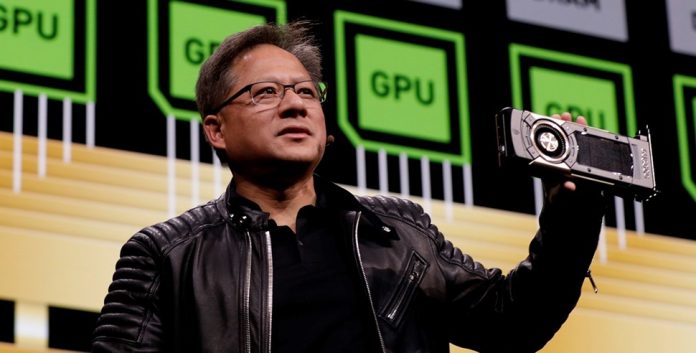
Nvidia CEO Jensen Huang has firmly rejected predictions that artificial intelligence could end the world by 2030, stating there is a 0% chance of that outcome.

In an exclusive interview with CBS News Huang said he questioned the motivations behind some of the more alarming AI predictions, suggesting political interests could drive them, attempts to attract attention, or other undisclosed reasons.

While acknowledging the growing concerns surrounding advanced AI, Huang maintained that the technology should not be portrayed as an inevitable path toward global catastrophe.

He said,

“I completely disagree that AI is going to destroy, is going to be the end of the world in 2030. I believe the claims of the end of the world, stirring fear across America, and doing it by the people who are doing it, make no sense to me. So they must be doing it for ulterior reasons.

“Maybe it’s political, maybe it’s otherwise, maybe it’s just attention-grabbing, maybe so that they could get a great interview with you. I don’t know what is the reason for it, but it’s characterized, 2030 is not going to be the end of the world.  There is 0% chance that’s going to be the end of the world.”

On the pace of AI development of the technology he added,

We should go as fast as we can irrespective of anybody else. We’re going to go as fast as we can, but we would never, and never should, ship products before they’re ready or deliver unsafe products. And nobody’s expecting us to do that. But everybody’s expecting us to succeed and help America be as prosperous as possible.”

Huang’s comments come amid intensifying debate over AI risks, including recent warnings from some industry researchers that advanced systems could pose existential threats within the decade.

Anthropic CEO Dario Amodei has called on AI companies to slow the pace at which they develop increasingly capable artificial intelligence models, warning that technological progress could outpace the industry’s ability to implement adequate safety measures.

In a recent essay, Amodei argued that AI companies should deliberately moderate the advancement of frontier models to create more time for researchers and regulators to address emerging risks. He proposed measures including independent evaluations of AI systems, greater coordination among leading AI developers and international cooperation on AI safety.

OpenAI CEO Sam Altman subsequently expressed support for Amodei’s call, agreeing that the industry should slow the pace of frontier AI development and strengthen safety measures. Other technology leaders, including Elon Musk and Google DeepMind CEO Demis Hassabis, have also backed greater caution around the development of increasingly autonomous AI systems.

The calls for a slowdown come as AI systems become increasingly capable of performing complex tasks with limited human intervention, intensifying debate over whether safety measures are keeping pace with technological progress.

However, Nvidia chief’s remarks align in substance with recent comments from President Donald Trump, who has described broader AI doomsday fears as a “hoax.”

Trump has rejected calls from leading artificial intelligence executives to slow the pace of AI development, arguing that the United States must maintain its lead over China. He said concerns about catastrophic AI risks are being overstated by negative forces.

Speaking to reporters at his Doonbeg golf resort in Ireland while attending the Irish Open, Trump said the U.S. remains the most advanced nation in AI and intends to keep it that way. “Whoever wins with AI wins. It’s an expression that I came up with, and it’s true”, he added.

During a phone call with Huang at the All-In Summit earlier this month, Trump stated that robots and AI would not take over the world.

Huang has indicated he shares the view that such catastrophic scenarios are unfounded. While dismissing extinction-level risks, Huang has also outlined a clear stance on the pace of AI development.

He argued against slowing progress across the industry, emphasizing that companies should advance as quickly as possible while maintaining strict safety standards.

“We should go as fast as we can irrespective of anybody else,” Huang said. “We’re going to go as fast as we can, but we would never, and never should, ship products before they’re ready or deliver products that are unsafe.” He added that the expectation is for the technology to succeed and contribute to prosperity.

Huang, whose company dominates the market for AI processors, has consistently maintained that artificial intelligence can be safely managed. He has repeatedly pushed back against calls for extensive new regulations, framing safety primarily as an engineering challenge rather than one requiring heavy external constraints.

For now, the leader of the world’s most important AI chip company has delivered an unambiguous message, that the end of the world is not coming in 2030 because of artificial intelligence.

Volkswagen Flags €10 Billion Costs As Porsche Crisis Deepens And China Pressure Intensifies

0

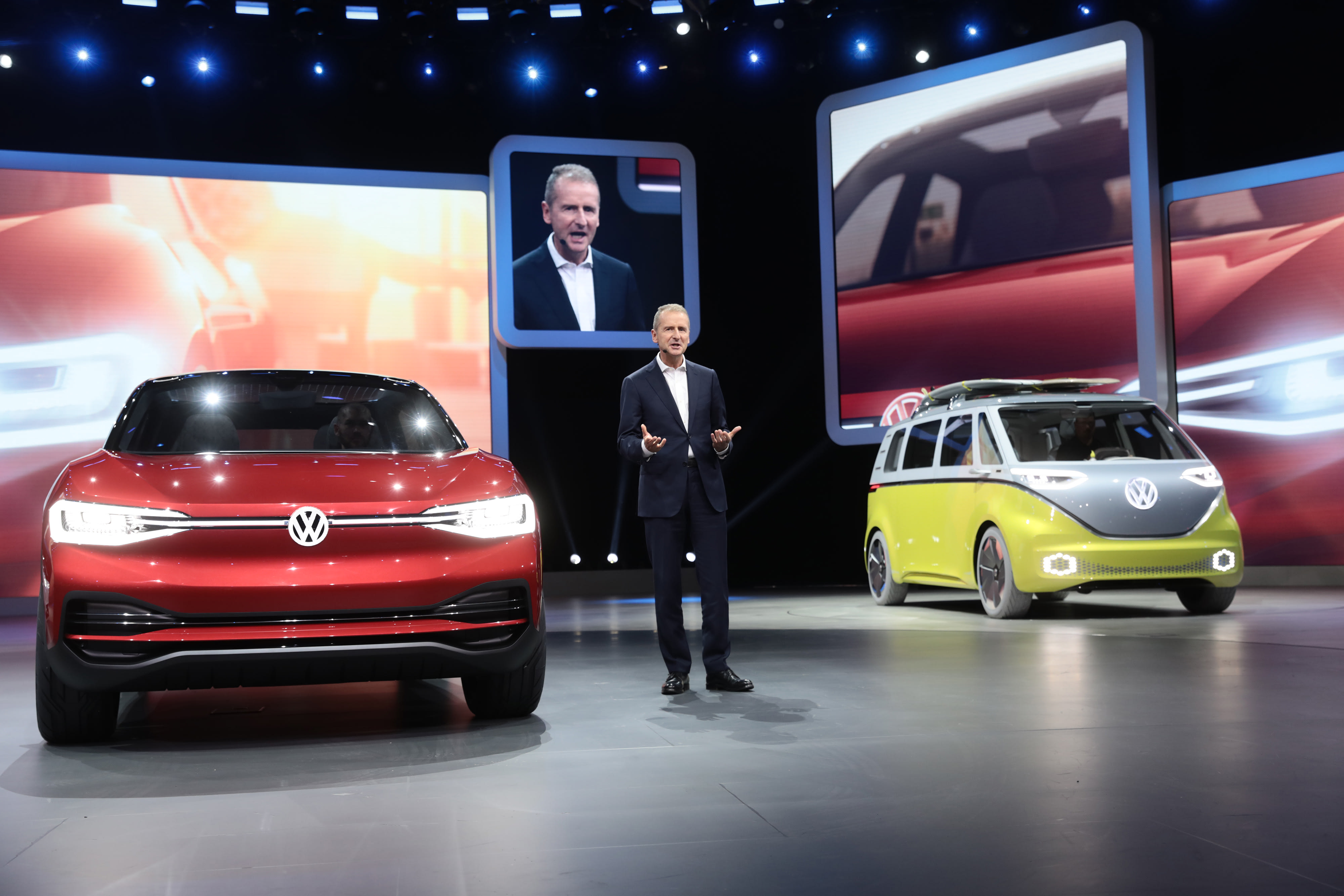
Volkswagen has warned of up to €10 billion ($11.5 billion) in one-off costs, most of them linked to struggling sports car unit Porsche, deepening a crisis at the world’s second-largest automaker and underscoring the growing pressure on Europe’s industrial giants from a rapidly changing global market.

The profit warning comes just two weeks after Volkswagen agreed to a sweeping transformation deal with shareholders that includes another 50,000 job cuts, a simplification of the group’s structure and the possibility of closing plants. The latest charges add another layer of pressure to a restructuring already described as the biggest in the company’s history.

Porsche is at the center of the latest deterioration. The luxury sports car brand has been hit by US tariffs and weakening demand for foreign luxury vehicles in China, creating a difficult combination for a business whose profitability has already deteriorated sharply. Porsche posted a profit margin of just 1.1% last year.

Volkswagen said about €6 billion of the impairment charges were tied to new mid-term assumptions for Porsche, in which it owns a 75% stake. The revised assumptions reflect lower expectations for the business as it reduces its dealership network in China and confronts weaker demand in one of its most important markets.

The warning underlines the scale of Volkswagen’s exposure to the two markets that have historically been critical to its global business. The automaker has been squeezed simultaneously by US import tariffs and a prolonged deterioration in China, where it lost its position as the country’s top-selling automaker in 2024.

“We have no time to lose,” Volkswagen finance chief Arno Antlitz said in an internal memo seen by Reuters, pointing to a 20% contraction in China, increasing competition from Asian rivals in Europe and rising sales of less profitable electric vehicles.

“There is no sign of consolidation,” Antlitz said of the Chinese market. “We cannot escape this trend.”

The deterioration has already been reflected in Volkswagen’s financial expectations. The group now expects its operating profit margin to be no higher than 1% in 2026, a dramatic reduction from its previous guidance of between 4.0% and 5.5%. Analysts had been expecting a margin of about 4.1%.

Volkswagen shares closed 5.6% lower on Friday, while Porsche shares fell 3.3%. Porsche SE, Volkswagen’s largest shareholder, also reduced its outlook, sending its shares down 4.9%.

China and EV Transition Squeeze Volkswagen

The latest warning exposes a difficult structural problem for Volkswagen. The company is being forced to contend with a weaker Chinese market at the same time as the global auto industry undergoes a costly transition toward battery-electric vehicles.

Volkswagen’s scale has historically provided a significant advantage, with its portfolio spanning mass-market and premium brands including Volkswagen passenger cars, Audi, Skoda and Seat. But the same breadth also leaves the group exposed to weakening demand across multiple segments and to the heavy investment required to adapt its product range.

China represents the most immediate pressure point. Volkswagen’s warning that there is “no sign of consolidation” in the market suggests that the company does not expect the competitive environment to improve quickly. Domestic Chinese manufacturers have expanded aggressively, while the shift toward electric vehicles has altered the competitive dynamics that previously favored established global automakers.

The company’s warning also points to a second problem: even where Volkswagen succeeds in increasing electric-vehicle sales, those vehicles can be less profitable than the models they are replacing. That means a faster shift in consumer demand toward battery-electric cars can increase pressure on margins before the company has fully adjusted its cost base and product mix.

Volkswagen said the “further deterioration in the market environment, especially in China” and an accelerated shift in demand toward battery-electric vehicles would result in lower expectations for its Audi and Volkswagen passenger-car brands.

The Porsche impairment is therefore more than an isolated problem at a luxury subsidiary. It forms part of a broader reassessment of the group’s earnings potential as Volkswagen confronts simultaneous changes in consumer demand, technology, trade policy and international competition.

The combination is particularly damaging for Porsche because its premium positioning makes it highly exposed to China’s luxury market while its US business faces the additional burden of tariffs. For Volkswagen’s wider group, the problem is broader: the company must reduce costs, restructure operations and regain competitiveness at a time when two of its most important overseas markets are becoming harder to navigate.