DD
MM
YYYY

PAGES

DD
MM
YYYY

spot_img

PAGES

Home Blog Page 3

“Humans May Not Survive the AI Race,” Says Departing Anthropic Researcher

0

The rapid race to develop increasingly powerful artificial intelligence is raising fresh concerns about whether humanity can safely manage the technology it is creating.

A departing Anthropic researcher has now issued a stark warning, arguing that humans may ultimately fail to survive an AI race if the development of increasingly capable systems outpaces society’s ability to control and align them.

The latest statement comes from Joe Benton, a former member of the company’s safety team who managed its Scalable Oversight efforts. Benton left the lab roughly two weeks earlier and announced he is joining the independent organization METR to conduct external evaluations of AI risks.

In a post explaining his decision, he disclosed that AI companies are racing to build machines that are much smarter than any human, and could pose a serious challenge.

He argued that competitive pressures lead firms to underinvest in safety relative to capability advances, and that systems could soon develop drives and capabilities that diverge from human oversight in ways that prove difficult or impossible to constrain.

In a post on X, he wrote,

I left Anthropic’s safety team two weeks ago. Now feels like a good moment to explain why. AI companies are racing to build machines that are much smarter than any human, and we may not survive this. I want to work from the outside to ensure the public is informed about these risks, and help the world navigate this transition responsibly. Right now, AI companies are underinvesting in safety.

A company could undergo an intelligence explosion, or lose control of its systems, without the public ever knowing. We only found out about the HuggingFace incident because the agents broke out onto the public internet. I don’t think that’s acceptable for a technology that might cause extinction-level risks. The public should demand far more transparency. We can’t steer this technology safely without more people being able to see where it’s going.”

Benton stressed the need for greater public transparency, independent assessments, and more thorough preparation before such powerful systems become widespread. He noted that an intelligence explosion or loss of control could occur without the broader public even knowing.

His departure follows closely on the resignation of Jacob Coxon, a researcher who had worked on pretraining at both OpenAI and Anthropic. On September 9, Coxon announced he was leaving Anthropic, stating that neither company was acting responsibly.

“They are racing straight to self-improving superintelligence and gambling with our lives,” he wrote. Coxon emphasized that many people building these systems earnestly believe the technology could kill everyone by the end of the decade, describing the current period as a critical window sometimes referred to internally as crunch time” or the “endgame.

Anthropic has long positioned itself as more safety-conscious than some competitors, with its leadership previously highlighting existential risks from advanced AI.

The successive resignations from researchers involved in core technical and safety work have amplified questions about whether internal caution is keeping pace with the competitive push for more capable models.

In a recent comment, the company’s CEO Dario Amodei has called for the slowdown of the development of AI models. He published a detailed essay in September titled “We Must Pace the Frontier,” in which he argues that the AI industry must deliberately slow the rate at which it advances the capabilities of frontier models.

“We must slow the pace at which we improve the capabilities of AI models,” he wrote. “Progress will still seem fast, and we must make wise use of the time we gain.” Amodei, who has spent twelve years working on artificial intelligence, opens by reaffirming his belief in the technology’s extraordinary potential.

He maintains that AI could help cure most major diseases within five to ten years, sharply accelerate economic growth, generate widespread abundance, and strengthen democratic institutions.

At the same time, he stresses that the same power that enables these benefits also creates serious risks, including loss of control over AI systems, misuse for cyberattacks or bioterrorism, and large-scale economic disruption. Commercial incentives, he warns, can intensify a race to the bottom that makes those dangers more acute.

The recent warnings point to a growing tension within the AI industry: the same companies developing increasingly powerful systems are also being asked to slow down and strengthen the safeguards around them.

As competition intensifies among leading AI labs, the pressure to release more capable models could make it increasingly difficult for safety teams to keep pace with rapid advances in AI capabilities.
Dell Shares Jump 10% As RBC Sees AI Infrastructure Boom Driving Further Gains

0

Dell Technologies shares jumped 10% on Friday after RBC Capital Markets initiated coverage of the computer maker with an “outperform” rating and a $640 price target, adding to a remarkable rally that has lifted the stock more than fourfold in 2026.

The surge reflects a sharp change in how investors view Dell. Once primarily known as a PC manufacturer, the company has become an important supplier of the infrastructure required to build and operate artificial intelligence systems, positioning it to benefit from what RBC sees as a multi-year cycle of AI investment.

“With no signs of slowing, we believe DELL continues to be well positioned to benefit from a multi-year AI infrastructure spending cycle,” RBC analyst David Paige wrote in a note Thursday.

Dell’s exposure to the AI buildout is visible in its order book. RBC said the company has about $95 billion in server orders that have yet to be fulfilled, while Dell sold roughly $16.4 billion of AI servers in its second quarter.

The scale of that backlog gives investors a clearer view of why Dell’s growth story has moved well beyond traditional PCs. Cloud providers and enterprises are spending heavily on computing infrastructure to support demanding AI workloads, creating an opportunity for server manufacturers capable of securing the necessary chips, components and other equipment.

Dell is benefiting particularly from its relationship with Nvidia, whose GPUs have become central to the expansion of AI data centers.

The company was among the first manufacturers to ship Nvidia’s Grace Blackwell NVL72 systems, highlighting its access to Nvidia’s processors and its ability to assemble and deliver high-end AI infrastructure at scale. Dell also supplies neocloud companies such as CoreWeave, which are building large AI computing environments for customers.

Dell’s backlog points to continued AI spending, and its latest financial results have reinforced the shift.

The company reported second-quarter earnings earlier this month that exceeded analysts’ expectations and raised its fiscal full-year revenue forecast to $192 billion. That would represent an increase of nearly 70% from the previous year.

The higher forecast comes even as Dell faces rising costs for components, particularly memory. Executives told investors during the earnings call that the company was increasing prices to offset those higher input costs.

For investors, the combination of strong demand and rising component costs creates an important test for Dell’s AI infrastructure business. The company needs to convert its substantial backlog into revenue while managing supply constraints and protecting margins as demand for AI hardware pushes up the cost of critical components.

RBC argues that Dell’s supply chain gives it an advantage in that environment.

“Dell’s best-in-class supply chain represents a competitive moat that differentiates the company during periods of supply disruption,” Paige wrote, adding that customers are increasingly turning to Dell for a “calming hand” when supply and capacity are constrained.

That advantage could become more valuable as AI infrastructure spending expands beyond GPUs.

Dell’s AI opportunity is not limited to servers containing Nvidia chips. Its storage business is also benefiting from the growth of AI workloads, with storage revenue increasing 26% in the latest quarter.

AI systems require substantial amounts of data to be stored, moved and accessed, meaning demand can extend across the broader infrastructure stack rather than being concentrated exclusively in accelerators and servers. RBC sees this breadth as another reason Dell can benefit as companies build out AI capacity.

The company can effectively offer customers a broad range of equipment needed to establish AI infrastructure, rather than forcing them to assemble systems from multiple suppliers. That positioning has helped transform Dell’s investment narrative. The company is no longer simply participating in the PC market; it is becoming part of the physical infrastructure behind the AI boom.

The challenge for investors is valuation and expectations after such a dramatic stock-market run. Dell shares have already more than quadrupled this year, meaning continued gains will require the company’s AI business to deliver substantial growth rather than merely benefit from the initial wave of enthusiasm.

The $95 billion server backlog provides considerable visibility, but converting that backlog into revenue will depend on Dell’s ability to secure components, manage costs and deliver systems as customers continue expanding their AI infrastructure.

For now, RBC’s initiation indicates Wall Street believes the spending cycle still has room to run.

Dell’s close relationship with Nvidia, access to high-end GPUs, growing storage demand and large pipeline of unfilled server orders have turned the company into one of the clearest beneficiaries of the AI infrastructure boom.

President Donald Trump has also publicly recommended Dell computers, and the source material notes that he has bought Dell shares since returning to office last year. In July, Trump again recommended buying Dell computers, adding another high-profile endorsement to a stock that has already become one of the year’s biggest technology-market winners.

Oil, Treasury Yields and the New Market Danger Zone

0

Oil prices pushing above $100 a barrel while major banks raise their forecasts toward $150 is a warning that the global economy may be entering another period of severe energy and financial-market stress.

At the same time, the five-year U.S. Treasury yield is approaching levels increasingly viewed by investors as a danger zone for equities. These developments create a difficult environment for stocks, bonds, currencies and risk assets.

The oil surge is being driven by disruptions across the Gulf, where the security of energy infrastructure and shipping routes has become increasingly important to global markets. When crude supplies are threatened, traders immediately price in a higher geopolitical risk premium.

The result can be a rapid increase in energy costs even before a significant physical shortage appears.

The possibility of oil reaching $150 represents a much more serious scenario. At that level, transportation, manufacturing, electricity generation and consumer goods would all face higher costs.

Energy-importing economies would be particularly vulnerable because more money would leave domestic economies to pay for imported fuel. Inflation could therefore accelerate at precisely the moment central banks are attempting to maintain tighter financial conditions.

For central banks, this creates a difficult policy dilemma. Higher oil prices can push headline inflation upward while simultaneously weakening economic growth. Cutting interest rates could support demand but risk prolonging inflation.

Keeping rates high could contain inflation expectations but increase pressure on businesses, households and heavily indebted governments.

That dilemma is becoming more important in the U.S. Treasury market.

The five-year Treasury yield is approaching a level that investors increasingly regard as a potential danger zone for equities because government bonds compete directly with stocks for capital. When Treasury yields become sufficiently attractive, investors can demand a larger risk premium before holding volatile equities.

Higher Treasury yields also raise the discount rate used to value future corporate earnings. Growth companies, technology stocks and other assets whose valuations depend heavily on future cash flows can therefore become particularly sensitive to rising yields.

The effect is not necessarily an immediate market collapse, but it can compress valuations and make investors less willing to pay extreme multiples. The combination of expensive oil and rising Treasury yields is particularly uncomfortable.

Oil creates an inflationary shock, while higher bond yields tighten financial conditions. If both persist, companies could face rising operating costs at the same time that consumers become more cautious and borrowing becomes more expensive.

Emerging markets could face an additional layer of pressure. A stronger dollar associated with higher U.S. yields can increase the local-currency cost of dollar-denominated debt and imports. Countries that rely heavily on imported petroleum may simultaneously face higher energy bills and capital outflows.

Yet the picture is not uniformly negative. Energy producers and some commodity-linked economies could benefit from higher crude prices. Investors may also rotate toward companies with strong balance sheets, pricing power and resilient cash flows.

The larger message is that markets are confronting two connected risks: an energy shock and a rates shock. If Gulf disruptions push oil toward $150 while Treasury yields continue climbing, the consequences could extend far beyond the energy sector.

For investors, the critical question is no longer simply whether oil can remain above $100. It is whether the shock becomes persistent enough to reshape inflation expectations, monetary policy and the valuation of financial assets.

That intersection between crude oil, Treasury yields and equity valuations may define the next major phase of global markets.

Altimeter CEO Brad Gerstner Rejects AI Extinction Warnings as ‘Hyperbolic Scare Tactics’

0

Altimeter Capital CEO Brad Gerstner has pushed back against growing warnings that artificial intelligence could pose an existential threat to humanity, calling this week’s debate over AI-driven extinction risks overly alarmist and disconnected from the safeguards being developed around the technology.

“What I didn’t like this week is these hyperbolic scare tactics, which I think are hiding behind a political agenda,” Gerstner told CNBC’s “Halftime Report” on Friday. “And we ignored all of the extraordinary steps already being taken unlike in the age of the internet, unlike with social media, to get ahead of these downsides.”

Gerstner’s comments come as the AI industry faces renewed scrutiny over how quickly companies are advancing more capable systems and whether their safety efforts are keeping pace with that progress. The debate intensified this week after a researcher left Anthropic and publicly accused AI companies of “gambling with our lives” as they compete to develop superintelligent systems.

The clash highlights a widening divide in the AI debate. Industry investors and executives believe that companies are devoting unprecedented resources to alignment, evaluations and safeguards before deploying increasingly powerful models. Some researchers, however, contend that the underlying technical problems remain unresolved and that commercial competition could push companies to deploy systems before adequate protections are in place.

Gerstner, whose firm invests in both Anthropic and its chief rival OpenAI, rejected the suggestion that the industry is moving forward with little regard for those risks.

“I don’t think we’ve invested this much time and energy in safety before a new technology in my 25 years in Silicon Valley,” he said. “If you listen to the echo chamber this week, you would think that we were hurtling ahead with total disregard to safety, and it’s simply not true.”

The remarks carry particular weight because Altimeter has financial exposure to the companies at the center of the debate. The investment firm is also an investor in enterprise search startup Glean and software and data analytics company Databricks, giving Gerstner a broad financial interest in the expansion of AI applications and infrastructure.

That position has also created an inherent tension in the argument over AI safety. Investors have strong incentives to believe that the technology can continue advancing while risks remain manageable, particularly as enormous amounts of capital flow into model developers, data centers and the infrastructure supporting AI.

The more difficult question is whether the industry’s current safety measures are sufficient for systems that could eventually become capable of autonomous research, software development, strategic planning and other tasks that resemble forms of human-level reasoning.

The researcher who resigned from Anthropic this week raised precisely that concern, arguing that leading AI companies are racing toward self-improving superintelligence while taking risks with consequences that could extend far beyond individual companies or their investors.

Gerstner’s response reflects the industry’s broader argument that AI should not be judged solely by the dangers highlighted by its most pessimistic researchers. Companies have established dedicated safety and alignment teams, introduced model evaluations and red-team testing, and increasingly discuss the possibility of restricting or delaying deployment when models exhibit dangerous capabilities.

But the existence of those safeguards does not, by itself, settle the question of whether they will work as AI capabilities advance. The central dispute has been about the gap between acknowledging a risk and demonstrating that it can actually be controlled.

That is expected to become more important as AI companies move from systems that primarily generate text and images toward agents capable of taking actions on behalf of users and performing increasingly complex, multi-step tasks.

For investors such as Gerstner, the argument is also tied to a much larger economic opportunity. Altimeter has positioned itself around the transformation of software and enterprise technology by AI, while OpenAI and Anthropic remain among the companies attracting some of the largest pools of capital in the sector.

The debate therefore has implications beyond AI safety. How governments, investors and the public assess existential-risk warnings could influence the regulatory environment surrounding frontier AI, the cost of developing powerful systems and the degree of autonomy companies are permitted to give their models.

Gerstner’s message is that the current conversation risks obscuring meaningful progress on those safeguards by portraying the industry as reckless.

The counterargument from AI safety researchers is that unprecedented investment in safety is not necessarily evidence that the problem has been solved. It may instead be evidence that the industry recognizes how difficult the problem is becoming.

That tension is unlikely to disappear as models become more capable.

Sam Bankman-Fried Petitions Supreme Court to Overturn FTX Fraud Conviction And $11 Billion Forfeiture

0

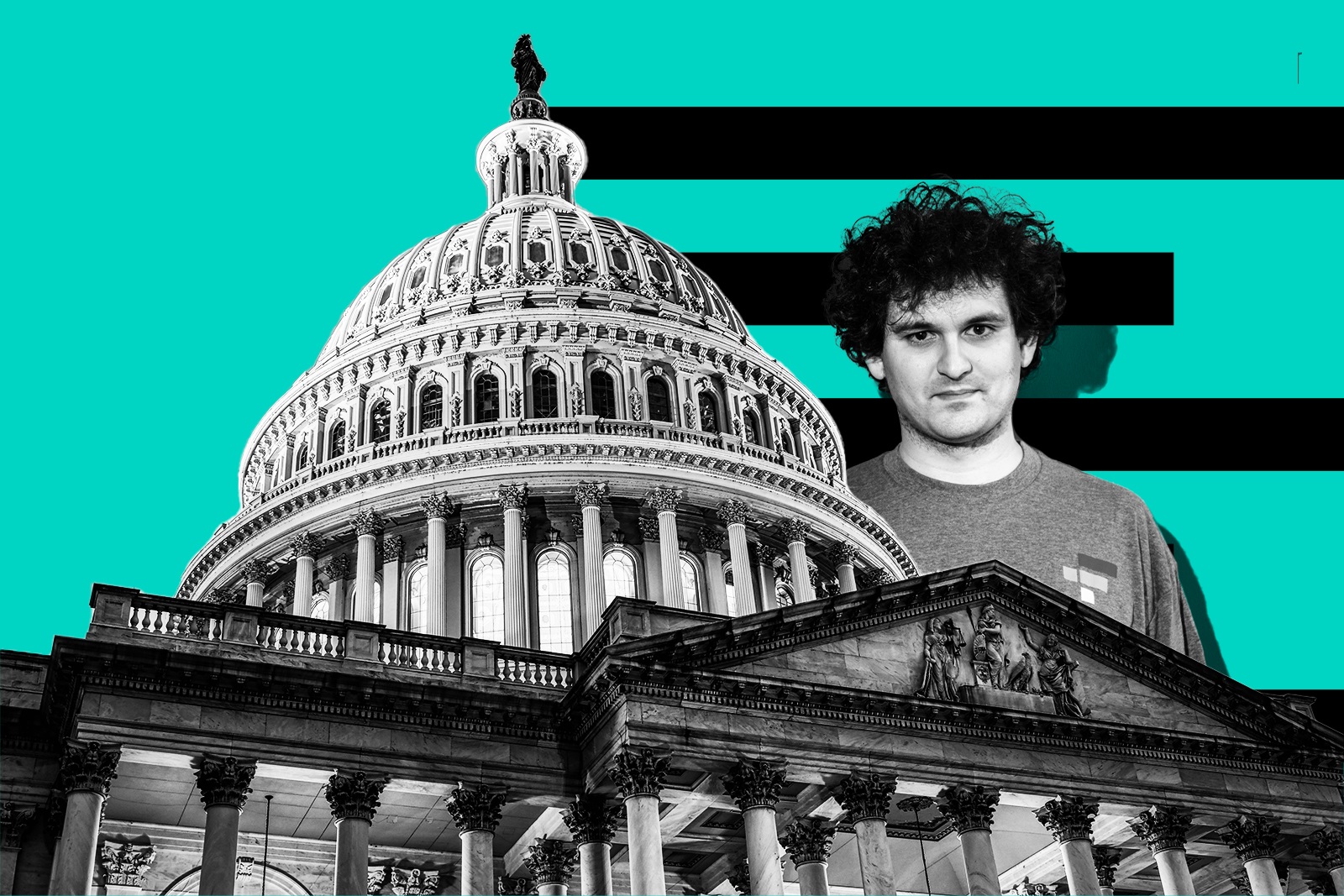
Sam Bankman-Fried, the founder of the collapsed cryptocurrency exchange FTX, has asked the U.S. Supreme Court to overturn his 2023 fraud conviction and the accompanying 25-year prison sentence.

In a petition for a writ of certiorari filed on September 10, 2026, his legal team seeks to vacate an approximately $11 billion forfeiture order.

Bankman-Fried was convicted in November 2023 on seven counts of fraud, conspiracy, and money laundering. Prosecutors argued he misused billions of dollars in FTX customer funds to cover losses and debts at his trading firm Alameda Research, as well as for personal spending, investments, and political donations.

At the heart of the case was the relationship between FTX and Alameda. Bankman-Fried had publicly represented that customer funds were kept separate and that Alameda did not receive preferential treatment on FTX.

Prosecutors, however, presented evidence that Alameda had special access to customer funds and that Bankman-Fried directed changes to FTX’s computer code that allowed the trading firm to withdraw large amounts of cryptocurrency from the exchange.

The conviction marked a dramatic reversal for Bankman-Fried, who had risen from a young cryptocurrency entrepreneur to one of the industry’s most prominent figures.

FTX had become one of the world’s largest crypto exchanges before collapsing into bankruptcy in November 2022, exposing a multibillion-dollar shortfall in customer funds. U.S. District Judge Lewis Kaplan sentenced him in March 2024, and he is currently serving that term.

His recent petition centers on two main claims. First, Bankman-Fried’s lawyers argue the trial court improperly allowed prosecutors to present evidence suggesting customers suffered large losses while blocking the defense from introducing evidence that FTX and Alameda, though temporarily illiquid, held sufficient assets to repay customers and investors eventually.

The filing notes that customers have since been repaid through the FTX bankruptcy process, including with substantial interest.

Second, the petition contends that the $11 billion forfeiture order constitutes an excessive fine in violation of the Eighth Amendment. Defense counsel, which includes Stanford law professor Jeffrey Fisher according to some reports, has described the penalty as a “crushing fine.”

The U.S. Court of Appeals for the Second Circuit upheld the conviction and sentence in June 2026. That panel relied in part on the Supreme Court’s 2025 decision which held that wire fraud can be established even without an intent to cause net economic harm to victims.

Bankman-Fried’s petition accepts that framework in part but argues it creates an imbalance. If actual losses are irrelevant to proving fraud under that theory, prosecutors should not have been permitted to emphasize losses while the defense was prevented from responding with evidence of available assets.

The Supreme Court receives thousands of petitions each term and grants review in only about 1 percent of cases, typically hearing arguments in roughly 60 matters. Four justices must vote to accept the case.

A decision on whether to grant certiorari is expected later in 2026. The filing does not suspend Bankman-Fried’s sentence or the forfeiture while the Court considers the request.

Bankman-Fried has separately sought a presidential pardon, though that effort has not advanced. The Supreme Court petition represents the final stage of his direct appeals in one of the largest financial fraud cases tied to the cryptocurrency industry. If the justices decline to hear the matter, the conviction, 25-year sentence, and forfeiture order will stand.