DD
MM
YYYY

PAGES

DD
MM
YYYY

spot_img

PAGES

Home Blog Page 3008

The Middle East remains a Place of Uncertainty

0
Benjamin Netanyahu and Joe Biden in Jerusalem, on March 9, 2010.

The Middle East, a region that has long been synonymous with geopolitical complexity, continues to navigate a path fraught with uncertainty. Recent developments suggest a cautious avoidance of direct conflict between Israel and Iran, two regional powers whose enmity has often threatened to escalate into open confrontation. This momentary respite, however, does not alleviate the underlying tensions that pervade the region.

The avoidance of conflict is a testament to the intricate balance of power and the delicate diplomatic engagements that characterize the Middle East. It is a region where historical grievances, strategic alliances, and the quest for influence converge, creating a tapestry of relations that is as rich as it is volatile.

Israel’s security concerns, particularly regarding its unacknowledged nuclear capabilities, are central to its defense strategy, especially in the face of perceived threats from Iran. Iran, on the other hand, asserts its right to respond to what it views as aggression, as evidenced by the Iranian President’s remarks following the assassination of Ismail Haniyeh on Iranian soil. These incidents highlight the ever-present potential for escalation, even as both nations navigate the complex waters of regional politics.

The broader Middle East remains a place where the specter of conflict looms large. The assassination of a Hamas political leader, attributed to Israel, and the subsequent vows of retaliation by Iran and its allies, underscore the fragility of peace in the region. The United States and other international actors have been actively involved in trying to prevent a wider regional conflict, reflecting the global implications of Middle Eastern stability.

Despite the potential for conflict, there have been periods where outright confrontation has been avoided. Such moments of restraint are significant, not only for the nations directly involved but also for the broader stability of the Middle East. However, avoidance of conflict does not equate to the absence of uncertainty. The region remains a complex puzzle, with each piece – from territorial disputes to ideological differences – contributing to the overall picture of unpredictability.

The recent news cycle has brought to light several developments that underscore the fragility of peace in the Middle East. Reports of heightened alertness from Hezbollah, the Lebanon-based militant group, suggest an atmosphere of preparedness for potential conflict. Furthermore, the acknowledgment of Israel’s formidable nuclear deterrent, particularly its fleet of Dolphins.

The strategic maneuvers and diplomatic engagements are indicative of the careful navigation required by the nations involved. It is a testament to the resilience and adaptability of the states in the Middle East that they continue to seek pathways to coexistence amidst the challenges.

The international community watches with a keen eye, understanding that the implications of these interactions extend far beyond the borders of the region. The pursuit of stability and peace is not only a regional concern but a global one, as the ripple effects of Middle Eastern politics can be felt worldwide.

The Middle East remains a place where unpredictability is a constant yet hope for a harmonious future persists. It is a region that demands attention, respect, and a nuanced understanding of its complexities. The world hopes for a day when the Middle East will find a lasting peace that honors the rich tapestry of its lands and peoples.


Navigating Bitcoin’s Price Volatility and Investor Sentiment

0

In the ever-evolving landscape of cryptocurrencies, Bitcoin has long stood as the flagship digital asset, capturing the attention of investors worldwide. However, the inherent volatility of Bitcoin’s price can often lead to a rollercoaster of emotions and market sentiment. As of late, the crypto community has witnessed a noticeable decline in Bitcoin’s value, with the current price hovering around $60,676. This downturn has cast a shadow over investor sentiment, plunging it to a state of extreme caution.

The recent dip in Bitcoin’s price is not an isolated event but part of the broader ebb and flow that characterizes the cryptocurrency market. Factors contributing to this volatility range from regulatory news, technological advancements, market manipulation, to macroeconomic trends. Such unpredictability is a double-edged sword; it presents opportunities for high returns while posing significant risks.

Investor sentiment, a key driver of market dynamics, currently reflects a pervasive sense of apprehension. The Crypto Fear & Greed Index, a barometer for investor mood, indicates a shift towards fear, suggesting that investors are exercising more caution in their trading decisions. This cautious approach is often a reaction to the fear of further price drops, leading to a sell-off that exacerbates the decline.

Despite the current sentiment, history has shown that the crypto market is resilient. Bitcoin, in particular, has rebounded from several downturns to reach new heights. This resilience is partly due to the growing recognition of Bitcoin as a ‘digital gold,’ a potential hedge against inflation and currency devaluation. Moreover, the finite supply of Bitcoin, capped at 21 million coins, adds to its appeal as a store of value over the long term.

Here are some strategies that can help in navigating the complex world of crypto investments:

Liquidity refers to how quickly and easily an asset can be converted into cash without affecting its market price. In the realm of cryptocurrencies, prioritizing assets with higher liquidity, like Bitcoin and Ethereum, can be a wise move. These assets are generally easier to sell in the market, especially during volatile periods.

The crypto market is known for its volatility, which can often lead to emotional trading. To conquer emotions, investors should adhere to a disciplined investment strategy and avoid making impulsive decisions based on short-term market movements. Given the speculative nature of cryptocurrencies, it’s prudent to invest only the amount of money that one can afford to lose without affecting their financial stability.

Diversification is key in any investment strategy. By spreading investments across different cryptocurrencies and blockchain projects, investors can mitigate the risk of loss if one asset underperforms. DCA involves investing a fixed amount of money at regular intervals, regardless of the asset’s price. This strategy can help in reducing the impact of volatility and lower the average cost of investment over time.

For investors, the key to navigating this volatility is a well-informed strategy that considers both the risks and the long-term potential of cryptocurrencies. Diversification, risk management, and a clear understanding of one’s investment horizon are crucial. Additionally, staying abreast of market trends and sentiment indicators can provide valuable insights into the timing of investment decisions.

While the current decline in Bitcoin’s price and the low investor sentiment present challenges, they also offer a moment for reflection and strategic planning. Investors who can weather the storm and make informed decisions may find opportunities even in a bearish market. As the crypto market continues to mature, it will likely become more stable, but for now, volatility remains an integral part of the cryptocurrency experience.

Congratulations Atlas Oranto for the Voyage in Venezuela’s Gas Industry

0

Venezuelan state-owned oil company, PDVSA (their NNPC equivalent), and Veneoranto Petroleum Ltd (a subsidiary created in Venezuela by Nigeria-based Atlas Oranto) signed an agreement to develop two natural gas prospects in the areas of Barracuda, located in territorial waters of the Gulf of Venezuela bordering Colombia, and Boca de Serpiente.

“I am pleased that the investment process for gas production from the Deltana platform has been accelerated…With these investments we will be the fourth natural gas reserve, it is important that investments keep flowing. We are reliable safe partners,” said Venezuelan President Nicolás Maduro, who was present at the signing of the agreement Aug. 8 in Caracas.

Let me use this moment to congratulate Arthur Eze as he takes Atlas Oranto global. It is about time Nigeria creates multinational oil and gas upstream companies. I posit that with all the sanctions against Venezuela, this could be a high margin endeavour.

Discover the Benefits of Trading Bots: Unlock Exclusive Rewards with ValueZoneAI

0

In today’s fast-paced financial markets, staying ahead of the curve can be a challenge. Whether you’re a seasoned trader or just starting out, you may have heard about trading bots—automated systems designed to help you trade more efficiently. But what exactly are trading bots, and how can they benefit you? Let’s dive into the world of trading bots and see how ValueZoneAI can unlock exclusive rewards for you.

What is a Trading Bot?

A trading bot is a software program that automatically buys and sells assets in financial markets based on predefined strategies. These bots can analyze market conditions, track price movements, and execute trades faster than any human could. By taking the emotion out of trading, bots can help you stick to your strategy, manage risk, and take advantage of opportunities as they arise.

Why Use a Trading Bot?

  1. 24/7 Market Monitoring: Unlike humans, trading bots never sleep. They can monitor the markets and execute trades around the clock, ensuring you don’t miss out on any opportunities, even when you’re not actively trading.
  2. Speed and Precision: In the world of trading, seconds can make a difference. Bots can analyze data and execute trades in real-time, much faster than a human could.
  3. Emotion-Free Trading: Emotional decisions can lead to costly mistakes. Bots follow a set strategy, ensuring that trades are executed based on logic and data, not on fear or greed.
  4. Backtesting Capabilities: Before going live, bots can backtest strategies using historical data. This helps in refining strategies and increasing the likelihood of success in real market conditions.

Unlocking Exclusive Rewards with ValueZoneAI

Unlocking Exclusive Rewards with ValueZoneAI

ValueZoneAI takes the power of trading bots to the next level. Not only offer advanced trading designed to maximize your returns, but it also provides exclusive rewards to its users. Here’s how ValueZoneAI stands out:

  1. Uses the Strategies of ValueZoneAi’s Plan:

ValueZoneAI offers personalized trading strategies that adapt to your goals and risk tolerance. Whether you’re looking to grow your portfolio steadily or are aiming for high-risk, high-reward trades, ValueZoneAI has a solution for you.

  1. Real-Time Insights:

Stay informed with real-time market insights and updates. ValueZoneAI keeps you in the loop, allowing you to adjust your strategy as needed.

  1. Loyalty Rewards:

As a ValueZoneAI user, you’ll gain $50 Welcome Bonus for New Users. Users can enjoy 3.5% Referral Rewards by referring people to join and experience the features of Trading Bots. These could include lower fees, or even bonus trading credits, giving you more value for your investment.

  1. Supporting Customer Service:

Join a community of like-minded traders who share tips, strategies, and insights. Any doubts of ValueZoneAI, there is Q&A and 1 by 1 Customer Chat available to contact!

Step-by-Step Guidance to involve in ValueZone AI:

  1. Sign Up: Fill in your information for registration. You will have unlocked the $50 Welcome Bonuses for Free

2. Start in Crypto Wallet and Account: Deposit with Account of Trading on Binance, etc

3. ?Choose Trading Plans: ValueZone AI offers a variety of trading plans.

Choose the one that suits you BEST:

  • AI High-Frequency Trading Strategies: Invest $100 for 2 days and earn $4 daily.
  • AI Statistical Arbitrage Strategies: Invest $500 for 3 days and earn $5.50 daily.
  • AI Cross Market Arbitrage Strategy: Invest $1500 for 7 days and earn $18 daily.
  • AI Short-Term CTA Strategy: Invest $3000 for 10 days and earn $39 daily.
  • AI Short-Term Alpha Strategy: Invest $5000 for 15 days and earn $70 daily.
  • AI Trend Following Strategy: Invest $8000 for 15 days and earn $120 daily.
  • AI Quantitative Hedging Strategy: Invest $15,000 for 25 days and earn $240 daily.
  • AI Dynamic Portfolio Strategy: Invest $23,000 for 25 days and earn $391 daily.
  • AI Capital Weighted Portfolio Strategy: Invest $35,000 for 30 days and earn $630 daily.
  • AI Momentum Investment Strategy: Invest $50,000 for 30 days and earn $950 daily.
  • AI Growth Investment Strategy: Invest $100,000 for 45 days and earn $2000 daily.
  1. Referral Bonuses

Invite friends and fellow traders to join ValueZone AI. For every referral, you’ll receive a 3.5% bonus on your investment, boosting your earning potential.

  1. Monitor and Adjust

Use ValueZone AI’s advanced tools to keep an eye on your investments. The platform provides real-time insights and analytics to help you make smart decisions.

  1. Enjoy Profits

You can withdraw your profits or reinvest as your investments grow to compound your returns. ValueZone AI ensures a smooth and efficient trading experience, helping you reach your financial goals.

  • Uses the Strategies of ValueZoneAi’s Plan:

ValueZoneAI offers personalized trading strategies that adapt to your goals and risk tolerance. Whether you’re looking to grow your portfolio steadily or are aiming for high-risk, high-reward trades, ValueZoneAI has a solution for you.

  • Real-Time Insights:

Stay informed with real-time market insights and updates. ValueZoneAI keeps you in the loop, allowing you to adjust your strategy as needed.

  • Loyalty Rewards:

As a ValueZoneAI user, you’ll gain $50 Welcome Bonus for New Users. Users can enjoy 3.5% Referral Rewards by referring people to join and experience the features of Trading Bots. These could include lower fees, or even bonus trading credits, giving you more value for your investment.

  • Supporting Customer Service:

Join a community of like-minded traders who share tips, strategies, and insights. Any doubts of ValueZoneAI, there is Q&A and 1 by 1 Customer Chat available to contact!

Conclusion

Trading bots are revolutionizing the way people trade by offering speed, efficiency, and consistency. With ValueZoneAI, not only do you get access to powerful trading tools, but you also unlock exclusive rewards that enhance your trading experience. Whether you’re looking to optimize your trading strategy or simply want to take advantage of the latest market opportunities, ValueZoneAI is your gateway to smarter, more profitable trading.


Explore what ValueZoneAI can do for you today, Sign Up Now and take the first step toward unlocking your full trading potential.


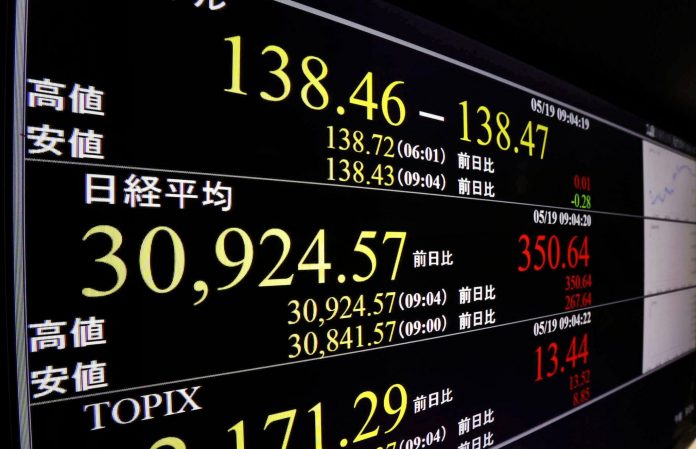
Japan’s NIKKEI rebounds After Steep Decline 

0

In a remarkable turnaround, Japan’s NIKKEI index experienced a significant rebound, closing over 10% up over the week. This surge comes as a breath of fresh air after a period of intense volatility and concern among investors. The NIKKEI, which is a benchmark stock market index for the Tokyo Stock Exchange, represents a wide array of industry sectors and is a critical indicator of the economic health of the region.

The rebound is particularly noteworthy given the index’s plunge the day before, which was one of the steepest in its history. Such dramatic fluctuations are emblematic of the current economic climate, where investor sentiment can shift rapidly due to various global factors, including geopolitical tensions, economic data releases, and market speculation.

The NIKKEI index’s steep decline was the result of a confluence of factors that rattled investor confidence and triggered a massive sell-off. Concerns over the health of the U.S. economy played a significant role, as investors reacted to data suggesting it might be in worse shape than previously thought. Additionally, the Bank of Japan’s decision to raise its benchmark interest rate contributed to the market’s unease, leading to a sharp unwind of the yen carry trade.

This carry trade, where investors borrow money in a country with low interest rates to invest in higher-yielding assets elsewhere, became less attractive as the cost of borrowing rose with a stronger yen and higher interest rates. The resulting sell-off was exacerbated by the need to repay these loans, adding downward pressure on the market.

Moreover, the volatility was amplified by a broader global sell-off, indicating a heightened sensitivity to economic indicators and central bank policies. The situation was described as a “perfect storm” of macroeconomic and market shocks, occurring at a time when risk assets were already considered overvalued.

The response of other Asian markets to the NIKKEI’s decline was a widespread downturn, reflecting the interconnectedness of global financial systems. The South Korean Kospi index experienced a significant drop, closing down 3.65%, marking its worst day since August 2020. This was primarily dragged down by banking stocks, while the small-cap Kosdaq plunged even further by 4.20%, reaching its lowest level since November 2023.

In Taiwan, the benchmark Taiwan Weighted Index was also affected, with a substantial decline of over 8%, driven down by tech and real estate stocks. Similarly, Australia’s S&P/ASX 200 fell 2.11%, retreating from its all-time high achieved just the day before. These movements indicate a domino effect, where a significant shift in a major market like Japan can lead to a broader regional impact.

Hong Kong’s Hang Seng index and mainland China’s CSI 300 also posted losses, though the CSI 300’s drop was the smallest in Asia, indicating a slightly more resilient performance amidst the sell-off. The widespread declines across Asian markets underscore the sensitivity of these markets to shifts in investor sentiment and economic indicators.

Investors and analysts will continue to watch these markets closely, as they can offer valuable insights into regional economic trends and potential future movements in the global financial landscape. For a more detailed analysis of the Asian market responses, further information can be found through financial news outlets and market analysis reports.

The bounce-back of the NIKKEI is a testament to the resilience of the Japanese economy and the confidence that investors have in its long-term prospects. It also highlights the dynamic nature of financial markets, where corrections can follow sharp declines as part of the market’s self-regulating mechanisms.

This event has had a ripple effect across global markets, with many indices in Europe and the United States showing signs of recovery in the aftermath of Japan’s rebound. The positive movement in the NIKKEI has provided a much-needed boost to investor morale, which had been dampened by the previous day’s losses.

Analysts will be closely monitoring the market’s performance in the coming days to determine whether this rebound is indicative of a sustained recovery or merely a temporary correction. Regardless, the day’s events have provided a fascinating case study on market dynamics and investor behavior.