DD
MM
YYYY

PAGES

DD
MM
YYYY

spot_img

PAGES

Home Blog Page 3013

US Federal Reserve’s Reverse Repo Operations Dip Below $300B, As Bank of Japan’s Monetary Policy Hits Turbulent Times

0

The financial world has witnessed a significant event as the Federal Reserve’s reverse repo operations have dipped below $300 billion for the first time since 2021. This development marks a notable shift from the peak of $2.554 trillion recorded on December 30, 2022. The reverse repo facility, a critical tool in the Fed’s monetary policy arsenal, allows banks, government-sponsored enterprises, and money-market mutual funds to park their cash overnight and earn interest. The recent decrease to $292 billion suggests a substantial change in the liquidity landscape of the financial system.

Analysts are keenly observing this trend, as it could indicate that the excess liquidity, which has been a characteristic of the financial markets in the past years, is being siphoned off. The decline in the use of the Fed’s facility could also signal that bank reserve balances are not as plentiful as previously thought, which may have implications for future monetary policy decisions.

The Fed had begun to slow down the pace of its balance sheet reduction in June, allowing fewer Treasuries to roll off each month, thereby easing potential pressure on money-market rates. This strategic move was anticipated by JPMorgan strategists, who predicted that the balance sheet could continue to shrink through the end of the year, with the reverse repo usage hovering just below $300 billion and reserves at around $3.1 trillion.

The demand for the Fed’s reverse repo facility saw a dramatic drop of about $1.8 trillion from the time the government suspended the debt ceiling in June 2023 until April of the following year. This was largely driven by an influx of bill supply. While Wall Street strategists initially expected the facility to empty in the first half of 2024, the usage stabilized due to a decrease in bill issuance and the uncertainty surrounding interest-rate cuts, which kept cash parked at the facility.

The trajectory of the reverse repo usage has been anything but linear. It has fluctuated significantly over the past year, influenced by bill supply and the inflow pace into money market funds. The recent gradual decline in balances at the facility since the latter half of July has caught the attention of market strategists and economists alike.

Understanding the mechanics of the Fed’s overnight reverse repo facility is crucial for grasping its role in the broader monetary policy framework. The facility acts similarly to interest on reserve balances (IORB) for nonbank money market participants, providing a floor under the federal funds rate and ensuring that the effective federal funds rate remains within the target range set by the Federal Open Market Committee (FOMC).

As the financial landscape continues to evolve, the Fed’s reverse repo operations will remain a key indicator of the health and stability of the money markets. The recent decrease below $300 billion is a clear sign that the financial markets are in a state of transition, and it will be important for policymakers, investors, and analysts to monitor these changes closely to navigate the uncertain waters ahead. For a more detailed understanding of the Fed’s overnight reverse repo facility and its implications, readers can explore further through the provided references.

Bank of Japan’s Monetary Policy in Turbulent Times

The Bank of Japan (BoJ) has been a focal point of attention in the financial world due to its recent decisions regarding interest rates amidst market instability. The BoJ’s stance on maintaining its interest rates during periods of market volatility has significant implications for the Japanese economy and the global financial landscape.

In March 2024, the BoJ made a historic move by raising its benchmark interest rate for the first time in 17 years, marking the end of a prolonged period of negative interest rates. This decision was aimed at boosting the economy and was a response to inflation rates reaching the bank’s target of 2%. The shift away from ultra-lax monetary policy was a cautious step towards “normalizing” monetary policy, reflecting a positive cycle of gradual wage and price increases.

However, the Japanese Yen’s fall to $145 has raised concerns about the currency’s weakening position and the potential impact on Japan’s export-driven economy. A weaker Yen can make Japanese goods cheaper and more competitive abroad, but it also increases the cost of imports, affecting domestic prices and purchasing power.

One of the primary risks associated with a weaker Yen is the potential for inflation to accelerate beyond the central bank’s targets. This could lead to a situation where the cost of living in Japan increases, affecting the purchasing power of households and potentially leading to a decrease in consumer spending. Imported goods, including essential commodities and raw materials, would become more expensive, which could have a ripple effect on various sectors of the economy.

Another risk is the impact on Japan’s trade balance. While a weaker Yen could make Japanese exports more competitive internationally, it could also mean that profits from overseas are worth less when converted back to Yen. Moreover, if Japanese companies have shifted production overseas, the benefits of a weaker currency on exports might be limited.

Furthermore, the depreciation of the Yen could affect foreign direct investment in Japan. As the Yen weakens, the cost of investment for foreign entities increases, potentially leading to a reduction in the number of new projects or expansions by foreign companies in Japan.

Additionally, the weakening Yen could have a psychological impact on the market, affecting investor confidence and leading to increased volatility. It could also complicate the Bank of Japan’s efforts to maintain a stable and sustainable growth trajectory for the country’s economy.

While there may be short-term benefits to a weaker Yen for certain sectors, the long-term risks cannot be overlooked. The Bank of Japan, therefore, faces a complex challenge in navigating these risks while striving to achieve its economic objectives. For a more in-depth analysis of the effects of a weaker Yen, financial news sources and economic research reports provide valuable insights.

The BoJ’s decision not to raise rates further during an unstable market is a strategic move that underscores the delicate balance central banks must maintain between supporting economic growth and controlling inflation. The BoJ appears to be taking a measured approach, carefully monitoring the economic indicators and market reactions before making further adjustments to its monetary policy.

The global financial community is closely watching the BoJ’s actions, as they not only affect the Japanese economy but also have ripple effects across international markets. Investors and policymakers alike are interested in how the BoJ navigates these challenging economic waters and what precedents it may set for other central banks facing similar dilemmas.

As the situation evolves, the BoJ’s policies will continue to be a subject of analysis and discussion. The bank’s future decisions will be pivotal in shaping Japan’s economic trajectory and its role in the global financial system.


Morgan Stanley begins offering Bitcoin ETFs to clients

0

In a significant development for cryptocurrency investment, Morgan Stanley has started offering Bitcoin Exchange-Traded Funds (ETFs) to its clients, marking a notable shift in the traditional financial landscape. This move by one of the largest banks in America is a clear indication of the growing institutional interest in cryptocurrencies as a legitimate asset class.

The introduction of Bitcoin ETFs by Morgan Stanley is poised to provide a more accessible avenue for investors to gain exposure to Bitcoin without the complexities of direct ownership. This is particularly appealing for those who are looking for a more traditional investment vehicle within the digital asset space. The bank’s decision to allow its wealth advisors to sell Bitcoin ETFs underscores the increasing demand from clients for diverse investment options that include cryptocurrencies.

Morgan Stanley’s approach is cautious and calculated, targeting wealthier clients with a minimum of $1.5 million in assets. This strategy reflects an understanding of the volatile nature of cryptocurrencies and a commitment to ensuring that clients are suitable for such speculative investments. The bank is also monitoring clients’ crypto holdings to prevent excessive exposure to the asset class, which is a prudent measure given the recent market corrections and the inherent volatility of cryptocurrencies.

Here are some of the key benefits:

Ease of Access: Bitcoin ETFs allow investors to buy shares using conventional brokerage accounts, making it simpler to invest in Bitcoin without dealing with cryptocurrency exchanges or wallets.

Regulatory Oversight: Operating within regulated financial systems, Bitcoin ETFs offer improved investor protection compared to direct cryptocurrency investments.

Diversification: Bitcoin ETFs provide an opportunity to diversify investment portfolios by adding a new asset class that is uncorrelated with traditional markets.

Liquidity: ETFs are known for their liquidity, allowing investors to easily buy and sell shares on the stock market.

Reduced Complexity: Investors do not need to worry about the security and storage of digital assets, as the ETF handles the custody of the actual bitcoins. Bitcoin ETFs contribute to the broader acceptance and mainstreaming of Bitcoin as an investment asset.

Regulated Environment: The ETF structure ensures that investments are made in a regulated environment, which can provide a sense of security for investors wary of the largely unregulated nature of cryptocurrencies. These benefits make Bitcoin ETFs an attractive option for individuals and institutions looking to gain exposure to Bitcoin’s potential for growth while mitigating some of the risks and challenges associated with direct cryptocurrency investments.

The availability of Bitcoin ETFs through Morgan Stanley is expected to pave the way for other major financial institutions to follow suit. The move is seen as a step towards the mainstreaming of cryptocurrencies, providing a stamp of legitimacy and potentially leading to wider adoption. With the backing of a major financial institution like Morgan Stanley, Bitcoin ETFs could see increased interest from investors who were previously hesitant to enter the cryptocurrency market.

The implications of this development are far-reaching, not only for investors but also for the cryptocurrency industry as a whole. It represents a bridge between traditional finance and the emerging world of digital assets, offering a regulated and familiar path for investment. As the landscape continues to evolve, the integration of cryptocurrencies into conventional investment portfolios is likely to become more commonplace, reflecting a new era of financial diversification and innovation.

Apple Chooses Google Over Bing, Even After Microsoft Offered It for Free

0

Apple has decided to maintain Google as its default search engine across its ecosystem, effectively diminishing Microsoft’s hopes of seeing Bing as the go-to search tool on Apple devices.

This decision comes despite Microsoft’s extensive efforts to secure the partnership, including offers to share 100% of Bing’s revenue with Apple and even proposals to give Bing away for free following a recent court’s ruling of Google as a monopoly.

According to StatCounter’s latest report, Google continues to dominate the global search industry with a staggering 91.04% market share, leaving Bing trailing far behind with just 3.86%. This overwhelming dominance underscores Google’s position as the preferred search engine for users worldwide, a fact that has played a crucial role in Apple’s decision to stick with the search giant.

The ongoing antitrust case against Google, United States vs. Google, has brought to light some of the inner workings of the tech giant’s strategies to maintain its market dominance. Judge Amit Mehta, who is overseeing the case, recently ruled that Google is a monopolist, citing its massive scale, high capital costs, and other factors that make it virtually impossible for competitors like Bing to break through. The case has revealed Google’s extensive financial arrangements with Apple, including payments of up to $26 billion in 2021 alone to secure its position as the default search engine on Apple devices.

Apple’s Perspective: Why Google Remains the Default Search Engine

However, Apple’s decision to keep Google as the default search engine in Safari is rooted in both business strategy and user experience. Eddy Cue, Apple’s Senior Vice President of Services, has been candid about the reasons behind this choice. Cue said that there is no price Microsoft could offer that would persuade Apple to switch to Bing.

He stated, “I don’t believe there’s a price in the world that Microsoft could offer us. They offered to give us Bing for free. They could give us the whole company.”

Apple conducted a comprehensive study in 2021 to evaluate the search quality between Google and Bing, and the results were telling. While Bing performed well in the desktop user interface category, it fell short across most other benchmarks. This finding reinforced Apple’s belief that Google provides a superior search experience for its users.

Cue’s sentiment was echoed by Apple CEO Tim Cook, who highlighted the financial implications of switching from Google to Bing. The current deal with Google is highly lucrative for Apple, and switching to Bing would not only compromise the quality of the search experience but also jeopardize Apple’s revenue.

Cook made it clear that Google’s search engine is not just a business decision but also a product choice that aligns with Apple’s commitment to providing the best user experience.

“It’s a great product for our customers, and we wanted our customers to know that they’re getting the Google search engine. It’s a symbiotic relationship. Google is the best search engine,” Cue remarked, further solidifying the partnership between the two tech giants.

The Antitrust Implications and Future of Search

The antitrust case against Google has brought intense scrutiny to the tech giant’s business practices, particularly its exclusive deals with companies like Apple. Judge Mehta’s ruling that Google is a monopolist has significant implications for the future of the search engine market, although it also underscores the challenges that competitors like Bing face in trying to disrupt Google’s dominance.

Microsoft CEO Satya Nadella, in his testimony during the trial, criticized Google’s business practices, claiming that the exclusive deal with Apple has severely limited Bing’s growth potential. Nadella suggested that Microsoft could pay up to $15 billion annually to secure a similar agreement with Apple, describing it as a “game-changing opportunity.”

However, the deal never materialized, largely due to Apple’s concerns about Bing’s ability to generate sufficient revenue and provide a competitive search experience.

Despite Microsoft’s recent advancements in integrating AI into Bing, which has attracted a growing number of users, the platform still struggles to compete with Google’s entrenched position. While AI has the potential to revolutionize search in the future, Judge Mehta noted that “AI may someday fundamentally alter search, but not anytime soon.”

The Status Quo Prevails

Apple’s decision to continue using Google as the default search engine in Safari highlights the tech giant’s focus on quality and revenue stability. Despite Microsoft’s efforts to promote Bing, the search engine’s perceived inferiority and inability to match Google’s financial offers have left it sidelined.

Against this backdrop, Google remains firmly entrenched as the search engine of choice for both Apple and its users for the foreseeable future. This means, for now, Google’s dominance remains unchallenged.

Tekedia Institute Congratulates Ayodeji Adedeji, new 9Mobile Chief Technical and Information Officer

0

The Board of 9mobile has approved the appointment of Ayodeji Adedeji as the new Chief Technical and Information Officer (CTIO) for the company.

Congratulations Deji. We celebrate your bio blurb: “He holds a BSc in Electrical Engineering (Digital Telecommunications) from the University of Lagos, Nigeria. He has also undergone extensive training in Project Management, Service Excellence, Network Technologies, Disaster Recovery, AWS Cloud, and is a Mini MBA graduate from Tekedia Institute.”

Yes, the Chief Technical and Information Officer (CTIO) is a graduate of Africa’s finest business school for entrepreneurial capitalism, Tekedia Institute. Congrats Deji, unlock value and advance the wealth of 9Mobile. We’re super proud of your accomplishments.

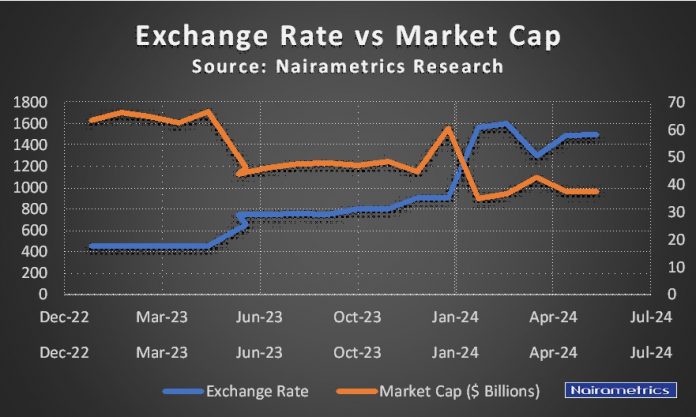
Massive Wealth Deterioration in Nigeria Stock Exchange (NGX): June 2023 ($66B), June 2024 (38B)

1

This is Nigeria: “On June 9, 2023, the Nigerian Exchange (NGX) closed with a market capitalization of N30.45 trillion, which was about $65.5 billion at the old exchange rate. And in 2024, the NGX closed the first half of the year with a market capitalization of N56.6 trillion, about $37.7 billion. Hence, the disparity between both periods amounted to $27.8 billion, thus pushing the NGX out of the list of top five largest stock markets in Africa“ – Nairametrics

In other words, while prices of fuel, electricity, etc were going up, investors in the Nigerian stock exchange lost more than 50% of their (absolute) wealth, benchmarked in US dollars. In comparison, the largest market in Africa (South Africa’s Johannesburg Stock Exchange) is at about $1.2 TRILLION, and now Nigeria operates at about sub-$40b. Naspers in South Africa can buy the Nigerian stock exchange with less than 30% of its global wealth now. 

Good People, this is an unprecedented wealth deterioration because even during the Biafra War, both the Nigerian pounds and Biafran pounds appreciated in value. But in a peaceful time, we saw what we experienced last year.  That means that ALL of us in Nigeria dropped the ball, and this must be quickly reversed to advance shared prosperity.