DD
MM
YYYY

PAGES

DD
MM
YYYY

spot_img

PAGES

Home Blog Page 3026

Dogecoin (DOGE) and Shiba Inu (SHIB) Traders Worry over Death Cross Pattern as RCOF Moves Higher

0

Recently, Dogecoin (DOGE) and Shiba Inu (SHIB) encountered a death cross, a technical pattern indicating prospective price declines. As a result, investors question whether this poses a short-term or long-term threat to both meme coins. Meanwhile, RCO Finance (RCOF) remains unaffected by this ordeal, presenting itself as a lucrative investment.

Let’s find out more about this unscathed token.

Inkling Of Death Cross For DOGE And SHIB Investors

The emergence of a death cross implies the bears may control the market for a short timeframe. This is the case with Dogecoin and Shiba Inu. The death cross pattern appears when the 50-day moving average exceeds the 200-day moving average.

Meanwhile, DOGE’s four-hour chart reveals a golden cross, a bullish pattern suggesting short-term profit-making. Investors risk losing money whenever the death cross pattern materializes on the chart because traders tend to panic sell in its aftermath, inciting steep price dips.

Lately, Dogecoin (DOGE) has been trending lower due to bearish influence and may continue to do so in the coming days. A probable factor behind its continuous drop is the falling price of Bitcoin and other cryptocurrencies. As SHIB and DOGE tank further, RCOF emerges as a preferred option for investors.

RCO Finance: A Safe Haven From DOGE And SHIB’s Downturn

RCOF has proven to be a haven to DOGE and SHIB investors amid the downturn plaguing both assets. RCOF is the native token of a recently developed crypto-AI project on Ethereum named RCO Finance. RCO Finance is a decentralized trading platform that empowers users to invest in various financial instruments.

DOGE and SHIB investors prefer RCO Finance because of its fundamentals, utility, value proposition, and, more importantly, its AI capabilities. Its broad-gauge DeFi ecosystem empowers users to invest, stake, farm, and borrow assets. Users can invest in over 120,000 digital assets without paying huge fees.

For staking its native token RCOF, users earn a high staking APY and receive staking rewards and quarterly dividends that will be paid directly to their wallets. Holding RCOF entitles users to farming airdrops whenever they are available and promoted. Borrowing and lending assets on the platform attract low interest rates, making RCO Finance one of the most economical platforms in the DeFi sector.

Its AI tool, a robo-advisor, helps investors navigate the platform’s flurry of digital asset offerings and leads them to lucrative investment opportunities. As a personal financial consultant, it offers personalized investment strategies that position investors ahead of the curve.

The robo-advisor, using its machine-learning algorithm, can analyze an asset by studying past trends, price actions, and prevailing sentiment to determine its future behavior.

Whether it’s crypto, stock, shares, or real-world assets, the robo-advisor can accurately predict their future price actions, enabling investors to make informed investment decisions. RCO Finance also allows investors to invest in spot Bitcoin and Ethereum ETFs.

RCO Finance is a secure platform that has undergone thorough audits by the blockchain security firm SolidProof. Moreover, it is bound to the European Union Market in Crypto-Asset (MiCA) regulatory documentation provisions. Therefore, users need not worry about the safety of their funds and assets.

RCOF Price Surges As Presale Progresses

With over $19,400 raised in Stage 2 of its presale, RCOF continues to forge ahead steadily. After a successful run in Stage 1, investors are now sitting on a 169% profit. This gain will be extended by the end of the current stage, with experts hinting at an increase of 337%.

RCOF is available at $0.0343, opening investors to an opportunity to realize over 30X their initial investment when the token launches at the proposed price of $0.6. Compared to DOGE and SHIB, a potential 3,000% ROI in RCOF makes it a better option.

So, what are you waiting for? Join the RCOF token presale now!

For more information about the RCO Finance Presale:

Visit RCO Finance Presale

Join The RCO Finance Community

Can Currency Hedging Completely Eliminate Foreign Exchange Risk?

0

Currency hedging is a strategy used by businesses to protect themselves from the risks associated with fluctuating exchange rates. It involves using financial instruments like forward contracts, options, and swaps to stabilize cash flows and secure profit margins. While currency hedging can significantly reduce foreign exchange risk, it’s important to understand that it cannot completely eliminate it. Let’s dive into the reasons why this is the case and how businesses can effectively manage these risks. Go trader-ai.org to access expert insights tailored for traders seeking to navigate the complexities of foreign exchange markets. Enhance your trading approach with guidance from top professionals. 

The Limits of Hedging

Currency hedging aims to minimize the impact of currency fluctuations on a business’s financial performance. However, several factors prevent it from providing absolute protection. Firstly, hedging instruments themselves carry costs. These include transaction fees, premiums for options, and potential opportunity costs from locking in exchange rates. These costs can add up and affect a company’s bottom line, making complete risk elimination financially impractical.

Additionally, hedging strategies often rely on forecasts and assumptions about future currency movements. While businesses can use historical data and market analysis to make informed predictions, the foreign exchange market is inherently unpredictable. Unforeseen events, such as political upheaval or natural disasters, can cause sudden and dramatic shifts in exchange rates. This uncertainty means that no hedging strategy can offer foolproof protection against all possible scenarios.

Another limitation is the time horizon of hedging instruments. Forward contracts and options are typically set for specific periods. If a business’s exposure to currency risk extends beyond these periods, it may need to enter new contracts, potentially at less favorable rates. This ongoing need to manage and renew hedging positions adds complexity and cost to the process, further illustrating why complete elimination of risk is challenging.

Managing Residual Risk

While complete elimination of foreign exchange risk is unattainable, businesses can effectively manage residual risk through a combination of strategies. One approach is to diversify currency exposure. By spreading business activities across multiple currencies, companies can balance out losses in one currency with gains in another. This natural hedging can help stabilize overall financial performance.

Another strategy is to use a layered approach to hedging. Instead of relying on a single hedging instrument, businesses can combine different tools to cover various aspects of their currency risk. For instance, a company might use forward contracts for predictable cash flows while employing options to protect against unexpected currency swings. This multi-faceted approach provides a more robust defense against currency volatility.

In addition to financial instruments, businesses can adjust their operational strategies to mitigate currency risk. For example, sourcing materials from suppliers in the same currency as the revenue can reduce the impact of exchange rate changes. Similarly, negotiating contracts in a stable currency or including clauses that adjust prices based on exchange rate fluctuations can offer further protection.

The Role of Financial Experts

Navigating the complexities of currency hedging requires expertise. These professionals can help businesses develop tailored hedging strategies that align with their specific needs and risk tolerance. They can also monitor market conditions and adjust hedging positions as necessary to maintain effective protection.

Financial experts can also assist with implementing technology solutions that streamline the hedging process. Automated platforms can track exchange rates, execute trades, and provide real-time analytics, making it easier for businesses to manage their currency risk. By leveraging technology, companies can reduce the administrative burden of hedging and improve the efficiency of their risk management efforts.

Striking a Balance 

While currency hedging cannot completely eliminate foreign exchange risk, it can significantly reduce it and provide businesses with greater financial stability. Understanding the limitations and costs associated with hedging is crucial for making informed decisions. By employing a combination of hedging instruments, diversifying currency exposure, and seeking expert advice, businesses can effectively manage residual risk and protect their financial health.

Conclusion

In the end, the goal of currency hedging is not to achieve absolute protection but to create a more predictable and stable financial environment. By carefully balancing the benefits and costs of hedging, businesses can navigate the uncertainties of the foreign exchange market and position themselves for long-term success. Always remember to research thoroughly and consult with financial experts to develop a hedging strategy that best fits your business needs and objectives.

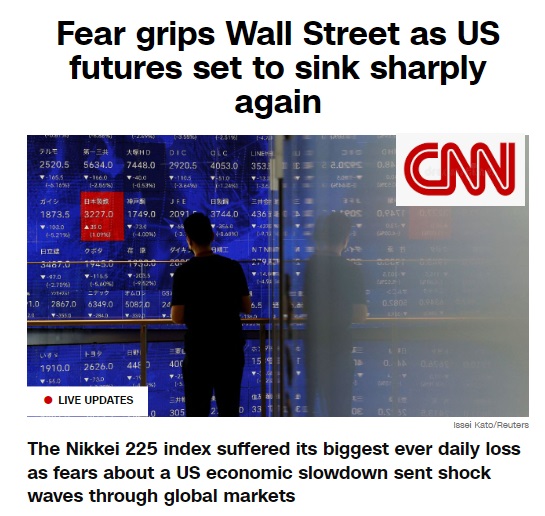
The Global Stock Market Seems To Be Crashing

0

Too bad, that is the way the market system works. It has been really long since I bought any stock. But with what I am seeing now, it does seem like the buying opportunities will return again. I see three types of investors:

Income chasers: Look for dividends.

Value pickers: Look for undervalued assets that could increase in value.

Growth makers: Look for big returns, or are willing to take risks.

As an early stage startup investor, I am in the Growth markers category. But whenever stock markets crash, you will always find me in the Value pickers club.

I like to go and pick some properties which are in equivalence with their national treasuries. In other words, for them to fail, the host nation will be gone. So, we are watching because it does seem like that time is just close.

And please if you have a company which has a promise to thrive during recession or a time of market paralysis, we are interested in exploring investments via Tekedia Capital. Remember that Uber, Airbnb, and some of the most amazing startups today, began during a season of market crash! We can help you in funding the next generation of such companies.

[I do not provide recommendations on stocks, so do not ask]

Despite Toncoin’s $100 Price Target, TON and AVAX Holders Have Been Allocating Profits To This New Altcoin Superstar

0

Over the past 24 hours, established altcoins like Toncoin and Avalanche have dug deeper into the crypto depths. Meanwhile, newcomer Rollblock (RBLK) is attracting new investors by offering an ingenious revenue-share scheme.

Toncoin (TON) Fails to Escape the Reds

Although Toncoin (TON) showed huge potential to excel in the Layer1 Blockchain sector, its days of glory are a distant memory now. Over the past 30 days, Toncoin has plunged nearly 18%, bringing the current trading price to $6.61.

Analysts suggest that Toncoin needs to devise a better strategy than simply onboarding new games. For now, industry experts believe that Toncoin will continue to hit lower lows throughout August.

Avalanche (AVAX) Bulls and Bears Stuck in a Fierce Battle

Over the last seven days, Avalanche (AVAX) saw a huge price decline of nearly 11%. According to Coinmarketcap, Avalanche is currently trading at $24.77 after an intra-day decline of 1.7%. These constant declines might be hinting toward a bearish thesis, but some Avalanche analysts are expecting a price reversal soon.

Technical indicators reveal that Avalanche bulls and bears are stuck in a tug-of-war right now. If the bulls take over, then Avalanche may see a massive surge in price in the next few weeks.

Rollblock (RBLK) Gains 7K Investors in Stage 4 of Presale

Rollblock (RBLK) is making investors abandon old tokens like Toncoin and Avalanche to jump on the trending GambleFi narrative. Rollblock is pioneering this narrative. Right now, Rollblock is wrapping up stage 4 of its presale and tokens are selling at a low price of $0.018. During the past 14 days, Rollblock’s value has surged by 75%, and analysts are predicting more rallies in the following weeks.

Rollblock combines state-of-the-art blockchain technology with online gambling to give players the best casino experience in the market. Fully audited and licensed by Curucao Gaming, Rollblock’s casino is ready to take over the $450 billion-a-year global gambling industry. Each financial transaction and bet placed on Rollblock is also backed on the Ethereum blockchain, making the platform immune to third-party manipulation.

Rollblock’s most innovative strategy is its revenue-sharing scheme. Each week, up to 30% of casino revenue is used for open market buybacks of the $RBLK token. These tokens are then split into two equal categories: one is burned to keep supply low, and the second is given to investors as staking rewards with huge APYs.

If Rollblock can keep up this momentum, then analysts believe that this new GambleFi token has the potential to disrupt the entire $450 billion gambling industry. In fact, analysts believe that Rollblock is already on its way to becoming the biggest DeFi token of 2024. Get involved now at just $0.018 and take part in Rollblock’s daily Olympic giveaways!


Discover the Exciting Opportunities of the Rollblock (RBLK) Presale Today!

Website: https://rollblockpresale.io/

Socials: https://linktr.ee/rollblockcasino

Echoes of Discontent: President Tinubu’s Response to Hunger Protests

0

President Bola Ahmed Tinubu’s recent address in reaction to widespread protests against hunger and bad governance demonstrates a complex interplay of articulatory discourses that are relevant to Nigeria’s current socioeconomic reality. The protests, which erupted in response to growing living costs and broad dissatisfaction with government policies, forced Tinubu to accept the people’s problems while asking for a stop to demonstrations and a shift to discussion.

Acknowledgment of Grievances

Tinubu’s address prominently acknowledges the demonstrators’ concerns. He said, “I heard your voices loud and clear.” I comprehend the anguish and fury that drive these protests.” This recognition is an attempt to acknowledge citizens’ anger, particularly among youth, who are disproportionately affected by economic challenges.

Call for Unity and Dialogue

The President stressed the importance of Nigerian unity, calling all citizens to work together to transform the country’s future: “Nigeria requires all hands on deck”. This call to collective action is a strategic rhetoric aimed at instilling a sense of national cohesion amid escalating tensions. Tinubu hopes that by facilitating conversation, he can build a platform for resolving protesters’ concerns while reducing the possibility of future upheaval.

Emphasis on Law and Order

Tinubu’s emphasis on keeping peace and order is another key component of his message. He warned against using the protests for violent ends, saying, “The law will catch up with you”. This claim emphasizes the government’s commitment to law enforcement while also showing a defensive posture in response to accusations that security agents used excessive force during the protests.

Economic Measures and Future Vision

Tinubu’s speech detailed his administration’s economic objectives, such as infrastructure development and student loan schemes. However, critics believe that these initiatives fail to address the demonstrators’ immediate concerns, such as the resumption of fuel subsidies and the critical need for relief from inflation, which has reached catastrophic levels. This disparity between declared government policies and the pressing demands of the population demonstrates a fundamental governance difficulty.

Comparison to Previous Responses

Acknowledgment of Grievances

Tinubu’s Approach: In his speech, Tinubu acknowledged the existence of grievances among the protesters, stating, “I have heard your voices loud and clear” and urging for dialogue to address these issues. This marks a shift from previous administrations that often dismissed protests or labeled them as politically motivated.

Previous Responses: Historically, responses from Nigerian leaders, such as during the EndSARS protests, often involved outright denial of the issues raised or attempts to discredit the protesters. For instance, former President Muhammadu Buhari faced significant backlash for his perceived indifference to the demands of young Nigerians during the EndSARS movement.

Call for Dialogue

Tinubu’s Emphasis: Tinubu called for the suspension of protests to create room for dialogue, stating, “Under the circumstances, I enjoin protesters and the organisers to suspend any further protest and create room for dialogue”. This attempt at fostering communication contrasts with previous tactics that relied more on the forceful dispersal of protests rather than engagement.

Historical Context: Previous leaders often resorted to heavy-handed tactics, including police brutality, to quell protests, which further escalated tensions. The EndSARS protests are a notable example where the government’s failure to engage led to violent confrontations.

Content of the Speech

Economic Measures: Tinubu outlined various economic initiatives and reforms his administration has undertaken, yet critics argue that these do not directly address the immediate concerns of the protesters, such as the reinstatement of fuel subsidies and urgent economic relief. This lack of specificity in addressing protesters’ demands has been a common critique of governmental speeches in the past.

Previous Leaders’ Speeches: Similar to Tinubu, past leaders often highlighted achievements without addressing the pressing issues at hand. For example, Buhari’s speeches during protests frequently focused on security and economic stability without acknowledging the specific grievances of the youth.

Specific Reactions to the Speech

Protest leaders and analysts have expressed displeasure, claiming that Tinubu’s speech lacked sincerity and failed to address the citizens’ immediate demands. Deji Adeyanju, a renowned protest leader, highlighted that the government must first listen to the people’s views and address their demands before engaging in conversation. Human rights lawyer Femi Falana also attacked the address, urging swift action on the protestors’ demands and condemning the government’s treatment of the protests.