DD
MM
YYYY

PAGES

DD
MM
YYYY

spot_img

PAGES

Home Blog Page 3027

The Biggest Illusion In Nigeria Is That Reduction of Imports Will Help Naira

0

Yes, Nigeria’s problem is that we do not import a lot. And that means our solution will not come by restricting imports or controlling people’s dorm bank accounts. For Naira to improve, Nigeria needs to import more – and importantly import the RIGHT things.

In 2022, South Korea’s total imports were $808.09 billion while Nigeria did about $60.35 billion for goods; South Korea is about 25% of Nigeria’s population. But if you check, South Korea imports were largely machinery, equipment, etc for production, while Nigeria’s were for finished goods. Also, in 2022, goods worth around $136.21 billion were imported to South Africa, with many of those industrial equipment. Check – more imports have not destroyed South Africa and South Korea’s currencies!

We need to import more and if we do, we will likely become a hub to serve West Africa with finished goods, and that means export more. Push the nation through policy to redesign the architecture of our economy, out of the SAP mindset of the late 1980s, where we created finance houses and banks, over building and running factories.

Good People, I do not like when I read our political leaders making a case that Nigeria must reduce imports. Which imports? The $100, $200, etc virtual wallets from young people? Someone must rethink Nigeria from the ground up.

Why Nations Remain Poor and the Power of Capital

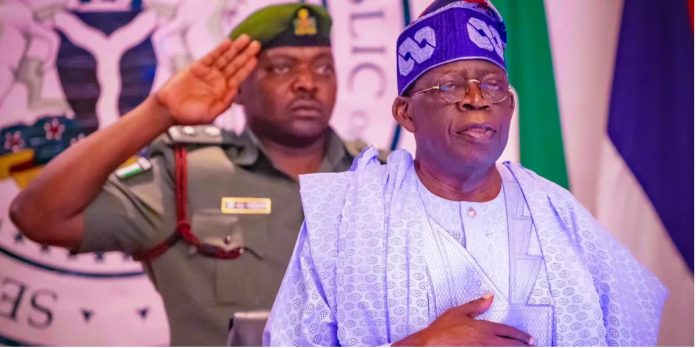
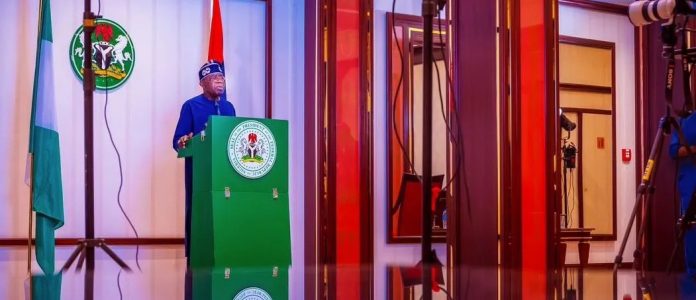
A Nuanced Pershpective on President Tinubu’s Address to the Nation

0

Nigerian President Bola Ahmed Tinubu’s recent address to the nation has sparked intense debate and discussion. Amidst the ongoing protests and unrest, the president’s speech has been criticized for not addressing the protesters’ concerns directly. However, it is essential to consider the context and dynamics at play.

The Campaign Promise Conundrum:

Unlike his predecessors, President Tinubu did not make explicit promises during his campaign. Instead, he focused on his past achievements and vision. Therefore, it is unrealistic to expect him to make promises during his protest speech.

The Alarming State of Unemployment and Poverty:

The stark reality is that over 60% of Nigeria’s population is unemployed, living from hand to mouth. The recent minimum wage increase, touted by the president, is woefully inadequate. It cannot even purchase basic staples like a bag of maize, rice, or garri, let alone cover essential expenses like healthcare and education. This dire situation demands urgent attention, lest it escalate into a full-blown crisis.

Dialogue and Compromise:

The president’s call for dialogue presents an opportunity for protest leaders to capitalize on. By synchronizing their demands and presenting a unified front, they may be able to negotiate more effectively with the government. Compromise is often the key to resolving conflicts, and both parties may need to make concessions to find a mutually acceptable solution.

Conclusion:

In conclusion, understanding the context and dynamics of President Tinubu’s address is crucial. The alarming state of unemployment and poverty demands immediate action. By approaching the issue with a nuanced perspective, we can better appreciate the challenges and opportunities that lie ahead. Let us hope that the government and protest leaders can engage in constructive dialogue and find a path forward that addresses the concerns of all Nigerians, lest the situation deteriorates into chaos and conflict.

Nigeria Must Solve Southeast Sit-At-Home And Nationwide Protests To Advance Opportunities

0

A few days ago, I put out words on the nationwide protests in Nigeria. Notwithstanding, I have not written much on the protests considering that a part of Nigeria has been protesting for years, and no one paid attention. Yes, the sit-at-home in the Southeast which takes out a day or two days in a week is also a protest, and it is hitting close to 6 years or so. But magically, Nigeria did not bother.

Consequently, over the last few years, the Southeast Nigeria has moved from #2 on per capita on tax to about #4. In other words, productivity has dropped, revenue went down, and economic opportunities severely diminished. That is a huge cost to Nigeria, and the implications have compounded our national economic challenges.

Our national leaders thought that losing two days in a week in one of its regions is a regional matter. They did not know that the Southeast people will still eat, which means even as demand stays constant, supply has reduced, pushing inflationary pressure in the nation. If Nigeria saves the two lost days in sit-at-home in the Southeast, we will reduce inflation within weeks. But if those protests remain, EVERYONE in Nigeria will continue to pay the prices.

The current nationwide protests in Nigeria could be traced partly to the years-long sit-at-home protests in the Southeast which has cost Nigeria at least more than its national budget. Why? You cannot close Aba, Enugu, Onitsha, etc some days of the week for years without Yobe, Kano, Akure, Jos, Ibadan, etc paying the prices economically.

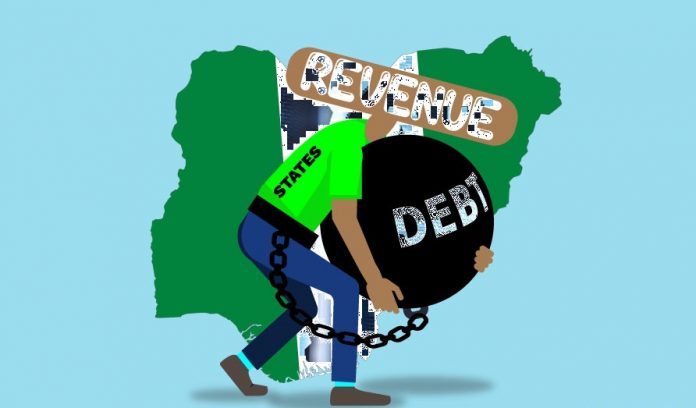
If you doubt me, check the latest VAT numbers per region; Southeast is way down and that is affecting everyone: “The debt service to revenue ratio has increased significantly, from 33.8% in 2017 to a projected 110.4% in 2024, signaling potential difficulties in meeting debt servicing obligations relative to revenue generation” – Afreximbank. Southeast used to provide tons of VAT revenue.

So, Mr. President, as you work to fix the nationwide protest, do not forget the sit-at-home protest. I challenge you to solve that problem because since that protest started, Nigeria’s economic position has deteriorated. I can provide you hard numbers to show how we are losing 4% of national economic output for more than half a decade!

I am compelled to comment because in your speech this morning, you omitted that sit-at-home protest. But you cannot fix the nationwide one sustainably without fixing that, as Nigeria cannot attain economic equilibrium without SE operating at full capacity!

Comment on LinkedIn Feed

Comment: Good to know! But the Governors of the Southeast region needs to do more has anyone ask them what they are doing with the humongous monthly FAAC coming from Abuja to that region?

My Response: Your comment is the current mindset we have in the nation now: it is a Southeast problem. But if people are hungry in Kaduna, it is a nationwide problem. But the day you understand that what affects SE affects the whole of Nigeria, we will be better. Check the data, Nigeria has been going down economically since these sit-at-home protests started. But you are fixated that it is a regional issue under the control of governors as though those protecting for hunger do not have governors with “humongous monthly FAAC” allocations.

Nigeria’s Debt Service to Revenue Ratio Expected to Hit 110.4% in 2024 – Afreximbank

0

Afreximbank, Africa’s leading export-import bank, has issued a stark warning about Nigeria’s financial future, predicting that the country’s debt service to revenue ratio could reach a staggering 110.4% in 2024.

This dire forecast highlights the escalating fiscal challenges that Nigeria faces as it grapples with economic instability and mounting debts.

In its latest country report, Afreximbank traced the alarming rise in Nigeria’s debt service to revenue ratio from 33.8% in 2017 to the projected 110.4% for 2024. This steep increase signals potential difficulties for Nigeria in meeting its debt servicing obligations, given its current revenue generation capacity.

Earlier this year, BusinessDay reported that Africa’s largest economy spent 66.9% (N5.79 trillion) of its total revenue of N8.65 trillion on debt servicing in the first nine months of the year. While this figure is lower than the 99.3% (N4.23 trillion) recorded in the same period of 2022, it underscores the persistent fiscal strain Nigeria faces.

Despite the gloomy outlook for 2024, the bank suggests that continuous structural reforms and improved fiscal management could reduce the debt service to revenue ratio to 62.6% by 2025.

Afreximbank stated, “The debt service to revenue ratio has increased significantly, from 33.8% in 2017 to a projected 110.4% in 2024, signalling potential difficulties in meeting debt servicing obligations relative to revenue generation.”

The report further noted that in terms of foreign exchange (FX) debt, Nigeria is experiencing a relatively low FX debt-to-GDP ratio, which has surged from 16.7% in 2017 to a projected 40.3% in 2024.

However, the debt-to-export ratio, which peaked at 235.7% in 2020, is expected to decline to 137.1% by 2025. This high ratio indicates Nigeria’s heavy reliance on external borrowing compared to its export earnings, highlighting the need for more balanced economic strategies.

“The debt-to-export ratio has also shown a substantial increase, reaching 235.7% in 2020 before gradually declining. It is projected to decrease to 137.1% in 2025, suggesting a heavy reliance on external borrowing compared to export earnings,” Afreximbank noted.

The report also highlights Nigeria’s debt service to export ratio, which has fluctuated over the years, reaching 18.4% in 2023. This ratio measures the proportion of exports required to service debt obligations, underscoring Nigeria’s dependence on its export sector to manage its debt burden.

Despite these challenges, Afreximbank’s report offers a cautiously optimistic view of Nigeria’s ability to sustain its debt. The bank emphasizes the importance of diversifying funding sources and enhancing revenue generation to mitigate risks associated with rising debt levels.

“The country needs to find diverse funding sources and increase its revenue to minimize risks associated with rising debt levels and debt service obligations compared to GDP, exports, and revenue,” the report emphasized.

It further noted that to address these fiscal challenges, Nigeria needs to implement effective measures to enhance its tax collection systems. Additionally, the bank said that addressing the pervasive issue of oil theft is crucial to safeguarding one of Nigeria’s critical revenue streams, noting also the need for reducing non-productive government spending will also free up resources that can be redirected towards debt servicing.

“Enhancing tax collection systems, curbing oil theft, cutting non-productive government spending, and supporting private sector-led growth can ease debt sustainability pressures and promote long-term economic stability,” Afreximbank said.

The lender noted that supporting private sector-led growth by promoting private sector initiatives can drive economic expansion and increase revenue, providing the government with the financial flexibility needed to manage its debt more effectively.

The report highlighted securing debt management frameworks, improving transparency and accountability in debt procurement and use, and establishing sustainable debt repayment plans as crucial to protecting Nigeria’s fiscal health and reducing risks linked with mounting debt levels and debt service obligations.

Finance Minister Wale Edun recently highlighted significant improvements in Nigeria’s revenue-to-debt service ratio, which he said has declined from 97% in 2023 to 68% in 2024. This reduction suggests a decreasing debt burden and an overall improvement in the country’s fiscal health.

The Minister attributed this positive trend to enhanced revenue collection efforts and measures to curtail systemic leakages. Notably, Nigeria has ceased relying on ways and means advances from the Central Bank to fund its fiscal obligations, marking a pivotal step towards more sustainable economic governance.

“The country’s debt service to export ratio has varied over the years, reaching 18.4% in 2023, which indicates the proportion of exports needed to service debt obligations. Despite facing challenges stemming from the government’s various reforms, Nigeria’s ability to sustain its debt looks promising,” the report added.

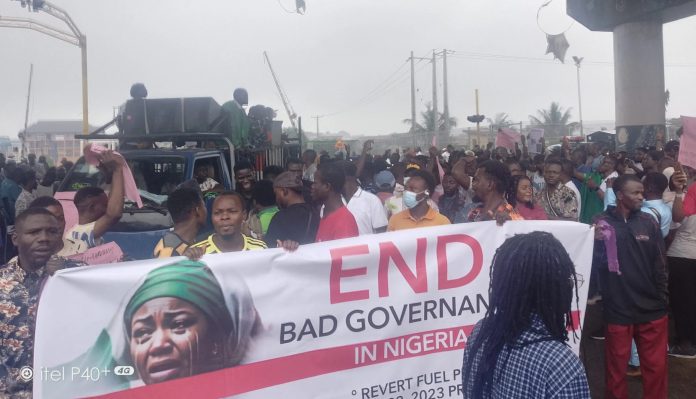
The Nigerian President Responds To Social Protests Tagged #EndBadGovernance

0

Nigeria is in the throes of national social protests at the moment with at least a dozen people killed so far, this is besides the destruction and looting. The 10-day protests billed to take place between 1st August 2024 to 10th August, 2024 came with much fanfare and gusto from those organising them. And the authorities have been threatening fire and brimstone in a bid to discourage these protests. Unfortunately for them, there is so much hunger, poverty, misgovernance, high inflation and unbearable distress for the masses to be intimidated by threats.

Realising the futility of their efforts; even after co-opting all stakeholders  including organised labour, organised private sector, all religious and traditional institutions, unions and organisations to its side; the authorities secured ex parte court orders to limit the protests to designated locations in the capital; Abuja; as well as the commercial hub; Lagos.

The causes of these protests include principally economic insecurity. Nigeria uses virtually all its revenue on its loans than on the people. It spends more of its income on its loans than on all other things put together. The ideal ratio for debt service is 22.5% as set by the World Bank and the IMF for economies like Nigeria’s. However, in the first half of 20223, Nigeria used 97% of revenue to service debts! Even now that the numbers for debt-service have improved to 68% of revenue in 2024Q2, something has been sacrificed on the altar of the lower debt-service numbers. This is so as Nigeria’s debt burden to GDP ratio has crossed the self-imposed limit of 40%.

Furthermore, Nigeria is experiencing the worst cost of living crisis in a generation. Headline inflation is at 34.19% according to official government statistics. Other authorities have far higher figures several times the official numbers. What is more, food inflation is far worse than the headline. Nigerians are experiencing hunger at the moment because Nigerians neither afford food nor is the food even available. Other pressing problems include high fuel prices and a general exorbitant cost of living pricing out almost everyone out of a decent life.

And copious solutions have been provided in the spirit of not only critiquing but providing alternatives to what is being critiqued. Of course, these are neither exhaustive nor conclusive. While their is an overwhelming proof that the president of Nigeria who only came in around 15 months ago in May, 2023 might have inherited a very bad economy, he has not made things any better but quite the contrary made things far worse with ill-thought out subsidy removal, floating of the naira and a myriad other missteps.

The expectation of many Nigerians when the President decided to address the nation because of the protest, was that  concrete measures with SMART characteristics would be introduced to roll back the damage caused by the President’s own policies. However, the president’s speech only regurgitated the efforts to provide succour, that have completely fallen flat on their face and have been nothing beyond cosmetics. Their is an urgent need to  have solutions that would move the needle. There is a need for the President to not only address the nation but to demonstrate clear-cut deliverables about the issues at hand such.

Like in Kenya where the president withdrew the finance law, abolished dozens of government departments, fired his cabinet, cut fiscal allocations for the presidency and the general costs of governance. Nigeria needs to not only take a leaf out of the Kenyan book but even go further to overhaul the entire apparatus of governance and government generally. This would be a gesture showing the authorities’ determination to fix the problems that made the population to take to the street.

The Nigerian leader, President Bola A. Tinubu needs to go beyond speaking. Addressing these problems would be what really matters. There is a need to make food affordable to all Nigerians, particularly the low-income earners who have been priced out of purchasing essentials like rice and flour. Nigeria being the nation with the least affordable food for its citizens according to the food security index. In terms of availability too, Nigeria is lagging. It is languishing at the bottom of the availability metric.

The authorities’ closing the borders to boost agriculture under the last president was a huge mistake. As Nigeria has not attained food sufficiency nor has it demonstrated the capacity for such in the nearest future. For example, while the total consumption of rice is in the region of 7 million metric tonnes, the production is way below that at 4 million metric tonnes. So, why shut down borders? It would benefit no one but the rice farmers at the detriment of everyone else.

Because food is not affordable and is not available; this is why the determination of the government to allow for food import should not be looked at with suspicion. The President of the African Development Bank (AfDB), Akinwunmi Adesina, has come out all guns blazing against the importation claiming that it would reverse the gains made in the agricultural space so far. Of course, no one wants these gains to be rolled back. But, there is a deficit for years now fueling rising prices. Hence there is nothing wrong about plugging the shortfall. So, the tariff-free food importation is necessary as a stop-gap measure to feed millions of hungry Nigerian while we try to increase the productivity or efficiency of our agriculture.

These are some of the problems as well as the solutions I am proposing that can be immediately implemented to solve some the most pressing challenges Nigerians face:

  1. There is a need for food to be affordable to everyday Nigerians inclusive of the lowest income earners.
  2. Food being available to everyone.
  3. Cost of living coming down to the barest minimum.
  4. etc

We are not just raising concerns and proposing general and ineffective solutions but also providing what we think are solutions.

  1. Problem- Subsidy removal has made price of fuel spiked with the knock-on effects on the cost of living. What can be done to lower this price?                     

Solutions-

  • Encouraging local refining; whether by Dangote refinery, government refineries and modular refineries; with a surfeit of crude feedstock so as not to subject Nigeria’s domestic fuel price to the vicissitudes of international oil price.
  • Immediate implementation of the much-hyped Petroleum Industry Act (PIA) wholesomely with the listing of the NNPC to ensure full transparency of the Nigerian oil industry to guarantee value for money.
  • Aggressively incentivise local & foreign investments into the oil and gas industry to boost production and revenue.
  • Bringing the full force of the Nigerian state to bear in tackling oil theft and insecurity in the oil producing areas as well as everywhere else.

This is but a few of the immediate things that can be done that would move the needle in bringing down fuel price.

 2. Problem- Food is neither affordable nor available for Nigerians.   

Solutions-

  • Only the Nigerian state has a monopoly on the use of violence to achieve results. Hence, it should deploy its full powers of coercion to end banditry, militancy, insurgency, the herder issue, criminality, kidnappings and any form of insecurity within months so that all Nigerians, most especially farmers are safe on their farms. That way everyone would go back to their farming activities.
  • Increase tractorisation and mechanisation. The government should not try to do this by itself as it has limited capacity. But rather, incentivise Nigerians and non-Nigerians to change from using hoe & cutlass and other stone-age tools to instead doing modern farming with sophisticated tools.  We need machines in the millions to boost horse power per hectare and to increase yield.
  • Refineries would help with fertiliser. There is a need to subsidise fertiliser and other farm inputs to boost production.
  • Encourage all year round farming by fixing dilapidated dams. While trillions of naira of foreign loans might have been secured for this, there is a need to be intentional about results and results only.
  • We must never repeat the mistake of the anchor borrowers programme (ABP) by just throwing money at problems believing these problems would magically solve themselves. There is a need for intentionality, clear timelines and KPIs and guarantee value for every kobo spent.
  • Post harvest losses which could be as high as 80% must be reduced to almost zero with modern storage, improved infrastructure and better transportation between farms\villages and the markets/cities.
  • Do not ask people to pray in the event of lack of rainfall. Instead of that use technology such as cloud seeding to make rain to fall.
  • We must focus on our competitive advantage instead of inefficiently trying to produce everything. We can proudly import what we do not have capacity for now while building that capacity. For example rice.

These are only a few solutions that can be implemented with the urgency of now.

3. Problem- Cost of living crisis. Some even go as far as selling their own babies to feed and pay rent! It is that bad.

Solutions-

  • To demonstrate empathy the political class inclusive of the president must demonstrate beyond the shadow of a doubt that they too are enduring same hardships that Nigerians are suffering. This would build confidence, understanding from the people and followership.       As leadership is about being exemplary and doing same thing you want others to do. So, stop losing the plot by enduring same things you ask your citizens to endure.
  • Cut the cost of governance by 90% or by much as possible by making do with just the barest. Oransaye report is outdated, so update it within a week and implement it within weeks. The savings from this should be used to support the most vulnerable Nigerians in a clear and transparent way.
  • The CBN has not done enough to keep a lid on money supply as it has reached all an all-time high of over 101 trillion naira now. Because inflation is always and everywhere monetary in nature. So, stop the growth in money supply and not currency in circulation (CIC) as the CBN likes to demonise CIC in an way that doesn’t make sense.
  • Ways and Means Advances must be scrapped completely and urgently too and never be increased as was recently done. How many people; including yours sincerely; would not feel the temptation to just print money if it is within their powers to do so whenever the urgent need for money arises? So stop it entirely as it is always subject to abuse and has caused more problems and proven our undoing eventually.
  • No one should strip the CBN of its operational independence as the Senate tried to do. It is unwise, shortsighted and dangerous. In fact, to the contrary what the CBN needs now is more independence from politicians not less.
  • Do everything to boost exports particularly from Nano, Small, Medium-Scaled Enterprises (NSMSMEs) as they have been punching below their weight. Diversifying Nigeria’s exports from oil and gas needs to be done urgently. If we cannot export goods immediately then lets export services to grow the naira and make it the strong currency Nigerians like it to be.

These are only few immediate solutions out of dozens that I have.

In conclusion, Nigeria might be on its knees at the moment which basically self-inflicted through gross incompetence and bad governance, consequently, there is a need to be drastic in urgent in measures to stop the descend in its tracks. As Nigeria is a country of  a huge population and treating things with levity or at snail-pace would not cut it.