DD
MM
YYYY

PAGES

DD
MM
YYYY

spot_img

PAGES

Home Blog Page 3042

Segmenting Opportunities in AI (Artificial Intelligence) Industry [video]

0

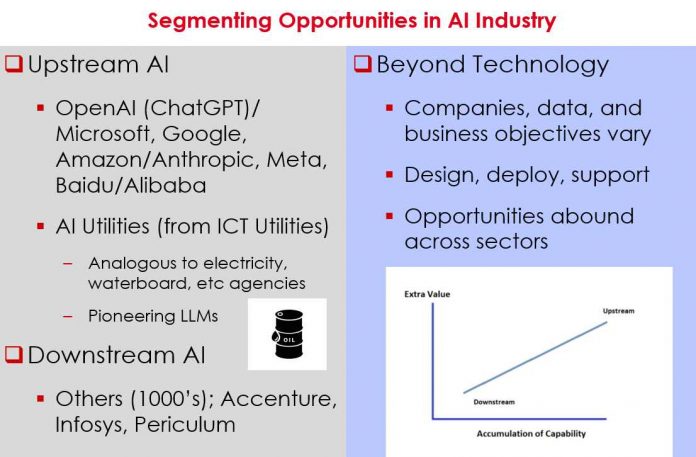
Everyone will have opportunities in this AI (artificial intelligence ) world. I draw from the oil industry to explain why even though the AI utilities will capture most of the opportunities, the downstream players will still capture value. At Tekedia AI in Business masterclass, we are helping professionals understand the emerging AI world here.


AI summarized this video as below:

In the realm of artificial intelligence (AI), a nuanced discussion is unfolding around segmenting opportunities within the industry, drawing intriguing parallels with the established oil sector. To grasp this discourse effectively, people should first acquaint themselves with AI technology and its diverse applications across industries.

Understanding the concepts of upstream AI—encompassing companies focused on core AI development—and downstream AI—comprising entities utilizing AI for specific products or services—is crucial. Key themes underpinning this dialogue include industry segmentation, market dynamics, competition, value capture strategies, and the integration of technology into varied business models. By juxtaposing historical contexts between the growth trajectories of both sectors—the evolutionary path of AI and the profound impact of oil on global economies—a richer understanding emerges regarding their comparative analyses.

Recent events shaping the landscape of AI, such as technological advancements, notable industry developments like mergers and acquisitions, or regulatory shifts impacting sector operations are pertinent considerations in this narrative. Moreover, exploring how other industries have been segmented can offer valuable insights into common trends in market dynamics and competitive landscapes.

Looking ahead to potential future scenarios in the AI domain suggests a trajectory marked by increased consolidation among dominant upstream players alongside ongoing innovation within downstream sectors. Regulatory adjustments may be on the horizon to address concerns related to market concentration issues while new business models leveraging cutting-edge AI technologies are poised to emerge.

Delving deeper into ethical implications surrounding essential services powered by AI or examining societal impacts stemming from its pervasive influence could serve as compelling extensions to this overarching discussion on segmenting opportunities within an ever-evolving industry landscape.

Windfall Tax: Getting the Economy to Work for All – By  Femi Otedola

0

I write to express my strong support for the implementation of a windfall tax in Nigeria and to highlight the critical role this measure plays in fostering a fairer and more equitable economic environment.

This endorsement aligns with the ongoing efforts to reform the Nigerian banking sector, aimed at enhancing economic stability and integrity within our financial institutions. Windfall taxes are levies on companies or individuals who receive substantial, unexpected profits due to circumstances beyond their usual control or investment. Taxing these extraordinary gains ensures a fairer distribution of wealth, allowing those who benefit disproportionately to contribute more significantly to the broader societal good.

The revenue generated from windfall taxes can be channeled into essential public services such as healthcare, education, and infrastructure, benefiting all citizens and helping to reduce social inequalities. The recent announcement of a windfall tax on the extraordinary profits earned by Nigerian banks is a significant first step towards achieving these goals. The consolidation of various foreign exchange rate systems into a single investors and exporters (I&E) window led to the depreciation of the Naira and substantial increases in the value of bank assets denominated in United States Dollars.

This extraordinary gain should be redistributed to fund critical infrastructure development, education, healthcare access, and public welfare initiatives, addressing the intense pressure on public finances and alleviating the cost-of-living crisis many Nigerians face. Furthermore, the financial statements of manufacturing, telecoms, and SMEs indicate that many of these companies may not be able to pay corporate tax for at least the next two years, as they are currently showing negative equity. It is essential for the government to step in and provide support to bridge these gaps, ensuring revenue generation and fostering economic development.

The importance of aligning financial priorities with Nigeria’s broader economic development goals cannot be overstated. The Federal Government’s reforms are both timely and essential for the sustainable growth of our economy.

By taking decisive action to implement these changes, the Federal Government is demonstrating a commitment to ethical leadership and accountability. These reforms will empower our banking sector to play a pivotal role in driving Nigeria’s economic development, ultimately securing a prosperous future for all Nigerians.

I also commend the recent recapitalization initiative in the banking sector, which sets minimum capital requirements of N500 billion for international banks and N200 billion for national banks. This move is designed to strengthen the banking sector’s capacity to support Nigeria’s broader economic development goals. It is crucial for banks to focus on operational efficiency, technological innovation, and customer service, rather than executive extravagance.

Amid the progress with banking sector reforms, there is an urgent need to address entrenched issues within the Nigerian banking sector.

A concerning trend has emerged where some bank chief executives prioritize personal gain over their duty to shareholders and customers. The core values of banking—trust, integrity, and service—must be upheld. I am particularly critical of the culture of flamboyance, especially the ownership and operation of private jets.

Nigerian banks are spending an estimated $50 million annually just on maintaining private jets, with over $500 million gone into purchasing nine private jets by four banks. This level of extravagance significantly erodes public trust in our financial institutions and diverts crucial resources away from vital areas such as operational efficiency, technological innovation, and customer service.

To regain the trust of the Nigerian public and fulfill its pivotal role in the nation’s economic development, the banking sector must realign its financial priorities. Investments should be channeled into areas that directly improve customer services and enhance technological infrastructure.

I urge all stakeholders in the Nigerian banking sector and the broader economic community to rally behind these visionary reforms. It is time for our financial institutions to embody the highest standards of integrity and service, ensuring a stronger and more resilient economy for all Nigerians.

Egyptian Fintech MNT-Halan Acquires Turkish Commercial Finance Company, Tam Finans

0

MNT-Halan, a leading Egyptian fintech unicorn, has announced its strategic expansion into the Turkish market through the acquisition of Tam Finans, a prominent commercial bank in Turkey.

This acquisition marks a significant milestone in MNT-Halan’s growth strategy, positioning the company to broaden its financial services footprint beyond Egypt.

Tam Finans is one of Turkey’s leading financial companies, providing a range of commercial banking services, including lending, payments, and financial solutions tailored to small and medium-sized enterprises (SMEs). With its strong capital structure, with an equity of more than TL 1 billion, the bank is among the leading companies in the country, with a strong financial structure and innovative approach leveraging technology.

By acquiring Tam Finans, MNT-Halan aims to leverage its technology and expertise to enhance and expand the bank’s offerings, integrating innovative fintech solutions to better serve customers in Turkey.

Speaking on the acquisition, MNT-Halan’s Founder and CEO Mounir Nakhla said,

“Today, MNT-Halan joins forces with Tam Finans to provide millions of businesses and consumers access to innovative financial services in Turkey. Combining Tam Finans’ credit models, distribution capabilities, and management team with MNT-Halan’s technology, customer-facing app, and financial muscle will help complete the product offering and give greater confidence to all its stakeholders. Turkey and Egypt’s histories and cultures have been intertwined for hundreds of years and their current economic outlook points to a bright future that we are ready to capitalize on.”

Also commenting, Hakan Karamanl?, Tam Finans’ CEO, said,

“We are delighted to join the MNT-Halan family. Their core belief that financial access enables people to fulfil their dreams mirrors the same ethos we have built our company on. MNT-Halan’s scalable technology will now allow us to grow faster and take our mission to more businesses and people as we capture cross-selling opportunities through an expanded product and services offering.”

MNT-Halan’s expansion into Turkey represents a critical step in its broader strategy to become a leading fintech player in the Middle East and North Africa (MENA) region, as well as to explore new markets with high growth potential.

This acquisition comes after the fintech unicorn expansion into Pakistan this year March, after it acquired Advans Pakistan Microfinance Bank, demonstrating the scalability and diversification of the company’s business model. Also, it recently raised US $157.5 million from the IFC (International Finance Corporation) as well as existing shareholders.

Founded in 2017 by Mounir Nakhla, MNT-Halan offers a diverse portfolio of financial and non-financial services ranging from lending, buy now pay later, e-commerce, payments, and mobility to on-demand logistics.

Its recent acquisition of Tams Finans, aligns with its mission to democratize financial services across emerging markets, providing accessible and affordable financial products. Notably, the acquisition will enable the company to introduce digital lending, payments, and other fintech services in Turkey, replicating its successful model in Egypt and further solidifying its presence in the region.

Samsung’s Q2 2024 Operating Profit Skyrockets Amid Strong AI Demand

0

South Korean multinational manufacturing conglomerate Samsung, has reported a staggering increase in its second quarter (Q2) operating profit, driven by robust demand for Artificial Intelligence (AI) technologies.

The tech giant’s financial results surpassed market expectations, highlighting its strong performance amidst a growing AI sector. The revenue for the quarter was 74.07 trillion Korean won (KRW), a 23.42% increase from a year earlier, while operating profit jumped 1,458.2%.

Also, the company posted an operating profit of KRW 10.44 trillion as favorable memory market conditions drove higher average sales price (ASP), while robust sales of OLED panels also contributed to the results.

Samsung’s memory market continues to make a significant recovery, with the second half outlook centered on server demand, driven by demand for HBM as well as conventional DRAM and server SSDs. The company noted that the increased demand is a result of the continued AI investments by cloud service providers and growing demand for AI from businesses for their on-premise servers.

PC demand was relatively weak, while demand for mobile products remained solid on the back of increased orders from Chinese original equipment manufacturer (OEM) customers. Demand from server applications continued to be robust, with second quarter results improving significantly from the previous quarter as the Company responded to demand for high-value-added products for generative Al applications.

The Company strengthened its leadership in the DDR5 market through the mass production of a 128GB product based on 1b nanometer(nm)1 32Gb DDR5, which was developed for the first time in the industry. In the second half of 2024, Al servers are expected to take up a larger portion of the market as major cloud service providers and enterprises expand their Al investments.

As Al servers equipped with HBM also feature high content-per-box with regards to conventional DRAM and SDs, demand is expected to remain strong across the board from HBM and DDR5 to server SSDs.

During its earnings call, the firm said it plans to address the Al demand by expanding sales of HBM3 – the latest Al memory product – through capacity expansion in the second half. It will also expand sales of SSDs which are currently in high demand for AI servers as well.

Overall market demand for smartphones declined sequentially, particularly in the premium segment, as seasonal trends continued in the smartphone market. While the MX Business recorded a sequential decline in revenue, the Galaxy S24 series achieved double-digit year-on-year growth in both shipments and revenue over its predecessor for both the second quarter and the first half of the year, demonstrating the continued success of the series.

In Q2 of 2024, overall demand for smartphones is expected to increase year-on-year, with increased demand for premium products being driven by growing demand for Al and the launch of new products with innovative features.

Samsung plans to continue pushing its premium Galaxy Al products. This comes after it announced last week global availability for its newest Galaxy devices including Galaxy Z Fold6, Z Flip6, Watch Ultra and Ring.

“Even in challenging circumstances, we will continue investing in upgrading Galaxy Al functionality in order to secure a long-term sustainable growth engine,” the company noted.

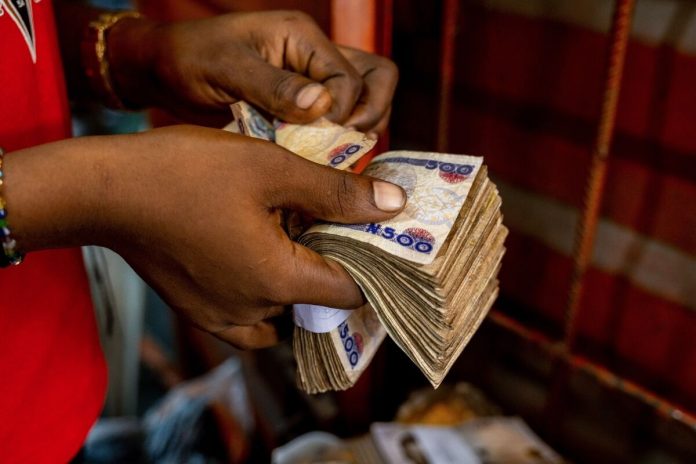
How Did Nigeria Become So Broke?

0

Nigeria, Africa’s largest economy, has experienced a complex economic journey from 1999 to 2024. This period has been marked by significant events that have shaped the nation’s financial status, including fluctuations in oil prices, policy changes, and global economic trends.

From 1999 to the early 2000s, Nigeria’s economy witnessed modest growth, with the GDP per capita growth rate hovering around 0.58% in 1999. The country’s reliance on oil exports meant that its fortunes were closely tied to the global oil market. The early 2000s saw a boom in oil prices, which led to increased revenue and the potential for economic expansion.

However, the subsequent years were not without challenges. The global financial crisis of 2008 had a ripple effect on Nigeria’s economy, leading to a contraction in the GDP growth rate. Despite this, the nation showed resilience with a recovery and a significant growth rate of 8.04% in 2009.

Nigeria’s economy has faced a challenging period since 2015, marked by a series of economic downturns and a struggle for recovery. The nation’s Gross Domestic Product (GDP) experienced fluctuations, with a significant decline in 2020, attributed to a global downturn caused by the COVID-19 pandemic. Despite a rebound in 2021, the growth rate was not sufficient to significantly alter the per capita income, which remained relatively flat.

Several factors have contributed to Nigeria’s economic situation since 2015. Key among these are monetary and exchange rate policy distortions, which have affected the overall economic stability. Additionally, Nigeria has faced increasing fiscal deficits, partly due to lower oil production and the financial burden of a costly fuel subsidy program. Trade protectionism measures have also played a role, alongside the impact of external shocks like the pandemic.

The oil sector, a cornerstone of Nigeria’s economy, has seen reduced output, which, coupled with fluctuating oil prices, has had a profound impact on the nation’s revenue and foreign exchange reserves. These economic challenges have been compounded by internal issues such as infrastructure deficits and governance concerns, which have hindered foreign investment and economic diversification efforts.

As of 2022, Nigeria’s GDP stood at $472.62 billion, reflecting a modest increase from the previous year. However, the growth rates from 2015 to 2022 have decreased, and the GDP per capita has shown little growth, indicating that the average Nigerian has not seen significant economic improvement.

The Nigerian government has made efforts to diversify the economy, reducing dependence on oil by investing in other sectors such as agriculture, manufacturing, and services. These efforts have been reflected in the GDP growth, with a notable increase of 7.21% in 2022 from the previous year.

The PwC Nigeria Economic Outlook for 2024 highlights seven key trends that will shape the nation’s economic trajectory. It projects a marginal decline in inflation and a 3.1% rise in GDP, emphasizing the need for balancing ambitious fiscal reforms with effective budget implementation. The report also underscores the importance of aligning fiscal and monetary policy to stabilize prices and reach target goals.

Infrastructure development has been a critical area of focus for Nigeria, with the allocated infrastructure spending budget for 2024 falling short of the yearly $150 billion requirement specified in the National Integrated Infrastructure Master Plan for 2021-2025. Security spending has also been significant, amounting to ?14.8 trillion over the past nine years, although challenges persist.

The Nigerian Economic Summit Group’s research document for 2024 provides a strategic plan for the nation’s transformation over the medium term, offering a nuanced understanding of the current economic landscape and projections for the future.

The path to economic recovery and growth for Nigeria involves addressing these multifaceted issues. It requires a concerted effort to reform economic policies, enhance oil production efficiency, diversify the economy, and improve governance and infrastructure. With the right policies and international support, Nigeria can work towards a more prosperous future.

Nigeria’s economic journey from 1999 to 2024 has been one of resilience and gradual progress, with the nation facing both internal and external challenges. The government’s efforts to diversify the economy and invest in infrastructure, coupled with the strategic alignment of fiscal and monetary policies, are pivotal for the nation’s continued growth and development. As Nigeria moves forward, it remains to be seen how these efforts will translate into sustainable economic prosperity for its citizens.