DD
MM
YYYY

PAGES

DD
MM
YYYY

spot_img

PAGES

Home Blog Page 3044

AI Advances and Renewable Growth: July 2024 Market Highlights

0

July 2024 has already been packed with events that have had a significant impact on the world’s financial markets. Let’s take stock (no pun intended) of this month’s market movers.

Technology: Rise of AI and Semiconductors

The technology sector continues to garner a great deal of attention:

— NVIDIA published exceptional quarterly results, propelled by strong demand for its GPUs used in artificial intelligence, sending its share price to record levels.

— Intel caused a stir with the launch of its new range of processors, aimed at competing directly with AMD and regaining market share in the server and PC segments.

Finance: Reactions to monetary policies

Banks and financial institutions reacted to recent decisions by central banks:

— JPMorgan Chase saw its shares rise after announcing solid quarterly results and an optimistic outlook despite global economic uncertainties.

— Deutsche Bank fell slightly after warning of the potential impact of high interest rates on mortgages and consumer credit in Europe.

Renewable energies: an unstoppable growth trend

Companies in the renewable energy sector are thriving:

— Tesla saw its shares soar after unveiling advances in its next-generation battery projects, promising greater autonomy and lower costs.

— NextEra Energy strengthened its leadership position by acquiring several wind farms in Europe, thus expanding its international presence.

Pharmaceuticals: Innovation and challenges

The pharmaceuticals sector was marked by significant announcements in research and development, as well as by regulatory challenges:

— Pfizer has announced positive results for a new treatment for a rare form of cancer, boosting its shares. However, concerns about drug prices remain.

— Moderna has launched a clinical trial for a combined flu vaccine and COVID-19, a long-awaited development.

Consumer: Resilience and challenges

The consumer sector showed signs of resilience despite inflationary pressures:

Amazon stock price surged following robust Prime Day sales that outperformed analysts’ expectations.

— Walmart continues to benefit from its hybrid model, combining in-store and online sales, but remains cautious about fluctuations in supply chain costs.

In a nutshell, July 2024 was/is a month of significant movement in various sectors, each with a unique impact on the financial markets. Technological advances, energy transition efforts, pharmaceutical innovations, monetary policy decisions, and consumer resilience have all shaped market trends. We’ll continue to monitor these market movers closely to anticipate future economic and sectoral developments.

Cantor Fitzgerald announces $2B Bitcoin Finance for Crypto Ventures

0

In a significant move for the cryptocurrency sector, Howard Lutnick, the CEO of Cantor Fitzgerald, has announced the launch of a $2 billion Bitcoin financing business. This announcement, made at the Bitcoin 2024 conference, marks a substantial commitment from a major financial services firm to the cryptocurrency market.

Cantor Fitzgerald, a name synonymous with innovation in the financial sector, is taking a bold step into the world of digital currency. The new financing business aims to provide leverage to investors holding Bitcoin, indicating a strong belief in the long-term viability of cryptocurrencies as an asset class.

The CEO’s defense of Tether, a widely used stablecoin, during his address at the conference, also highlights the growing importance of digital assets in the global financial system. Stablecoins like Tether are crucial for the liquidity and stability of the cryptocurrency market, and support from prominent financial leaders adds credibility to their use.

This move by Cantor Fitzgerald could signal a new era of institutional support for Bitcoin and other digital currencies. With a $2 billion commitment, the firm is positioning itself as a significant player in the cryptocurrency lending space, potentially paving the way for other financial institutions to follow suit.

The implications of this development are far-reaching. It could lead to increased liquidity in the cryptocurrency market, making it easier for investors to access funds and take advantage of market opportunities. Moreover, it represents a vote of confidence in the security and potential of Bitcoin as an investment.

Bitcoin financing, while offering numerous opportunities for growth and innovation, also carries with it a set of risks that potential investors should be aware of. Here are some of the key risks associated with Bitcoin financing:

Volatility: Bitcoin’s price is known for its rapid and significant fluctuations. This volatility can result in substantial gains, but also significant losses, making it a risky investment for those not prepared for its unpredictability.

Regulatory Uncertainty: The regulatory environment for Bitcoin is still evolving. Governments could impose strict regulations or even outright bans on Bitcoin trading and mining, which could impact its value and legality.

Security Concerns: The digital nature of Bitcoin makes it susceptible to cybertheft and security breaches. Investors must ensure robust security measures to protect their investments from hackers.

Market Manipulation: The cryptocurrency market is relatively young and can be subject to price manipulation by influential players, which can lead to artificial inflation or deflation of Bitcoin prices.

Technological Risks: Advances in technology, such as quantum computing, could potentially compromise Bitcoin’s cryptographic security, leading to the exposure of private keys and loss of assets. Unlike traditional currencies, Bitcoin is not backed by any physical commodity or government guarantee. Its value is largely driven by market demand and investor sentiment. In the event of a price drop, those using Bitcoin as collateral for loans could face the loss of their capital if the value dips below the required threshold.

As the cryptocurrency market continues to mature, the entry of established financial entities like Cantor Fitzgerald is a testament to the growing integration of digital assets into the broader financial landscape. This could be just the beginning of a trend where traditional finance and digital currencies become increasingly intertwined, offering new possibilities for investors and strengthening the market’s infrastructure.

Despite all the Volatility last month, Crypto Markets have once again turned Bullish

Meanwhile, the cryptocurrency markets have once again demonstrated their remarkable resilience. Despite experiencing significant volatility last month, the markets have rebounded and are currently exhibiting a bullish trend. This pattern of recovery underscores the inherent dynamism within the crypto space, where investor sentiment can shift rapidly, often driven by regulatory changes, technological advancements, or global economic factors.

The current bullish sentiment can be attributed to several key factors. Firstly, the approval of Exchange-Traded Funds (ETFs) has provided a substantial boost to the value of Bitcoin, which surged 150% coming into 2024. This has had a knock-on effect across the market, instilling confidence among investors and contributing to the overall market upturn.

Another contributing factor is the intersection of Artificial Intelligence (AI) and cryptocurrency. This fusion of cutting-edge technology with digital assets is opening up new possibilities for automated trading, predictive analytics, and enhanced security protocols, further bolstering market optimism.

Moreover, the crypto market is witnessing an increase in funding, mergers, and acquisitions, indicating a maturing market that is attracting institutional investors and large-scale corporate participants. This trend is likely to continue, as the market capitalization of cryptocurrencies grows, and the industry consolidates.

Regulation is also playing a pivotal role. Increasing regulation of cryptocurrency and exchanges is providing a clearer legal framework, which is essential for mainstream adoption. While regulatory scrutiny can sometimes create uncertainty, it also leads to greater transparency and stability in the long term.

The environmental impact of cryptocurrencies, particularly those that require energy-intensive mining operations, remains a concern. However, the industry is responding with innovative solutions that aim to reduce the carbon footprint of crypto-related activities.

The digitization of real-world assets through blockchain technology is another trend that is gaining momentum. This trend is transforming traditional asset classes, making them more accessible, and creating new opportunities for investment and wealth generation.

Lastly, the exploration of Central Bank Digital Currencies (CBDCs) by global officials is a significant development. The potential introduction of government-backed digital currencies could radically alter the financial landscape, integrating digital assets into the broader monetary system.

Some of the most popular altcoins that are making waves in the market this year.

Ethereum (ETH) remains a stalwart in the altcoin space, with its market capitalization reflecting its widespread use and adoption. As a platform for decentralized applications (dApps) and smart contracts, Ethereum continues to be indispensable in the crypto ecosystem. Its transition to Ethereum 2.0, which aims to enhance scalability and energy efficiency, keeps it at the forefront of blockchain technology.

Binance Coin (BNB) has also been gaining traction, especially for its utility within the Binance exchange ecosystem. It offers users discounted trading fees and has expanded its use beyond the exchange, including payment processing and travel bookings.

Solana (SOL) is noted for its high-speed transaction capabilities, powered by a unique hybrid proof-of-stake and proof-of-history mechanism. This makes it an attractive option for decentralized finance (DeFi) and app development.

Avalanche (AVAX) is another altcoin to keep an eye on, especially for its customizable blockchain networks that cater to various DeFi applications.

Chainlink (LINK) stands out as a leading oracle network, providing reliable data feeds to smart contracts, which is crucial for the execution of complex blockchain-based agreements.

Other notable mentions include Cardano (ADA), known for its robust security features, and Polkadot (DOT), which enables different blockchains to interoperate seamlessly. Additionally, meme coins like Dogecoin (DOGE) continue to attract interest due to their viral nature and growing communities.

The cryptocurrency market’s return to a bullish state despite recent volatility is a testament to its robustness and the growing confidence of its participants. With a range of factors contributing to this positive outlook, the future of cryptocurrency remains bright, albeit with the usual caution that the market’s volatility warrants. For those interested in the evolving landscape of digital currencies, staying informed and vigilant is key to navigating the market’s ebbs and flows.

Germany’s Acceleration in Electric Vehicle Race

0

Germany, a nation renowned for its engineering excellence and automotive prowess, has made significant strides in the electric vehicle (EV) sector. As of 2024, Germany has solidified its position as the third-largest market for electric cars globally, trailing only behind China and the United States. This achievement marks a pivotal moment in the country’s automotive history, reflecting a conscious shift towards sustainable mobility.

The journey to this milestone began years ago, with German automakers committing to an electric future amidst growing environmental concerns and stringent emissions regulations. In 2023, Volkswagen led the charge as the largest electric car brand in Germany, with the Tesla Model Y being the most popular battery-electric vehicle (BEV) among German consumers. The market share for electric cars in Germany saw a moderate increase to 18.4%, indicating a steady, albeit slower, growth compared to previous years.

The landscape of electric vehicles in Germany is diverse, with a range of models catering to various consumer preferences. From the sleek and innovative Tesla Model Y to the practical and efficient VW ID.4/ID.5, and the robust Skoda Enyaq, the German market offers a plethora of choices for potential EV owners. This variety is crucial in a market where consumer needs are as varied as the vehicles themselves.

Despite the progress, the journey hasn’t been without its challenges. The abrupt cancellation of subsidies for private buyers in late 2023 introduced uncertainty into the market, potentially impacting sales in the early months of 2024. Moreover, the German auto industry has faced criticism for concentrating on the higher end of the market, leaving room for more affordable options from international competitors.

Germany’s ambitious goals for electric vehicle (EV) adoption face several significant challenges that could hinder the transition from traditional combustion engines to cleaner electric alternatives. One of the primary obstacles is the high cost of electric cars, which remains a deterrent for many potential buyers. The manufacturing of EV batteries contributes to the overall price tag, making electric cars more expensive than their diesel or petrol counterparts.

Another major concern is the range anxiety associated with electric cars. Many consumers are hesitant to switch to EVs due to fears of limited driving range and the availability of charging stations. This is compounded by the current inadequacy of charging infrastructure, which struggles to meet the growing demand for electric vehicles.

Environmental benefits, often a selling point for electric cars, have also been called into question. Some consumers remain skeptical about the actual environmental impact of EVs, considering the entire lifecycle from production to disposal.

Furthermore, the abrupt cancellation of subsidies for private buyers in late 2023 has introduced uncertainty into the market, potentially affecting sales and consumer confidence. This change in policy may slow down the momentum gained in previous years, as subsidies played a crucial role in making EVs more accessible to a broader audience.

Looking ahead, Germany’s commitment to expanding its charging infrastructure and potential policies to mandate a percentage of new vehicle sales to be electric could further bolster the EV market. Such initiatives would not only support the growth of electric vehicles but also contribute to the country’s broader environmental goals.

Germany’s ascent to the third spot in the global ranking of electric car usage is a testament to the country’s adaptability and forward-thinking approach to mobility. With continued innovation and supportive policies, Germany is well-positioned to maintain its momentum in the electric vehicle revolution, driving towards a greener and more sustainable future on the roads.

Trump Announces Ambitious Plan to Make The United States The Crypto Capital of The World

0

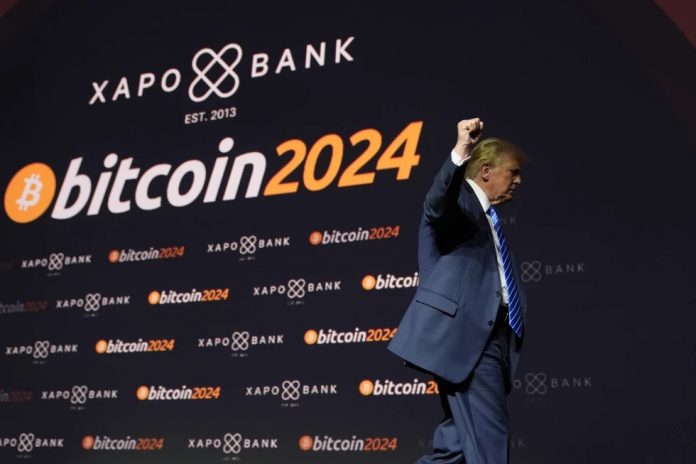
Former United States President and current Republican presidential aspirant Donald Trump has announced his ambitious plan to establish the United States as the global capital for cryptocurrency. This announcement was made at the Bitcoin conference in Nashville held on Saturday 27, 2024.

While speaking at the event, Trump said,

“This afternoon I’m laying out my plan to ensure that the United States will be the crypto capital of the planet and the Bitcoin superpower of the world, and we’ll get it done”.

He further stated that if he becomes president, he would ensure that the US government retains its Bitcoin holdings indefinitely. “For too long our government has violated the Cardinal rule that every Bitcoiner knows by heart: Never sell your Bitcoin”, he remarked.

Throughout his speech, Trump outlined the Republican party’s plan to embrace crypto and roll out friendly policies, as against that of President Biden’s administration which he said has taken a hard regulatory approach to crypto.

“The Biden-Harris administration’s repression of crypto and Bitcoin is wrong and it’s very bad for our country. Let me tell you if they win this election, every one of you will be gone. They will be vicious. They will be ruthless. They will do things that you wouldn’t believe”, Trump stated.

Also, Trump further made a shocking statement on his plans to fire the U.S. chairman of the Securities and Exchange Commission (SEC), Gary. S Gensler, who he said has taken an aggressive approach to crypto regulation in the country.

It is understood that since his first year as the head of the SEC, Gensler has been consistent in his stance that most cryptocurrencies fit the definition of securities used for gambling, which presents a systemic risk for the economy.

As the adoption of crypto continues to surge, Gensler has called for an aggressive approach to policing cryptocurrency as the industry’s surging growth has rattled the financial world. In 2021, while testifying before the Senate Banking Committee, he argued that the vast majority of digital assets traded over crypto exchanges need to register with the SEC so the agency can protect investors against abuses.

“It’s a highly speculative asset class,” Gensler said, expressing skepticism about claims by crypto advocates that it offers a path to financial independence for smaller investors.

Trump’s recent crypto-friendly stance is coming as the race to capture the votes of US citizens takes center stage in the 2024 presidential contest. Meanwhile, about five years ago, Trump had starkly opposed the decentralized tokens. In a post made on X (formerly Twitter) in July 2019, Trump said he is not a fan of Bitcoin and other Cryptocurrencies.

He wrote, “I am not a fan of Bitcoin and other Cryptocurrencies, which are not money, and whose value is highly volatile and based on thin air. Unregulated Crypto Assets can facilitate unlawful behavior, including drug trade and other illegal activity.”

Fast forward to May 2024, Trump completed a total flip-flop on his stance regarding cryptocurrencies, becoming the first major presidential candidate to accept Bitcoin donations. Notably, this sharp change in policy stance has appeased many crypto supporters, which could be a crucial deciding factor for his victory in the election in November this year.

However, as regards Trump’s recent support for cryptocurrency, Co-founder of the decentralized blockchain and development platform Ethereum, Vitalik Buterin, has issued a stern warning against choosing a candidate purely based on whether they claim to be “pro-crypto.

Vitalik via a blogpost wrote that if one notices a politician being crypto-friendly, one important thing that they can do is look up their views on crypto five years ago.

Similarly, he urged them to check up on their views on related topics such as encrypted messaging five years ago. This according to him, can be a good guide on what kinds of changes to their views might happen five years in the future.

LemFi Enters The Latin American Market, Expands International Payment Services to Brazil And Mexico

0

LemFi, a leading fintech company that has expanded to Latin America after it announced the expansion of its International payment services to Brazil and Mexico.

This strategic move aims to enhance cross-border payment capabilities and provide seamless financial solutions to individuals and businesses in these vibrant markets.

LemFi’s expansion into Brazil and Mexico is set to address the growing demand for efficient and reliable international payment services in Latin America. By leveraging its advanced technology and robust platform, LemFi aims to facilitate faster, more cost-effective transactions, catering to the needs of both personal and business clients.

Speaking on its recent expansion, Rebeca Wignall, LemFi’s General Counsel said,

“Since our inception in 2020, we have been committed to reshaping how people move their money internationally. Our expansion to serve the Latin American diaspora underscores our global growth ambitions and our desire to be the choice remittance platform for everyone, everywhere.”

Brazil and Mexico are among the largest economies in Latin America, with significant potential for growth in the fintech sector. LemFi’s entry into these markets is a strategic decision to tap into the increasing demand for digital financial solutions. The company’s innovative approach and user-friendly platform are anticipated to gain rapid acceptance among consumers and businesses seeking reliable international payment options.

With a recent launch in the United States, a US$33 Million Series A raise, recent expansions to China, India, and Pakistan, and planned expansions to other diverse markets, LemFi has proven to have the team, resources, and strategies to deliver on the promise of reliability, cost-effectiveness, and value, helping the Latin American diaspora be more financially connected to home. 

In 2023, the Central Bank of Nigeria (CBN) granted LemFi an IMTO license as a remittance provider. The Fintech provides global financial services to immigrants and enables users to send money to over 21 countries across the world.

LemFi also offers a multi-currency account for immigrants to hold, send, and receive money in both the currencies of their home country and that of their host country. Users can also send money to more than 30 countries.

The fintech invites everyone who needs to stay in touch with their homes in Mexico, Brazil, and beyond to experience innovative products and services through its Mobile App, which can be downloaded from the Google Play Store, the Apple App Store, or the website. 

Notably, LemFi will continue to expand to diverse markets and innovate, delivering easy-to-use and cost-effective ways to move money safely across the globe.