DD
MM
YYYY

PAGES

DD
MM
YYYY

spot_img

PAGES

Home Blog Page 3046

Burkina Faso is Halting Gold Exports to Bolster Currency Reserves

0

In a bold move to strengthen its currency reserves and tackle the illicit trade, Burkina Faso has announced an immediate suspension of gold exports, particularly from artisanal and semi-mechanized mining operations. This decision, spearheaded by the nation’s military leadership, underscores a determined effort to restructure and enhance the regulation of the gold sector.

The West African nation, rich in mineral resources, has long grappled with the challenges posed by unregulated artisanal gold mining. The vast majority of the gold mined through these operations has bypassed formal channels, leading to significant revenue loss for the government and contributing to regional insecurity. The suspension of export permits is a strategic step towards addressing these issues head-on.

By redirecting the flow of gold to the state-owned Société Nationale des Substances Précieuses (SONASP), the government aims to ensure that a fair share of the profits benefits the national economy and its people. This move also aligns with the broader regional efforts, as highlighted in a report by the Economic Community of West African States (ECOWAS), to formalize artisanal and small-scale mining across the Sahel region.

Here are some of the main hurdles faced in regulating this industry:

Informality and Legal Frameworks: A significant portion of artisanal mining operates outside formal legal frameworks. This informality can stem from a lack of clear policies or from miners’ attempts to avoid regulations and taxes.

Environmental Impact: Artisanal mining can have severe environmental consequences, including deforestation, soil erosion, and water contamination. The use of mercury in gold extraction is particularly harmful, leading to pollution that endangers biodiversity and human health.

Health and Safety: Working conditions in artisanal mines are often unsafe, with miners facing risks such as mine collapses and exposure to toxic chemicals. The lack of safety measures and health services exacerbates these dangers.

Economic Viability: Many artisanal miners operate with minimal profit margins. Regulatory measures that increase costs, such as requiring expensive safety equipment or environmental controls, can threaten the economic viability of their operations.

Social and Community Issues: Artisanal mining is not just an economic activity; it’s also deeply embedded in the social fabric of communities. Regulations need to be sensitive to the social dynamics and not disrupt the livelihoods of entire communities.

Enforcement and Corruption: Even when regulations are in place, enforcement can be challenging. Limited resources, vast and remote areas of operation, and corruption can all undermine regulatory efforts.

The suspension is not just an economic measure but also a security one. The illicit gold trade has been a source of funding for armed groups in the Sahel, exacerbating the security situation in the region. By taking control of the gold exports, Burkina Faso is also taking a stand against the financial underpinnings of these groups.

The impact of this policy shift will be closely watched by economists and policymakers alike, as it could set a precedent for other resource-rich nations facing similar challenges. The success of Burkina Faso’s initiative could inspire a wave of regulatory reforms across the continent, potentially leading to more stable and prosperous economies.

For now, the world’s eyes are on Burkina Faso, as it takes a firm stance on its gold exports. The country’s efforts to clean up the sector and better organize the marketing of its precious resources are commendable steps towards economic resilience and regional stability.

Revolut secures $45B Valuation in a Share Sale to Employees

0

In a remarkable development for the fintech sector, U.K.-based trading platform Revolut has recently secured a staggering $45 billion valuation, following a share sale to its employees. This valuation not only cements Revolut’s position as one of the world’s most valuable fintech firms but also marks it as Europe’s most precious private tech company, surpassing many of Britain’s oldest banks, including Barclays, Lloyds Bank, and NatWest.

Founded in 2015, Revolut began as a digital banking alternative, offering budgeting and currency exchange services. Over the years, it has expanded its portfolio to include a range of financial services, from cryptocurrency trading to stock investing. The company’s growth trajectory has been nothing short of meteoric, with a valuation that has soared from $33 billion in 2021 to its current $45 billion.

The recent share sale by employees is a secondary market transaction, providing liquidity and an opportunity for the staff to benefit from the company’s growth. This move is indicative of Revolut’s strong financial performance and its strategic objectives’ execution. In 2023, Revolut reported a revenue of $2.2 billion, with a profit before tax amounting to $545 million, reflecting the company’s robust business model and operational efficiency.

The valuation increase is a testament to the confidence that investors have in Revolut’s business model and its potential for future growth. The round was led by new investors Coatue and D1 Capital Partners, along with existing investor Tiger Global, highlighting the diverse mix of support the fintech giant enjoys.

Revolut has significantly expanded its range of services since its inception, positioning itself as a comprehensive financial hub for modern consumers. The platform offers a variety of services that cater to the diverse needs of its users, from everyday transactions to investment opportunities.

One of the core offerings of Revolut is its personal finance management tools, which include budgeting and analytics to help users track and control their spending. Additionally, the platform provides global spending and transfers without hidden fees, making it a favorite for travelers and international users.

For those looking to save and grow their money, Revolut offers savings accounts with competitive interest rates. Users can also engage in stock trading with access to 3,000+ stocks, including high-profile companies like Apple and Tesla, without commission fees. Moreover, cryptocurrency exchange services are available for users interested in digital currencies.

Revolut hasn’t stopped there; it also provides unique features such as RevPoints, which can be collected on daily expenses and redeemed for rewards, and the ability to send gift cards or cash instantly to friends and family. For the socially conscious, there’s the option to round up card payments and donate the spare change to charity.

The company’s commitment to innovation is evident in its continuous efforts to enhance user experience and offer new services. With plans to introduce more features and expand its global reach, Revolut is set to redefine the financial services landscape further.

Revolut’s success story is also a sign of the changing times in the financial industry. Traditional banking institutions are facing stiff competition from agile, tech-driven companies like Revolut, which are redefining the banking experience for customers. With a U.K. banking license secured after a three-year wait and a banking license in Mexico, Revolut is well-positioned to expand its services and compete with established banks on a global scale.

As Revolut reportedly considers an IPO on the Nasdaq, the fintech firm’s journey reflects the broader trends in the industry, where innovation, customer-centric services, and technological advancements are shaping the future of finance. The employee share sale is not just a financial milestone; it’s a harbinger of the fintech revolution, where companies like Revolut are leading the charge in creating a more accessible and user-friendly financial ecosystem.

The Lesson from Obama’s Ad – Stage – And How AI Is Disintermediating Roles At Work

0
Obama family arrives at US Capitol prior to inauguration swear-in

The nature of work is being redesigned as a result of artificial intelligence (AI). Today, we are reading that General Motors (GM) is firing 1,000 workers: “General Motors (GM), one of the world’s leading automakers, has announced plans to eliminate 1,000 software-related positions as part of a broader strategy to refocus on quality improvement and accelerate the integration of artificial intelligence (AI) across its operations.”

Yes, AI is doing its thing, and companies are doing all to bake AI into their products. Good People, it is very magical because as that happens, the nature of work will change, because AI will disintermediate many jobs.

Think about it: how can a company fire many software guys even as it ramps up to “accelerate the integration of artificial intelligence (AI) across its operations”? Do not think deeper; let me take you to the Stage – an ad, and one of the most politically lethal adverts created by Obama against Mitt Romney for US Presidency. In that ad, men built a stage to host a town hall meeting for a new owner (Romney), and Romney walked on that stage to fire them all. They never forgot how they prepared, worked hard, to build that stage, only to be fired on that stage!

As we make AI better, AI will create job redundancies in many companies even as AI opens new vistas of opportunities. Yes, the AI you are helping to improve will improve, and overtime will eliminate your role. Those software guys helped the AI, and the AI has just made their roles useless. The lesson: #prepare and #relearn because the AI era is here.

General Motors Slashes 1,000 Jobs to Accelerate AI Integration Across Its Operations

0

General Motors (GM), one of the world’s leading automakers, has announced plans to eliminate 1,000 software-related positions as part of a broader strategy to refocus on quality improvement and accelerate the integration of artificial intelligence (AI) across its operations.

This development comes after GM has struggled with recent software problems. Recall that the automaker in December 2023, paused the sale of its Chevy Blazer EV, following a limited number of customer complaints over software-related quality issues.

General Motors recent integration of AI into its operations, the decision reflects the company’s shift in priorities as it navigates the rapidly evolving landscape of the automotive industry, where technology and innovation are becoming increasingly critical. The recent layoffs at the company, represent about 1.3% of its global salaried workforce of 76,000 as of the end of last year.

By cutting 1,000 software jobs, GM aims to streamline its workforce and reallocate resources towards areas that promise the most significant returns, such as AI development.

A spokesperson at the company Stuart Fowle disclosed that the job cuts were not about cost-cutting performance or individual performance. Rather, they are meant to help the company move more quickly as it tries to compete in the world of “software-defined vehicles.”

The spokesman wrote in an e-mail statement,

“As we build GM’s future, we must simplify for speed and excellence, make bold choices, and prioritize the investments that will have the greatest impact. As a result, we’re reducing certain teams within the Software and Services organization. We are grateful to those who helped establish a strong foundation that positions GM to lead moving forward.”

Focus on AI Integration

In a significant shift within the global automotive industry, automakers are increasingly laying off workers as they integrate AI into their operations, driven by the need to stay competitive in the evolving market. AI is playing an increasingly central role in the automotive industry, from autonomous driving systems to advanced manufacturing processes.

For GM, integrating AI more deeply into its operations is crucial to staying ahead in a market where tech-driven innovations are rapidly transforming how vehicles are designed, produced, and used. The company plans to use AI to optimize its production lines, enhance the safety and functionality of its vehicles, and create more personalized customer experiences.

As more companies invest in AI and other advanced technologies, the demand for traditional software roles is poised to decrease, while the need for expertise in AI, machine learning, and data science continues to grow.

NNPC announces a record-breaking net profit of N3.297tn for December 2023 FY

0

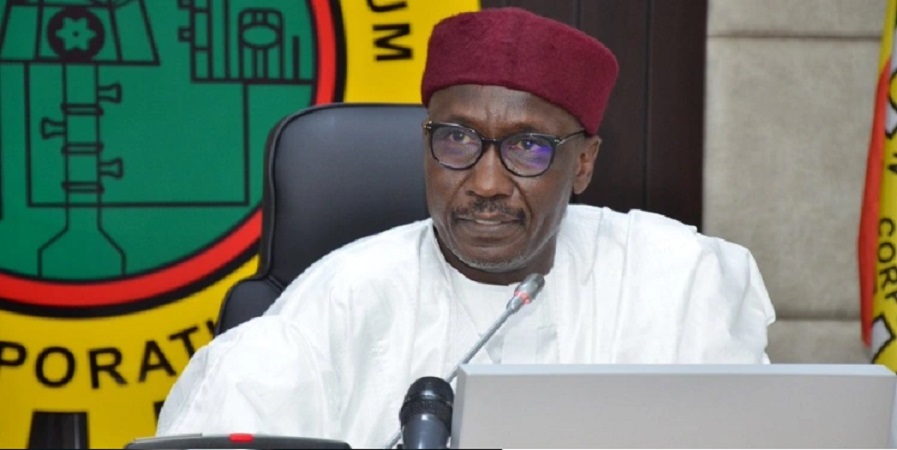
The Nigerian National Petroleum Company Limited (NNPC) has announced a record-breaking net profit of N3.297 trillion for the financial year ending December 2023, marking a remarkable 28% increase from the N2.548 trillion profit reported in 2022.

This growth represents an impressive N749 billion rise in profitability, reinforcing the company’s financial strength amid a challenging economic and operational environment.

The NNPC has also declared a substantial final dividend of N2.1 trillion, demonstrating its robust financial health and commitment to shareholder returns. During a press conference at the NNPC Towers in Abuja, the company’s Chief Financial Officer, Mr. Umar Ajiya, attributed this success to strategic foresight and operational resilience.

He stated, “Our fiscal performance reflects both strategic foresight and operational resilience. Despite inherent challenges of our operational and economic environment, we have improved the productivity and the financial performance of this great company.”

The company’s financial performance has followed a continuous upward trend since it first recorded a profit in 2020. In 2018, NNPC reported a loss of N803 billion, which was reduced to N1.7 billion in 2019. The company turned the tide in 2020, reporting N287 billion in profit, followed by N674.1 billion in 2021, and an impressive N2.548 trillion in 2022.

This turnaround can be largely credited to the Petroleum Industry Act (PIA) 2021, which has driven significant changes in the governance and financial management of NNPC.

Chief Pius Akinyelure, Chairman of the NNPC Board, highlighted the role of the PIA and the dedication of the Board, Management, and staff. He said, “The excellent performance came as the fruit of the PIA 2021, the commitment of the Board, Management, and staff of the company.”

In addition to its financial success, NNPC has set an ambitious goal of reaching 2 million barrels per day (bpd) in crude oil production by the end of December 2024. The new oil production target comes against the backdrop of the NNPC’s inability to fulfill its crude oil supply obligation to Dangote Refinery.

Oritsemeyiwa Eyesan, Executive Vice President of Upstream, attributed this goal to the government’s renewed efforts to combat crude oil theft and pipeline vandalism, which have historically hampered production levels. She noted that improvements in these areas are pivotal in achieving this target.

Despite its financial success, NNPC is currently facing challenges with fuel distribution, leading to fuel queues in Lagos and the Federal Capital Territory (FCT). Dapo Segun, Executive Vice President, of Downstream, has appealed for patience as the company collaborates with stakeholders to resolve the distribution and logistics issues. He assured the public that NNPC is working diligently to address the bottlenecks affecting fuel supply.

Subsidy Payments and Debt Obligations

NNPC’s profit declaration also comes against the backdrop of its N6.8 billion debt to international traders and ongoing discussions to borrow $2 billion. Additionally, the company has reportedly not remitted funds to the federation account since January 2023, as outlined by Section 64(c) of the PIA. This section mandates that NNPC must remit 70% of its crude oil sales to the federation account, retain 20% as earnings, and allocate 10% to the Frontier Basin Exploration Fund.

NNPC has explained to the federal government that its inability to pay taxes and royalties stems from its subsidy payments and foreign exchange differential challenges, which it refers to as a “subsidy shortfall/FX differential.”

The Bola Tinubu-led government has indicated that it plans to spend N6.8 trillion on fuel subsidies between August 2023 and December 2024, 17 months. To manage this financial burden, the government has approved that NNPC utilize its dividends to offset subsidy bills. This approach is part of the administration’s strategy to manage the economic impact of rising oil prices and Nigeria’s subsidy framework, which has strained public finances.

However, energy experts have noted that NNPC’s debt obligations, coupled with the government’s subsidy plans, create significant challenges that will require careful management. The continued implementation of reforms under the Petroleum Industry Act and improvements in crude oil production capacity have been touted as crucial in sustaining the company’s financial performance in the coming years.