DD
MM
YYYY

PAGES

DD
MM
YYYY

spot_img

PAGES

Home Blog Page 3050

Hold or Fold? Solana (SOL) and Binance (BNB) Patrons Question Weathering the Storm or Seeking Shelter in New ICO For Optimum Performance

0

Investors are wondering if they should hold or fold in the big-name tokens like Solana (SOL) and Binance’s BNB (BNB) through this bear market. With GambleFi rockstar Rollblock’s (RBLK) ICO on the horizon, many investors are dumping their bags to get in on this top altcoin’s presale instead.

Solana ETF Delay Leaves Long-Term Investors Holding Bags

The Solana price is still up 500% on the year, but it has given up much of its gains on the way down from its annual high of $200 to its current $150. Another 15% drop this week for the Solana price has many investors looking for an exit.

Solana has enjoyed a strong year overall as it became the main contender to #2 Ethereum. However, with the Solana ETFs now on the back burner, many short-term investors are cashing in and moving on. This leaves long-term investors wondering if they want to wait around with Solana or move on as well.

Red Week Hits BNB Extra Hard

The BNB price dropped another 15% this week. While its current price of $500 is not too far off 2024 highs of $600, the BNB price drop down to almost $400 in less than a day has investors spooked.

BNB is limited by the performance of its parent company, Binance, and Binance depends on the crypto market to be green to drive activity on its exchange. Big red weeks like this week eat into Binance’s revenues and send BNB plunging into the red. If this bear market is set to continue, many BNB investors will start to sell.

Rollblock Growth Projections Make it 2024’s Most Anticipated ICO

With so many investors fleeing the big-name tokens in favor of top altcoins, it is no surprise that Rollblock’s presale is selling out each new stage faster than the previous one. Rollblock is now blazing through its 5th presale stage on its way to becoming the most anticipated ICO of 2024.

Hopes are so high for Rollblock due to its focus on the untapped potential of bringing blockchain technology to the stale $450 billion global gambling industry. The gambling industry is expected to grow to $750 billion by 2028 as it migrates online, and this new generation of players is expecting a next-generation experience from their online gambling.

Rollblock is already a thriving casino with more than 150 of the best games in the industry and the best sports betting platform in the world.

However, Rollblock’s real draw is its crypto innovations.

Rollblock offers fast, anonymous and seamless transactions, allowing players to hit the tables right away from any country of origin without needing to pass KYC checks.

Rollblock also has the 1st gambling token that actively shares its casino revenue with token holders. Rollblock achieves this by buying its own token back from the market to either use as a staking reward or to burn to drive up the price.

RBLK is selling for $0.02 in the 5th stage of the presale. This price is expected to grow 100x to 1,000x higher as Rollblock gains traction throughout the gambling market.


Discover the Exciting Opportunities of the Rollblock (RBLK) Presale Today!

Website: https://presale.rollblock.io/

Socials: https://linktr.ee/rollblockcasino
Jumia Recorded $20.2m Operating Loss, 17% Revenue Decline in Q1 2024

0

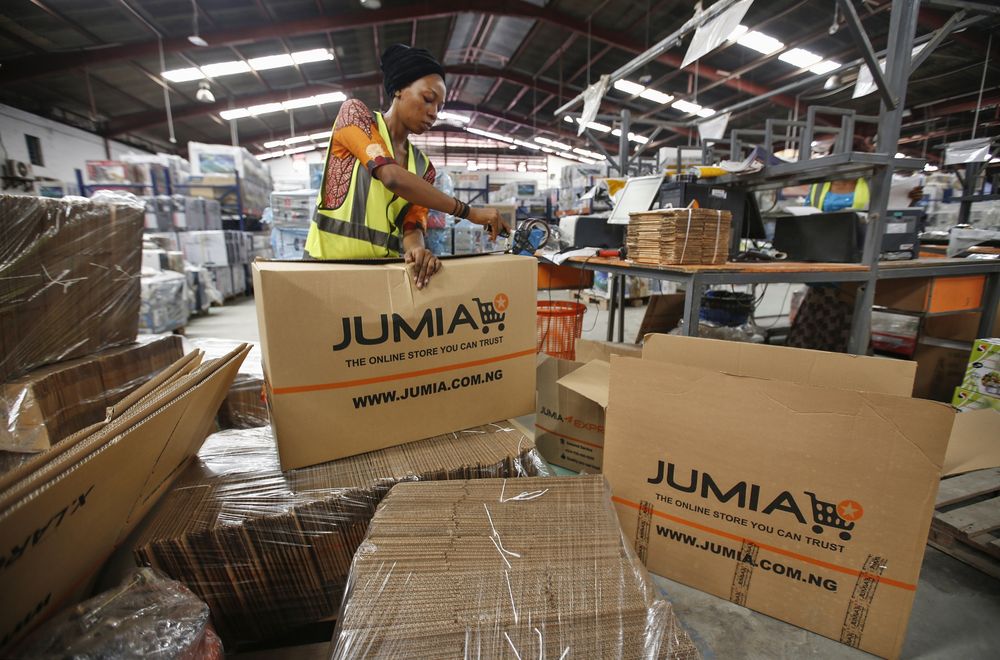
Africa’s e-commerce giant, Jumia, has faced a challenging second quarter in 2024, marked by a significant $20.2 million operating loss and a 17% decline in revenue.

However, despite these setbacks, the company has shown signs of improvement, managing to reduce its year-over-year losses by 8% from the $22.1 million operating loss recorded in the same period last year. This underlines the firm’s ongoing efforts to curb expenditures and move closer to profitability.

Detailed Financial Performance

In the second quarter of 2024, Jumia’s revenue dropped to $36.5 million, down from the $44 million reported in the same quarter of the previous year. This decline in revenue is a reflection of the challenging market conditions and currency devaluations in several of its operating countries.

The company’s gross merchandise value (GMV)—the total amount customers paid before deductions like fees, discounts, or returns—also decreased by 5% year-over-year, reaching $170.1 million. These financial metrics highlight the economic pressures faced by Jumia, impacted by both purchasing power and supply availability in key markets.

Despite the financial setbacks, Francis Dufay, Jumia’s Group CEO, remains optimistic about the company’s future. He noted that the strategic measures implemented to reduce losses and edge closer to profitability are beginning to show results.

“Our performance this quarter reinforces our belief that our strategy is working. Our deep understanding of the African e-commerce market as well as our unique asset base and strategy position Jumia for growth as we progress on the path towards profitability,” Dufay stated.

Since taking over as CEO, Dufay has been committed to a rigorous cost-cutting strategy. This included reducing the workforce by approximately 900 jobs and shutting down Jumia Foods in 2023, a move aimed at reducing operational costs and enhancing financial health.

“Jumia continues to take a disciplined and targeted approach to marketing spend, focusing on more efficient marketing channels such as search engine optimization (SEO), customer relationship management (CRM), and relevant offline local channels, while also leveraging its JForce network,” Dufay added.

These efforts have resulted in a more loyal and higher quality customer base, with a 262 basis point year-over-year improvement in repurchase rates in the first quarter of 2024.

Growth in JumiaPay

One of the bright spots in Jumia’s financial performance has been the growth of JumiaPay, the company’s payment platform. The second quarter saw JumiaPay transactions rise to 1.9 million, a 31% increase year-over-year.

This growth was driven by greater penetration of JumiaPay on delivery, coupled with cashback campaigns and incentives introduced during the quarter. The company emphasized ongoing efforts to streamline the user experience on JumiaPay and increase the number of cashless orders, positioning JumiaPay as a vital component of its e-commerce platform.

Jumia has managed to secure sufficient inventory and maintain a diversified product assortment at competitive prices, keeping consumers engaged on its platform. This is despite the tough economic conditions in Africa, particularly in major markets like Nigeria and Ghana.

Significant currency devaluations in some of its largest markets have posed challenges, affecting both purchasing power and supply availability. Nevertheless, Jumia’s ability to adapt and continue offering value to its customers underscores its resilience and strategic agility.

However, Francis Dufay highlighted the importance of strategic focus in navigating the challenging macroeconomic environment.

“Our performance this quarter reinforces our belief that our strategy is working. Our deep understanding of the African e-commerce market as well as our unique asset base and strategy position Jumia for growth as we progress on the path towards profitability,” he stated.

The company’s disciplined approach to marketing, emphasizing more efficient channels like SEO and CRM, has been instrumental in attracting a more loyal and high-quality customer base.

While the challenging macro environment in Africa, characterized by significant currency devaluations, has impacted Jumia’s financial performance, the company’s success in maintaining a diverse product range and competitive pricing continues to attract consumers. Jumia’s ability to secure inventory and navigate supply chain challenges positions it well for future growth, despite the current economic headwinds.

Four DNAs In The Genes of Great Companies [video]

1

At Tekedia Institute, we have identified four characteristics of enduring category-king companies. In your business, you must possess these four traits if you want to deepen your moats and win the competition:

Perceptively innovative: you are always innovating. You never rest, always pushing for better products, services and experiences. You outperform competitors with new solutions for unmet needs.

Evidently inspired: you inspire your users. You are modern, trustworthy and inspirational, you have a larger purpose, helping people live out their own values and beliefs.

Ruthlessly pragmatic: your customers depend on you and you have their backs, making life easier by delivering consistent experiences. You make good on your promises.

Customer obsessed: customers cannot imagine living without you. You know what matters to customers, finding new ways to meet their most important needs.

We add that for online companies, the path to acquiring and compounding your moats come by winning demand through influence and control, over merely providing supply.

For deeper insights on these 4 traits, register for Tekedia Mini-MBA here  https://school.tekedia.com/course/mmba/


Heritage Bank Failure, Unity Bank Merger with Providus, and Audit of Central Bank of Nigeria

1

Act 1, Scene 1: Heritage Bank Collapses

“The Nigeria Deposit Insurance Corporation (NDIC) is hereby appointed as the Liquidator of the bank [Heritage Bank] in accordance with Section 12 (2) of BOFIA, 2020. We wish to assure the public that the Nigerian financial system remains on a solid footing.” – Central Bank of Nigeria, June 2024.

Act 1, Scene 2: Unity Bank Merges with Providus Bank

“The Central Bank of Nigeria (CBN) has granted approval for a pivotal financial accommodation to support the proposed merger between Unity Bank Plc and Providus Bank Limited. This strategic move is designed to bolster the stability of Nigeria’s financial system and avert potential systemic risks,” Central Bank of Nigeria, Aug 2024.

Act 2, Scene 1: Audit of Central Bank of Nigeria since 2011

[Yet to be downloaded …]

Now that many banks are reporting that the FX gains which they trumpeted as a product of genius banking sagacity are all vapours, unrealized, and that means non-taxable on on the retroactive 70% windfall tax ordinance, I call the apex bank to invent better tools, on how it monitors banks. If the banks can suddenly re-allocate assets to NOT pay anything on the windfall tax, wasting “parliamentary time” of Honourables and Distinguished on making new laws, we may need to order bigger CCTVs in those vaults (both physical and virtual)

Central Bank of Nigeria (CBN) Approves N700bn for Merger of Unity Bank and Providus Bank

1

In a move that has caused a stir in Nigeria’s financial industry, the Central Bank of Nigeria (CBN) has approved financial accommodation to facilitate the proposed merger between Unity Bank Plc and Providus Bank Limited.

The announcement, delivered by Mrs. Hakama Sidi Ali, the Acting Director of Corporate Communications at the CBN, is said to be part of efforts to stabilize the nation’s banking sector and avert potential systemic risks.

“The Central Bank of Nigeria (CBN) has granted approval for a pivotal financial accommodation to support the proposed merger between Unity Bank Plc and Providus Bank Limited. This strategic move is designed to bolster the stability of Nigeria’s financial system and avert potential systemic risks,” the statement said.

While the apex bank refrained from disclosing the exact figure of the financial aid, insider sources have revealed that the CBN injected approximately N700 billion into the merger. This colossal financial backing is poised to play a critical role in addressing Unity Bank’s total obligations to the Central Bank and other stakeholders, ensuring the operational stability of the newly merged entity.

While the development has caused a stir, many believe that the funding by the CBN is vital for the financial health and operational stability of the post-merger organization. They note that the fund will be instrumental in addressing Unity Bank’s total obligations to the Central Bank and other stakeholders.

The central bank’s action is grounded in Section 42 (2) of the CBN Act, 2007, which empowers it to take necessary measures to ensure the stability of the financial system.

“It is unequivocal to state that the CBN’s action is in accordance with the provisions of Section 42 (2) of the CBN Act, 2007. This arrangement is crucial for the financial health and operational stability of the post-merger organization,” the statement said.

The CBN emphasized that the arrangement is vital for the financial health and operational stability of the post-merger organization.

“The merger is contingent upon the financial support from the CBN. The fund will be instrumental in addressing Unity Bank’s total obligations to the Central Bank and other stakeholders,” the CBN noted.

To assuage concerns, the CBN clarified that no other Nigerian bank currently faces a situation akin to that of Heritage Bank, which was recently liquidated. The central bank reassured stakeholders of its unwavering commitment to protecting depositors’ interests and ensuring the seamless operation of the banking sector through proactive measures and strategic interventions.

The move comes on the heels of the CBN’s recent revocation of Heritage Bank Plc’s banking license. This drastic step was taken in response to the bank’s persistent financial instability and failure to comply with regulatory requirements, as stipulated under Section 12 of the Banks and Other Financial Institutions Act (BOFIA) 2020.

The CBN said that despite numerous supervisory measures, Heritage Bank’s financial health continued to deteriorate, posing a significant threat to the stability of Nigeria’s financial system. Consequently, the CBN acted decisively to revoke its license, reinforcing public confidence in the banking sector.

“The decision to revoke Heritage Bank’s licence is part of the CBN’s mandate to maintain a sound financial system in Nigeria,” the CBN stated emphatically. “Heritage Bank had failed to adhere to Section 12 (1) of BOFIA 2020, necessitating regulatory intervention. The bank’s continuous underperformance posed a significant threat to financial stability, compelling the CBN to revoke its licence.”