DD
MM
YYYY

PAGES

DD
MM
YYYY

spot_img

PAGES

Home Blog Page 3051

China’s Brilliance on Making Things And The Fall of Apple China!

1

Over time what happened to the Ovim tablet will happen to Apple in China, except that Ovim tablet was on its own when Tecno came to Nigeria and knocked it out. Here, Apple went into the den: “According to a recent report by Canalys, Apple’s market share in China dropped to 14%, down from 15% in the first quarter and 16% during the same period last year. This decline saw the Cupertino giant, once the third-largest vendor in China, fall to the sixth spot with approximately 9.7 million units shipped.”

Who can protect the world from China when it comes to making things? From EU to US, everyone is building “iron-gates” on the fear that Chinese makers are coming. Yet, many here will write that Chinese products are not market-leading even when their home markets are doing everything to protect their market-leading products from China! Lol.

Who can protect the world from China when it comes to making things? From the EU to the US, everyone is building “iron-gates” in the fear that Chinese makers are coming (hello EV vehicles, satellite phones,). Yet, many here will write that Chinese products are not market-leading even when their home markets are doing everything to protect their market-leading products from China! Lol.

Respect China; they inspire on what a people can accomplish if they have a united spirit. That Apple could be taken out this way reminds you while in the last ten centuries, China dominated the world’s economy in at least 6!

Linkedin News: Apple has dropped out of the top five smartphone vendors in China as homegrown brands explode in popularity, The Wall Street Journal reports, citing new industry tracking data. Though overall smartphone sales are up 6% in the world’s largest smartphone market, Apple’s market share there has declined to 15.5%, from 17.4% a year ago. iPhone sales in China have been slipping since the turn of the year, thanks in part to government restrictions. Many of the Chinese brands have also been quick to incorporate AI into their phones — something Apple is still working on. (LinkedIn News)

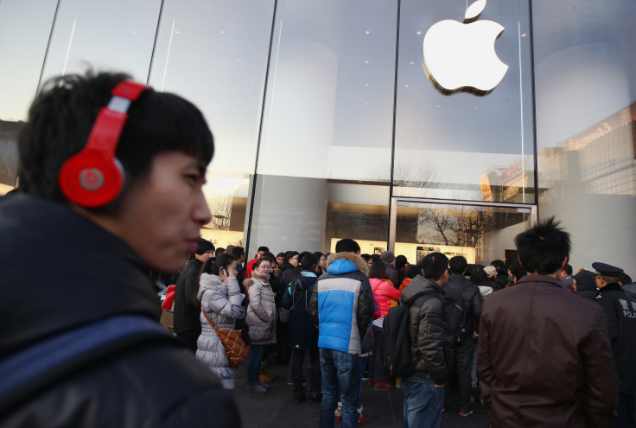
Apple Drops Out of Top Five Smartphone Vendors in China

Switzerland Requires all Government Software to be Open Source

0

Switzerland has taken a bold step in the realm of digital governance and software transparency. The country has enacted a new law, known as the Federal Law on the Use of Electronic Means for the Fulfillment of Government Tasks (EMBAG), which mandates all public organizations to adopt open-source software (OSS). This pioneering move is not just about embracing the open-source ethos but also about setting a precedent for transparency, security, and efficiency in government operations.

The journey towards this landmark decision began over a decade ago, with the Swiss Federal Supreme Court’s release of its Open Justitia court application under an OSS license. This sparked a series of political and legal debates, culminating in the passing of EMBAG in 2023. The law now requires that unless third-party rights or security concerns are at stake, the source code of software developed by or for the public sector must be disclosed and released under an open-source license.

The implications of this law are far-reaching. For one, it reduces the risk of vendor lock-in, where government agencies become overly dependent on a single supplier for products and services. This move could potentially lead to reduced IT costs and improved services for taxpayers. Moreover, it allows for greater collaboration and innovation within the public sector, as companies and individuals can contribute to and improve upon the software used by the government.

Another significant aspect of the EMBAG is its requirement for the release of non-personal and non-security-sensitive government data as Open Government Data (OGD). This “open by default” approach aligns with the broader European push towards open data and software, although Switzerland has taken it a step further by enshrining it in law.

The implementation of this law is overseen by the Swiss Federal Statistical Office (BFS), which is navigating the organizational and financial aspects of OSS releases. While the transition may present challenges, the potential benefits for digital sovereignty and public sector innovation are substantial.

The adoption of open source software (OSS) policies by governments around the world has been gaining momentum, with several countries recognizing the benefits of such frameworks for their public sector IT strategies. The move towards open source in government software is driven by the desire for increased transparency, cost savings, enhanced security, and the promotion of technological sovereignty.

One of the pioneers in this domain is Brazil, which has actively pursued the implementation of open source solutions within its government operations. The country has recognized the advantages of interoperability, customizability, and the avoidance of vendor lock-in, which align with the principles of open source software.

Denmark and the Netherlands have also been at the forefront, announcing research and development policies that favor open source. These countries have cited the higher security assurance and the potential for innovation as key factors in their decision to adopt OSS policies.

The European Union has been a strong advocate for “public money, public code,” encouraging member states to consider open source solutions for government software. This approach has led to a number of EU countries adopting similar policies, aiming to create a more collaborative and open digital environment for public services.

Switzerland’s commitment to open-source software in government is a testament to the country’s forward-thinking approach to technology and governance. It serves as a model for other nations considering similar measures and underscores the importance of openness and collaboration in the digital age. As the world watches, it will be interesting to see how this decision influences global trends in government software procurement and utilization.

Dangote Refinery Received Only $2.7bn from CBN in 10 Years – Dangote

0

Aliko Dangote has revealed that he secured only $2.7 billion in loans from the Central Bank of Nigeria (CBN) for the Dangote Refinery, amid growing insinuation that the ambitious project may have played a role in exacerbating Nigeria’s current foreign exchange (forex) crisis.

As the country navigates through economic turbulence marked by a significant forex scarcity, the Dangote Refinery, a landmark infrastructure initiative, has found itself at the center of a heated debate about its impact on the nation’s financial stability.

Nigeria, Africa’s fourth-largest economy, has been grappling with a severe shortage of foreign exchange, a problem that has been attributed to several factors including declining oil revenues, reduced foreign investment, and a high demand for dollars to support imports. Against this backdrop, critics have pointed fingers at the Dangote Refinery’s substantial forex requirements as a potential drain on the country’s already stressed reserves.

In an attempt to address these concerns, Aliko Dangote, the billionaire industrialist behind the refinery, issued a detailed statement clarifying the financial structure of the project. According to him, the $2.7 billion obtained from the CBN over a decade was a modest portion of the total investment required for the refinery.

He explained that the project was primarily funded through the company’s own resources, with the CBN’s contribution being relatively minimal in the broader scheme.

“On the loan that we got, part of the loan was taken by Dangote Industries, which is a local company. Dangote Industries got allocation from Central Bank and the total allocation that we got, including the money that we lost in terms of interest, was about $2.7 billion from 2013 to 2023.

“Out of the $2.7 billion we still have more than $200 million of forwards that we’re yet to collect from the CBN. So, it’s the total of $2.5 billion we got from the CBN in real cash which was paid in terms of interest and principal payment,” he said.

Dangote’s statement seemed aimed at dispelling the growing narrative that his refinery project has been a significant burden on Nigeria’s forex reserves.

He further clarified that the funds received from the CBN would eventually be reinvested into the Nigerian economy through dividends and other financial returns once the refinery begins to generate profits.

“Dangote Industries as soon as they get their dividends are bringing that money back to sell in the local market. They’re bringing that money back into Nigeria.

“There’s no money we’ve taken away from Nigeria. And the one that we took, we’ll return it. So it’s better for people to understand.

“It’s better for people to understand that what we took from CBN, we’re bringing it back. The thinking of people is that the majority of the Central Bank’s money was depleted by the Dangote’s major projects. We got $2.5 billion cash from Central Bank and that money will come back as soon as we start making money. Once we start making money, we’ll start paying the loans that we have,” Dangote added.

In an earlier statement, Aliko Dangote revealed that his company has already repaid $2.5 billion of the $5.5 billion loan secured from various banks to finance the construction of the Dangote Refinery. Additionally, the former Governor of the Central Bank of Nigeria (CBN) noted that as of 2023, Dangote had repaid 70% of the loan obtained from the apex bank.

Dangote recent clarifications on the refinery are deemed necessary given the recent spat between him and the Nigerian government regarding his refinery.

The Dangote Refinery, once fully operational, promises to be a game-changer for Nigeria. It is expected to significantly reduce the country’s dependence on imported refined petroleum products, conserving foreign exchange that would otherwise be spent on imports.

While the refinery’s long-term benefits for Nigeria’s economy are widely acknowledged, its role in the current forex crisis has become a subject that refuses to go away. Dangote’s clarifications aim to reassure both the public and financial stakeholders that the project is not unduly straining the country’s forex resources and that the benefits, once realized, will outweigh the initial costs.

NAMA Increases ENC Charges by 800%, Paving Way for Fresh Fee Hikes for Flights in Nigeria

0

In a move that is likely going to stir the waters of Nigeria’s aviation industry, the Nigerian Airspace Management Agency (NAMA) has announced a substantial increase in en-route navigational charges. The new fees, which see domestic flight charges rise from N2,000 to N18,000 and international charges soar from N6,000 to N54,000 per flight, represent a significant shift in the cost structure for airlines operating in and out of Nigeria.

This change, revealed by NAMA’s Managing Director, Umar Ahmed Farouk, at the League of Airports and Aviation Correspondents (LAAC) conference in Lagos, aims to address the rising operational costs and the need for improved airspace management.

He said, “NAMA relies on statutory fees for the management of the airspace (remember that aviation takes place only in the air). These funds are generated from services we provide to the flying community, without these funds NAMA can’t discharge its responsibility of ensuring the safety of our airspace effectively. We majorly generate these funds through the airline companies.”

Additionally, NAMA has adjusted the fees for extending operational hours at sunset airports, raising the cost from N50,000 to a staggering N450,000 per extension. This increase, intended to cover the rising costs of diesel and other logistical needs, has sparked concerns among travelers and industry stakeholders. The fear is that these hikes could translate into even higher ticket prices for both domestic and international flights, compounding an already steep increase in airfare costs.

Since 2015, the cost of flights within Nigeria has increased significantly, with some reports indicating a rise of about 1150%. International flight prices have also surged, with the same percent increase over the same period. This trend has been driven by various factors, including currency devaluation, rising fuel prices, and increased operational costs.

Earlier this year, NAMA, in collaboration with the Nigerian Civil Aviation Authority (NCAA) and representatives from the Airline Operators of Nigeria (AON), reviewed the outdated N16,000 Terminal Enroute Navigational Charges (TNS). This review, held in Abuja, aimed to update the charges to reflect the current economic realities. Airlines have acknowledged how necessary these changes are, citing the need for the fees to match the services provided and the costs incurred by NAMA.

In defense of the new charges, Farouk highlighted the critical role of efficient pricing in the aviation sector. He emphasized that NAMA’s operations are primarily funded through these fees, as the agency does not receive financial allocations from the federal government.

In 2023 alone, NAMA faced expenditures of N21 billion for personnel, over N12 billion in capital costs, and more than N10 billion in overhead costs. Farouk said despite these rising expenses, NAMA’s charges had remained unchanged since June 2008, even as ticket prices for one-way domestic flights soared to between N150,000 and N200,000.

The Many Challenges of the Nigerian Aviation Industry

The increase in en-route navigational charges comes amid other challenges that the aviation industry is grappling with.

Dr. Thomas Ogungbangbe, Chairman of the conference and CEO of CITA Aviation Fueling Ltd., outlined several challenges facing the sector. These include high fuel costs, limited access to foreign exchange, a weakening naira, and the need for continuous maintenance and infrastructure upgrades.

However, Ogungbangbe argued that while these challenges are significant, they also present an opportunity for innovation and growth within the industry.

He criticized the current focus on developing new airport projects at the expense of essential infrastructure like roads, which are crucial for improving access to airports and making air travel more accessible. Improved road networks would facilitate easier access to airports, potentially increasing air travel demand and supporting the sector’s growth.

In response to these challenges, the Minister of Aviation and Aerospace Development, Mr. Festus Keyamo (SAN), assured that the federal government is committed to supporting local airline operators. Keyamo highlighted the importance of developing Maintenance Repair Organization (MRO) facilities across the country, which he believes will significantly boost the aviation sector.

Discussions are already underway with international investors from Europe, Asia, America, and the Middle East to attract investment into Nigeria’s MRO facilities.

Keyamo also addressed issues related to bilateral air services agreements, noting that they often do not favor Nigerian airlines. He pointed out that while international carriers such as Lufthansa, Delta, and United Airlines have extensive operations in Nigeria, Nigerian airlines are often relegated to secondary routes in these carriers’ home countries.

“Lufthansa is coming here but we are not going to Frankfurt.  Delta, and United are coming from America but we are not going there. South Africa is coming here with no reciprocity,” he said.

Apple Drops Out of Top Five Smartphone Vendors in China

0

Apple has slipped out of the top five smartphone vendors in China for the second quarter of 2024, a clear indication of the increasing dominance of domestic brands in the world’s largest smartphone market.

According to a recent report by Canalys, Apple’s market share in China dropped to 14%, down from 15% in the first quarter and 16% during the same period last year. This decline saw the Cupertino giant, once the third-largest vendor in China, fall to the sixth spot with approximately 9.7 million units shipped.

The Canalys report highlights that this is the first time in history that local Chinese brands have occupied all the top five positions.

“It is the first quarter in history that domestic vendors dominate all the top five positions,” Lucas Zhong, a research analyst at Canalys, said.

This notable change underscores a broader trend where Chinese manufacturers are not only growing but are also increasingly capturing the high-end segment of the market traditionally dominated by international brands like Apple.

Leading the charge, Vivo reclaimed the top spot with a 19% market share, shipping 13.1 million units. This success was largely driven by strong sales during the “618” e-commerce festival, a significant shopping event in China. Oppo followed closely in second place, shipping 11.3 million units, buoyed by the launch of its new Reno 12 series.

Honor, a former subsidiary of Huawei, came in third with 10.7 million units, showing a 4% year-on-year growth. Huawei itself made a notable comeback, taking the fourth spot with a 15% market share and 10.6 million units shipped. This resurgence is attributed to the strong performance of its Mate 60 smartphone, which has helped the company regain ground in the competitive landscape.

Xiaomi rounded out the top five, boosted by the excitement surrounding its first electric vehicle, the SU7, alongside solid sales of its K70 and flagship 14 series smartphones.

The overall smartphone market in China saw a 10% growth year-on-year in the second quarter, with total shipments exceeding 70 million units. This growth has been propelled by the innovative strategies of Chinese brands, including a strong focus on high-end devices and the integration of cutting-edge technologies like generative AI, as seen in Honor’s latest offerings.

This trend is reshaping the competitive market, putting significant pressure on international players like Apple.

In an effort to counteract this pressure, Apple launched a substantial discount campaign in May, offering significant price cuts of up to 2,300 yuan ($318) on select iPhone models via its official Tmall store. This move was part of a broader strategy to solidify its position in the high-end market, where it faces increasing competition from local brands.

Apple has also been working to enhance its connection with Chinese consumers by tailoring marketing campaigns to local cultural events and festivals, building a stronger brand presence.

Additionally, the iPhone maker has been expanding its retail footprint in China, opening new stores in key cities to enhance visibility and provide more touchpoints for consumers. The company is also investing in its after-sales service network, offering extended warranties and faster repair services to improve customer satisfaction and loyalty.

Moreover, Apple is collaborating with local developers to create apps and services that cater specifically to the Chinese market, thereby enriching the user experience and fostering a loyal customer base.

Despite these efforts, Apple’s position in the Chinese market remains challenged. The company’s shipments have been declining since the first quarter, where they fell by 25% year-on-year to 10 million units. The second quarter’s sales decline suggests that even aggressive discounting and strategic market adaptations may not be enough to stem the tide against the rising tide of Chinese brands.

Apple has dropped out of the top five smartphone vendors in China as homegrown brands explode in popularity, The Wall Street Journal reports, citing new industry tracking data. Though overall smartphone sales are up 6% in the world’s largest smartphone market, Apple’s market share there has declined to 15.5%, from 17.4% a year ago. iPhone sales in China have been slipping since the turn of the year, thanks in part to government restrictions. Many of the Chinese brands have also been quick to incorporate AI into their phones — something Apple is still working on. (LinkedIn News)