DD
MM
YYYY

PAGES

DD
MM
YYYY

spot_img

PAGES

Home Blog Page 3056

Rollblock To Give $1000’s Away During 2024 Olympics, Whilst Their Revenue Share Model Has PEPE and SHIB Holders Diving In

0

Memecoins have been on fire during this crypto cycle, and holders of coins like Pepe (PEPE) and Shiba Inu (SHIB) are now sitting on considerable unrealized profits. That said, many are now looking to diversify into new coins such as Rollblock ($RBLK), a disruptive play-to-earn coin that experts are tipping to make gains over 100x this year.

Pepe ($PEPE) Whale Cashes Out to Lock In Profits

Pepe (PEPE) investors find themselves up a whopping 770% in a year, though it has been a volatile few months for the frog-based meme coin. Pepe has been performing strongly since the news of the Ethereum ETF was leaked.

Pepe is currently finding support at $0.000011 and looks to be bouncing strongly from the 50-day moving average. An early investor who bought in October sold 170 billion Pepe tokens and cashed out huge profits. This is expected to dampen price action, although support looks good around $0.0000085.

Shiba Inu ($SHIB) Buyers Nowhere to Be Found

Shiba Inu (SHIB) has faced considerable selling pressure over the last 3 months and finds itself down nearly 40% since the March highs. Shiba Inu has seen a volatile year, and bears have recently been in control of the Shiba Inu price action. Shiba Inu has recently announced a token burn to try to turn things around.

All major Shiba Inu moving averages are overhead at this point, with the 100-day MA almost out of sight at $0.000021. This resistance will require serious buying pressure from Shiba Inu bulls to overcome in the weeks ahead.

Rollblock ($RBLK) Investor Interest Grows Amid Olympic Giveaways

Rollblock ($RBLK)  is currently attracting huge investor interest with giveaways around the Paris Olympics. Bringing the best of web3 technology to the 450 billion online gambling sector, Rollblock encrypts all transactions onto the ethereum blockchain, eliminating the risk of bets being manipulated.

As it is fully crypto-native, Rollblock eliminates the need for KYC checks – users can simply connect a crypto wallet to begin. There are over 150 fully immersive AI-powered Casino games, from favorites like roulette and Monopoly to new exclusives and a popular sports betting facility which will be added soon. Rollblock can vouch for the fairness of its games and can prove its offerings to be more fair than competitors.

In-game rewards are paid out using the native RBLK token, which has great utility on the platform. RBLK can be staked for generous passive income, and Rollblock will head to the open market each week with a portion of its operating profits. They will buy potentially millions of dollars of RBLK to be burned to reduce supply, with the other half allocated to stakers. As demand skyrockets this year, prices will go parabolic!

RBLK tokens are selling out fast at the current price of $0.0172. Stage 4 of the presale is nearly half sold already, and hype around the Paris Olympics on Rollblock socials will see demand grow even faster, so take a position today before $RBLK soars by over 800%!


Discover the Exciting Opportunities of the Rollblock (RBLK) Presale Today!

Website: https://presale.rollblock.io/

Socials: https://linktr.ee/rollblockcasino

The Limits of BRICS Currency Backed by Gold And Why Currency SWAP Regime Is More Promising

0

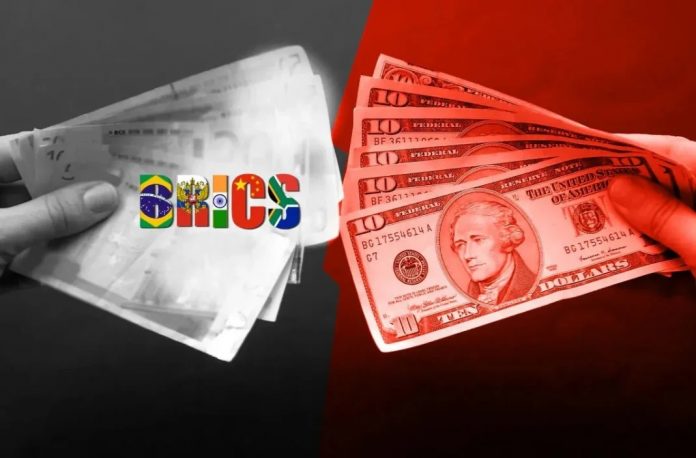
The BRICS nations – Brazil, Russia, India, China, South Africa and plus – want to abandon the US dollars for a “BRICS currency”, ditching SWIFT while anchoring everything on gold: “Recently, the BRICS nations have been exploring groundbreaking initiatives aimed at reshaping the global financial landscape. Among these initiatives are the creation of an alternative financial messaging system akin to the Western-dominated SWIFT (Society for Worldwide Interbank Financial Telecommunication) system and the development of a new gold-backed currency.”

My take: these countries will score own-goals if they think they can use gold to back the planned BRICS currency, which is being designed to rival the US dollars. Here is an advantage of a gold-backed currency as advocates explain: “it provides more stability and certainty to its users and holders, as its value is determined by the market price of gold, which is relatively stable and predictable over time. A gold backed currency also reduces the risk of inflation or hyperinflation, as its supply cannot be increased arbitrarily by its issuer.”

I do not buy that and this has been my position. In our modern global economy, using gold to back any currency in a free mercantilist economy (you are better by increasing export and trade) is an illusion. Using the US which has data on everything, the nation has about 8,133 metric tons in gold reserves which comes down to about $500 billion. Simply, if you melt all the physical gold in America, it is not worth up to 20% of the value of Apple Inc. At a deeper level, markets have priced Apple more because it has more value! 

Globally (including the BRICs nations), in all forms and nature including bullions, jewelry, derivatives, private placements, stocks, etc, the value of gold is about $13 trillion. The world economy is about $105 trillion; there is no way gold in all forms will back that economic size, even for the BRICS countries, unless we move to the imperial age.

What that means is that gold cannot support the BRICS currency efficiently because of the asymmetrical imbalance where the GDP of China alone is larger than the value of known gold, in all forms, in the world. Of course, they can launch a currency, but that currency will be like the types we have seen in Zimbabwe and Venezuela which no one wants to use for something serious.

More so, if they adopt a single currency, the flexibility which comes to the independent central banks will go, since that currency will have a supranational apex bank for its governance. That limits the flexibility and autonomy of its issuer to conduct monetary policy according to its economic needs and objectives. A gold backed currency cannot be adjusted in value through interest rate changes, quantitative easing, or exchange rate interventions.

Russia is surviving Ukraine-anchored sanctions because it has used interest rates to save the ruble, its currency. China last week depended on the same interest rate to adjust for growth. Under a BRICs currency, anchored on gold, that interest rate tool would be severely limited.

Good People, currency union is challenging when economies are heterogeneous in nature, and in BRICS, none seems similar, making welfare losses possible, and that is why BRICS currency, anchored on gold, will not be effective. Rather, currency swaps will reign! Yes, they can swap currencies with no need of converging on the US dollars.

LinkedIn Summary as comment: A gold backed BRICS currency is impractical due to the limited global gold supply relative to economic size and the inherent economic diversity among BRICS nations. The rigidity of a gold standard would hinder monetary policy flexibility and technological innovation. Instead, I think currency swaps and diversified financial systems offer a more viable solution, promoting flexibility, reducing dependence on the US dollar, and enhancing economic cooperation.

Dangote Refinery Reportedly Reselling Purchased Crude Oil

0

Africa’s largest oil refining plant, Dangote Refinery, is reportedly reselling cargoes of U.S. and Nigerian crude, according to sources familiar with the matter, who claim that the reoffer is linked to technical problems at the refinery.

A Dangote executive has denied these claims, insisting that the crude distillation unit (CDU) is operational. Nevertheless, the market is buzzing with speculation about what these moves mean for the refinery and its ambitions.

The Dangote Oil Refinery, a $20 billion project by Africa’s richest man, Aliko Dangote, began production in January 2024. It was heralded as a game-changer for Nigeria’s oil industry, promising to transform the country from a heavy importer of fuel to a significant exporter.

Once fully operational, it is expected to be the largest refinery in Africa and Europe, with a capacity of 650,000 barrels per day. This would have a profound impact on the Europe-to-Africa fuel trade, potentially making Nigeria a major player in the global oil market.

However, the report of reselling crude has cast a shadow over these lofty ambitions. Sources cited by Reuters said that the refinery has been offering Nigerian Escravos and Forcados crude, as well as U.S. WTI Midland crude, back on the market. Such resales are rare but not unheard of in the industry, often indicating operational challenges.

The news led to a dip in crude prices, with Brent crude falling as much as 2.5% towards $80 a barrel before recovering slightly.

However, the refinery has denied the report, with Anthony Chiejina, Chief Branding and Communication Officer at Dangote Group, calling it “outright falsehood.”

He stated, “We are not authorized to sell any crude we buy from Nigeria! Also, our CDU is working and in perfect condition. We advise that you ignore these false narratives being peddled by those bent on the importation of dirty fuels into the country.”

Yet, this denial hasn’t quelled the concerns. The refinery’s alleged resales come amidst a backdrop of tension between Dangote Group and Nigerian oil regulatory agencies.

The controversy erupted on July 18 when Farouk Ahmed, Chief Executive Officer of the Nigerian Midstream and Downstream Petroleum Regulatory Authority (NMDPRA), claimed that local refineries, including the Dangote Refinery, were producing inferior products compared to imports.

In response to the allegations, Dangote presented evidence of rigorous testing conducted at his refinery, asserting that the quality of the refinery’s products is one of the best.

Consequently, the entrepreneur claimed that some personnel of the Nigerian National Petroleum Company (NNPC), along with certain oil traders, have set up a blending plant in Malta. Dangote made this disclosure during a hearing at the House of Representatives, where he vowed to fight these alleged underhanded practices head-on.

“Some of the NNPC people and some of the traders have opened a blending plant somewhere off Malta. We all know these areas, we know what they’re doing. It’s not that we don’t know… I’m not scared, I will fight head-on,” he said.

This allegation is significant because it suggests that certain elements within the NNPC are undermining the refinery’s operations by diverting crude supplies. An oil blending plant, which combines re-refined oil with additives to create finished lubricant products, lacks the refining capability of a full-scale refinery. The implication is that this plant is used to create lower-grade products imported into Nigeria at cheaper costs.

Mele Kyari, the Group Chief Executive Officer of NNPC, has denied these claims, stating, “To clarify the allegations regarding the blending plant, I do not own or operate any business directly or by proxy anywhere in the world with the exception of a local mini Agric venture. Neither am I aware of any employee of the NNPC, that owns or operates a blending plant in Malta or anywhere else in the world.”

Kyari further assured that any NNPC staff found to be involved in such activities would face strict sanctions. “For further assurance, our compliance sanction grid shall apply to any NNPC employee who is established to be involved in doing so if availed and I strongly recommend that such individuals be declared public and be made known to relevant government security agencies for necessary actions in view of the grave implications for national energy security,” he concluded.

The allegations and the subsequent denials have created a complex and charged atmosphere. If the claims about the reselling of crude are true, it could indicate that Dangote is backing down from the ambitious refinery, despite his vow to fight on.

However, the refinery’s operational hiccups, real or perceived, have broader implications for Nigeria’s oil sector. The country has long struggled with refining capacity, relying heavily on imports despite being Africa’s largest oil producer.

Dangote Refinery was supposed to be a solution to this paradox, but these recent issues suggest that the path to self-sufficiency in fuel production may be fraught with more challenges than initially anticipated.

BRICS Announces Plan to Ditch SWIFT, Create Alternative Financial System

2

The BRICS alliance, an economic consortium of five major emerging economies—Brazil, Russia, India, China, and South Africa—has been steadily increasing its influence on the global stage.

Founded in 2006, the group’s primary objective is to enhance economic cooperation among its member nations and to serve as a counterbalance to Western-dominated financial and political institutions. With a combined population of over 3 billion people and some of the world’s largest and fastest-growing economies, BRICS represents a significant bloc in international affairs.

Recently, the BRICS nations have been exploring groundbreaking initiatives aimed at reshaping the global financial landscape. Among these initiatives are the creation of an alternative financial messaging system akin to the Western-dominated SWIFT (Society for Worldwide Interbank Financial Telecommunication) system and the development of a new gold-backed currency.

These efforts are not merely technical or economic endeavors; they are strategic moves aimed at establishing a more multipolar financial world, less reliant on the U.S. dollar and Western financial systems.

The motivation for these initiatives has roots in both historical and recent events. The global financial crisis of 2008, for instance, exposed vulnerabilities in the Western financial system, prompting BRICS countries to consider alternatives that would protect their economies from similar shocks. More recently, geopolitical tensions, particularly the Western sanctions imposed on Russia, have accelerated these efforts.

In 2022, following Russia’s military actions in Ukraine, Western nations responded with a series of stringent economic sanctions. One of the most significant of these was the decision to exclude Russia from the SWIFT system, effectively isolating Russian financial institutions from global markets.

The exclusion of Russia from SWIFT recently reinforced the need for an independent financial messaging system that would be immune to such geopolitical maneuvers.

The proposed BRICS financial messaging system aims to provide a robust and secure platform for cross-border transactions. Unlike SWIFT, which is heavily influenced by Western nations, the BRICS system would be controlled by state-owned banks within the member countries. This setup would ensure that the system operates independently of Western political and economic pressures.

“The financial agenda of BRICS has a main initiative for building a new economic reality that solves both major tasks. Creating our own financial messaging system for the BRICS countries, similar to SWIFT, based on state-owned banks capable of clearing settlements of counterparties from the BRICS countries and the related role of the same bank,” Alexander Babakov, Deputy Chairman of the Russian State Duma, said.

The system is designed to be compatible with the existing financial infrastructures of BRICS countries, facilitating integration with national payment systems, banks, and other financial institutions. It would also incorporate advanced security measures to protect against cyber threats, a growing concern in the digital age.

The Gold-Backed Currency Initiative

In addition to developing a new financial messaging system, BRICS is also exploring the creation of a gold-backed currency. This initiative is particularly significant given the current dominance of the U.S. dollar in global trade and finance. A gold-backed currency would provide a stable alternative, reducing the reliance of BRICS countries on the U.S. dollar and protecting their economies from dollar fluctuations.

The concept of a gold-backed currency harks back to a time when currencies were directly linked to the value of gold, providing a tangible basis for value and stability. In contrast, the U.S. dollar, like most modern currencies, is a fiat currency, meaning it is not backed by any physical commodity. The U.S.’s growing national debt, which recently reached $34.4 trillion, raises concerns about the long-term stability of the dollar and is believed to be part of the reasons BRICS is seeking more secure alternatives.

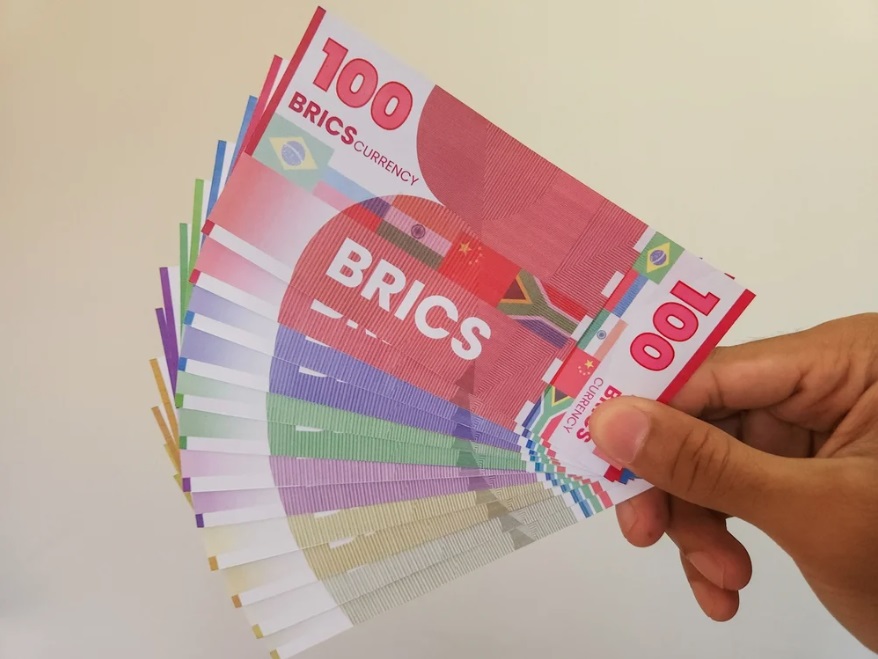
The proposed BRICS currency would not only facilitate trade within the alliance but also offer an attractive option for other developing nations looking to diversify their reserves. By conducting trade in this new currency or their local currencies, BRICS and other countries could reduce their exposure to the U.S. dollar, diminishing its global dominance.

Implications for the U.S. Economy

Financial analysts note that the potential creation of a BRICS financial messaging system and a gold-backed currency could have profound implications for the U.S. economy, particularly its banking and financial sectors.

Currently, the U.S. dollar’s dominance in global trade gives the United States significant economic leverage. A shift away from the dollar could destabilize this position, affecting everything from foreign exchange rates to international lending practices.

In addition, analysts believe that U.S. banks, which are deeply integrated into the global financial system, could face new challenges if the BRICS initiatives succeed. Reduced demand for U.S. dollars could lead to a decline in the currency’s value, impacting the profitability of dollar-denominated loans and investments. This shift could exacerbate existing vulnerabilities in the U.S. banking sector, which has seen several institutions face difficulties since 2020.

The broader financial sector, encompassing industries like consumer goods, technology, and fintech, could also feel the impact. Inflationary pressures might rise if the U.S. dollar weakens, leading to higher prices for imported goods and affecting everyday essentials for American consumers.

Toward a Multipolar Financial World

The BRICS initiatives are part of a broader movement toward a multipolar financial world, where multiple currencies and monetary systems coexist, reducing the dominance of any single currency or system. This vision aligns with the goals of many developing countries that seek greater autonomy in their economic affairs.

For the BRICS nations, these initiatives are not just about economic pragmatism; they are also about asserting greater influence on the global stage. By reducing their dependence on the U.S. dollar and Western financial systems, these countries aim to create a more equitable international economic order that better reflects the diversity and interests of the global community.