DD
MM
YYYY

PAGES

DD
MM
YYYY

spot_img

PAGES

Home Blog Page 3063

Can Rollblock Follow In The Footsteps Of Mantle (MNT) and Uniswap (UNI) By Surging Into The Multi Billions?

0

A key metric that investors use when choosing which cryptos to buy is market cap. If a crypto is a microcap below $1 million, a small cap below $1 billion, or a medium cap between 1 billion and 10 billion, it will possess a considerably greater chance for exponential returns than cryptos that are in the top twenty today.

With unprecedented potential to surge into the top 20 one day, Rollblock presents an opportunity to garner monumental, life-changing returns for early investors. As the top DeFi gaming play-to-earn crypto, Rollblock’s fundamentals and security pander both to investors as well as the platform’s avid users. As the price keeps surging, crypto analysts are predicting Rollblock to achieve a 100x increase in 2024.

Uniswap Deteriorates In Late July

Uniswap has declined in late July, losing 20% of its value in one month and 5% in one week. This may present a buying opportunity for Uniswap, as it is ideal to acquire crypto’s when they are down.

Some crypto analysts are expecting Uniswap to surge drastically as the bull run truly picks up steam. This is because Uniswap is one of Ethereum’s primary DEX’s. When activity soars during the bull run and investors flock to Uniswap to use the platform’s utility, it could result in bullish momentum for Uniswap.

Mantle Rises As Market Recovers From Fallout

Mantle’s price action continues to rise as Mantle soars over 11% in one month and 7% in one week.

Some crypto analysts predict that Mantle’s bullish momentum will continue as the bull run progresses, while others predict a stark Mantle correction.

Mantle remains a solid investment opportunity. This is especially the case for medium risk investors looking for a steady mid cap that has seldom seen a bull run before.

Rollblock’s Unprecedented Presale Success Indicates Its 100x Potential

Rollblock (RBLK) is an advanced Play-to-Earn casino-backed GambleFi token. In addition to its GambleFi casino that allows users to access over 150 unique titles, Rollblock is expanding into the sports betting market, attracting a huge audience and providing great utility for RBLK tokens.

Rollblock removes mandatory KYC requirements, allowing players to quickly start using the platform without annoying inconveniences that would usually deter a more casual audience. Strategic partnerships with top game developers and blockchain industry leaders further enhance the platform and increase demand for RBLK tokens.

Rollblock ensures that all transactions are secure and immutable. The platform’s user-friendly interface makes placing bets easy for both seasoned gamers and newbies, improving accessibility while encouraging broader adoption in the cryptocurrency space.

Rollblock allocates up to 30% of weekly profits to RBLK holders, using half of the revenue to buy back and burn tokens and the other half for staking rewards. This profit-sharing mechanism incentivizes long-term holding and builds investor confidence.

Rollblock is trading at $0.017 at stage 4 of its pre-launch stage. Crypto analysts predict a 950% increase in value for Rollblock during its presale, with bullish analysts anticipating a 100x rally by the end of the year.

Discover the Exciting Opportunities of the Rollblock (RBLK) Presale Today!

Website: https://presale.rollblock.io/

Socials: https://linktr.ee/rollblockcasino


Spot Ethereum ETF Approval and Its Influence on Ether Price Index

0

The cryptocurrency market has witnessed a significant milestone with the U.S. Securities and Exchange Commission’s (SEC) approval of spot Ethereum Exchange-Traded Funds (ETFs). This landmark decision marks a pivotal moment for Ethereum, the second-largest cryptocurrency by market capitalization, as it opens the doors for mainstream investors to gain exposure to its price movements through regulated financial products.

The introduction of Ethereum Spot ETFs is expected to have a profound influence on the Ether price index. Historically, the launch of similar financial products has been associated with increased investment and heightened market activity. For instance, the initiation of Bitcoin ETFs earlier in the year led to a surge in Bitcoin’s price, setting new all-time highs.

Analysts predict that while Ethereum Spot ETFs may not attract as much investment as Bitcoin Spot ETFs, which enjoy higher liquidity and a larger market size, they could still see substantial monthly net inflows. Estimates suggest inflows ranging from $750 million to $1 billion, indicating a robust demand for Ethereum-based investment products.

The Ether price reacted to the news of the ETF approval with a modest increase, suggesting that the market had partially priced in the approval. However, the long-term impact on the Ether price index will likely be more pronounced as the ETFs begin trading and attract investment. The consensus among analysts is that the Ether ETFs will see less inflow compared to Bitcoin ETFs, but the exact influence on the price index remains to be seen.

The approval of Ethereum Spot ETFs is not just a win for Ethereum but also for the broader cryptocurrency market. It represents a growing recognition of digital assets by regulatory bodies and could pave the way for more cryptocurrency-based financial products in the future. As the market matures and more institutional investors enter the space, the impact of such products on the price indices of cryptocurrencies like Ether will be an area of keen interest and analysis.

The Ether Spot ETFs in the USA have marked a significant milestone in the cryptocurrency industry, with a strong market debut that reflects growing investor interest and confidence in digital assets. On their first day of trading, these ETFs saw a substantial $1.07 billions of shares traded, indicating a robust market reception.

The SEC’s decision to approve Ethereum Spot ETFs underscores the potential of Ethereum and its underlying blockchain technology. Ethereum’s smart contract capabilities and its role as a platform for decentralized applications offer a value proposition that extends beyond mere investment. The approval of Ethereum ETFs could further legitimize the cryptocurrency and bolster its position as a leading digital asset.

Among the most actively traded Ether Spot ETFs were Grayscale’s Ethereum Trust, iShares Ethereum Trust, and Fidelity Advantage Ether ETF, showcasing the diversity of options available to investors. Despite the high trading volumes, they fell short of the bitcoin ETFs’ debut, hinting at a more cautious approach from investors towards Ether ETFs.

The introduction of these ETFs is seen as a crucial step in the evolution of the cryptocurrency market, potentially enhancing market stability and reducing volatility. The fees associated with these ETFs range from 0.19% to 2.5%, offering investors various cost structures to choose from based on their investment strategies.

As the Ethereum Spot ETFs commence trading, all eyes will be on the Ether price index to gauge the market’s response. Will this approval lead to a new era of growth for Ethereum, or will the market’s reaction be more subdued? Only time will tell, but one thing is certain: the approval of Ethereum ETFs is a welcome development and a testament of the growing mature state of the crypto industry alongside regulatory openness to blockchain technology.

Nigerian Wealth Management Platform Risevest, Looks to Expand to Kenya With Acquisition of Hisa

1

Nigerian wealth management/investment platform Risevest is set to expand into the Kenyan market, with ongoing talks to acquire Kenyan investment startup Hisa.

This strategic move aims to broaden Risevest’s footprint in East Africa and tap into the growing demand for investment solutions in the region. Hisa, known for its innovative approach to investment, provides a platform that allows users invest in stocks and other financial instruments.

By integrating Hisa’s platform, Risevest will not only gain a foothold in Kenya, but also strengthen its ability to provide international investment options, particularly in US stocks.

However, it is worth noting that Risevest’s acquisition of Hisa is currently still in talks, after one person with direct knowledge of the deal said the conversation between both companies is still ongoing.

“We are always discussing with other companies to see where potential alignments can be created, but for now, nothing is concrete with Hisa yet”, Eke Urum, Risevest’s founder and CEO told Techcabal.

Acquiring Hisa will allow RiseVest to gain market share in Kenya without registering a new entity and obtaining new licences. Established in 2014, Risevest provides Nigerians with access to dollar-denominated investments, helping them hedge against local currency devaluation and inflation. The platform allows users to invest in global stocks, bonds, and real estate with as little as $10.

Also, the platform provides users access to over 3,500 stocks and bonds and real estate investment trusts (REITs) in the US, UK, and Europe. It offers a range of investment options, including long-term investments, short-term investments, and automated investments.

Over the years, Risevest has grown to become a significant player in the Nigerian fintech landscape, offering a range of investment products managed by a world-class team using smart algorithms.

Hisa, on the other hand, Founded in 2020 by Eric Asuma, the platorm is licenced by the Capital Markets Authority of Kenya (CMA) and the Nairobi Securities Exchange (NSE).

The platform has been making waves in the Kenyan fintech scene by enabling users to buy fractional shares of US stocks, thereby lowering the entry barrier for investors. It aims to enable Kenyans to trade both local and global stocks.

In 2022, Hisa raised US$ 250,000 in pre-seed funding from angel investors such as Faida Investment Bank, Estonia based VC Startup Wise Guys, Chipper Cash Founder Ham Serunjogi and Majid Moujaled at a post money valuation of US$ 5 million. 

This acquisition of Hisa by Risevest, is expected to strengthen the platform’s abilities and expand the services it offers. Notably, as financial technology continues to evolve rapidly in Africa, Risevest’s move highlights the increasing competition among fintech companies to capture market share and provide innovative financial solutions to a growing number of tech-savvy investors across the continent.

Mt. Gox Creditors Start Receiving Bitcoin and Bitcoin Cash on Kraken

0

After years of anticipation and legal proceedings, the Mt. Gox saga is reaching a pivotal moment as creditors begin to receive Bitcoin (BTC) and Bitcoin Cash (BCH) through the Kraken exchange platform. This event marks a significant milestone in one of the cryptocurrency industry’s most infamous episodes.

Mt. Gox, once the world’s leading Bitcoin exchange, filed for bankruptcy in 2014 following a catastrophic hack that resulted in the loss of 850,000 BTC, valued at approximately $56 billion at current market rates. The collapse sent shockwaves through the nascent cryptocurrency community and left many investors without access to their digital assets.

Several key factors contributed to its downfall, painting a picture of vulnerability in the face of rapid growth and the challenges of an emerging technological frontier.

Security Breaches: Mt. Gox’s history with security was troubled, with multiple hacks over the years. In 2011, hackers exploited stolen credentials to transfer Bitcoins, and deficiencies in network protocols led to thousands of Bitcoins being lost.

Operational Mismanagement: The exchange was plagued by operational issues, including chronic withdrawal delays and a lack of transparency. These issues were exacerbated by technical bugs that prevented the company from having a firm grasp on transaction details.

Transaction Malleability: A significant technical issue faced by Mt. Gox was transaction malleability, a bug that allowed users to alter transaction IDs. This issue contributed to the confusion and loss of funds, although its role has been disputed within the community.

Regulatory Challenges: Mt. Gox faced regulatory hurdles, including the seizure of its US-based accounts due to compliance issues with financial regulations. This not only affected its operations but also eroded user trust.

The distribution process has been a complex and lengthy one, with Kraken playing a crucial role in facilitating the return of funds to the affected parties. Kraken CEO Dave Ripley announced the successful distribution of assets, emphasizing the exchange’s commitment to resolving the matter that has lingered for nearly a decade.

The repayment program’s impact on the cryptocurrency market has been a subject of intense speculation. As the distribution commenced, there were concerns about potential market volatility, with some fearing that a mass sell-off by the creditors could lead to a significant price drop. However, reports suggest that Mt. Gox creditors are not rushing to sell their newly received BTC, alleviating some of the apprehensions about immediate market disruption.

Bitcoin’s price experienced a slight dip to near $65,000, reflecting the market’s sensitivity to the potential sell pressure from the distribution. Despite initial concerns, the majority of Mt. Gox creditors are reportedly not rushing to sell their newly reclaimed BTC, suggesting a cautious approach to reintegration into the market.

Bitcoin Cash, on the other hand, saw a more pronounced decline, dropping by 7% as the news of the distribution influenced market sentiment. This price movement underscores the interconnectedness of the cryptocurrency ecosystem and the influence that major events can have on asset valuations.

The completion of this distribution by Kraken is not just a logistical success; it represents a step towards maturation for the cryptocurrency industry. It highlights the advancements in security, governance, and legal frameworks that have been developed since the early days of Bitcoin trading.

As the industry continues to evolve, the resolution of the Mt. Gox case will likely be looked back upon as a defining moment—a testament to the resilience of the cryptocurrency community and its commitment to establishing a secure and trustworthy environment for digital assets.

Wood Filament for 3D Printing: 6 Best Options

0

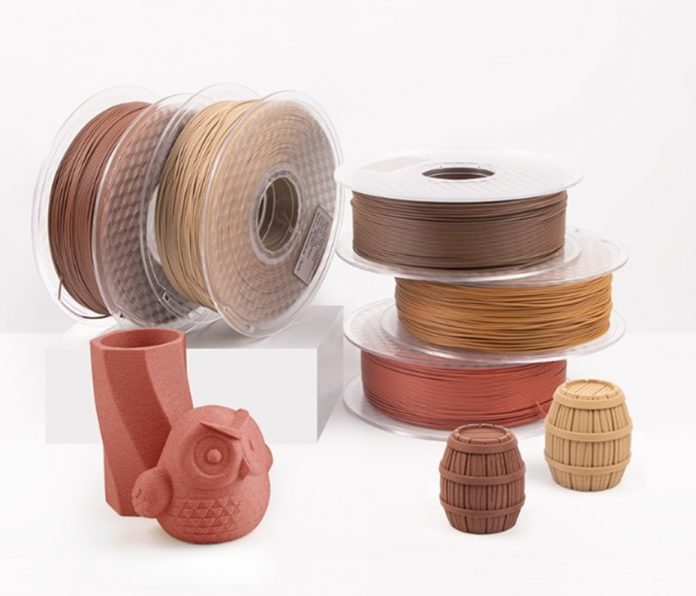
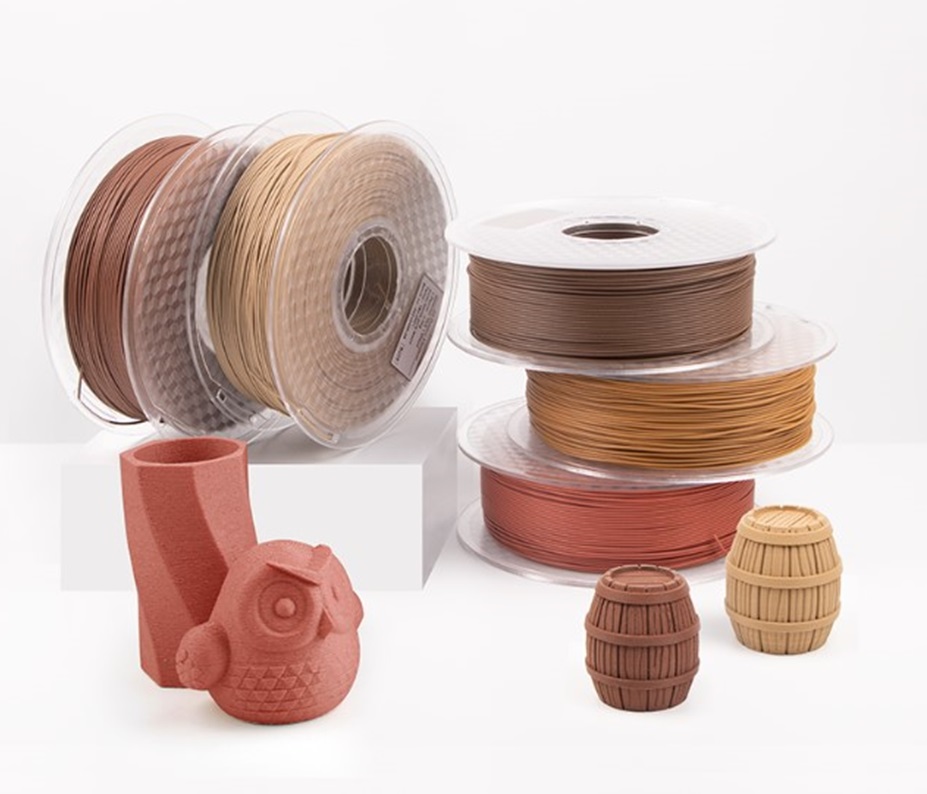
There are several colored filaments that give the impression of wood, but in reality, they usually just look and feel like plastic because they don’t actually contain any wood particles. Depending on the filament producer, wood filaments nowadays typically contain a combination of 70% PLA and 30% hardwood fibers. We promise you will be amazed by how realistic the prints feel, even if the wood content is very low. Because they are the most popular, wood-infused PLA filaments for 3D printing will be the focus of this essay.

1. Amolene Wood Filament
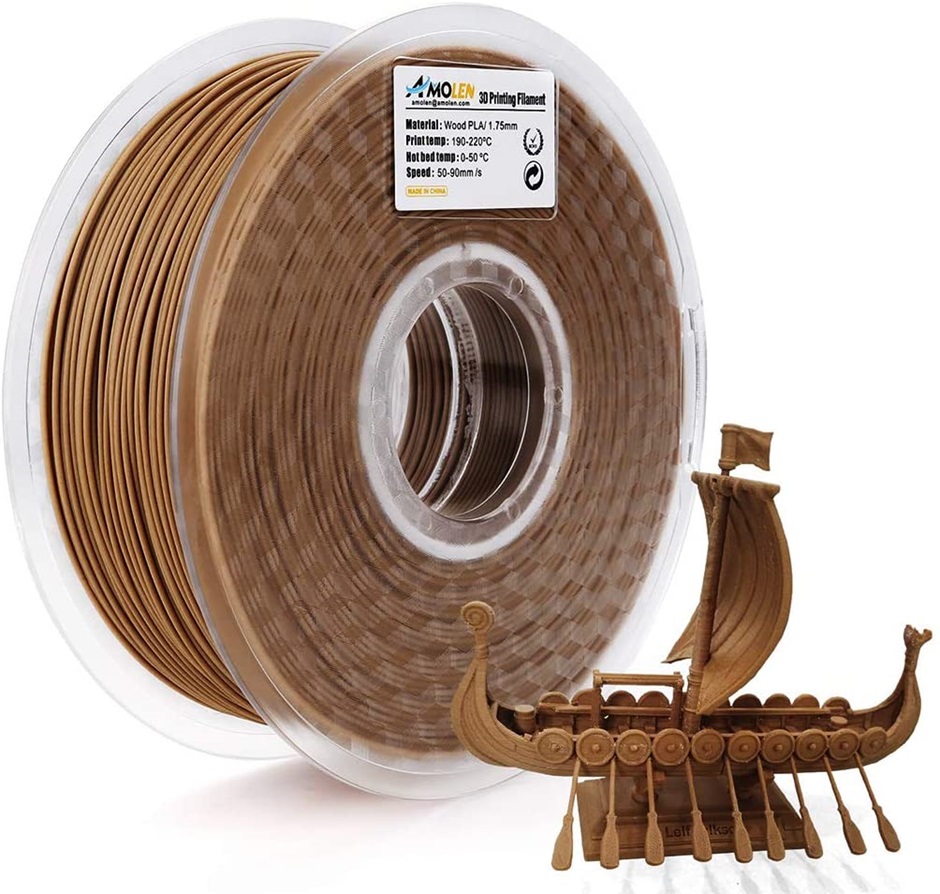
Key Features:

  • Material contains 30% real wood fiber
  • Unparalleled wood grain and texture
  • High-speed printing support
  • No bubble, No jamming, No warping

The recycled wood filaments used to make AMOLEN 3D printers are compatible with the vast majority of consumer-grade FDM 3D printers on the market today. Combining PLA with reclaimed wood particles makes it an eco-friendly product. Aside from a few key differences, it prints identically to standard PLA filament. The surface wood color and texture are very stunning. When the extrusion temperature is between 190 and 220°C, it can function with even a modest heat bed.

A diameter variation of no more than 30 microns or slightly less is possible due to its precise dimensions. If you want your 3D printing to be consistently good, this is the way to go.

Designed with professional 3D printer users in mind, it meets or exceeds all quality and performance standards with its wood filament and extremely tight tolerances. Get this wood filament if you care about your 3D printer running smoothly and without issues. It produces first-rate outcomes with no bubbles, jams, or warping and excellent shaping.

The careful packing ensures that it melts easily and feeds continuously. You can use this wood filament without worrying that it will jam the extruder or nozzle. Designers, engineers, and anyone else interested in 3D printing that demands the best will often consider this wood filament to be their first pick for this reason. Actually, you’d have a hard time finding a more suitable filament than this one. Once the hot end is heated to the correct temperature, it flows effortlessly out of the nozzle.

The filament diameter is the industry standard 1 75 mm, and it comes on 1.0 kg spools. You may get it in walnut and dark wood finishes. The price is quite affordable.

2. Sunlu Wood Filament
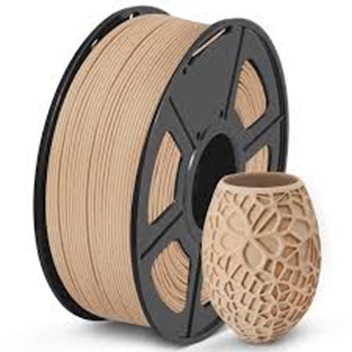
Key Features:

  • printing temp: 205?-225?
  • 75mm with a precision of +/- 0.05mm
  • no nozzle clogging

To achieve the desired wood grain pattern and color, SUNLU Wood Filament uses a carefully balanced blend of polymer and 20% recycled wood particles.

The clog-free filament is crucial in its development and production to ensure a steady and trouble-free 3D printing platform. Once it has cured for at least 24 hours, it is vacuum-packed in aluminum foil to prevent moisture damage and guarantee a high-quality print. One thing to keep in mind is that wood prints at a little different speed than other PLA fibers. How hot the filaments are when printed is a major factor here.

For a high-quality print, the folks at Sunlu use both mechanical winding and rigorous hand inspection. Because of this, you can be certain that your wood filaments will be neat and easy to feed into your 3D printer’s nozzle. If you are not completely happy with their 3D print filaments, the company offers a three-month money-back guarantee. You can get this printing material in spools weighing 1 kilogram, and the diameter of the wood filament is 175 millimeters. At a reasonable price, it comes in a light wood color with an oak-like feel.

Price: $26.99.

3. ISANMATE’s 3D Printer Filament
Key Features:

  • Filament Diameter: 1.75mm
  • Tolerance: +/-0.02mm
  • Length Around: 340m
  • Print Temp: 190-220 degrees
  • Hot Bed Temp: 50?
  • Print Speed: 40-80mm/s

This PLA, also known as ISANMATE’s Wood Filament comes with Dimensional Accuracy +/- 0.03 mm, 1.75 mm Filament, PLA, 1 KG Spool of Various Colourful Rainbow.

iSANMATE Wood Filament features a wood color and texture in addition to 80% PLA and 20% wood flour. It works wonderfully with 3D printers to make things that have that lovely wooden feel.

Superior high-layer-height bonding, durability, and non-toxicity characterize this premium 3D printer filament. Despite being incredibly user-friendly, it outperforms standard PLA filament in terms of strength. The diameter of the spool is 197 mm.

The company’s customer service is top-notch, and this 3D printer filament has a limited guarantee of one year. They aim to address all customer concerns promptly and usually respond within 24 hours.

Price: $18.99.

4. Polymaker

Key Features:

  • Wood mimic PLA matte finish
  • Weight: 600g
  • Diameter: 1.75mm/2.85
  • Print temperature: 190-210?C
  • Print speed: 30-50mm/s

Polymaker, a popular 3D printer filament maker, produces PolyWood, a line of wood PLA filament. PlasticWood comes in two different sizes, 1.75 mm and 2.85 mm, but it only comes in one color: a light wood that looks incredibly real.

Polywood isn’t normally on this list because it doesn’t have any wood fibers. Instead, its special “foaming” process adds wood’s qualities to PLA plastic. Because of this way of making things, their wood filament is about 35–40% less dense than standard PLA filament. It looks and feels like wood.

According to the many reviews found online, people seem to like how PolyWood prints turn out in terms of texture and surface appearance. However, it’s important to know that this thread costs about $50 per kilogram, which is quite expensive.

Price: $50 per kg.

5. Lay Wood Flex

Key Features:

  • Composition: 65% PLA, 35% wood
  • Diameter: 1.75 mm
  • Price per kg: ?$100 (250-g spool at ?$25)
  • Printing temperatures: 190-250 °C (hot end); heated bed not required

Lay Filaments stands apart from the crowd because of the extensive selection of high-quality filaments it offers for 3D printing. The first person to ever make a wood filament was Kai Parthy, a German inventor and creator of Lay Filaments. The LayWood-Flex is one of the wood filament varieties introduced by Lay Filaments since then.

The composition of LayWood-Flex includes a flexibilizer, a bonding polymer, and wood fibers amounting to 35% by weight. In terms of surface smoothness, texture, pliability, and odor, these substances aim to imitate real wood.

For all appearances and textures, LayWood-Flex is real wood. As a result, it’s great for making sandable and paintable components. It is possible to change colors because the temperature range at the hot end is so broad. The wood particles burn more quickly at higher temperatures, giving the material a darker look.

6. Protopasta

Key Features:

  • Nozzle: 0.4 mm standard brass w/ sock
  • Nozzle Temp: 205C
  • Bed Temp: 60C
  • Bed Type: Glass, PEI, BuildTak, or other
  • Great for rigid, artistic prints with no special hardware required

Protopasta is a reputable and widely recognized company that makes high-quality fibers. This company has been around since 2013 and makes products that are biodegradable, reusable, and recyclable.

Their high-quality matte fiber wood HTPLA has a lifelike wood look and sticks well to the bed. Little bits of gold and black make these colors look even more like real wood. People who have used this filament say they are happy with the results and don’t have to make many changes to their slicing settings. The only bad thing they said was that it stringed more than normal PLA. This filament comes in different types of wood, such as olive, walnut, mahogany, and more.

Price: $6

Having looked at the wood filament for 3D printing, it’s also important to have a look at the best 3D printing software that you can use to prepare your designs for 3D printing. There are many that are available but we recommend using SelfCAD. SelfCAD is an easy to use 3D design software that you can use to create both simple and complex designs with ease.

It comes with interesting 3D modeling tools like freehand drawing and sketching that you can use to create designs from scratch. There are also easy-to-use selection modes as well as various modification tools to help you modify your designs based on your requirements. It has an image-to-3D feature that makes it easier to turn photos to 3D models. You can also import STL files and modify them based on your needs.

The software also comes with an in-built online slicer that one can use to prepare designs for 3D printing. The video below shows how to slice STL files and generate the Gcode to send to the 3D printer.

Elevate Your 3D Printing: Choose the Perfect Wood Filament

Wood filaments are a type of composite filament that usually incorporates wood particles into a PLA (Polylactic Acid) basis. While exact percentages may vary by product and maker, the typical make-up of wood filament is 30% wood and 70% PLA. Most of the filament’s characteristics are associated with PLA since it is the major component.

When compared to standard plastic filaments, the distinctive visual quality of 3D-printed wood objects is the primary draw. The texture and appearance of 3D-printed models made from wood filaments are very similar to those of real wood. 3D printing allows for the creation of patterns and designs that would be highly challenging, if not impossible, to accomplish with conventional woodworking methods. Composite 3D printing filaments made of metal or carbon fiber are far more likely to distort and shrink than wood filaments, which are far less abrasive.