DD
MM
YYYY

PAGES

DD
MM
YYYY

spot_img

PAGES

Home Blog Page 3073

Dangote Scraps Steel Investment Over Allegations of Monopoly. But Ndubuisi Wants To Be A “Monopoly” Which Is Noble!

1

Let us have a conversation on the soul of the market system within the framework of entrepreneurial capitalism. Who is a monopolist? How does monopoly come? Is monopoly desirable?

Good People, when you start a company, the most strategic objective is to fix the frictions of customers, and if indeed your desire is to do something big, you must have modeled that current providers of the required services have unserved customers (yes, opportunities). In other words, there are opportunities in the market which remain unlocked, and your thinking is that your business will go there, solve the problems, and be rewarded by customers.

Ideally, that “opportunity”, no matter how small, gives you a “monopoly status” since you desire to go there and unlock something latent. Indeed, every business is inherently a monopolist because you think no matter what others are offering in the market, you have an opportunity which remains unsolved. Going into that opportunity is the essence you have mobilized factors of production, to create products and services, for the market. 

If you innovate and set a new basis of competition, creating an orthogonal path which is totally different from what everyone is doing in the market, you become disruptive. And disruption anoints you the title of a category-king company which means you are the leader. Of course, once people see that you are making tons of money in that “area”, they will quickly come, imagining an unmet need within the space as they desire to create their own “monopoly” within the category or sector.

If all players play within the tenet of free market, even and fair regulation, being a monopolist is desirable, and must not be seen as bad.  Where monopoly is bad is when it comes through asymmetric means, outside the rules of the universal market system.

Where am I going? If Nigeria which has zero steel capability has a company like Dangote Steel come into it, that firm falls really out of the sphere of monopoly even though there is nothing wrong being one, provided it has come via free market ethos.

Google is a monopoly. Amazon is a monopoly. Nvidia is a monopoly. Microsoft is a monopoly. And those are celebrated. 

Sustained monopoly is a feature of market success. Today, I challenge you to go and build a monopoly business and be ready to defend the territory when others come after you!  My desire is to become a “monopoly” in the provision of Mini-MBA programs in Africa, and there is no apology there.


BNB Achieves $86 Billion Market Cap While Injective (INJ) Executes Strategic Token Burn

0

Binance Coin (BNB) rocketed to an $86 billion market cap in July. Injective (INJ) records a 24% rally, spurred by increasing DeFi activity within its ecosystem.

Meanwhile, investors are fixing their eyes on the next best P2E meme coin investment after Shiba Inu. In the opening stage of its presale, $WW3S has raised $56,000 and counting. But is this milestone enough to position it as one of the top cryptocurrencies in 2024? Let us discuss.

Binance Coin (BNB) Hits $86 Billion Market Cap, Announces Initiative That Could Improve DeFi Activity

Weeks after crossing an all-time high and hitting $700 levels, Binance Coin (BNB) has seen its market cap skyrocket to $86 billion. At the time of writing, Binance Coin is trading for $595.80, 17% below its peak of $720 achieved on June 6.

However, Binance Coin’s (BNB) momentum may improve in the coming weeks. Recently, BNB Chain made headlines after dedicating a $900k liquidity pool to support the meme coin ecosystem. Bullish analysts say this move will increase developer participation within the Binance ecosystem and position BNB Chain as the ideal network to launch meme tokens. If the bulls are right, Binance Coin may fluctuate between $600 and $700 in Q3.

Injective’s (INJ) Impressive Token Burn

Injective (INJ) is an open-source layer-one blockchain protocol that is making a resurgence. INJ was trading bearishly for most of June. Investors are impressed by Injective’s weekly token burn, which destroyed over $65,000 INJ during the most recent burn event. This burn, along with emerging partnerships in Injective’s ecosystem, have pushed Injective (INJ) up from $22 at the start of the week to $26 on July 22. Like Binance Coin (BNB) bullish observers say Injective may rise further in the coming weeks, reaching $30 in Q3 2024.

WW3 Shiba: Exploring Passive Income Generation Through Blockchain Technology

As the first SocialFi P2E meme coin that rewards users for completing missions, WW3 Shiba presents an immersive gameplay universe that captures the attention of gamers, investors, and traders alike.

Within the WW3 Shiba universe, players recruit loyal dog companions and lead them into battle to prevent dangerous world leaders from destroying the earth. The WW3 Shiba ecosystem rewards the most dedicated gamers for their participation. So, in return for playing the game and saving the world from World War 3, players earn high-value NFTs, cash prizes, and $WW3S tokens.

Yet, WW3 Shiba offers more than just a gaming experience. With its rich P2E opportunities, WW3 Shiba enables players to make money while furthering the financial ambitions of its network. In addition to in-game rewards, players may also generate passive income by trading their NFTs, staking their $WW3S tokens, and even competing to become the top dog in their country. Top Dogs earn huge in-game rewards and individual NFTs representing the dog from the country of their choice.

In addition, WW3 Shiba demonstrates its commitment to the welfare of dogs by dedicating 2% of all transactions and funds to dogs affected by current wars. As excitement surrounding its launch grows, the founders of WW3 Shiba have locked liquidity assets for ten years and team tokens for three years. Doing so has helped demonstrate their commitment to the longevity of WW3 Shiba.

Conclusion

In July, Binance Coin witnessed its market cap reach $86 billion, signaling increasing DeFi activity in its ecosystem. Also, injective holders have much to celebrate as they watch the token soar 11% on the back of increased DeFi activity within its ecosystem.

Elsewhere, WW3 Shiba has been the name on most investors’ lips since the launch of its presale, which has raised $51,000+ so far. With a starting price of $0.001 and plans to flood 50% of its token supply into the hands of investors, this presale event is widely considered a rare opportunity to make lucrative profits on a tiny investment. Bullish predictions back $WW3S to 100x when it lists, fueled by its novel blend of gameplay elements, P2E opportunities, and charitable contributions to dog causes.


If you would like to find out more information about the presale:

Website: ww3shiba.com

Twitter: https://x.com/WW3SHIBA

Telegram: https://t.me/ww3shiba_portal

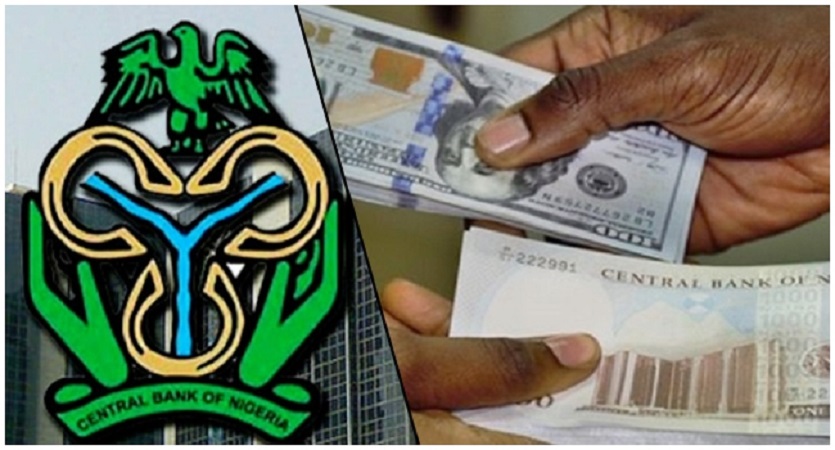
Central Bank of Nigeria (CBN) Reports $1.07bn Increase in Remittance Inflows Through IMTOs in Q1 2024

0

The Central Bank of Nigeria (CBN) has reported a notable 39% increase in inflows through International Money Transfer Operators (IMTOs) for the first quarter of 2024 compared to the same period in 2023.

This surge is attributed to recent reforms implemented by the CBN aimed at attracting more dollar supply through IMTOs. The boost in remittance inflows is seen as a crucial development for Nigeria, particularly as the country grapples with declining foreign exchange (FX) inflows due to reduced oil output and revenue generation.

According to the quarterly statistical bulletin of the CBN, the increase in inflows has been substantial. In January 2024, inflows stood at $383.04 million, marking a significant rise of 30% from $295.21 million in January 2023. This upward trend continued in February, with inflows reaching $322.83 million, representing a dramatic 65% increase from $195.23 million in February 2023. March 2024 saw inflows of $363.70 million, reflecting a 30% rise from the $279.79 million recorded in March of the previous year.

The total inflow for the first quarter of 2024 amounted to $1.07 billion, marking a 39% increase from the $770.23 million recorded in the same period of 2023. When comparing Q1 2024 to the last quarter of 2023, which saw total inflows of $965.82 million, there is an increase of about 11%.

Impact of CBN Reforms

In January 2024, the CBN issued a circular that removed the previous cap on exchange rates quoted by IMTOs. Before the circular, IMTOs were required to quote rates within a permissible range of -2.5% to +2.5% around the previous day’s closing rate of the Nigerian Foreign Exchange Market. By the end of January, the CBN further released revised guidelines for the operations of IMTOs, which included several significant changes.

The application fee for an IMTO license was increased from N500,000 in 2014 to N10 million in the revised guidelines, an increase of about 1,900% in about 10 years. The CBN also established a minimum operating capital requirement of $1 million for foreign entities and an equivalent amount for local IMTOs.

Additionally, IMTOs were previously barred from purchasing foreign exchange from the domestic market to fulfill their obligations, but this ban has been lifted with the recent circular, allowing IMTOs to trade on the official market.

The CBN also reached an agreement with IMTOs to set up a Collaborative Task Force to double remittance inflows into the country. This task force reports directly to Yemi Cardoso, the Governor of the CBN. Additionally, the CBN recently granted 14 new Approval-in-Principle (AIP) to IMTOs, according to the Bank’s Acting Director of Corporate Communications, Mrs. Hakama Sidi Ali.

The Central Bank’s reforms have included streamlining processes, onboarding more IMTOs, and enhancing measures to ensure an increase in the supply of foreign currencies. These measures are believed to be paying off, as evidenced by the substantial increase in remittance inflows.

This surge in remittance inflows is crucial for Nigeria’s economy, providing much-needed foreign exchange and supporting household income. The increase in dollar supply through IMTOs not only helps stabilize the naira but also supports various economic activities dependent on foreign exchange.

The CBN has been counting on diaspora remittances to boost FX inflow, which has been on the decline due to reduced oil output. With the decline in oil revenues, remittances have become increasingly vital in maintaining Nigeria’s foreign exchange reserves and overall economic health.

The recent reforms and efforts to attract more inflows through IMTOs are part of the CBN’s broader strategy to mitigate the impact of reduced oil revenues and ensure a steady supply of foreign currency.

This trend is expected to continue, contributing positively to the nation’s economic outlook and helping to stabilize the FX market amid declining oil revenues.

How To Grow Revenue of Small and Medium Scale Companies

0

Today, we will continue our conversation on the mechanics of market systems as our Faculty, Afolabi Olamide, of Touch and Pay Technologies Ltd (YC W22), the creators of Cowry card in Lagos, comes to Tekedia Mini-MBA Live. How do you grow from 1000 users to close to 5 million in less than four years?

What do they do? They digitize small payments like N200, N300, etc, making sure that revenue is assured for merchants, owners, vendors and companies. And the vision has worked, maximally: if you take care of the kobos, the Nairas will take care of themselves.

With more than 99% system reliability through a closed network, they made customers to become FANS, and when fandom happens in markets, you thrive. And it is contactless which means the card lasts longer in the rain, sun, and harmattan.

Olamide will speak, and we will learn from him on why design wins markets. The market players include danfo owners, bus drivers, shops, etc, who upon deploying their solutions see bigger revenue. Yes, when leakages are blocked, revenue increases.

Zoom link in the classboard here: discover how to grow that SME revenue.

Tekedia Institute Mini-MBA – our product is knowledge.

Zenith Bank Maintains Top Spot as Nigeria’s Leading Tier-1 Bank in 2024

0

One of Nigeria’s leading multinational financial service providers Zenith Bank, has once again solidified its position as Nigeria’s leading Tier-1 bank in 2024, continuing its reign as the top financial institution in the country.

This recognition was announced in the July 2024  Edition of the Banker Magazine, for the Top 1000 World Bank Rankings. The ranking places Zenith Bank as the 565th Bank globally with a Tier-1 capital of $2.01 billion.

The rankings are based on the year-end 2023 Tier-1 capital of banks worldwide and serve as the primary reference for global bank financials, utilized by most international organizations in their assessments. The magazine stated that Tier-1 capital, as defined by the latest Bank for International Settlements guidelines, included loss-absorbing capital, i.e., common stock, disclosed reserves, retained earnings, and minority interests in the equity of subsidiaries that are less than wholly owned.

Commenting on the achievement, the Group Managing Director/ CEO of Zenith Bank Plc, Dr. Adaora Umeoji, OON, expressed excitement, stating that the recognition is a testament to the bank’s strategic focus on sustainable growth, innovation and customer satisfaction.

In her words,

“We are deeply honoured to be recognised as the Number One Bank in Nigeria by Tier-1 Capital for the fifteenth consecutive year. This recognition is a testament to our strategic focus on sustainable growth, innovation, and customer satisfaction. It also emphasises our resilience and strength in navigating the ever-evolving financial landscape. Our dedicated team of professionals has remained steadfast in ensuring that we maintain our position at the forefront of the banking industry.”

She further extended profound appreciation to the Founder and Chairman, of Zenith Bank, Dr. Jim Ovia, CFR, whose visionary and transformative leadership, she said has played a pivotal role in cultivating a resilient and thriving establishment.

Zenith Bank’s sustained leadership can be attributed to its robust financial performance. The bank has demonstrated impressive growth in key financial metrics, including profitability, asset quality, and capital adequacy. Its financial performance for the year was driven by a remarkable triple-digit growth of 125% in gross earnings, from N945.6 billion reported in 2022 to N2.132 trillion in 2023.

This growth resulted in an enhanced market share in both the retail and corporate segments, even amid a persistently challenging macroeconomic environment. The rise in gross earnings was largely due to the expansion in both interest and non-interest income. Interest income growth was driven by an increase in the size of risk assets and their effective repricing, while non-interest income saw significant boosts from trading gains and foreign currency revaluation gains.

Notably, a key factor in Zenith Bank’s continued success is its focus on innovation and digital transformation. The bank has continued to invest heavily in cutting-edge technology to enhance its digital banking services, offering customers seamless and efficient banking experiences. From mobile banking apps to internet banking platforms, Zenith Bank has ensured that its customers have access to convenient and secure banking solutions.