DD
MM
YYYY

PAGES

DD
MM
YYYY

spot_img

PAGES

Home Blog Page 3085

Biden Accuses Elon Musk of Attempting to Buy Election with $180m Donation to Trump, As Fallout with Democrats Deepens

3

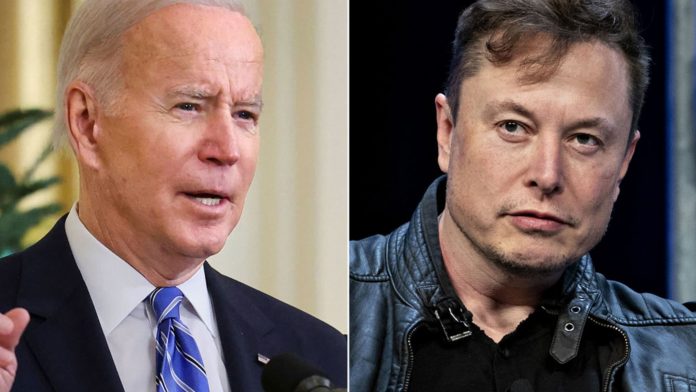
President Joe Biden has taken to social media to accuse tech billionaire and X microblogging platform owner, Elon Musk, and his associates of attempting to influence the upcoming November 5 election in favor of former President Donald Trump.

This accusation marks the latest development in a series of escalating tensions between Musk and the Democratic Party, rooted in disagreements over cultural issues and economic policies.

Biden’s accusation, made via a post on X, features a striking image of both Trump and Musk prominently displayed on his campaign’s donation portal. The President expressed his frustration, tweeting, “I’m sick of Elon Musk and his rich buddies trying to buy this election.”

This statement comes on the heels of Musk’s recent public endorsement of Trump, further intensifying the political drama.

The controversy was ignited after an attempted assassination attempt on Trump in Butler, Pennsylvania. In response to the incident, Musk took to his X account, declaring, “I fully endorse President Trump.”

This endorsement was followed by Musk’s announcement of a substantial financial commitment to Trump’s campaign, pledging $45 million per month to support the Republican nominee’s bid to unseat Biden in the 2024 presidential election.

Biden believes that Musk and other American billionaires are rallying behind Trump due to his promises of tax reductions, contrasting sharply with Biden’s push for increased taxes on the wealthy.

This divergence in economic policy has been a significant point of contention, but the rift between Musk and the Democrats runs deeper, touching on cultural issues that have become increasingly polarized.

The Cultural Divide: Woke Culture and Transgenderism

Musk’s fallout with the Democrats can be traced back to his growing disillusionment with what he perceives as the extreme woke culture embraced by the Left. A focal point of his criticism is the promotion of transgenderism to involve children, which he believes is harmful to society. This issue came to a head recently with the passage of California’s AB1955 legislation.

On Tuesday, Democratic California Governor Gavin Newsom signed AB1955 into law, a controversial piece of legislation that requires schools to withhold information about students experiencing gender dysphoria from their parents. The law has sparked outrage among many, including Musk, who argue that it undermines parental rights and places children at risk.

“The governor of California just signed a bill causing massive destruction of parental rights and putting children at risk for permanent damage,” Musk lamented on Tuesday. “This is the final straw,” he added, announcing significant business decisions in response to the law.

In a decisive move, Musk declared that SpaceX would relocate its headquarters from Hawthorne, California, to Starbase, Texas. This relocation is a direct response to California’s new legislation and other similar laws that Musk believes are detrimental to families and businesses.

“Because of this law and the many others that preceded it, attacking both families and companies, SpaceX will now move its HQ from Hawthorne, California, to Starbase, Texas,” Musk stated.

In addition to moving SpaceX, Musk also announced plans to relocate the headquarters of X to Austin, Texas. These moves underline Musk’s commitment to distancing his business interests from California’s policies, which he views as increasingly hostile to both parental rights and corporate freedom.

Musk’s public clash with the Democratic Party highlights a broader cultural and political divide in the United States. His criticism of the Left’s approach to issues such as transgender rights reflects a growing sentiment among some Americans who feel alienated by progressive policies.

However, the billionaire polymath’s relocation of major business operations from California to Texas signals a significant shift in the business landscape, with potential economic implications for both states.

The stakes of the fallout become higher as the 2024 presidential election approaches. Biden’s accusation of Musk and his associates attempting to “buy this election” adds fuel to an already fiery political climate.

Meanwhile, Musk’s actions and statements continue to galvanize his supporters, who see him as a champion against what they perceive as overreach by the Democratic Party.


FTX and US CFTC Reach Settlement for a $12B Repayment Plan to Creditors

2

The cryptocurrency landscape has witnessed a significant development as FTX, the bankrupt cryptocurrency exchange, and the United States Commodities Futures Trading Commission (CFTC) have reached a settlement agreement. This settlement concludes a 19-month lawsuit with a substantial $12.7 billion repayment plan to FTX creditors.

The case, which began in December 2022, involved allegations of fraud and misrepresentation by FTX and its former CEO, Sam Bankman-Fried, along with FTX’s sister trading firm, Alameda Research. The lawsuit claimed that FTX.com was marketed as a digital commodity asset platform, which led to the CFTC’s legal action.

The settlement includes $8.7 billion in restitution and $4 billion in disgorgement. Notably, the CFTC has decided not to seek a civil monetary penalty, considering the significant liabilities FTX already faces. This decision reflects a strategic approach by the CFTC, prioritizing the restitution to creditors over the imposition of additional financial penalties.

FTX’s acknowledgment of the conduct, guilty pleas, and convictions of the FTX insiders has played a crucial role in shaping the settlement. The agreement is described as an “integral and valuable component” of FTX’s proposed Chapter 11 reorganization plan. It aims to resolve ongoing litigation and disputes with one of the largest creditors of the debtors, avoid further litigation costs and delays, and mitigate the risk of asset liquidations.

The proposed settlement is not just a financial agreement but also a strategic move to mitigate risks and avoid the costs and delays associated with further litigation. It is seen as an integral component of the debtors’ proposed chapter 11 reorganization plan, aiming to streamline the process and provide a clearer path forward for all parties involved.

For the creditors, the settlement could mean a significant return on their claims. FTX’s proposed reorganization plan would see a 118% return for 98% of the creditors with claims under $50,000, based on the US dollar value of asset prices at the time of FTX’s bankruptcy filing. This proposal is particularly noteworthy given the volatile nature of the cryptocurrency market and the substantial increase in market cap since the filing.

The settlement hearing is scheduled for August 6, and creditors are currently voting on their preferred payout method, with a final decision expected on October 7. This decision will be a pivotal moment for the creditors, many of whom have expressed a preference for a cryptocurrency payout in-kind, reflecting the market’s growth since the bankruptcy filing.

The FTX case has been a cautionary tale for the cryptocurrency industry, highlighting the need for robust regulatory frameworks and the importance of transparency and accountability. The settlement with the CFTC is a reminder of the regulatory bodies’ role in safeguarding the interests of investors and maintaining the integrity of financial markets.

As the cryptocurrency landscape continues to evolve, the outcome of the FTX settlement will likely have far-reaching implications for the industry, potentially setting precedents for how similar cases are handled in the future. It is a reminder that, despite the decentralized nature of cryptocurrencies, regulatory oversight remains a critical component of the financial ecosystem.

The FTX saga is far from over, but this settlement marks a significant milestone in addressing the repercussions of one of the most significant collapses in the history of cryptocurrency exchanges. It underscores the complexities of the digital asset space and the ongoing efforts to navigate its challenges and opportunities.

From Bitcoin Rise to New ATHs to 100x Gains: The New Blast Token Taking the Lead

0

The crypto market is calm, showing signs of an impending bull run. Altcoins, while still accessible at favorable entry points, are poised for a rapid rise. This period of relative tranquility may soon give way to explosive growth, as certain tokens stand on the brink of substantial gains. Among them, the new Blast Token is emerging as a potential leader, promising returns that could reach 100x. Investors and enthusiasts alike are closely watching for which coins will take off next. This article will reveal the top contenders ready for growth, offering insights into the next big opportunities in the crypto space.

CYBRO Presale Soars Past $1.3 Million: A One-in-a-Million NeoBank Investment Opportunity

CYBRO is capturing the attention of crypto whales as its exclusive token presale quickly surges above $1.3 million. This cutting-edge NeoBank offers investors unparalleled opportunities to maximize their earnings in any market condition.

Experts predict a potential ROI of 1200%, with CYBRO tokens available at a presale price of just $0.03 each. This rare, technologically advanced project has already attracted prominent crypto whales and influencers, indicating strong confidence and interest.

Holders of CYBRO tokens will enjoy lucrative staking rewards, exclusive airdrops, cashback on purchases, reduced trading and lending fees, and a robust insurance program within the platform.

With only 21% of the total tokens available for this presale and approximately 64 million already sold, this is a golden opportunity for savvy investors to secure a stake in a project that’s truly one in a million.

>>>Join CYBRO and aim for future returns up to 1200%<<<

Avalanche (AVAX) Ready for Lift-Off Amid Crypto Market Jitters

Despite recent market turbulence, Avalanche (AVAX) is showing signs of potential growth. Its current price range is between $24.83 and $27.65. Bulls seem to be gaining strength as the price edges closer to the nearest resistance level of $28.94. If it breaks through, the next target is $31.75, representing a potential rise of around 17% from current levels. Although the coin shows a small monthly dip of 3.11%, a recent weekly gain of over 7% suggests renewed buying interest. With encouraging patterns from 2021, AVAX might be gearing up for an exciting run.

Bulls Eye Strong Potential for Solana (SOL) Recovery

Solana’s price is currently ranging between $134.38 and $154.92. Despite a slight dip, the bullish patterns from 2021 suggest strong potential for growth. With the RSI at 52.42, there’s still room for upward momentum. If SOL breaks past the $162.06 resistance level, it could target the next at $182.60, a potential gain of about 18%. Recent price changes show a healthy 12.1% bump over the week and an impressive 70.12% rise in six months. The recent positive movement indicates that bulls may overpower bears soon, pushing prices higher. This promising setup mirrors past trends and hints at continued strong performance for Solana.

Polkadot Gearing Up for a Breakout: Bulls to Take Charge?

Polkadot is currently trading between $5.85 and $6.65, showing promise despite recent dips. Bulls and bears are closely matched, but bulls seem poised for action. Key resistance sits at $6.98; breaking through could see DOT aiming for $7.77, an almost 15% rise. Support holds at $5.38, giving it a strong base. Indicators like RSI at around 35 and a low stochastic suggest the coin is undervalued, hinting at potential growth. Recent small gains also signal a shift in momentum. If these patterns hold, we could see a bullish trend similar to 2021. DOT fans might want to keep a close watch.

Dymension (DYM) Primed for Massive Gains Despite Recent Market Drops

Dymension (DYM) is showing strong signs of growth despite recent market volatility. Currently, DYM is trading in the range of $1.08 to $1.60, just below the nearest resistance level of $1.85. Bears are weakening as the coin has surged 41.41% in just one week. With a 9.90% increase this month and a staggering 916% over the past six months, DYM holds impressive potential. If it breaks past $1.85, it could rally towards $2.37, offering a potential gain of about 25%. With bullish momentum building, DYM might just be on the brink of a significant breakout.

Conclusion

AVAX, SOL, DOT, and DYM show less short-term potential. CYBRO, with its advanced DeFi platform, offers exceptional opportunities for investors. It maximizes earnings through AI-powered yield aggregation on the Blast blockchain. Investors can benefit from lucrative staking rewards, exclusive airdrops, and cashback on purchases. CYBRO ensures a superior user experience with seamless deposits and withdrawals. Its focus on transparency, compliance, and quality makes it stand out. The project has strong interest from crypto whales and influencers, highlighting its promising future.


Site: https://cybro.io

Twitter: https://twitter.com/Cybro_io

Discord: https://discord.gg/xFMGDQPhrB

Telegram: https://t.me/cybro_io

TotalEnergies Sells its Onshore Oil Assets to Indigenous oil firm, Chappal Energies, for $860m

0

French oil giant TotalEnergies has found a buyer for its onshore oil assets in Nigeria. The company plans to sell its stake to the indigenous oil firm, Chappal Energies, for a sum of $860 million.

This transaction, expected to close by December 31, 2024, is part of TotalEnergies’ strategic realignment towards more secure offshore investments, away from the increasingly challenging onshore operations.

According to Bloomberg, the divestment deal encompasses a 10% stake in 15 oil mining leases, along with the ownership of the Forcados and Bonny export terminals. These terminals are pivotal components within the Shell Petroleum Development Company (SPDC) joint venture.

The financing for Chappal Energies’ acquisition will come from an entity associated with TotalEnergies or a financial institution chosen by the French company. Additionally, trading firm Trafigura and a consortium of global banks are contributing funds to support this transaction.

This move by TotalEnergies is not an isolated incident but part of a broader trend among International Oil Companies (IOCs) divesting from Nigeria’s onshore sector.

Earlier this year, TotalEnergies’ CEO, Patrick Pouyanne, announced the company’s intention to divest its minority stake in the Nigerian onshore oil joint venture during a financial results presentation. Pouyanne highlighted the growing operational challenges and security concerns in the Niger Delta as key reasons for this decision.

“We want to divest our share of SPDC, and we are looking to reshape the portfolio. Producing this oil in the Niger Delta is not in line with our [Health, Security, and Environmental] policies; it’s a real difficulty,” Pouyanne explained.

Despite its divestment plans, TotalEnergies aims to retain its Nigerian gas assets, which are considered crucial for the company’s future expansion in liquefied natural gas development.

Nigerian Oil Sector Challenges

TotalEnergies’ decision to exit the onshore oil segment is influenced by persistent issues in the Niger Delta, including oil spills, theft, sabotage, and operational difficulties. These challenges have led to expensive repairs and prolonged legal battles, undermining the profitability and sustainability of onshore operations.

The company is seeking to focus on offshore fields as a way of creating a more stable and secure environment to continue its operations in Nigeria.

The Wider Trend of IOCs Divestment

TotalEnergies is not alone in this strategic shift. Other major IOCs have also been divesting from Nigeria’s onshore sector. In May 2024, Shell announced the sale of its 30% stake in SPDC to a consortium primarily composed of local companies for up to $2.4 billion. Similarly, ExxonMobil and Norway’s Equinor have also sold their assets in Nigeria in recent years, opting to concentrate on more profitable and less risky ventures elsewhere.

This wave of divestment comes at a critical time for Nigeria, which is grappling with the need to boost its oil production to support economic growth and stability.

However, the IOCs exits, currently marked by TotalEnergies’ exit from the onshore sector, presents both challenges and opportunities for Nigeria. Energy experts say on the one hand, it denotes the need for the country to address the security and operational issues to retain and attract investment in its oil sector. On the other hand, it provides an opportunity for indigenous companies like Chappal Energies to step up and take a more prominent role in the industry.

Ethereum’s Potential Performance Post-ETF Launch

0

As the much-anticipated debut of Ethereum-based Exchange-Traded Funds (ETFs) in the United States draws near, a significant uptick in hedging activity has been observed. This surge is indicative of the market’s heightened expectations and the bullish sentiment surrounding Ethereum’s potential performance post-ETF launch.

Ethereum, the second-largest cryptocurrency by market capitalization, has been a frontrunner in the blockchain revolution. Its innovative smart contract functionality and robust decentralized applications (dApps) ecosystem have established it as a cornerstone of the crypto industry. The approval and subsequent launch of Ethereum ETFs are expected to further cement its status and attract a new wave of institutional and retail investors.

The Ethereum market has been abuzz with activity, with investors turning to options markets to hedge their positions against potential price volatility. The increase in implied volatility (IV) for options, especially those with short-term contracts expiring soon after the ETF launch, suggests that traders are willing to pay a premium to safeguard their investments from any sudden market movements.

This strategic move by traders is not unfounded, as historical precedents such as the launch of Bitcoin ETFs have shown that significant market events can lead to unpredictable price swings. The anticipation of Ethereum ETFs, which are expected to commence trading next Tuesday, has led to predictions of substantial net inflows, potentially amounting to $5 billion within the first six months, thereby boosting Ethereum’s market value relative to Bitcoin.

The U.S. Securities and Exchange Commission (SEC) has requested the final S-1 forms by July 17, indicating that the market debut is imminent. The anticipation of this event has already had a noticeable impact on Ethereum’s price, which crossed the $3,300 mark amid expectations of the ETF launch.

The introduction of leveraged Ether ETFs, such as the ProShares Ultra Ether ETF (ETHT) and ProShares Ultrashort Ether ETF (ETHD), which offer investors long and short exposure to Ether at 2x leverage, further diversifies the options available to market participants and reflects the growing maturity of the cryptocurrency market.

However, the impact of the ETF launch is not without its debates. While some analysts predict that Ethereum will outperform Bitcoin post-ETF launch, others suggest that external factors such as monetary policy may play a more significant role in determining Ethereum’s performance than the ETF itself. This divergence in opinions highlights the unpredictable nature of the crypto markets and the myriads of factors that can influence price movements.

The potential for Ethereum to outshine Bitcoin in the aftermath of the ETF launch is supported by analytics firm Kaiko, which suggests that the mood in crypto markets has significantly changed since the U.S. Securities and Exchange Commission (SEC) approved spot Ethereum ETFs. The firm notes that despite a pullback in ETH’s price, the relative performance ratio of ETH to BTC remains elevated, indicating a strong position for Ethereum as the ETFs begin trading.

On the other hand, widely followed crypto analyst Benjamin Cowen cautions that the ETF launch may not provide the boost to Ethereum that many expect. Cowen emphasizes that Federal Reserve monetary policy could be a more substantial driver of ETH’s price than the ETF launch, suggesting that market narratives may not always align with actual outcomes.

As the crypto market evolves, the introduction of Ethereum ETFs represents a significant milestone. It not only provides a new investment vehicle for traditional investors but also signals a growing acceptance of cryptocurrencies within the mainstream financial ecosystem. The increased hedging activity is a testament to the market’s adaptability and the innovative strategies investors employ to navigate the dynamic landscape of digital assets.