DD
MM
YYYY

PAGES

DD
MM
YYYY

spot_img

PAGES

Home Blog Page 3087

Nigeria’s Food Security Crisis: 172 Million Nigerians Unable to Afford a Healthy Diet

1

In a stark reminder of Nigeria’s deepening food crisis, the latest State of Food Security and Nutrition in the World 2024 report has revealed that approximately 172 million Nigerians are unable to afford a healthy diet. This harrowing statistic, highlighted by a report from FAO, IFAD, UNICEF, WFP, and WHO, has once again, underlined the severity of food insecurity and malnutrition plaguing the nation.

The report, titled “Financing to End Hunger, Food Insecurity and Malnutrition in All Its Forms,” paints a grim picture of a nation struggling to feed its populace. As of 2022, about 78.7% of Nigerians could not afford a healthy diet. The number of people unable to afford nutritious food has been steadily rising since 2017. Back then, 143.8 million Nigerians were affected, a figure that has grown year by year, reaching 172 million in 2022.

To afford a healthy diet in Nigeria, a person would need around $3.83 per day in 2022, translating to approximately N1,767.55 based on the exchange rate of N461.5/$1 at the end of December 2022. With the naira now trading at N1,617.08/$, the cost of a nutritious meal has soared, making it even more unattainable for millions.

“Nigeria has the fifth highest cost of a healthy diet in the West African sub-region, behind Mauritania ($4.86 per day), Ghana ($4.29 per day), Cabo Verde ($4.07 per day) and the Niger Republic ($3.96),” the report noted.

Moreover, the National Bureau of Statistics and the Global Alliance for Improved Nutrition’s latest “Cost of Healthy Diet” report showed that the national average cost of a healthy diet rose to N1,241 per adult per day in June 2024 from N858 in January 2024. The report attributes this increase primarily to the rising costs of vegetables, legumes, nuts, seeds, and starchy staples.

#EndHunger Protests: A Nation’s Cry For Help Amid Tool Little Government Measures

Against this backdrop, the country is witnessing widespread protests under the #EndHunger movement. Nigerians are taking to the streets, demanding immediate action to combat hunger and malnutrition. Unfortunately, the government’s response is seen as lackluster and inadequate.

The Federal Government’s reaction to the crisis has been to distribute rice and disburse funds to state governments. For instance, the federal government, in the wake of the protests, announced the disbursement of N570 billion to states, in addition to truckloads of rice.

However, these measures have proven insufficient in addressing the root causes of food insecurity. The temporary relief provided by rice distribution and cash handouts fails to offer a sustainable solution to the ongoing hunger crisis.

In early July, the government announced a 150-day duty-free import window for food items imported through land and sea borders. This policy is intended to reduce the demand for foreign exchange by food importers and ease the food shortage. While this initiative might offer some relief, it is far from being a comprehensive solution to the systemic issues driving food insecurity, among them – insecurity.

The 2024 edition of the Global Report on Food Crises, which provides analysis and evidence on acute food insecurity, identified Nigeria as one of the 19 countries experiencing protracted major food crises over the past eight years. Alongside countries like Afghanistan, the Democratic Republic of the Congo, Ethiopia, the Syrian Arab Republic, and Yemen, Nigeria consistently ranks among the top ten countries with the highest populations facing acute food insecurity.

In 2023, nearly 282 million people in 59 food-crisis countries faced high levels of acute food insecurity, with Nigeria being one of the top five most affected.

“These 19 countries have been in a major food crisis for the past eight years, and six countries (Afghanistan, Democratic Republic of the Congo, Ethiopia, Nigeria, Syrian Arab Republic and Yemen) have consistently ranked among the top ten in terms of the population affected, with 108 million people facing acute food insecurity,” the report noted.

The report calls for significant improvements in the execution and quality of budget spending on food security. It emphasizes that even if more financing becomes available, necessary changes and reforms must be implemented to ensure higher execution and quality of spending.

“Even if more financing for food security and nutrition becomes available, changes and reforms are necessary to guarantee higher execution and quality of spending. The larger the required budget reallocations (e.g. Burkina Faso and Nigeria), the further away the country is from the optimal budget allocation. Optimal budget reallocations, irrespective of their size in each country, can significantly increase the value of public money,” the report added.

A Call for Sustainable Solutions

To tackle the hunger crisis, the government has been advised to prioritize food security and nutrition by implementing policies that address the root causes of hunger and malnutrition. This includes investing in agriculture, improving infrastructure, and ensuring that social safety nets are in place to protect the most vulnerable populations.

The road to eradicating hunger and malnutrition in Nigeria is long and fraught with challenges. However, experts believe that with the right policies and a committed effort from the government and all stakeholders, it is possible to achieve food security and ensure that every Nigerian has access to a healthy diet.


Neiro and Raboo Trend With Top Gains, Shiba Inu Struggles to Keep up The Pace

0

Neiro recently experienced a dramatic price surge, while Shiba Inu saw a significant drop amid a broader market correction. Interestingly, Raboo’s upward trend continues to draw attention in the meme coin ecosystem, with over $2 million raised and more than 60% price rally since Stage 1. Investors are now eyeing Raboo ($RABT), with crypto analysts predicting it as one of the top cryptos to buy in 2024.

Neiro token surge yields massive profits for savvy developer amid crypto market volatility

In a remarkable turn of events, a developer’s strategic investment in the newly launched Neiro  has paid off handsomely. Initially acquiring 97.5 million Neiro tokens for just 3 SOL (around $500), the developer’s timely actions resulted in extraordinary profits. By selling 68 million tokens for 15,511 SOL (approximately $2.85 million), they realized a profit of 15,508 SOL, demonstrating Neiro’s explosive growth.

The developer further capitalized on the Neiro’s success by sending 10 million Neiro  to a burn wallet, effectively reducing the supply and enhancing Neiro’s scarcity. This move, combined with the remaining 19.5 million tokens, represents an unrealized profit of about $1.8 million at current market values. Neiro’s rise on the Solana blockchain, inspired by the iconic Dogecoin mascot Kabosu, underscores the speculative nature of the cryptocurrency market. Meanwhile, the Neiro token on Ethereum saw a dramatic price surge, overshadowing its Solana counterparts amidst speculations that Neiro might now be one of the top cryptos to buy in 2024.

Shiba Inu’s set for recovery, driven by imressive token burn rate

Although Shiba Inu declined recently amid prevailing volatility and bearish sentiment that also caused major cryptos like bitcoin and ethereum to dip, new data suggests that Shiba Inu might now be on track for recovery. This new data has been corroborated by a notable increase in Shiba Inu’s recent trading volumes indicating whale activity alongside an increase in the token burn rate which engineers scarcity and could drive up the price of Shiba Inu.

With Shiba Inu’s fourth anniversary this August, Shiba Inu faces a critical period, indicated by its 20% decline over the past week. Furthermore, On-chain metrics and price prediction firm CoinCodex forecast a bearish trend for Shiba Inu in August 2024. Consequently, investors need to tread carefully before losing their money to the dip in Shiba Inu and other volatile tokens.

Raboo: The next top Meme Coin integrating AI and SocialFi for a strong community

Raboo ($RABT) presale token, which has been tipped as one of the top altcoins to watch, is set to emerge as the top AI meme coin in 2024. Raboo’s trajectory has been impressive so far as the presale token remains on track to challenge prominent meme tokens like Shiba Inu on its journey to becoming one of the top 20 cryptocurrencies by market cap.

With a solid smart contract audited by SOLIDProof, Raboo combines the worlds of SocialFi, MemeFi, and blockchain, allowing meme coin enthusiasts to interact with like-minded crypto investors and earn real-world rewards from their victories.

Raboo’s innovative feature, Rabooscan, uses exclusive AI technology to scour social platforms for fresh memes, analyzing them against specific criteria to gather detailed information. This data is then used to create AI-generated memes, adding a unique technological edge to the project. Beyond the digital realm, Raboo is set to launch exclusive branded merchandise, allowing fans to showcase their love for the meme coin in style, and engage with exciting updates as the project evolves.

Marketing efforts for Raboo are set to go viral, with a strategic barrage of tactics designed to boost the coin’s visibility and market presence. The project will include prize draws and giveaways, offering participants valuable rewards and tokens. Additionally, Raboo will empower buyers to stake their $RABT, earning attractive rewards and solidifying the project’s long-term future. Partnerships with platforms and influencers will further drive the development and expansion of Raboo, ensuring its continued rise in the cryptocurrency market.

Conclusion

Neiro recently experienced a massive price surge. Also,  Shiba Inu has seen a significant price drop amidst bearish sentiment in the crypto market. On the other hand, Raboo, an innovative AI-driven meme coin, continues to gain traction due to its cutting-edge features. Priced at $0.0048 in Stage 4, Raboo’s upward trend has attracted considerable attention making it one of the top altcoins to watch this year.

You can participate in the Raboo presale here:

Telegram: https://t.me/RabootokenPortal

Twitter: https://twitter.com/Raboo_Official

The Amazon’s Delivery Man Who Does Not Care About The Mission of Firms

0

This is a skit, but we are using it to teach here.

This is a classic example why every company must and should administer a basic test before hiring. Listening to this guy, you will understand why HR puts you through those tests. There are things in life, and at work, no school or job will prepare you, because those things are expected, and are part of what makes us prepared to work.

Yet, you may not blame him 100% because Amazon did not invest in even telling him why he delivers packages. If they have done that, he would not be in the company uniform, and be speaking the way he has done. As far as he is concerned, the world ends on delivery packages – and why delivery happens, he has no idea.

If your company’s competitive positioning is to find the cheapest people to fill an ocean with buckets of water, from your borehole,  you are lost because there are available people who will accept the job, and they will come with their buckets, ready to fill the ocean! Good luck.

But if I may suggest one thing: hire smartly because the most important factor of production remains the human element, and in the tripod of people, processes and tools – the pillars of the mechanics of firms – if the people do not function, missions fade.

You need smarter people to execute the mission of firms.

The video is here


Building Resilient Anti-Fraud Systems in Enterprises | Tekedia Mini-MBA

0

From my non-scientific data, more fintechs collapse in Africa due to cybersecurity, compliance, KYC, and fraud related matters, than competition. Consequently, to ensure businesses and professionals understand this extremely new vector in the market system, Africa’s leading business school for entrepreneurial capitalism, Tekedia Institute, has created a course – Building Resilient Anti-Fraud Systems in Enterprises.

Our Faculty is Oluwatobiloba Ololade, a  leader in this space, and CEO of Africa’s leading digital and identity verification company, Dojah (YC-W22). Dojah is a YCombinator and Tekedia Capital portfolio firm.

Dojah is Africa’s first end-to-end Fraud Prevention and KYC Platform, delivering industry-leading services, from onboarding to ongoing monitoring, and in the process helps businesses fight financial crimes and deliver superior service experiences to customers.

Zoom link in the classboard.

Tekedia Mini-MMBA >> our product is Knowledge.

Register for the next edition here.


Bitcoin, Dow and the Illusion of the Decentralization of Cryptos

0

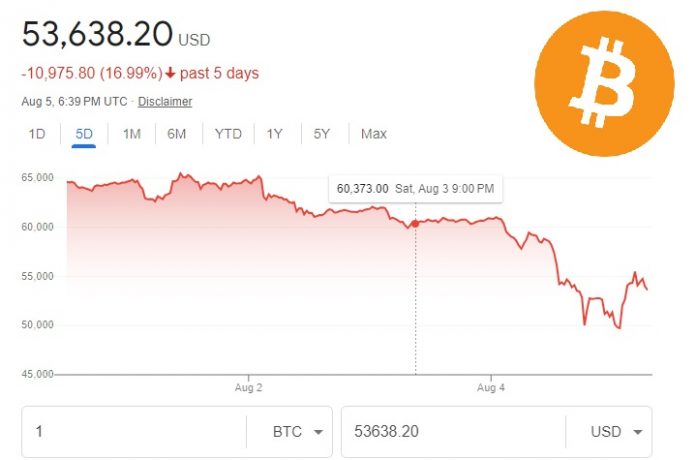
My name is Bitcoin and I am a modern currency which is decentralized and unbounded from governments, my creators posit. However, recently, I seem to track the Dow market index, and global events. So, when the Dow falls, I fall. I cannot explain what is happening to me!

Good People, in Oct 2007, the Dow closed at its pre-recession high of about 14,000. In March 2009, the index had fallen more than 50% to about 6,500. So, from 2009 to now, the DOW has added about 32,000 points to the current 38,700 points. Considering how many decades it took the Dow to get to 14,000 since 1897 when it was established, and how it used less than 15 years to add 32,000, you could agree that the market system has been a financialized system.

Simply, can you point to one thing in the world that has improved by 5X except the Dow stock index in the last 15 years? This is why everyone should pay attention as the current events unfold. Shine ya eyes.

It was a fanatical crusade: bitcoin and the broad cryptocurrency world was decentralized and unbounded from the high voltage searchlights of governments. The hodlers believed that you can live in your hut, your mansion, and anything in between, untethered to any central ordinance.

But here, I had posited that it was all an illusion to think that Bitcoin is not centralized. Indeed, the top 10 global miners possibly control up to 70% of the total coins being created. And what that means is this: only a few people or organizations can  “print” the new currency of Bitcoin and bring it to the world. Sure, many prefer that over central banks because governments are bad!

But with the collapse of FTX and the domino impacts across domains and territories, we can now agree that crypto is not fundamentally decentralized, but centralized outside the powers of government. As FTX goes, it has taken hedge funds, startups, businesses and thousands of global citizens along, financially. From Nigeria to Germany, Canada to Japan, etc, entities have been affected just because one company faded.