DD
MM
YYYY

PAGES

DD
MM
YYYY

spot_img

PAGES

Home Blog Page 3088

How To Receive Casino Sign-Up Bonus?

0

Register at top sweepstakes casinos in the U.S. or Canada, and you can claim an exciting welcome bonus. You don’t want to miss the sign-up offer since it gives you a generous amount of coins to start playing for free. In this post, we’ll review the simple procedure to receive a signup bonus at Fortune Coins Casino. The welcome offer on the site gives you 630,000 GCs and 1,000 FCs, which is incredible. If you find it interesting, follow the below steps to get the bonus.

Step 1: Register an Account

For this step, visit the Fortune Coins Casino official website and tap the Sign Up button. Next, enter your name and email and create a password. At the end of the form, you’ll have to accept the terms and conditions and consent to the privacy policy. Then, hit Create an Account to submit.

Upon creating an account, you instantly become a Fortune Coins player. When you log in, you’ll get 100,000 GCs and 200 FCs as the first part of the casino sign-up bonus. Note that you can sign up much faster using the Google or Facebook option. 

Step 2: Verify Your Phone Number

The second part of the Fortune Coins sign-up bonus gives you 100,000 GCs and 100 FCs. To receive it, you have to verify your phone number. It’s a simple step you can carry out from your account settings. 

So, navigate to the section and locate the option to enter your phone number. Input the digits correctly and submit. Fortune Coins will send you a verification code by SMS to confirm the phone number. Enter the code in the provided space on the casino website, and you’re done. 

Step 3: Opt-in For Email and SMS notifications

As a new Fortune Coins Casino player, it’s ideal to turn on email and SMS alerts to ensure you don’t miss out on promotions. Interestingly, the site even gives you a bonus just for doing so. If you turn on email notifications, you receive 100,000 GCs and 300 FCs. Do the same for SMS, and you get 100,000 GCs and 200 FCs. 

While the bonus is huge, this step is the simplest. You only have to visit your account settings and tap the toggle for email and SMS. It won’t take you more than 30 seconds once logged in.

Step 4: Connect to Google and Facebook

Fortune Coins stays true to its status as a social casino. So, the platform lets you connect to your Google and Facebook accounts, with bonuses up for grabs. This part of the signup offer gets you 20,000 GCs and 100 FCs. In other words, you get 40,000 GCs and 200 FCs in total.

Connecting to Google or Facebook is simple; you do it via your account settings. Registering using either of the two options will give you the attached bonus by default. 

Step 5: Claim the Daily Bonus

Finally, Fortune Coins has a daily bonus during your first three days as a player. It gives you 300,000 GCs and 100 GCs on the first day, adding to the welcome package. Ensure you log in every day, as there’s a grand bonus to claim on the third day. 

Bottom Line

If you add up the bonuses for each step, you get 630,000 GCs and 1,000 FCs. It’s challenging to find a sweepstakes casino with a better deal. So, if you want to receive the best sign-up bonus, visit Fortune Coins Casino today.
OKX to Discontinue Services to Nigerian Users

0

The cryptocurrency landscape is ever evolving, and with it comes a series of regulatory challenges and changes that affect how digital asset services operate globally. A recent development in this dynamic field is the announcement by OKX, a prominent digital asset exchange, to discontinue its services in Nigeria. This decision is a significant event in the crypto space and has implications for Nigerian users and the broader digital asset market in the country.

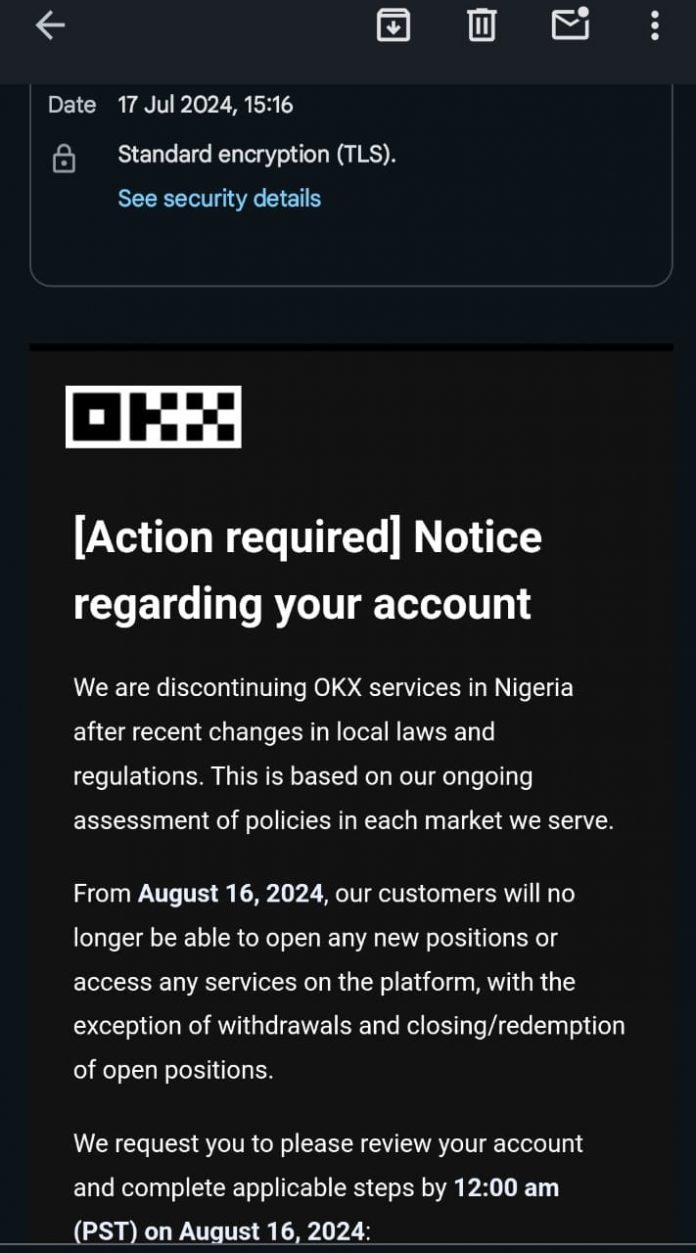
OKX’s decision to exit the Nigerian market is attributed to the recent changes in local laws and regulations that have impacted the operation of digital asset services. The exchange has communicated to its users that effective from August 16, they will no longer be able to open new trading positions or access services in the country. However, there is a provision for users to withdraw and close open positions, ensuring that they have the opportunity to secure their assets before the cessation of services.

The move by OKX adds to the list of crypto firms that have had to re-evaluate their operations in Nigeria due to the regulatory environment. It reflects a growing trend where crypto exchanges are facing increasing scrutiny from regulators, leading to a re-assessment of their business strategies and, in some cases, a complete withdrawal from certain markets.

For Nigerian users, this development means they must take immediate action to review their accounts and make necessary arrangements before the stipulated deadline. The discontinuation of OKX’s services underscores the importance for users to stay informed about the regulatory climate and its potential impact on their digital asset holdings and activities.

One of the most prominent exchanges in Nigeria is Binance, which offers a comprehensive platform for trading a wide range of cryptocurrencies. Binance is known for its user-friendly interface, extensive market depth, and robust security measures, making it a popular choice among both novice and experienced traders.

For those looking for local exchanges with support for Nigerian Naira (NGN), NairaEx provides a straightforward and efficient service for buying and selling cryptocurrencies with NGN. It is designed to cater to users who prefer a more direct and simple trading experience.

Quidax is another exchange that has gained traction in Nigeria, offering an easy-to-use platform with a focus on customer support. It provides various trading pairs and is geared towards users who are new to the cryptocurrency space.

Luno, with its emphasis on simplicity and security, is also a favored option for Nigerian users. It supports NGN and is tailored for those who are just starting out in crypto trading, offering educational resources to help users navigate the crypto ecosystem.

Bybit and KuCoin are exchanges that, while not offering NGN spot trading pairs, allow users to buy crypto with NGN. These platforms are suitable for users looking for alternatives to the more mainstream exchanges and those interested in a wide selection of altcoins.

Yellow Card and ByBarter are platforms that facilitate crypto purchases with NGN and provide services for cross-border payments in Africa. They are particularly useful for users who need to make international transactions using cryptocurrencies.

The broader implication of OKX’s departure is a signal to the crypto industry about the challenges of navigating regulatory frameworks that vary significantly across different jurisdictions. It highlights the need for ongoing dialogue between the crypto community, regulators, and policymakers to find a balance that fosters innovation while ensuring user protection and market integrity.

As the situation unfolds, it will be crucial to monitor how the Nigerian market adapts to this change and what it means for the future of cryptocurrency services in the region. The case of OKX serves as a reminder of the volatile nature of the crypto industry and the need for agility and responsiveness to the changing regulatory landscapes.

The Nigeria’s Windfall Tax on Banks

0

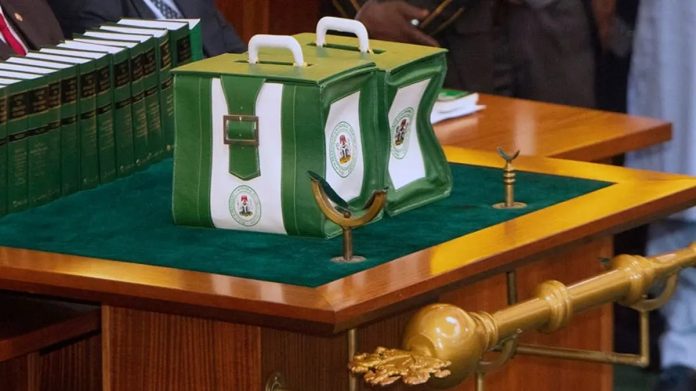
The government has brought clarity now on the banks’ FX-induced profits: “[Nigerian government] has petitioned the Senate for a substantial budget increase of N6.2 trillion. This request, if approved, will elevate the 2024 appropriation act from N28.7 trillion to a staggering N34.9 trillion….To fund the budget expansion, Tinubu’s administration is targeting the financial sector with proposed amendments to the Finance Act of 2023. The president seeks to implement a one-time windfall tax on the substantial foreign exchange gains reported by banks.

“It could be recalled that the Central Bank of Nigeria (CBN) prohibited banks from using the proceeds of the FX windfall for their recapitalization. The CBN has outlined various avenues for banks to raise fresh equity capital, including private placements, rights issues, offers for subscriptions, and strategic mergers and acquisitions.”

On Wednesday, Senate President Godswill Akpabio read Tinubu’s letter to the upper legislative chamber. According to the president’s request, N3.2 trillion is earmarked for infrastructure projects, while N3 trillion is intended for recurrent expenses. These funds, it said, are crucial for the “Renewed Hope Infrastructure Projects” and the seamless functioning of the federal government.

“Pursuant to section 58 (2) of the constitution of the federal republic of Nigeria as amended, I forward herewith the above-named bills for consideration and passage by the senate. The appropriation act amendment bill seeks to amend the principal act to provide the sum of N3,200,000,000,000 for Renewed Hope Infrastructure Projects and other critical infrastructure projects to be undertaken across the country and the sum of N3,000,000,000,000 to meet further recurrent expenditure requirements necessary for the proper operation of the federal government. They shall be funded by accruing to the federal government of Nigeria,” Tinubu said in his letter.

Many months ago, I argued that not allowing banks to use their profits for recapitalisation, was not unfair for existing bank shareholders, as hitting the market was simply going to dilute them. But that is a stale matter as the issue now for banking sector investors is clear: how much would Nigeria go for this special one-time windfall tax? 40%, 50%, 60? We do not know. (Update: it seems the amount is 50%)

President Bola Tinubu has proposed a N6.2 trillion increase to the 2024 budget, raising it from N28.7 trillion to N34.9 trillion. This request was made in a letter to the National Assembly, which has passed the amendment for a second reading. The proposed increase is intended to fund various projects and address economic challenges. Additionally, there is a proposal to tax banks 50% of their realized profits on foreign exchange (FX) gains. This move has sparked discussions and concerns about the country’s debt servicing and revenue resources.

To the banks, you may need to work with the government to clear the air very fast as under this veil, you may struggle to meet the capitalisation target. If Nigeria can impose a special windfall profit, it can become a constant going forward. New disclosures needed.

The FX matter is a poison pill; Nigeria created vapour profits for banks even as Nigeria put itself at a disadvantage where it has to use Naira-based tax revenue to service US dollar-based loans. But because many manufacturing companies went under or are struggling, those banks have to bail out the government.  Just hope those profits are actually there in the virtual and physical vaults!

Tinubu Asks National Assembly for N6.2trn Budget Increase, to Be Funded by Tax on Banks’ FX Windfall Profits

Question: What happens to current bank IPOs and Share Prices?

My Response: The banks may re-price things since that “profit” does not belong to them 100%. So, if you bought for a balance sheet of xx with cash at hand x, that cash number has changed, as Nigeria is asking for a part of that cash.

Tinubu Asks National Assembly for N6.2trn Budget Increase, to Be Funded by Tax on Banks’ FX Windfall Profits

0

President Bola Tinubu has petitioned the Senate for a substantial budget increase of N6.2 trillion. This request, if approved, will elevate the 2024 appropriation act from N28.7 trillion to a staggering N34.9 trillion.

This move, which seemingly underlines the administration’s urgent need to address the nation’s critical infrastructure gaps and mounting recurrent expenditures, has come under criticism.

On Wednesday, Senate President Godswill Akpabio read Tinubu’s letter to the upper legislative chamber. According to the president’s request, N3.2 trillion is earmarked for infrastructure projects, while N3 trillion is intended for recurrent expenses. These funds, it said, are crucial for the “Renewed Hope Infrastructure Projects” and the seamless functioning of the federal government.

“Pursuant to section 58 (2) of the constitution of the federal republic of Nigeria as amended, I forward herewith the above-named bills for consideration and passage by the senate. The appropriation act amendment bill seeks to amend the principal act to provide the sum of N3,200,000,000,000 for Renewed Hope Infrastructure Projects and other critical infrastructure projects to be undertaken across the country and the sum of N3,000,000,000,000 to meet further recurrent expenditure requirements necessary for the proper operation of the federal government. They shall be funded by accruing to the federal government of Nigeria,” Tinubu said in his letter.

Taxing Times: The Finance Act Amendment

To fund the budget expansion, Tinubu’s administration is targeting the financial sector with proposed amendments to the Finance Act of 2023. The president seeks to implement a one-time windfall tax on the substantial foreign exchange gains reported by banks.

It could be recalled that the Central Bank of Nigeria (CBN) prohibited banks from using the proceeds of the FX windfall for their recapitalization. The CBN has outlined various avenues for banks to raise fresh equity capital, including private placements, rights issues, offers for subscriptions, and strategic mergers and acquisitions.

The federal government said it intends to use the tax fund to bankroll essential capital infrastructure, education, healthcare, and public welfare initiatives—key elements of the “Renewed Hope Agenda.”

“Furthermore, the proposed amendments to the Finance Acts 2023 are required to implement a one-time windfall tax on the foreign exchange gains realized by banks in their 2023 financial statements to fund capital infrastructure development, education, and healthcare as well as welfare initiatives, all of which are components of the Renewed Hope Agenda,” Tinubu said.

The FX Windfall

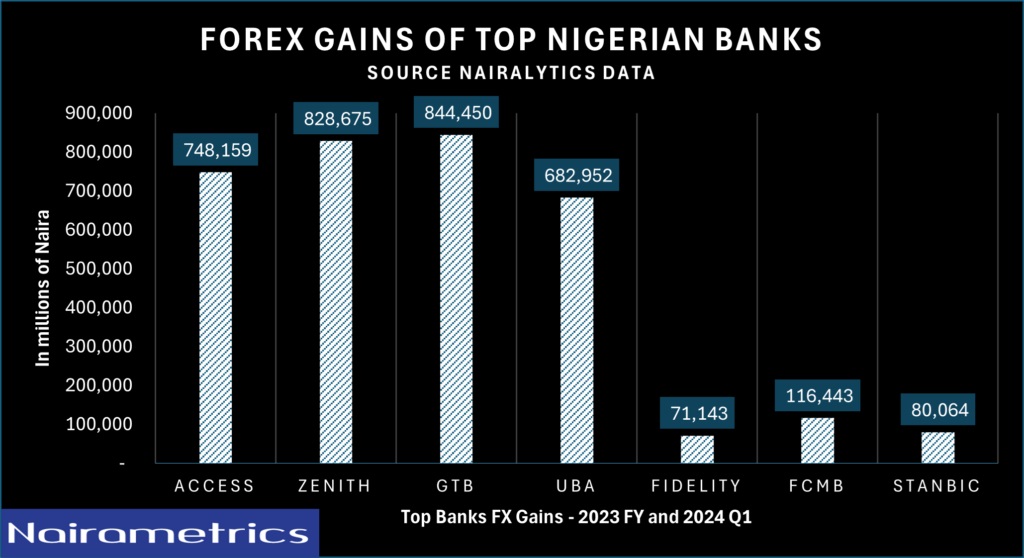
Nigerian banks have enjoyed remarkable profits driven by foreign exchange revaluation gains. In 2023, the top seven local banks reported combined profits of N2.48 trillion, with an additional N882.9 billion in the first quarter of 2024, according to Nairalytics.

With oil revenue dwindling, the federal government is understood to have shifted attention to the banks’ FX gains. The government’s earlier move to borrow from the pension was met with stiff opposition.

Tinubu Contrasting His Tax Reform Initiative

Tinubu’s approach, however, reveals a paradox. The administration is simultaneously attempting to tax its way out of the economic crisis while introducing tax reforms designed to alleviate multiple taxation burdens on businesses. This dual strategy raises questions about the coherence and efficacy of the government’s economic policies.

Economic experts say the push to boost tax revenues, particularly through windfall taxes on banks, seems at odds with ongoing tax reform efforts aimed at reducing the tax burden on businesses. The tax reforms are expected to foster a conducive business environment and stimulate economic growth.

Trump Likens the US to Insurance Company, Asks Taiwan to Pay for Defense

0

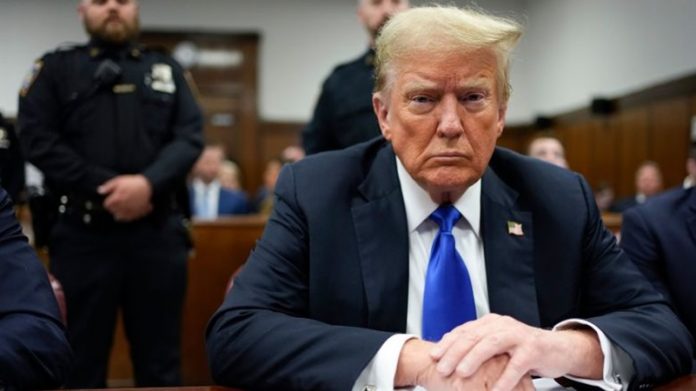
Former U.S. President Donald Trump, who is once again seeking the White House, recently stirred controversy with his remarks about Taiwan. Trump suggested that Taiwan should pay the U.S. for its defense, comparing the country to an insurance policy that offers no returns.

“Taiwan should pay us for defense,” Trump said.

“You know, we’re no different than an insurance company. Taiwan doesn’t give us anything.”

He added, “They took almost 100% of our chip industry, I give them credit. We should have never let that happen.”

These comments, made during an interview with Bloomberg Businessweek, reflect a broader discourse on the geopolitical and economic intricacies surrounding Taiwan, particularly its pivotal role in the global semiconductor industry.

Taiwan holds a unique and critical position in the global semiconductor industry. The island is home to Taiwan Semiconductor Manufacturing Co. (TSMC), the world’s largest and most advanced chipmaker. TSMC produces cutting-edge semiconductors for major American technology companies like Apple and Nvidia, making Taiwan indispensable to the tech sector.

According to TrendForce data, Taiwan is projected to account for 66% of the world’s production of advanced chips in 2024, while the U.S. is expected to contribute just 6%.

The concentration of semiconductor manufacturing in Taiwan has raised significant concerns about the potential risks associated with geopolitical tensions, especially given China’s stance on Taiwan. Beijing considers Taiwan a part of its territory, and Chinese President Xi Jinping has asserted that reunification with the mainland is inevitable.

In the event of a Chinese attack on Taiwan, the ramifications for global technology supply chains could be catastrophic. TSMC Chairman Mark Liu has warned that any military action would render TSMC’s factories inoperable, disrupting the global supply of advanced semiconductors.

Trump’s suggestion that Taiwan should pay the U.S. for defense highlights his transactional approach to international relations. In the past, Trump’s Make America Great Again (MAGA) mantra was buoyed by his idea of curtailing the cost of US global leadership.

Thus, by likening the U.S. defense commitment to an insurance policy, Trump emphasizes his belief that allies should contribute more financially to their security arrangements.

“Now we’re giving them billions of dollars to build new chips in our country, and then they’re going to take that too, in other words, they’ll build it but then they’ll bring it back to their country,” he said.

This perspective is consistent with his broader views on global defense spending, where he has often criticized allies for not bearing a fair share of defense costs.

However, Trump’s comments contrast the broader context of U.S.-Taiwan relations and the geopolitical stakes involved. Taiwan’s semiconductor industry is not only vital to the global economy but also strategically important to U.S. technological leadership. The reliance on Taiwanese semiconductors means that maintaining stability in the region is in the U.S.’s direct interest, beyond any financial considerations.

This means withdrawing support for Taiwan, especially in the face of the ongoing chip and geopolitical warfare with China, would be a strategic misstep. The semiconductor industry is crucial for national security, given its applications in everything from consumer electronics to military technology. Thus, analysts believe that ensuring the stability and security of Taiwan is integral to maintaining the U.S.’s technological edge and economic security.

The Biden administration has recognized these risks and has taken steps to reduce the U.S.’s dependence on Taiwanese chip manufacturing. Through initiatives like the CHIPS and Science Act, the U.S. government has allocated significant grants to encourage semiconductor companies to establish and expand their manufacturing facilities within the United States. These efforts aim to build a more resilient and self-sufficient domestic semiconductor industry.

Political Motive Behind Trump’s Comments?

Trump’s current stance on Taiwan is believed to be based on political calculations. Many believe that by advocating for Taiwan to pay for defense, Trump appeals to a segment of his base that favors reduced U.S. spending abroad and increased financial contributions from allies.

Despite Trump’s rhetoric, the issue of Taiwan’s defense and its semiconductor industry remains subject to bipartisan consensus in the U.S. Congress. Lawmakers from both parties agree on the strategic importance of supporting Taiwan against potential Chinese aggression and ensuring the resilience of global semiconductor supply chains. The geopolitical tensions and the ongoing technological competition with China make it imperative for the U.S. to continue its support for Taiwan.