DD
MM
YYYY

PAGES

DD
MM
YYYY

spot_img

PAGES

Home Blog Page 3089

d.light Announces The Closure of $176 Million Securitization Facility For Affordable Off-grid Solar in Kenya, Tanzania And Uganda

0
Fund, money cash dollar

d.light, a global provider of transformational household products and affordable finance for low-income households, has announced the closing of a new securitization facility worth $176 million.

The new financing, provided by the social impact-focused asset management company African Frontier Capital (AFC), will be used to purchase receivables in Kenya, Tanzania, and Uganda. Also, the financing will enable d.light to expand its PayGo consumer finance offering, making solar-powered products accessible to more low-income households and communities without electricity.

With this recent funding, d.light has secured a total of $718 million in securitized financing across five separate facilities since 2020.

Commenting on the funds secured, the company’s CEO Neejip Tozun said,

“This new facility is another landmark step in d.light’s mission to provide people with affordable energy that is also clean, safe, and sustainable. It lets us expand our reach so that millions of off-grid families across Kenya, Tanzania and Uganda can experience the benefits of solar energy. Facilities like this make possible our pioneering PayGo consumer financing model with which we are able to offer solar home systems and high-efficiency appliances to the people that need them most in a way that is affordable and sustainable.“

Tozun added that with the new facility, d.light now has receivables-based financing in all of its PayGo markets Kenya, Uganda, Tanzania, and Nigeria, noting that this achievement allows the company to maintain consistent positive cash flow and eliminates the need for additional external equity fundraising to support its growth.

Also commenting on the funding, Eric De Moudt, AFC’s founder and CEO said,

“This milestone is a testament to how data-driven financial innovation can play an important role in bringing financial inclusion to the world’s most vulnerable communities, helping them to gain access to clean and modern energy and the ensuing social and economic benefits that come about as a result. We are grateful to d.light for its ongoing leadership in the off-grid solar sector and proud to partner with such a visionary company”.

Founded in 2007 by Ned Tozun and Sam Goldman at Standford University, d.light is a front-runner in providing access to clean and affordable energy to millions of people across 70 countries globally. In 2008, the company developed its first product, and since then, it has constantly been expanding its operations and reach across the globe.

In March 2010, d.light hit the milestone of transforming 1 million lives. The company has been working with distribution partners in Kenya, Uganda, and Tanzania since 2010, and has had its operations in Kenya since 2011, in Uganda since 2015, and in Tanzania since 2016.

d.light has a proven track record in the use of securitized finance to support its solar-powered household products in sub-Saharan Africa. It has previously set up four facilities, beginning in 2020 and including two in Kenya and one each in Nigeria and Tanzania. The combined purchasing value of these existing facilities plus the new facility is $718 million.

In 2011, the company introduced a new solar study lamp, and by then, it had transformed 5 million lives with our energy-efficient initiative. The social impact of its products and initiative was recognized by Forbes when its founders were recognized among the World’s Top 30 Social Entrepreneurs in November 2011.

Not only the West but the Middle East has also recognized d.light’s efforts towards creating a sustainable future after it won the Zayed Future Energy Prize, the UAE’s global recognition award in sustainability in 2013.

Trump Outsmarts Biden On Youth Votes with New Love for TikTok

0

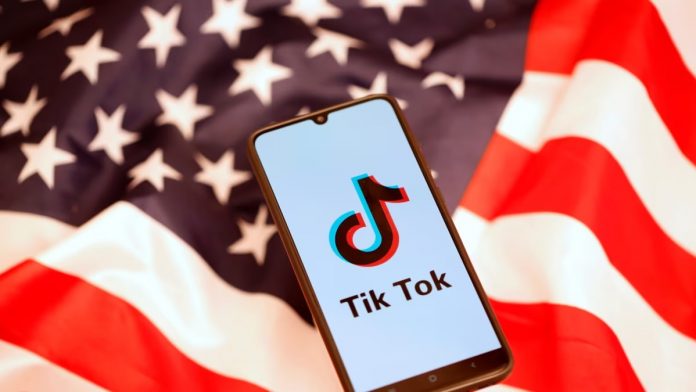
Donald Trump has an uncommon political sagacity. His recent embrace of TikTok has taken it to the next level. This was the president who began the high voltage searchlight on TikTok, and even signed things to make the company history in the United States.

In 2020, he signed executive orders aimed at banning TikTok and WeChat unless their U.S. operations were sold to American companies. However, these efforts were blocked by U.S. courts, and the subsequent Biden administration withdrew the Trump-era executive orders in June 2021.

Despite his previous efforts to ban TikTok, Trump recently told Bloomberg BusinessWeek, “I’m for TikTok because you need competition. If you don’t have TikTok, you have Facebook and Instagram.”

This shift in position has raised eyebrows, given his attempts to ban TikTok and history of criticizing Meta Platforms-owned Facebook and Instagram for suspending his accounts following the January 6 Capitol Hill riot.

But the BIG bans happened where Trump was de-platformed in Facebook, Twitter and other social media ecosystems. Then, another moment came: he now wants to have his job of the presidency back, and his opponent – Mr. Biden – has played into the hands of the frenemy-strategists who legislated for the extinction of TikTok.

But instead of Trump joining the party. He has changed the playbook: “I’m for TikTok”.

Magically, he wins the young people, a weak point for him when last he was on the ballot. And Biden is now the person against TikTok and the young people. But beyond politics, why should Trump reward Facebook which banned him, by kicking its main competitor out of America?  With TikTok advocacy, Trump uses one stone to get two birds. He wins the presidency!*

*yet to decide who gets my vote. I am a one issue voter: education.

“I’m for TikTok”: Trump Reiterates Newly found Love for Embattled Chinese App

1

Republican presidential candidate Donald Trump recently voiced his support for TikTok, even as the popular short-form video app faces a potential ban in the United States. This marks a significant shift from his previous stance when, as president, he attempted to ban TikTok and Chinese-owned WeChat in 2020.

During his presidency, Trump declared TikTok a national security threat, citing concerns over the app’s Chinese ownership and potential data privacy issues.

In 2020, he signed executive orders aimed at banning TikTok and WeChat unless their U.S. operations were sold to American companies. However, these efforts were blocked by U.S. courts, and the subsequent Biden administration withdrew the Trump-era executive orders in June 2021.

Despite his previous efforts to ban TikTok, Trump recently told Bloomberg BusinessWeek, “I’m for TikTok because you need competition. If you don’t have TikTok, you have Facebook and Instagram.”

This shift in position has raised eyebrows, given his attempts to ban TikTok and history of criticizing Meta Platforms-owned Facebook and Instagram for suspending his accounts following the January 6 Capitol Hill riot.

Political Motivations Behind Trump’s U-Turn

Trump’s newfound support for TikTok can be seen as a politically motivated move. After being banned from Facebook and Twitter (now X), Trump’s relationship with major social media platforms soured. His company, Trump Media and Technology Group, operates Truth Social, a social media platform he quickly founded as a competitor to mainstream networks like Facebook and Twitter following his ban.

Supporting TikTok now, a rival to these platforms, is believed to align with Trump’s broader strategy to challenge the dominance of tech giants that have previously censored him.

Additionally, Trump’s endorsement of TikTok could be a strategic move to appeal to younger voters who heavily use the app. TikTok’s vast user base in the U.S., reportedly around 170 million Americans, represents a significant demographic that could influence electoral outcomes. By positioning himself as a supporter of TikTok, Trump may be attempting to garner favor among these users.

Legislative Challenges for TikTok

Despite Trump’s support, the future of TikTok in the U.S. remains uncertain. In April 2024, President Joe Biden signed a law requiring TikTok’s Chinese parent company, ByteDance, to divest its U.S. assets by January 19, 2025, or face a ban. This bipartisan legislation was instigated by ongoing concerns among U.S. lawmakers about potential national security risks posed by Chinese-owned apps.

The Biden administration’s approach aims to end Chinese-based ownership of TikTok on national security grounds without outright banning the app. This nuanced stance came after Biden had reversed Trump’s executive orders Trump targeting TikTok.

The U.S. government’s scrutiny of TikTok is part of a broader effort to address concerns about foreign influence and data privacy. Lawmakers worry that the Chinese government could access data on American users or use the app for espionage. These concerns have driven bipartisan support for measures to limit Chinese ownership of technology companies operating in the U.S.

However, critics argue that banning TikTok or forcing its sale could have significant economic implications. TikTok has become a major player in the social media industry, with substantial investments in the U.S. economy and a large user base. The app’s popularity among young people and content creators has also made it an important platform for cultural and social expression.

Pursuing Disciplined Expansion out of Nigeria [video]

1

How do you expand out of Nigeria into other African countries? When should that expansion begin? In this video piece, I share our perspective when one of our Tekedia Capital startups in Lagos came, positing that it would like to expand to Accra and Nairobi.

We reminded the company that the Accra and Nairobi we expect right now are Kano, Port Harcourt, Abuja, Onitsha,  etc because those are more lucrative “countries” than some of the African countries mentioned when the marginal cost and capital efficiency are modeled, for a young company.

Sure, we support international expansion. Yet, we treasure disciplined expansion and not just an expansion on the grounds of statistics.

AI summary of the video

In the realm of business expansion strategies, the notion of prioritizing domestic growth before venturing into international markets is a common narrative. While this approach may offer a sense of security and familiarity, it also carries the risk of overlooking potentially lucrative opportunities beyond national borders. Businesses must strike a balance between consolidating their presence in familiar territories and exploring new markets to capitalize on diverse growth prospects. Diligent market research and strategic planning are crucial in determining the optimal timing and approach for international expansion.

Moreover, while advocating for cautious and disciplined expansion practices is prudent, an overly conservative stance could stifle innovation and hinder competitiveness in dynamic market environments. Balancing operational efficiency with strategic risk-taking is essential for businesses aiming to achieve sustainable growth and long-term success. Embracing calculated risks, fostering adaptability, and maintaining a keen eye on emerging trends can empower organizations to navigate complexities associated with expansion while seizing opportunities for innovation and market leadership.

  • Discussion on business growth in Nigeria and Africa.
  • Emphasis on expanding within Nigeria before venturing into other African countries.
  • Importance of building presence in multiple cities within Nigeria.
  • Highlighting the need to consolidate efforts within the same national geography.
  • Caution against expanding too quickly across various African cities.
  • Questioning the strategy of expanding into multiple countries simultaneously.
  • Advocating for efficient resource utilization and disciplined business expansion.
  • Challenging the idea of moving operations out of Nigeria prematurely.
  • Emphasizing the importance of scaling out of Nigeria strategically and from a position of strength.

Something to Consider

In the realm of business expansion strategies, the notion of prioritizing domestic growth before venturing into international markets is a common narrative. While this approach may offer a sense of security and familiarity, it also carries the risk of overlooking potentially lucrative opportunities beyond national borders. Businesses must strike a balance between consolidating their presence in familiar territories and exploring new markets to capitalize on diverse growth prospects. Diligent market research and strategic planning are crucial in determining the optimal timing and approach for international expansion.

Moreover, while advocating for cautious and disciplined expansion practices is prudent, an overly conservative stance could stifle innovation and hinder competitiveness in dynamic market environments. Balancing operational efficiency with strategic risk-taking is essential for businesses aiming to achieve sustainable growth and long-term success. Embracing calculated risks, fostering adaptability, and maintaining a keen eye on emerging trends can empower organizations to navigate complexities associated with expansion while seizing opportunities for innovation and market leadership.

Bitcoin Pumps As Gaming Token Narrative Sees Influx; Rollblock (RBLK) To Lead Sandbox (SAND) and Axie Infinity (AXS)

1

With the crypto flagship token Bitcoin (BTC) pumping again, investors are starting to wonder where the next 10x and 100x returns will be during this upcoming crypto boom.

Memecoins are a mess. DeFi tokens are mired in red tape. Big-cap coins are doing their best to look good for Washington and Wall Street. That leaves only one real candidate for the source of the next round of huge returns: gaming tokens.

However, not all gaming tokens are the same. The Sandbox (SAND) is a metaverse type game where players can build and trade objects and land. On the other hand Axie Infinity (AXS) is a Pokemon-type game where players raise, battle and trade pets.

While these are both fun gaming platforms with loyal communities, they struggle to create the kind of monetization that leads to explosive growth.

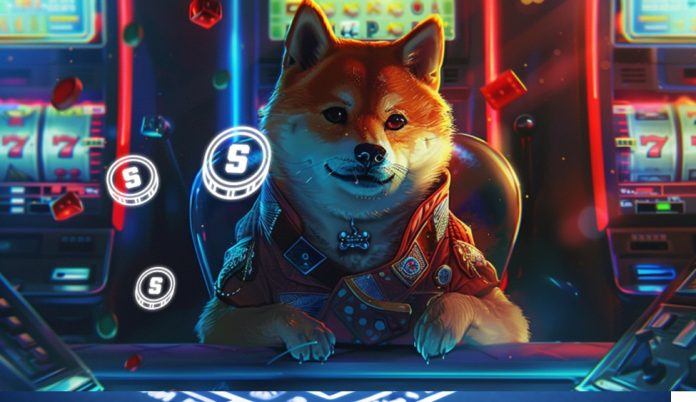
Rollblock (RBLK) does not share this problem with monetization. By focusing on both classic and cutting-edge gambling games, Rollblock ensures that its players are always excited to turn that next card or spin that wheel one more time. Rollblock’s combination of traditional casino fun with the latest crypto innovations has some analysts predicting 100x returns or more in 2024.

The Sandbox Price Signifies Market Trends

The Sandbox crypto token has had a rough year. Although The Sandbox price did manage to almost double at a high of $0.80 during the height of the 2024 crypto boom, The Sandbox then plummeted down to a low of less than $0.30.

The Sandbox crypto token simply does not have enough native revenue generation from trading items in their metaverse. The Sandbox price needs a huge influx of players to drive the token up naturally, as any outside investors’ money will just inflate and deflate again, like during the early 2024 crypto boom.

Low Incentives For Using The Axie Infinity Marketplace Weigh On The Token Price

The Axie Infinity price suffers from a similar issue of a lack of native revenue generation.

While this Pokemon-type game is very popular with the community, there is little reason for the players to trade their pets for the large sums of money that will drive the Axie Infinity price to significant new highs.

The Axie Infinity price first fell from $6 to $4 at the start of 2024. Axie Infinity then grew 3x to $12 during the 2024 crypto boom, before ending the year back at $6.

Rollblock Leads Gaming Tokens With Disruptive Technology

Instead of focusing on niche games with very small audiences, Rollblock has gone with a tried-and-tested gambling platform. Humans have been playing games of chance for thousands of years. Gambling is guaranteed fun that appeals to players of all backgrounds.

Rollblock has ensured that these players can find the perfect games for their gambling desires by providing more than 150 games to choose from. These range from the old classics of poker and roulette to a dizzying array of cutting-edge slot games.

Rollblock is innovating even further by introducing a massive sports betting platform where players can bet on almost every major sport imaginable. This focus on appealing to as broad an audience as possible is how Rollblock is guaranteed to leave other gaming tokens in the dust.

Gambling is now a $450 billion industry that is set to grow even further to $750 billion by 2028 as it becomes increasingly digitized.

Rollblock’s appreciation of the monetization issue goes even further with its commitment to keeping the RBLK token price steadily increasing over time. With this in mind, Rollblock has organized a weekly buyback of $RBLK tokens, using up to 30% of its revenue.

Repurchased tokens are burned or used to pay market-beating APYs for staking, ensuring the demand for RBLK will always outstrip the supply. This approach guarantees that every player will be a winner simply by using the platform’s native token.

With this focus on creating a gaming token that actually generates its own revenue and limits its supply, it is no surprise that some analysts are predicting that the price of RBLK could 100x in 2024 alone.

The token is currently still in presale for the low price of $0.0158. While still only in stage 3 of the presale, analysts are predicting that the growing demand for this token will increase the price another 700% during the course of the presale, so interested investors are encouraged to move before $RBLK soars!

Discover the Exciting Opportunities of the Rollblock (RBLK) Presale Today!

Website: https://presale.rollblock.io/

Socials: https://linktr.ee/rollblockcasino