
DD
MM
YYYY

PAGES

DD
MM
YYYY

spot_img

PAGES

Home Blog Page 3091

Is TRON (TRX) Founder Justin Sun Buying Ethereum Here Due To ETH ETFs Going Live? Ethereum Investors Are Rapidly Accumulating RBLK?

0

Ethereum’s (ETH) price continues to surge following recent whale transactions. One of these whale buyers, Justin Sun, is also the founder of TRON (TRX). According to Coinmarketcap, Sun has acquired over 370,000 ETH since February. This robust investment in Ethereum comes amidst anticipation for ETF approval and has sparked questions from investors about TRON (TRX), Ethereum (ETH), and Ethereum ETFs.

Meanwhile, as Justin Sun’s investments trigger investors’ scrutiny, a new altcoin on the Ethereum blockchain is gaining traction. Rollblock (RBLK) uses blockchain technology to secure transactions in the $450 billion online gambling industry. Its growth potential has captured investors’ interests, and many are stacking $RBLK tokens to prepare for the next bull run.

TRON (TRX) Surges in July By 20% Despite Bitcoin’s Price Fall

Since Justin Sun announced that a gasless stablecoin would be launched in Q4, TRON (TRX) has continued to surge, maintaining its annual all-time high for the past 5 months. Coinmarketcap data shows that TRON (TRX) climbed 20% in just one month and is now trading at $0.137.

This demonstrates market optimism even as the rest of the market folds after Bitcoin’s mini-dump. However, several cryptocurrency experts believe that TRON (TRX) will see a sharp decline in the coming weeks, citing that TRON’s current growth trajectory is unsustainable.

Ethereum ETF To Secure Approval Amidst Regulatory Investigation

Spot Ethereum ETF asset managers updated their S-1 filings to the SEC recently. Among the details made public, the Ethereum ETF fees were set at 0.19%. Analysts and top investors are looking forward to the Ethereum ETF approval this week as it could increase Ethereum’s value and trigger another bull run.

Ethereum has remained on top of the cryptocurrency market as an excellent investment for wealthy or risk-averse investors expecting guaranteed returns. However, investors cannot accurately predict Ethereum’s (ETH) growth as it rises and falls with the rest of the market, with some analysts believing it could see further declines before another rally.

Rollblock (RBLK) to Take Over The $450 Billion Global Gambling Market

Rollblock (RBLK) is a GambleFi protocol that sets itself apart in a highly competitive market with limitless potential. Built on the Ethereum blockchain, Rollblock uses blockchain technology to solve a problem that has plagued millions of gamers in the iGaming sector.

Players placing bets online have reported a lack of transparency and security with many platforms, which leads to their unwillingness to place bets. Rollblock processes all transactions using blockchain technology to ensure they are traceable and cannot be changed. This has attracted over 4,000 new users and thousands of investors who want to benefit from Rollblock’s growing casino.

Rollblock also attracts users by making it easy to access the casino. Instead of requesting KYC verification, Rollblock only needs users to sign up with their email or crypto wallets.

Rollblock (RBLK) operates on a play-to-earn system. Players can earn $RBLK tokens while playing over 150 games on the platform. They can then stake these tokens for more rewards, hold their $RBLK tokens, or withdraw to other cryptocurrencies or fiat.

Investors also benefit from the casino’s growth with Rollblock’s revenue share model. Rollblock sets aside up to 30% of the casino’s daily profits to buy back $RBLK from the open market and burn half to increase the RBLK value and scarcity. The remaining tokens are then shared with investors as rewards.

Rollblock is built to disrupt the global gambling industry as it grows past $740 billion by 2028. Savvy investors who can spot strong growth potential have been joining the presale to take advantage of Rollblock’s current price at $0.0158.

Rollblock only has 1 billion $RBLK tokens, 60% of which are dedicated to the presale. This means once all 600 million tokens are sold in the next few weeks, Rollblock will become a scarce token and get more expensive for investors seeking growth. Experts predict Rollblock’s price could surge by over 800% before the end of the presale, which means investors who stack the $RBLK tokens now will record huge growth in their portfolios, with early adopters already up 58%!

Discover the Exciting Opportunities of the Rollblock (RBLK) Presale Today!

Website: https://presale.rollblock.io/

Socials: https://linktr.ee/rollblockcasino
 

German Government Promotes Ceasefire Operation in Gaza

0

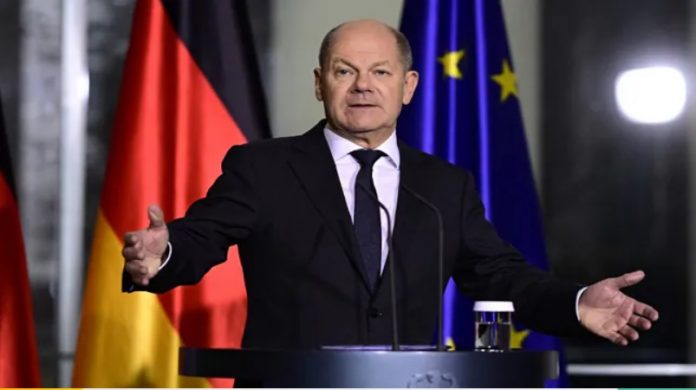
The German government has been actively involved in promoting a ceasefire in the Gaza Strip amidst the ongoing conflict between Israel and Hamas. German Foreign Minister Annalena Baerbock has been particularly vocal, calling for an immediate humanitarian ceasefire to alleviate the suffering of civilians in Gaza. This stance is part of Germany’s broader diplomatic efforts to balance its strong support for Israel with the urgent need to address the humanitarian crisis in Gaza.

The ongoing conflict between Israel and Hamas has had a devastating impact on civilians, particularly in Gaza. The humanitarian crisis in Gaza has worsened significantly, with thousands of casualties and widespread destruction. The blockade and intermittent conflicts have already strained the region’s health infrastructure, leading to shortages of medical supplies and essential services.

The recent escalation has resulted in a high number of civilian deaths and injuries. According to reports, the death toll in Gaza has reached tens of thousands, with many more injured. The conflict has also led to severe disruptions in basic services, including access to clean water, sanitation, and healthcare.

Germany’s approach has included intensive diplomatic missions to the Middle East, aiming to influence all parties involved to end the violence and work towards a sustainable peace solution. Despite these efforts, Germany has faced criticism for abstaining from UN votes on ceasefire resolutions, as these resolutions did not explicitly condemn Hamas’ attacks.

Germany has once again declined requests to supply fighter jets to Ukraine. This decision comes despite calls from opposition leader Friedrich Merz of the Christian Democratic Union (CDU), who argued that providing fighter jets would help Ukraine regain control over its airspace amid increasing missile attacks on infrastructure and civilian areas.

Government spokesman Steffen Hebestreit explained that Ukraine is already set to receive F-16 jets from other Western partners, which Germany does not possess. He emphasized that delivering different types of fighter jets would not be practical due to the extensive training required for each type. The German Defense Ministry also highlighted the importance of countries focusing on their specialized areas of support rather than trying to provide everything.

This stance aligns with previous statements from German Chancellor Olaf Scholz, who has consistently ruled out sending fighter jets to Ukraine, warning against a bidding war for weapons. Scholz has reiterated that NATO is not at war with Russia and that escalation must be avoided. Germany’s commitment to supporting Ukraine remains strong, but it continues to focus on providing aid in areas where it can be most effective.

Germany is providing a wide range of aid to Ukraine, focusing on military, financial, and humanitarian support:

Military Aid: Germany has supplied various types of military equipment, including Leopard 1 tanks, Gepard anti-aircraft guns, and Patriot air defense systems. Additionally, they have provided significant amounts of ammunition and other military supplies. Germany has also trained over 10,000 Ukrainian soldiers.

Financial Aid: Germany has committed substantial financial resources to support Ukraine. This includes funds for security capacity building and contributions to the European Peace Facility, which reimburses EU member states for military assistance provided to Ukraine.

Humanitarian Aid: Germany has been active in providing humanitarian assistance, such as medical supplies, food, and shelter for displaced persons. They have also supported various international organizations working on the ground in Ukraine to deliver essential services.

The German government continues to advocate for humanitarian pauses in the conflict, emphasizing the importance of addressing both the security of Israel and the humanitarian needs of the Palestinian people. This delicate balancing act reflects Germany’s commitment to promoting peace and stability in the region while navigating complex international dynamics.

The psychological impact on civilians, especially children, is profound. Many are dealing with trauma and mental health issues due to the constant threat of violence and loss. International efforts to negotiate a cease-fire have so far been unsuccessful, further exacerbating the humanitarian situation. The situation remains fluid, and the need for humanitarian aid and international intervention is critical to alleviate the suffering of civilians caught in the crossfire.

China’s Green Shoots and Implications for Asia, as Tanzania Pushes out Maasai to attract Rich Tourists

0

The financial landscape is currently buzzing with discussions on several key topics: the overheated stock market, China’s economic green shoots, and the private credit bezzle. Let’s dive into each of these areas.

The stock market has been on a remarkable rally, with indices like the S&P 500 and Dow Jones reaching historic highs. This surge is driven by investor optimism, particularly around advancements in artificial intelligence and other tech innovations. However, experts warn that the market is showing signs of overheating, with valuations soaring to levels that may not be sustainable. This situation raises concerns about a potential correction, where stock prices could sharply decline.

The term “private credit bezzle” refers to the hidden losses or inefficiencies within the private credit market. This market includes a range of non-bank lending activities, such as loans to small and medium-sized enterprises or real estate projects.

China’s economy is showing signs of recovery, often referred to as “green shoots.” These indicators include a resurgence in manufacturing and exports, as well as increased domestic consumption. Despite challenges such as a struggling property sector and global economic uncertainties, some analysts are optimistic about China’s growth prospects. For instance, Goldman Sachs has raised its growth forecast for China, reflecting a more positive outlook.

One of the key areas of improvement is in manufacturing. Recent data shows consecutive months of expanding manufacturing activity, which is a positive sign for the overall economy. Additionally, China’s exports have seen a modest increase, with a 1.5% rise in April compared to the previous year. This growth is partly driven by increased demand from emerging markets and a boost in transportation products.

Domestic consumption is also on the rise. Tourists are spending more per trip, and corporate earnings for some of China’s largest enterprises are looking more optimistic. This uptick in spending and earnings is crucial for sustaining economic growth.

China’s commitment to achieving peak carbon emissions before 2030 and carbon neutrality by 2060 is a major step towards a greener economy. This transition involves significant changes in energy, industry, transport, cities, and land use. As China shifts towards more sustainable practices, it is expected to lead the way in green technologies, creating high-skilled jobs and fostering innovation in renewable energy and energy efficiency.

For Asia, China’s green transition presents both opportunities and challenges. Many Southeast Asian countries, which are heavily export-dependent, have already started to benefit from China’s early recovery by shifting their export destinations to China. This shift helps these countries stabilize their economies and recover from the global economic downturn.

The transition also requires these countries to adapt to new market demands and invest in their own green technologies and sustainable practices. As China reduces its reliance on coal and other fossil fuels, neighboring countries may need to follow suit to remain competitive and align with global climate goals.

However, challenges remain. The property sector continues to face difficulties, and there are concerns about the sustainability of the current growth trends. Analysts are cautious, noting that while these green shoots are promising, they need to be nurtured carefully to ensure long-term stability.

Tanzania Pushing out Maasai to attract Rich Tourists

The Tanzanian government is expanding its nature preserves, aiming to increase the land under conservation from 30% to 50% of the country’s total territory. This initiative is intended to attract more luxury tourism, with significant backing from international partners like Berlin. However, this expansion has led to the displacement of the Maasai people from their ancestral lands, particularly in areas like the Ngorongoro Conservation Area and Loliondo.

The Maasai, a semi-nomadic ethnic group known for their rich cultural heritage and traditional herding lifestyle, have faced forced evictions and significant hardships as a result of these policies. Reports indicate that the Tanzanian authorities have used excessive force, arbitrary arrests, and other forms of mistreatment during these evictions. The displacement has disrupted their access to essential services like healthcare and education, further exacerbating their plight.

Tanzania is making significant strides in boosting its tourism sector, aiming to enhance economic growth and development. The country is renowned for its stunning landscapes, rich wildlife, and cultural heritage, making it a prime destination for travelers.

In recent years, Tanzania has seen a remarkable recovery in its tourism industry, especially after the setbacks caused by the COVID-19 pandemic. The sector is projected to generate substantial revenue, with expectations of up to Sh3.38 trillion in the next financial year. This growth is crucial for the country’s economy, providing jobs and supporting local communities.

However, the push for luxury tourism has also raised concerns. Efforts to expand nature preserves and attract high-end tourists have led to the displacement of Maasai herders from their ancestral lands. This has sparked debates about balancing economic development with the preservation of indigenous cultures and rights.

One of the key initiatives is hosting the East African Community (EAC) Regional Tourism Expo. This event aims to promote the region as a single tourism destination, showcasing its diverse attractions, from tropical beaches to abundant wildlife and scenic landscapes.

The expo, which has already attracted thousands of visitors and numerous exhibitors, focuses on creating awareness about tourism investment opportunities and fostering collaboration among EAC member states. By highlighting the unique offerings of each country, the expo seeks to enhance intra-regional tourism and attract international tourists.

Moreover, the EAC’s Tourism Marketing Strategy, implemented through such events, aims to recover and sustainably develop the tourism and wildlife sectors, which were heavily impacted by the COVID-19 pandemic. This collaborative approach not only boosts tourism revenue but also supports wildlife conservation efforts and creates jobs, contributing significantly to the region’s socio-economic development.

Overall, Tanzania’s tourism strategy highlights the potential for significant economic benefits while also underscoring the need for sustainable and inclusive practices to ensure that all stakeholders benefit from this growth. The EAC aims to enhance cooperation among these nations in various sectors, including economic, political, and social spheres, to promote regional integration and development.

This situation has sparked significant controversy and criticism from human rights organizations and the international community, who argue that the Maasai’s rights and livelihoods are being sacrificed for the sake of tourism development. The Maasai continue to resist these evictions, striving to protect their land and way of life.

IMF Downgrades Nigeria’s Economic Growth Forecast From 3.3% to 3.1%

0

The International Monetary Fund (IMF) has revised its forecast for Nigeria’s economic growth, projecting a slowdown in 2024. In its July 2024 World Economic Outlook, released on Tuesday, the IMF downgraded Nigeria’s growth forecast to 3.1 percent from the previously projected 3.3 percent in April. This adjustment reflects a 0.2 percentage point reduction from the prior forecast.

The IMF attributed the downgrade to lower-than-expected economic activity in the first quarter (Q1) of 2024. Despite this reduction, the IMF maintained its forecast for Nigeria’s economic growth at 3.0 percent for 2025, indicating a stable but modest growth outlook for the country.

Sub-Saharan Africa’s Economic Outlook

In addition to Nigeria, the IMF also revised its forecast for economic growth in the broader sub-Saharan Africa region. The growth forecast for the region in 2024 has been adjusted downward to 3.7 percent from the 3.8 percent projected in April. This revision is closely tied to Nigeria’s economic performance, as the IMF noted that the weaker-than-expected activity in Nigeria’s first quarter significantly impacted the regional forecast.

However, there is a positive note for the future. The IMF increased its forecast for economic growth in sub-Saharan Africa for 2025 to 4.1 percent, up from the April projection of 4.0 percent. This upward revision suggests a more optimistic outlook for the region in the medium term.

Global Economic Projections

Globally, the IMF retained its growth forecast, projecting stable economic growth rates of 3.2 percent in 2024 and 3.3 percent in 2025. The global economic outlook remains broadly unchanged from the April projections, reflecting a steady global economic environment.

For advanced economies, the IMF expects growth to converge over the coming quarters. In the United States, the growth projection for 2024 has been revised downward to 2.6 percent, a 0.1 percentage point reduction from the April forecast. This adjustment is due to a slower-than-expected start to the year. Looking ahead, the IMF anticipates U.S. growth to slow to 1.9 percent in 2025 as the labor market cools and consumption moderates, with fiscal policy beginning to tighten gradually.

By the end of 2025, U.S. growth is projected to align with potential, closing the positive output gap.

Global Inflation Trends

On the inflation front, the IMF forecasts a continued decline in global inflation. In advanced economies, the pace of disinflation is expected to slow in 2024 and 2025. The IMF attributes this slower pace to persistent inflation in service prices and higher commodity prices. However, the gradual cooling of labor markets, coupled with an expected decline in energy prices, should bring headline inflation back to target by the end of 2025.

For emerging markets and developing economies, the IMF predicts that inflation will remain higher and drop more slowly than in advanced economies. Despite this, inflation in these economies is already nearing pre-pandemic levels, partly due to falling energy prices.

Implications for Nigeria and Sub-Saharan Africa

The revised forecasts for Nigeria and sub-Saharan Africa highlight several key challenges and opportunities for the region. The downgraded growth forecast for Nigeria in 2024 underscores the need for robust economic policies and reforms to stimulate growth and address structural issues within the economy.

The potential for increased growth in 2025, both for Nigeria and sub-Saharan Africa, suggests that with the right policy measures, the region can achieve significant economic improvements. Key areas of focus should include enhancing infrastructure, improving governance, and fostering a conducive environment for investment and private sector development.

Nigeria’s Economic Challenges and Government Response

The revised projection is an indication that the Nigerian government under President Bola Tinubu is yet to come up with a clear economic plan that effectively addresses the current challenges. Inflation has continued to rise, particularly food inflation, which has hit 41 percent, pushing many Nigerians to the edge.

The government’s most effective approach so far has been to distribute food, but this measure has only reached a few among the millions of hungry Nigerians. Economists warn that this approach could further stoke inflation, as it means mopping up scarce food supplies from the markets.

The IMF’s downgrade signals that more comprehensive and effective economic strategies are needed to address Nigeria’s structural problems. These issues include high unemployment rates, a volatile exchange rate, and inadequate infrastructure. The Nigerian government has been advised to urgently implement policies that promote sustainable growth and economic stability.

Like Cryptocurrency, AI Has A Challenge of Growing Energy Demands: Microsoft and Google Consumed More Electricity Than 100 Countries in 2023

0

The burgeoning impact of generative AI, which is reshaping industries as diverse as medicine, education, music, and computing, across the globe, has ushered in a fresh concern. While the world is immersed in the consumption of everything AI has to offer, which goes beyond chatbots and image generation tools, the challenge posed by the technology – significant energy consumption – has been noted.

A recent report noted that the demand for electricity to fuel AI’s rapid growth is staggering, raising environmental and logistical concerns that are yet to be fully addressed.

The power consumption of AI has become a critical issue as the technology matures. According to recent reports, major AI developers like Microsoft and Google consumed a combined 48 TWh (terawatt-hours) of electricity in 2023 alone, with each company using 24 TWh. This consumption level surpasses that of over 100 nations, including countries like Ghana and Tunisia, according to a detailed analysis by Michael Thomas.

To put this into perspective, the energy needs of Microsoft’s and Google’s AI operations could meet the entire electricity consumption of Azerbaijan, a nation with a population of 10.14 million and an estimated GDP of $78.7 billion.

Electricity consumption is not the only concern. AI systems also require substantial amounts of water for cooling. It has been noted that a single AI query can use as much water as a standard water bottle.

The environmental degradation associated with AI advancements mirrors concerns previously raised about cryptocurrency mining. Cryptocurrency, particularly Bitcoin, has been criticized for its massive energy consumption. The energy-intensive process of mining Bitcoin led to significant environmental concerns, contributing to China’s decision to ban cryptocurrency mining in 2021.

The country cited the substantial electricity consumption and its environmental impact as primary reasons for the ban. Bitcoin mining’s power demands were so high that, at its peak, it consumed more electricity annually than countries like Argentina and Ukraine combined.

Despite the clear parallels between AI and cryptocurrency in terms of energy consumption, no country, including the United States, is taking substantial steps to address the electricity usage challenges posed by AI.

This lack of action is concerning, given the exponential growth in AI applications and the associated energy demands. AI’s extensive use of resources, which underlines its impact on the environment is emerging amid efforts by companies like Google and Microsoft to champion renewable energy and seek alternative power sources.

Elon Musk, cofounder of OpenAI and founder of xAI, Grok, has been vocal about the potential dangers of unchecked AI growth. Musk has warned that we are on the verge of a significant technological breakthrough with AI, but there may not be enough power to sustain its advancements by 2025.

However, in response to these challenges, some AI leaders are exploring alternative power sources. Sam Altman, CEO of OpenAI, is investigating nuclear fusion as a potential solution to power AI systems. Microsoft has also taken steps in this direction, partnering with Helion to develop nuclear fusion technology. Helion aims to generate nuclear energy by 2028, with current efforts focused on training large language models (LLMs) to expedite the regulatory process.

While nuclear fusion promises a non-existent environmental impact, many scientists and researchers argue it may be too late to address the climate crisis solely with this technology. They suggest that fission and renewable energy sources might offer more immediate and practical solutions.

The high AI energy consumption poses a challenge to the financial success of AI-driven companies like Microsoft. The economic incentives for continued AI development are notable in Microsoft’s market valuation, which recently surpassed $3 trillion, a milestone attributed to its early adoption and investment in AI.

CEO Satya Nadella credited the company’s financial performance, including increases in revenue, operating income, and net income, to the transformative potential of AI. However, this economic success further complicates the issue, as the drive for profit may overshadow the environmental and logistical challenges associated with AI’s energy demands.

The US has been reluctant to roll out regulations to address other AI concerns. Though the Senate has introduced a bill dubbed COPIED Act to address some of the issues, it largely focused on the deepfake concerns. Also, the European Union’s AI Act, even though it covers a wide range of issues, did not touch energy consumption. This means that AI’s high energy consumption is a fresh concern that policymakers must include in their cart of things to do about AI.