DD
MM
YYYY

PAGES

DD
MM
YYYY

spot_img

PAGES

Home Blog Page 3096

Germany’s Acceleration in Electric Vehicle Race

0

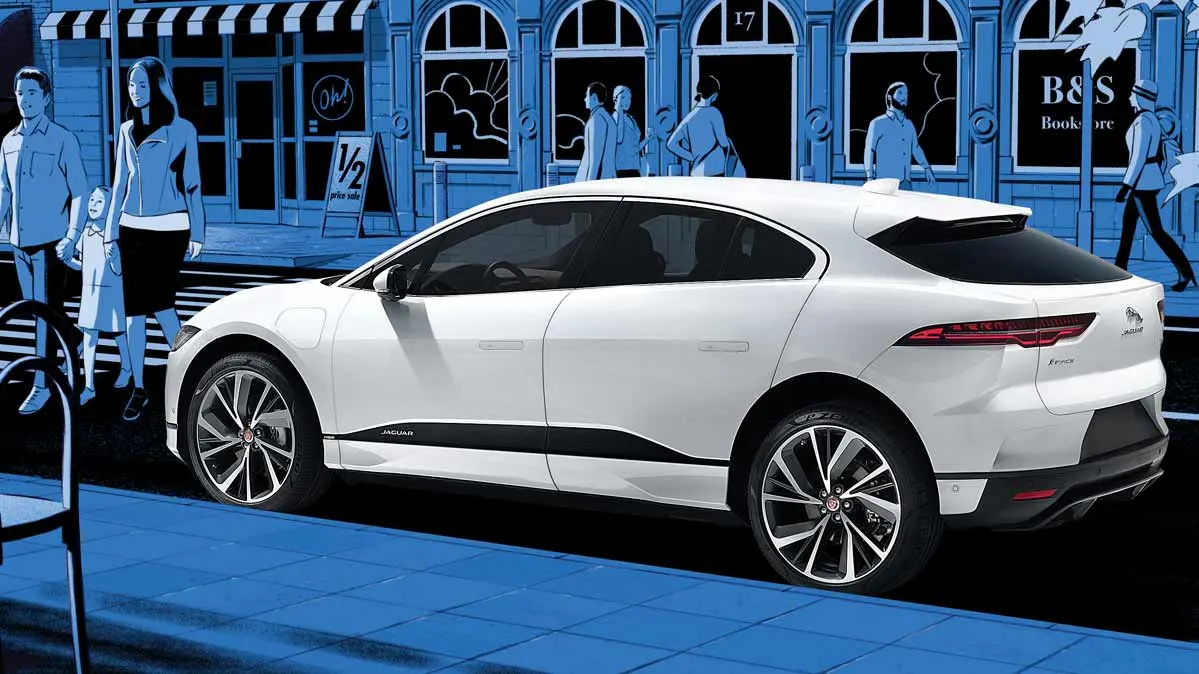
Germany, a nation renowned for its engineering excellence and automotive prowess, has made significant strides in the electric vehicle (EV) sector. As of 2024, Germany has solidified its position as the third-largest market for electric cars globally, trailing only behind China and the United States. This achievement marks a pivotal moment in the country’s automotive history, reflecting a conscious shift towards sustainable mobility.

The journey to this milestone began years ago, with German automakers committing to an electric future amidst growing environmental concerns and stringent emissions regulations. In 2023, Volkswagen led the charge as the largest electric car brand in Germany, with the Tesla Model Y being the most popular battery-electric vehicle (BEV) among German consumers. The market share for electric cars in Germany saw a moderate increase to 18.4%, indicating a steady, albeit slower, growth compared to previous years.

The landscape of electric vehicles in Germany is diverse, with a range of models catering to various consumer preferences. From the sleek and innovative Tesla Model Y to the practical and efficient VW ID.4/ID.5, and the robust Skoda Enyaq, the German market offers a plethora of choices for potential EV owners. This variety is crucial in a market where consumer needs are as varied as the vehicles themselves.

Despite the progress, the journey hasn’t been without its challenges. The abrupt cancellation of subsidies for private buyers in late 2023 introduced uncertainty into the market, potentially impacting sales in the early months of 2024. Moreover, the German auto industry has faced criticism for concentrating on the higher end of the market, leaving room for more affordable options from international competitors.

Germany’s ambitious goals for electric vehicle (EV) adoption face several significant challenges that could hinder the transition from traditional combustion engines to cleaner electric alternatives. One of the primary obstacles is the high cost of electric cars, which remains a deterrent for many potential buyers. The manufacturing of EV batteries contributes to the overall price tag, making electric cars more expensive than their diesel or petrol counterparts.

Another major concern is the range anxiety associated with electric cars. Many consumers are hesitant to switch to EVs due to fears of limited driving range and the availability of charging stations. This is compounded by the current inadequacy of charging infrastructure, which struggles to meet the growing demand for electric vehicles.

Environmental benefits, often a selling point for electric cars, have also been called into question. Some consumers remain skeptical about the actual environmental impact of EVs, considering the entire lifecycle from production to disposal.

Furthermore, the abrupt cancellation of subsidies for private buyers in late 2023 has introduced uncertainty into the market, potentially affecting sales and consumer confidence. This change in policy may slow down the momentum gained in previous years, as subsidies played a crucial role in making EVs more accessible to a broader audience.

Looking ahead, Germany’s commitment to expanding its charging infrastructure and potential policies to mandate a percentage of new vehicle sales to be electric could further bolster the EV market. Such initiatives would not only support the growth of electric vehicles but also contribute to the country’s broader environmental goals.

Germany’s ascent to the third spot in the global ranking of electric car usage is a testament to the country’s adaptability and forward-thinking approach to mobility. With continued innovation and supportive policies, Germany is well-positioned to maintain its momentum in the electric vehicle revolution, driving towards a greener and more sustainable future on the roads.
Trump Announces Ambitious Plan to Make The United States The Crypto Capital of The World

0

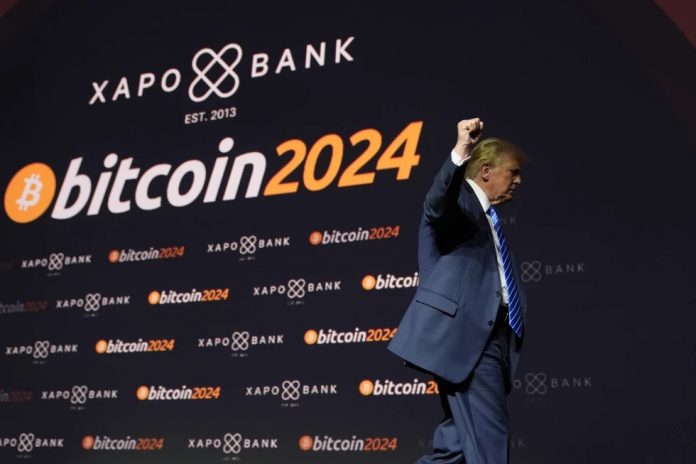
Former United States President and current Republican presidential aspirant Donald Trump has announced his ambitious plan to establish the United States as the global capital for cryptocurrency. This announcement was made at the Bitcoin conference in Nashville held on Saturday 27, 2024.

While speaking at the event, Trump said,

“This afternoon I’m laying out my plan to ensure that the United States will be the crypto capital of the planet and the Bitcoin superpower of the world, and we’ll get it done”.

He further stated that if he becomes president, he would ensure that the US government retains its Bitcoin holdings indefinitely. “For too long our government has violated the Cardinal rule that every Bitcoiner knows by heart: Never sell your Bitcoin”, he remarked.

Throughout his speech, Trump outlined the Republican party’s plan to embrace crypto and roll out friendly policies, as against that of President Biden’s administration which he said has taken a hard regulatory approach to crypto.

“The Biden-Harris administration’s repression of crypto and Bitcoin is wrong and it’s very bad for our country. Let me tell you if they win this election, every one of you will be gone. They will be vicious. They will be ruthless. They will do things that you wouldn’t believe”, Trump stated.

Also, Trump further made a shocking statement on his plans to fire the U.S. chairman of the Securities and Exchange Commission (SEC), Gary. S Gensler, who he said has taken an aggressive approach to crypto regulation in the country.

It is understood that since his first year as the head of the SEC, Gensler has been consistent in his stance that most cryptocurrencies fit the definition of securities used for gambling, which presents a systemic risk for the economy.

As the adoption of crypto continues to surge, Gensler has called for an aggressive approach to policing cryptocurrency as the industry’s surging growth has rattled the financial world. In 2021, while testifying before the Senate Banking Committee, he argued that the vast majority of digital assets traded over crypto exchanges need to register with the SEC so the agency can protect investors against abuses.

“It’s a highly speculative asset class,” Gensler said, expressing skepticism about claims by crypto advocates that it offers a path to financial independence for smaller investors.

Trump’s recent crypto-friendly stance is coming as the race to capture the votes of US citizens takes center stage in the 2024 presidential contest. Meanwhile, about five years ago, Trump had starkly opposed the decentralized tokens. In a post made on X (formerly Twitter) in July 2019, Trump said he is not a fan of Bitcoin and other Cryptocurrencies.

He wrote, “I am not a fan of Bitcoin and other Cryptocurrencies, which are not money, and whose value is highly volatile and based on thin air. Unregulated Crypto Assets can facilitate unlawful behavior, including drug trade and other illegal activity.”

Fast forward to May 2024, Trump completed a total flip-flop on his stance regarding cryptocurrencies, becoming the first major presidential candidate to accept Bitcoin donations. Notably, this sharp change in policy stance has appeased many crypto supporters, which could be a crucial deciding factor for his victory in the election in November this year.

However, as regards Trump’s recent support for cryptocurrency, Co-founder of the decentralized blockchain and development platform Ethereum, Vitalik Buterin, has issued a stern warning against choosing a candidate purely based on whether they claim to be “pro-crypto.

Vitalik via a blogpost wrote that if one notices a politician being crypto-friendly, one important thing that they can do is look up their views on crypto five years ago.

Similarly, he urged them to check up on their views on related topics such as encrypted messaging five years ago. This according to him, can be a good guide on what kinds of changes to their views might happen five years in the future.

LemFi Enters The Latin American Market, Expands International Payment Services to Brazil And Mexico

0

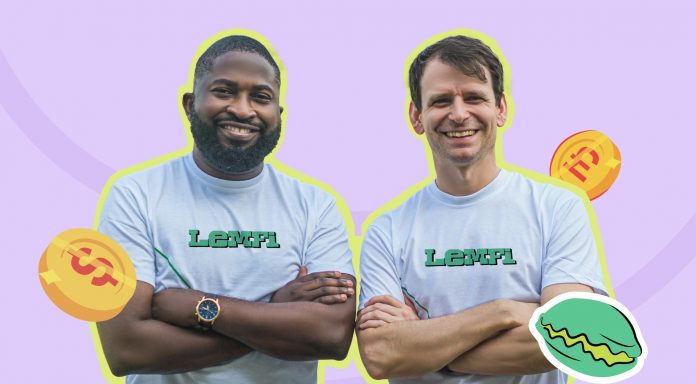
LemFi, a leading fintech company that has expanded to Latin America after it announced the expansion of its International payment services to Brazil and Mexico.

This strategic move aims to enhance cross-border payment capabilities and provide seamless financial solutions to individuals and businesses in these vibrant markets.

LemFi’s expansion into Brazil and Mexico is set to address the growing demand for efficient and reliable international payment services in Latin America. By leveraging its advanced technology and robust platform, LemFi aims to facilitate faster, more cost-effective transactions, catering to the needs of both personal and business clients.

Speaking on its recent expansion, Rebeca Wignall, LemFi’s General Counsel said,

“Since our inception in 2020, we have been committed to reshaping how people move their money internationally. Our expansion to serve the Latin American diaspora underscores our global growth ambitions and our desire to be the choice remittance platform for everyone, everywhere.”

Brazil and Mexico are among the largest economies in Latin America, with significant potential for growth in the fintech sector. LemFi’s entry into these markets is a strategic decision to tap into the increasing demand for digital financial solutions. The company’s innovative approach and user-friendly platform are anticipated to gain rapid acceptance among consumers and businesses seeking reliable international payment options.

With a recent launch in the United States, a US$33 Million Series A raise, recent expansions to China, India, and Pakistan, and planned expansions to other diverse markets, LemFi has proven to have the team, resources, and strategies to deliver on the promise of reliability, cost-effectiveness, and value, helping the Latin American diaspora be more financially connected to home. 

In 2023, the Central Bank of Nigeria (CBN) granted LemFi an IMTO license as a remittance provider. The Fintech provides global financial services to immigrants and enables users to send money to over 21 countries across the world.

LemFi also offers a multi-currency account for immigrants to hold, send, and receive money in both the currencies of their home country and that of their host country. Users can also send money to more than 30 countries.

The fintech invites everyone who needs to stay in touch with their homes in Mexico, Brazil, and beyond to experience innovative products and services through its Mobile App, which can be downloaded from the Google Play Store, the Apple App Store, or the website. 

Notably, LemFi will continue to expand to diverse markets and innovate, delivering easy-to-use and cost-effective ways to move money safely across the globe. 

Kamala Harris Gains On Political Market Share, Justifying The Democratic Party New Model

0

If you look deep in the market, Boards of companies do one critical thing: hire a CEO to lead a firm. And the CEO has to do another important thing: commit a firm to a business model (or models), arising out of a company’s strategy framework. In other words, you hire a CEO to commit a company to a business model!

In politics, the leadership of political parties are the Board. The product is the campaign and here the revenue is measured in votes since the “customers” are the voters. As in companies, the CEO must architect a business model to take that product to the customers. And who that CEO is matters. In US presidential politics, the CEO is the nominee or the candidate.

The intra-party candidates have largely the same products – Republican and Democratic parties have core tenets which govern them. Those are the values of the firm (here, the party). From those values, candidates draw visions and missions, getting down to the operational business models to win votes (the revenue here).

They fired and replaced that CEO and within quarters, the loss-making company is making money. Why? The new CEO  has changed the business model while using the same staff and products. That also happens in politics: just changing a person can shift the perceptions of the customers  who are expected to deliver the revenue (the votes), because a person does have the capacity to rewire the model of a party and extrapolate its essence.

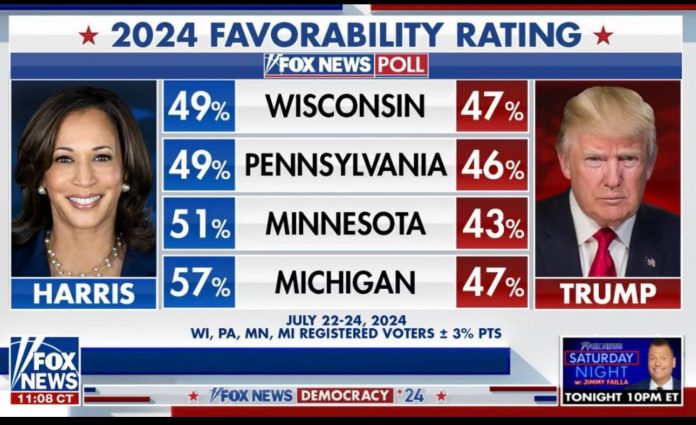
The Democratic Party has a new “CEO” and the operating model upon their product (the campaign) has changed, and the customers (voters) seem to be buying into everything. For the Republican party, they now need to update their own model to move into new positioning in the market. It is about who wins the market share, across the swing states.  This is business. This is politics. This is America. May the best win!

Now, let me ask you: “Do you believe this FOX NEWS poll?” Lol

Mike Ejeagha sues Brain Jotter for copyright infringement over the gwo gwo gwo viral video?

0

What if Gentleman Mike Ejeagha or his estate decide to sue Brain Jotter for using his song for the gwo gwo Gwo video without his consent or authorization as many lawyers and online semi-lawyers have advised? 

Well, from my experience having handled similar cases like this, this is how it will play out!

Once there’s a contest on ownership or accusation of intellectual property theft or litigation on copyright infringement on a music or video, every digital platform that Brain Jotter uploaded the video (including YouTube, Instagram, Facebook, Snapchat, Tiktok and X) will take down the video, or the sound or the music on the video will be muted while the video will be allowed to remain on the platform. 

Knowing how much these platforms pay now for viral contents, that the video must have generated hundreds of thousands of dollars; calculations will be made and every money Brain Jotter have made from that particular video in every platform it was uploaded will be split into half and half will be ordered to go to Gentleman Mike Ejeagha or to his estate since he is the owner of the song.

The court will also award damages against Brain Jotter for copyright infringement or for using the song without the consent or authorization of Mike Ejeagha or his representatives. 

I know this is not what most of you was expecting to hear but there is no need to get sentimental or emotional over this, this is how the law works especially intellectual property laws but I’m sure that Mike Ejeagha and his representatives are enjoying the trend and won’t want to breed rancor by approaching the court; his estate may likely ask for more money and the Brain Jotter that I know will definitely take care of the man and pay him more money as an honorarium or as homage but it’s not everything that should be taken to court, the court should always be the last resort. Let’s all enjoy this trend as trends like these are the things that distract Nigerians from economic hardship and keep us sane. I forgot to mention that litigation is expensive and it takes time, if this case goes to court, it might even spend up to 10 years in court before judgment will be given. 

What Mike Ejeagha and those who care about him should be more concerned about is how he will get paid the royalties accruing to the song/album now that the album, Akuko N’ Egwu which contains the song  is topping the charts so that it will be paid directly to him or directly to his estate and not to some distributor. Hopefully, they haven’t sold out the right to the song/album. The royalties from the digital streams and digital usage like TikTok, Instagram, Facebook, Snapchat usage etc  should be running into hundreds of thousands of dollars already.