DD
MM
YYYY

PAGES

DD
MM
YYYY

spot_img

PAGES

Home Blog Page 3096

Dangote Refinery to List on Nigerian Stock Exchange by Q1 2025

0

Aliko Dangote, President of the Dangote Group, has revealed ambitious plans to list the fertilizer and petrochemical business of the Dangote Refinery on the stock exchange in the first quarter of 2025.

This announcement comes at a time when the refinery, Africa’s largest, is grappling with significant challenges in securing a steady supply of crude oil.

During a media briefing at the Dangote Refinery, Aliko Dangote emphasized the importance of involving Nigerians in the ownership of the refinery and its associated businesses.

“Because of the nature of the business we have, both the refinery and the fertilizer, we are targeting end of this year but it depends, most likely, worst case we will be able to list them before the end of first quarter of next year, so that we will sell shares and Nigerians will buy.” Dangote stated

This move follows recent reports that Dangote plans to pursue dual listings of the refinery on both the London and Nigerian stock exchanges. Dangote has a history of listing many of his businesses, such as Dangote Cement, which is currently the most capitalized company in Nigeria with a market valuation exceeding N11 trillion.

The refinery has previously held stakes by entities like the Nigerian National Petroleum Corporation (NNPC). However, Dangote revealed on Sunday that the state-owned company holds only a 7.2% stake in the refinery, not the 20% that was previously reported.

The Dangote Refinery, positioned as Africa’s largest oil refinery and the world’s largest single-train facility, is poised to transform Nigeria’s oil industry. Situated in the Lekki Free Trade Zone, this state-of-the-art facility boasts a production capacity of 650,000 barrels per day (bpd).

The refinery includes a 900 ktpa polypropylene plant, a 36 ktpa sulfur plant, and a 585 ktpa carbon black production unit. It features a total storage capacity of 4.5 billion liters, ensuring Nigeria’s crude and gasoline requirements for 20 and 15 days, respectively.

After completing its test run in January 2024, the refinery transitioned to steady-state production by March 2024. Production is set to increase to 500,000 bpd by August 2024, 550,000 bpd by the end of the year, and reach its full capacity of 650,000 bpd by the first quarter of 2025. Gasoline production is expected to commence in July 2024, with sales starting in August. The annual revenue from the refinery is projected to exceed $26 billion.

Crude Oil Supply Challenges

Despite its advanced infrastructure and ambitious targets, the Dangote Refinery faces a significant hurdle: securing a consistent supply of crude oil. The inability of the NNPC to provide adequate crude has forced the refinery to look beyond Nigerian borders. As a result, the Dangote Refinery has begun sourcing crude oil from international markets, including the United States, Brazil, and other countries.

However, sourcing crude oil from international markets has logistical and financial implications for the refinery. While the refinery is expected to reduce the cost of petroleum products in the country, analysts have warned that importing crude oil means higher transportation costs and longer lead times, which can disrupt production schedules and increase the overall cost of refining. These additional costs are likely to be passed on to consumers, potentially impacting the price of petroleum products in Nigeria.

Moreover, analysts have pointed out that relying on international crude suppliers exposes the refinery to global market fluctuations and geopolitical risks. Any disruption in supply chains, such as political instability in supplier countries or changes in international trade policies, could adversely affect the refinery’s operations.

In response to these challenges, the Dangote Refinery has made strategic adjustments to its operations. The facility’s configuration has been optimized to minimize the production of low-value products and maximize the output of more profitable crudes and products. This flexibility allows the refinery to adjust its production based on the quality and cost of the crude oil available, thereby enhancing its economic viability.

Additionally, the large-scale operation of the refinery helps to reduce production costs and enables it to serve a vast market efficiently. By leveraging economies of scale, the Dangote Refinery aims to maintain competitive pricing despite the higher costs associated with importing crude oil.

The listing of the refinery and its associated businesses on the stock exchange is expected to provide a significant boost to the company’s capital base. The influx of investment from public shareholders is expected to enable the refinery to expand its operations, invest in new technologies, and possibly secure more stable sources of crude oil in the long term.
BlockDAG’s Latest Update: Dev Release 72 Boosts Blockchain Explorer and Multiplies Passive Income ROI by 30,000X

0

BlockDAG has reaffirmed its dedication to innovation and community engagement with the rollout of Dev Release 72. This update centers on refining the Blockchain Explorer, incorporating insights from an internal demonstration. The goal is to enhance user experience and technical functionality, reinforcing BlockDAG’s position as a prominent blockchain platform. Concurrently, BlockDAG is captivating investor interest by offering extraordinary passive income opportunities, with potential returns up to 30,000X.

BlockDAG’s Passive Income Streams Lure Investors

BlockDAG excels as a robust blockchain network that provides varied income opportunities for its community. Here, investors can generate passive income through multiple channels. BlockDAG’s initiative enables participants to see their initial investments flourish as the project progresses.

Pioneering members enjoy asset appreciation as BlockDAG lists on major exchanges. Moreover, BlockDAG introduces user-friendly mobile mining, converting smartphones into mining devices through the X1 mining app, now active. BlockDAG offers specialized ASIC-based X series miners for those seeking enhanced mining capabilities. Additionally, after launch, users can sell their mining units on platforms like eBay or Amazon, potentially at elevated prices.

BlockDAG also presents a referral rewards program, offering a 10% bonus for each investment made via their referrals. By distributing an exclusive link to friends, family, and others, users can enhance their investment returns as they widen their network in BDAG.

BlockDAG’s presale provides early access to its BDAG coin, giving investors a premier opportunity with early entry. Initial investors could realize returns of 30,000x their initial stake. The presale is moving swiftly, with Batch 1 starting at $0.001 and the latest Batch 20 at $0.015. Thus far, BlockDAG has attracted $58.3 million in presale from over 12.1 billion BDAG coins, demonstrating strong demand and confidence in the initiative.

Dev Release 72: Enhancing the Blockchain Explorer

In Dev Release 72, BlockDAG utilized an internal demo of its Blockchain Explorer to gather critical feedback for improvements. Key enhancement areas include design, responsiveness, and technical performance, aiming to elevate the user experience. Feedback indicated a need for a more intuitive layout and easier navigation. Changes will improve the placement of essential elements for smoother browsing.

The explorer’s mobile responsiveness will be optimized through CSS adjustments and media queries. The visual scheme will be adjusted for enhanced readability, and subtle loading indicators will be added to enhance user interaction during data retrieval.

API calls will be optimized for faster data access and decreased latency, enhancing overall performance. Caching mechanisms will store frequently accessed data to speed up loading times and decrease server demand. Database indexing will be refined for quicker query responses, and error handling will be enhanced to give users clearer messages and developers better debugging tools.

Additional protective measures, including rate limiting and improved input validation, will be implemented to guard against potential security threats. These upgrades aim to provide a smoother, more engaging Blockchain Explorer, underscoring BlockDAG’s commitment to continual improvement and user satisfaction.

Final Thoughts

BlockDAG’s Dev Release 72 is a pivotal enhancement to the user experience and technical performance of its Blockchain Explorer. Inspired by valuable community feedback, the refinements promise a more fluid and effective user interface. Alongside these technical upgrades, BlockDAG offers diverse passive income opportunities, drawing considerable investor interest. With its thriving presale and innovative mining solutions, BlockDAG remains on a path of growth and innovation within the blockchain sector.


Invest in the BlockDAG Presale Now:

Website: https://blockdag.network

Presale: https://purchase.blockdag.network

Telegram: https://t.me/blockDAGnetwork

Discord: https://discord.gg/Q7BxghMVyu

Experts Recommend Buying ETFSwap (ETFS) If You Want A Repeat Of The Avalanche (AVAX) And Polygon (MATIC) Run In 2021

1

In 2021, Polygon (MATIC) and Avalanche (AVAX) experienced a meteoric price uptrend, with the native AVAX and MATIC tokens hitting all-time highs of $144.96 and $2.92, respectively. It’s 2024, and major crypto investment and price action experts have alerted investors to buy ETFSwap (ETFS) for a repeat and more of the Avalanche (AVAX) and Polygon (MATIC) 2021 bull runs.

Avalanche (AVAX) Made Investors Millions in 2021

The Avalanche (AVAX) price uptrend in 2021 was very profitable to its early investors as the native AVAX token hit its highest-ever price in November of that year. In February 2021, Avalanche went on an upward momentum, peaked at $55. In August 2021, Avalanche launched a $180 million liquidity mining incentive program that would allow users of the Avalanche ecosystem access and use certain Ethereum DeFi protocols to earn AVAX tokens. Consequently, Avalanche (AVAX) soared to a new high of $76 in that same month.

Avalanche (AVAX) eventually closed 2021 with an all-time high of $144.96 upon pronounced success of its ecosystem innovations and widespread adoption of its utilities.

ETFSwap (ETFS) Poised To Repeat And Surpass The 2021 Run Of Avalanche (AVAX) And Polygon (MATIC)

Tipped by major price action and crypto investment experts to repeat and surpass the 2021 run of Polygon (MATIC) and Avalanche (AVAX), ETFSwap (ETFS) is offering the Web3 world a groundbreaking ETF ecosystem that transcends the space into a more lucrative one. ETFSwap (ETFS), through its utility ETFS token, is powering a dedicated tokenization platform for exchange-traded funds (ETFs) in cryptocurrency.

ETFSwap (ETFS) allows crypto users the opportunity to trade lucrative real-world commodities like oil, gas, gold, and many more on the blockchain at massive leverages of up to 100X. Experts say that ETFSwap (ETFS) has a very high ceiling as its ecosystem is at the forefront of a transformative Web3 era by establishing the world’s first decentralized protocol that provides permissionless access to institutional ETFs.

ETFSwap (ETFS) is launching its beta platform in less than 30 days with a native ETF Screener and Tracker, and major crypto market makers and whales are anticipating it. This ETF tracker and screener advances crypto trading with its AI-powered big data analysis, which uses predictive and sentimental analysis to analyze the market trades of major market makers like Grayscale and Fidelity for accurate trade signals.

More so, ETFSwap is one of the most transparent ecosystems, as it recently secured investor compliance with SolidProof KYC. Users can hereby rest assured that their ETF positions and investment portfolios are safe.

The ETFS token is powering all these groundbreaking innovations, and it is set to receive major market adoption. Little wonder major whales are buying into its ongoing presale at a steal offer of $0.01831.With close to 500 million tokens already sold, you might not get a better time to make millions than now.

Polygon (MATIC) Shot High In 2021

Just like Avalanche (AVAX), Polygon (MATIC) shot high in 2021 as its native AVAX token hit an all-time high of $2.92 on December 26, 2021. In 2021, Polygon (MATIC) powered tens of thousands of dApp interactions on the blockchain, with its native MATIC token as the powering utility. Consequently, many whales bought into Polygon (MATIC) to secure its network by delegating MATIC tokens.

Polygon (MATIC) has also been leveraging core blockchain solutions to reduce the energy emissions of smart contract building and other DeFi transactions. Consequently, keeping its blockchain relatively profitable even though its native MATIC token has significantly dipped from its 2021 high.

Why ETFSwap (ETFS) Will Repeat and Surpass The 2021 Run Of Avalanche (AVAX) And Polygon (MATIC)

ETFSwap (ETFS) powers a revolutionary ecosystem that is advancing the horizons of Web3 delivery with its hybrid institutional ETF mechanism. Hence, its high-liquid financial instrument classes are set to push its ETFS token past the highs of the AVAX and MATIC tokens

The ETFS token is still selling at $0.01831. Hence, Crypto investment analysts say now is the best time to join the presale before the window closes.


For more information about the ETFS Presale:

 Visit ETFSwap Presale

Join The ETFSwap Community

By 2030, Earn $600 Daily with BlockDAG’s X1 Mining App | Cosmos Price Increase & Solana ETF Surge

0

As Cosmos (ATOM) shows bullish momentum, investors are closely monitoring its price to optimize their investments. Meanwhile, excitement over the Solana spot ETF has surged, further boosting Solana’s value.

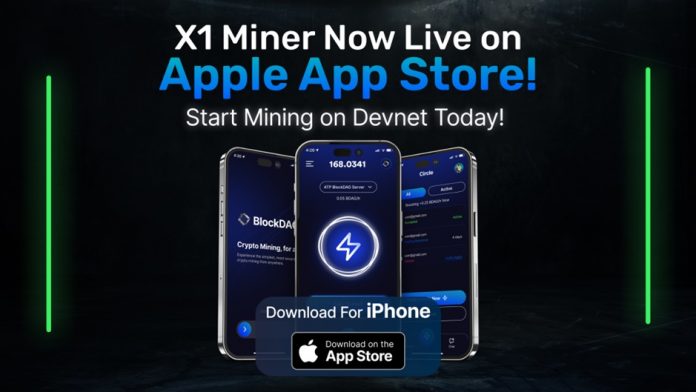
However, BlockDAG (BDAG) stands out as the best cryptocurrency for the future, thanks to its X1 Miner App. Now live on Apple’s App Store, it features easy onboarding. Users can register within seconds and start mining, potentially earning $600 daily by 2030 when BlockDAG reaches $30, as predicted by analysts. Designed for user experience, BlockDAG is a top choice for digital mining.

Cosmos Price Boosted by New Valence Protocol

Cosmos Hub (ATOM), a leading layer-zero blockchain, has launched the Valence protocol to boost its price. With a valuation of approximately $2.56 billion, Cosmos Hub strengthens its position in the cryptocurrency landscape. The Valence protocol, developed by Timewave, enhances the interchain ecosystem.

Valence works with Cosmos’ Inter-Blockchain Communication (IBC) project, facilitating economic relationships between crypto-native organizations. Its launch promotes mass adoption of the Cosmos ecosystem. Despite recent price declines, Valence is expected to drive growth and adoption.

Surge in Activity Amid Solana Spot ETF Excitement

Solana (SOL) has experienced increased on-chain activity due to excitement over Solana spot ETFs. VanEck and 21Shares have filed for a Solana spot ETF, igniting investor interest and driving Solana’s price up from $124 to $153.

ETFSwap (ETFS) has also emerged as a promising investment opportunity amid the ETF buzz. The growing interest in Solana spot ETFs is expected to push prices higher, with investors eagerly watching for further gains.

BlockDAG’s X1 Miner Boasts Easy Onboarding & Big Earnings

The X1 Miner App is revolutionizing cryptocurrency mining within the BlockDAG ecosystem. The app’s quick registration process allows users to sign up with their phone numbers, granting instant access to mining functionalities. This seamless onboarding eliminates complex setups, enabling anyone to start mining immediately.

By pressing the “Activate BlockDAG X1” button, users can earn 0.83 BDAG coins per hour without draining device resources. Users can mine up to 20 BDAG coins daily, with potential increases through a referral system. Daily engagement prepares users for the transition from Devnet to Mainnet, where mined BDAG coins will become tradable assets, ensuring a secure and optimized mining experience.

In the current Batch 20, BlockDAG has shown impressive growth, with a 1400% increase since the initial batch. It has raised $58.3 million from the sales of 12.2 billion coins and 9,000+ mining rigs. Analysts predict BDAG coins will reach $30 by 2030.

With this price prediction, the X1 Miner App could potentially earn users up to $600 daily by mining 20 BDAG coins, translating to easy and significant profits. The app simplifies entry into cryptocurrency mining while promising substantial future earnings. Its user-centric design and community-driven rewards system make it a key player in digital mining.

Final Say

While Cosmos price attracts attention and Solana spot ETFs excite investors, BlockDAG stands out for mining and investment. The X1 Miner App’s easy onboarding and significant earning potential make it a standout choice. With potential daily earnings of up to $600 when BDAG hits $30 by 2030, BlockDAG offers unparalleled opportunities for both novice and seasoned miners. As the crypto market evolves, BlockDAG’s growth and innovation ensure it remains a leading player in digital mining.


Join BlockDAG Presale Now:

Website: https://blockdag.network

Presale: https://purchase.blockdag.network

Telegram: https://t.me/blockDAGnetworkOfficial

Discord: https://discord.gg/Q7BxghMVyu


Rising Food Prices Pushes Nigeria’s Inflation to 34.19% in June 2024

0

Nigeria’s inflation has defied all efforts by the government, rising once again in June to a record 34.19%, according to the latest report from the Nigerian Bureau of Statistics (NBS).

The headline inflation was up from 33.95% in May 2024, marking an increase of 0.24 percentage points within a month and a substantial year-on-year jump of 11.40 percentage points from the 22.79% recorded in June 2023.

The report highlighted that on a month-on-month basis, the headline inflation rate in June 2024 was 2.31%, a 0.17 percentage point rise from the 2.14% recorded in May 2024.

“The percentage change in the average Consumer Price Index (CPI) for the twelve months ending June 2024 over the previous twelve-month period was 30.00%, showing an 8.45 percentage point increase compared to the 21.54% recorded in June 2023,” it said.

Urban areas are feeling the brunt of the inflationary pressures more acutely. The urban inflation rate in June 2024 was 36.55% on a year-on-year basis, 12.23 percentage points higher than the 24.33% recorded in June 2023. On a month-on-month basis, urban inflation rose to 2.46% in June 2024, up from 2.35% in May 2024.

The NBS said, “The twelve-month average for urban inflation was 32.08%, reflecting a 9.70 percentage point increase from the previous year.”

In contrast, rural areas, while still experiencing significant inflation, have slightly lower rates. The rural inflation rate in June 2024 was 32.09% year-on-year, up by 10.71 percentage points from the 21.37% recorded in June 2023.

“On a month-on-month basis, rural inflation increased to 2.17% in June 2024 from 1.94% in May 2024,” the report said. It added that “the twelve-month average for rural inflation was 28.15%, a rise of 7.39 percentage points from June 2023.”

Food inflation remains the most concerning aspect of Nigeria’s economic woes. The food inflation rate in June 2024 was a staggering 40.87% year-on-year, up by 15.62 percentage points from 25.25% in June 2023.

The increase in food prices was driven by rising costs of essential items such as millet, garri, guinea corn, yams, water yams, coco yams, groundnut oil, palm oil, and various fish products.

On a month-on-month basis, the food inflation rate was 2.55% in June 2024, a 0.26 percentage point rise from 2.28% in May 2024.

The NBS attributed this increase primarily to higher prices for groundnut oil, palm oil, water yams, coco yams, cassava, tobacco, fresh catfish, croaker, mudfish, and snails.

Economists have noted that Nigeria’s rising food inflation is a direct consequence of insufficient local food production, with the nation restricting food importation.

The core inflation rate, which excludes the prices of volatile agricultural produce and energy, stood at 27.40% year-on-year in June 2024, up by 7.34 percentage points from 20.06% in June 2023.

“The highest increases were observed in housing rentals, intercity bus journeys, motorcycle journeys, accommodation services, medical consultation fees, laboratory services, X-ray photography, and pharmaceutical products,” the report said.

On a month-on-month basis, the core inflation rate was 2.06% in June 2024, slightly up from 2.01% in May 2024. The average twelve-month annual inflation rate was 24.06% for the twelve months ending June 2024, up by 5.59 percentage points from 18.47% in June 2023.

The NBS report also highlighted significant regional variations in inflation rates. Year-on-year, the highest inflation rates were recorded in Bauchi (43.95%), Kogi (39.91%), and Oyo (39.15%), while Borno (25.90%), Benue (27.52%), and Katsina (29.21%) had the slowest rise. Month-on-month, the highest increases were in Yobe (3.79%), Abuja (3.45%), and Ondo (3.38%), while Nasarawa (0.71%), Osun (1.19%), and Kano (1.27%) recorded the slowest rise.

In terms of food inflation, the highest year-on-year rates were observed in Edo (47.34%), Kogi (46.37%), and Cross River (45.28%), while Nasarawa (34.31%), Bauchi (34.78%), and Adamawa (35.96%) had the slowest rise. Month-on-month, the highest increases were in Yobe (4.75%), Adamawa (4.74%), and Taraba (4.12%), while Nasarawa (0.14%), Kano (0.96%), and Lagos (1.25%) recorded the slowest rise.

In response to the worsening food crisis, the government has been compelled to reverse its earlier decision not to import food. Last week, the federal government announced plans to allow duty-free importation of food items such as maize, rice paddy, and wheat for 150 days to stabilize market prices.

This move, while necessary to address the immediate food shortages, has sparked controversy among local farmers and agricultural associations, who fear it will undermine domestic production efforts.

However, economists believe that the persistent increase in food prices is a clear indicator of the challenges the country faces in local food production. Many note that the Nigerian agricultural sector is struggling to keep up with demand, and this has forced prices to skyrocket.

With headline inflation at 34.19% and food inflation at 40.87%, Nigeria faces a critical challenge in balancing immediate food needs with long-term agricultural sustainability.

Stakeholders in the agricultural sector believe that while the government’s recent decision to allow food imports may offer temporary relief, it underscores the urgent need for a more robust and sustainable approach to food production and economic stability.

They note that investing in agriculture, supporting farmers with better access to resources, and implementing policies that promote self-sufficiency are essential steps to ensure long-term food security and economic stability in Nigeria.