DD
MM
YYYY

PAGES

DD
MM
YYYY

spot_img

PAGES

Home Blog Page 3097

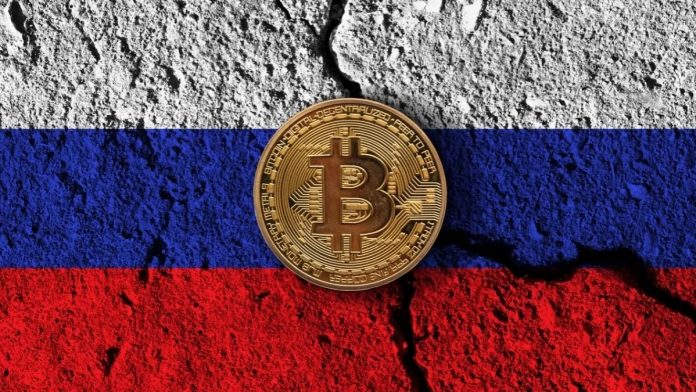
Navigating Russia’s Foray into Cryptocurrency for International Transactions

0

In a strategic pivot, Russia is set to commence the use of cryptocurrencies for international transactions starting September 1st. This move represents a significant shift in the country’s financial strategy, especially in light of the economic sanctions imposed by Western countries. The adoption of digital currencies for cross-border payments is seen as an effort to circumvent these sanctions and facilitate smoother financial exchanges on the global stage.

Cryptocurrency has emerged as a revolutionary force in the financial world, offering a new paradigm for conducting transactions across borders. Its decentralized nature, speed, and cost-effectiveness have made it an attractive option for international trade. However, with these benefits come significant risks that must be carefully considered.

Background of Russia’s Economic Sanctions

The sanctions, which have targeted Russia’s access to traditional payment systems, have necessitated the exploration of alternative transaction methods. Previously, Russia had been largely cut off from the SWIFT international payment system, which significantly hampered its ability to engage in global trade. The sanctions were a response to the geopolitical tensions and conflicts involving Russia, and they aimed to isolate the country economically.

The Shift to Cryptocurrency

In response to these challenges, Russian authorities have turned their attention to cryptocurrencies. The legal groundwork for this shift was laid on August 8th, when President Vladimir Putin signed legislation that legalized the experimental use of cryptocurrencies for international payments and Forex transactions.

This legislation marks a departure from Russia’s earlier stance on digital currencies. Before the conflict in Ukraine in 2022, the Central Bank of Russia had advocated for a total ban on cryptocurrencies. However, the landscape has changed, and now, cryptocurrencies are being embraced as a viable solution for international trade.

Stablecoins, which are digital currencies pegged to traditional fiat currencies, are expected to play a crucial role in these international transactions. The Central Bank of Russia is overseeing the process and is also continuing trials for the digital ruble, which began in August 2023. The digital ruble is part of Russia’s broader plan to integrate cryptocurrencies into its system for international trade, particularly with China, its largest trading partner.

The success of Russia’s cryptocurrency initiative may heavily rely on support from the BRICS nations (Brazil, Russia, India, China, and South Africa). Some of these countries have indicated that they are working on the matter, although their full commitment remains to be seen. The collaboration among these nations could potentially create a new dynamic in international trade, one that is less dependent on traditional Western financial systems.

Despite the potential benefits, there are several challenges that Russia may face in implementing cryptocurrencies for international trade. These include the volatility of cryptocurrency values, technical complexities, and restrictions on cryptocurrency use in certain countries. Moreover, the security measures for these transactions are still a subject of discussion and development.

Russia’s decision to use cryptocurrencies for international transactions is a testament to the evolving nature of global finance. It reflects a world where digital currencies are becoming increasingly mainstream, offering new avenues for countries to engage in trade and commerce. As September 1st approaches, the international community will be watching closely to see how this experiment unfolds and what implications it will have for the future of economic sanctions and cryptocurrency’s role in global trade.

Nigerian Fintech Grey Partners dLocal to Revolutionize Cross-Border Payments in Emerging Markets

0

Grey, a Nigerian fintech company dedicated to simplifying cross-border payments, has announced a strategic partnership with dLocal, a leading payment platform specializing in building out the infrastructure for financial services in Africa, Asia, and Latin America, to revolutionize cross-border payments in emerging markets.

This collaboration marks a significant step towards making global transactions more accessible, affordable, and seamless for millions of users across the globe.

In an increasingly digital world, the challenges of cross-border transactions remain significant, particularly for individuals and businesses in developing countries. Despite advances in digital banking, around 1.7 billion people globally, still lack access to traditional banking services, making global payments costly, slow, and cumbersome. This partnership between Grey and Local is poised to change that by offering a more efficient and affordable solution.

Through this partnership, Grey users in countries such as Brazil, Mexico, Indonesia, South Africa, and the Philippines will be able to send and receive payments instantly into their wallets and bank accounts. This service will be available at a low cost, significantly reducing the financial burden associated with cross-border transactions.

Whether a freelancer working for international clients, a digital nomad in Southeast Asia, or simply sending money to family back home, this collaboration ensures that global transactions are not only faster but also more secure and convenient.

Notably, this partnership is just the beginning of Grey’s broader mission to revolutionize global banking. The fintech is committed to providing seamless and hassle-free banking, experience to users around the world, especially in regions where access to financial services has traditionally been limited.

Since its launch in 2020, with over 50+ employees across six countries, Grey has helped hundreds of people open bank accounts and receive payments from companies worldwide. dLocal on the other hand is constantly through its remarkable feature, is constantly pushing the boundaries of innovation to assist merchants and businesses.

The payment platform currently has over 900 payment methods, with more options and alternatives constantly being added. Through developing cross-border financial infrastructures, the payment platform wants to make it as simple as possible to make a transaction or receive a payment within emerging economies. For anyone merchants and their customers alike.

As Grey forms this strategic partnership with dLocal to expand its reach, it remains dedicated to innovating until everyone, regardless of location, can enjoy limitless banking services. Through this partnership, Grey is taking a significant step towards fulfilling its vision of a world where global payments are no longer a barrier but a gateway to new opportunities for all.

The Fintech is on a mission to make it easier for digital nomads and remote workers to live and work in the modern world.

Brazil’s Supreme Court Blocks Starlink’s Bank Accounts As Feud with Musk Escalates

0

In the latest episode of the escalating tension between Elon Musk and Brazil’s judiciary, the country’s Supreme Court has blocked the local bank accounts of Starlink, Musk’s satellite internet firm, intensifying an ongoing feud that could see X, another of Musk’s companies, pushed out of one of its most significant markets.

Musk, who also helms electric vehicle giant Tesla, has been embroiled in a bitter standoff with Brazil’s Supreme Court, particularly with Justice Alexandre de Moraes, who has emerged as a formidable adversary.

On Thursday, the Supreme Court, through an order signed by Moraes, froze Starlink’s bank accounts in Brazil. This action was taken as part of a broader strategy to compel Musk to comply with a separate court order involving X. The order required Musk to appoint a legal representative for X in Brazil, a requirement the platform had failed to meet by the set deadline of 8:00 p.m. (2300 GMT) on Thursday.

The Supreme Court’s actions have put Musk’s companies on the brink of losing access to one of their largest markets, a move with potentially significant financial repercussions.

The Roots of the Dispute

The origins of this clash date back several months when Brazil’s Supreme Court began ordering X to block accounts accused of spreading misinformation and hate speech, particularly those linked to supporters of far-right former President Jair Bolsonaro. These accounts had been a source of significant controversy, with many being implicated in efforts to undermine Brazil’s democratic processes following Bolsonaro’s electoral defeat in 2022.

Musk, who has positioned himself as a staunch defender of free speech, viewed these orders as antithetical to the platform’s principles. In a defiant move, Musk’s X, which initially complied with some of the court orders, later reversed course, leading to Moraes opening an inquiry into Musk’s businesses in April. This inquiry marked the beginning of a legal battle that has since spiraled into a full-blown standoff.

The situation escalated earlier this month when X announced it was shutting down its operations in Brazil, citing what it described as “censorship orders” from Moraes. However, X continued to operate in the country, keeping its service available to Brazilian users while firing its local staff. Musk’s defiance has been met with increasing pressure from Brazil’s judiciary, culminating in the freezing of Starlink’s bank accounts.

Musk’s Defiant Response

Musk has not taken these actions lying down. In a series of incendiary posts on X, he lashed out at Justice Moraes, labeling him an “evil dictator” and accusing the judge of acting illegally. He also described Moraes as “an outright criminal of the worst kind, masquerading as a judge.”

Musk said that the ruling to freeze Starlink’s accounts was not only unjust but also harmful to ordinary Brazilians who rely on the service. He also announced that SpaceX would provide free internet service to Brazilian users until the legal dispute is resolved.

“This order is based on an unfounded determination that Starlink should be responsible for the fines levied—unconstitutionally—against X,” Starlink wrote in a statement on X. “It was issued in secret and without affording Starlink any of the due process of law guaranteed by the Constitution of Brazil. We intend to address the matter legally.”

The fines in question, which reportedly total at least 20 million reais ($3.6 million), stem from X’s failure to comply with previous court orders. The fines are part of a broader effort by Brazil’s judiciary to hold Musk accountable for his refusal to adhere to the country’s legal requirements.

The Fight for Free Speech and Market Access

The ongoing dispute has raised significant questions about the balance between free speech and efforts to spread harmful content on digital platforms. While Musk argues that the court’s actions amount to censorship, Moraes and other Brazilian officials insist that the measures are necessary to protect the country’s democratic institutions.

Brazil’s President Luiz Inácio Lula da Silva has also weighed in on the matter, subtly backing Moraes by pinning a post on X that listed alternative social media platforms. This move could be interpreted as a signal to Brazilians that there are other ways to communicate online if X becomes inaccessible.

Economically, the stakes are high for Musk. Brazil is one of X’s largest markets, and losing access to the country could deal a significant blow to the platform, which is already struggling with declining advertising revenue. The financial implications for Starlink are also considerable, as the satellite internet service has been touted as a key part of SpaceX’s global strategy.

A Divided Public

Public opinion in Brazil is deeply divided over the dispute. On X, the platform at the center of the controversy, Brazilians have posted memes and commentary, with some siding with Moraes and others defending Musk’s stance on free speech.

The polarized responses reflect the broader societal debates that have emerged in the wake of Bolsonaro’s presidency, with issues of misinformation, judicial overreach, and the role of social media platforms in shaping public discourse all coming to the fore.

It’s Graduation Day – It’s Time to Build | Tekedia Mini-MBA

0
Graduation week tekedia mini-MBA

Good People, it’s graduation week at Tekedia Institute and Tekedia Mini-MBA edition 14 will conclude this weekend. It has been a great academic excursion on the mechanics of market systems. Yes, over the last 13 weeks, more than 80 faculty members have led those excursions across different business topics and domains.

We have mastered the fundamental constructs of business, and acquired skills and knowledge from executives in leading global and local companies, on innovation, business growth and operational execution.

On Saturday, we will have the grand finale with a lecture titled “It’s Graduation Day – It’s Time to Build”. Yes, opportunities everywhere; let’s build solutions and unlock them. Zoom link in the class board.

The #knowledge of a people is the #wealth of a people. To our co-learners, graduating this weekend, you are #ready2lead . To experience our quality and join the next edition of Tekedia Mini-MBA which begins on Sept 9, go here and register 

Uniswap Killer DTX Exchange Moves Ahead With Successful Testnet Launch, Here’s Why TRX Holders Buy The Dip

0

Tron (TRX) has been in bullish mode throughout the market downtrend, and it is still resisting the pullback while Bitcoin once again broke below $60,000.

Meanwhile, DTX Exchange (DTX) Uniswap (UNI) killer, called by experts, is working as a UNI killer. After the DTX testnet launched last week, Uniswap (UNI) has fallen more than 20% and slid below the $6 level. DTX Exchange is expected to take over the billion-dollar exchange industry with its innovative technology and community-focused approach.

New Ethereum Linked Memecoin Surges On Uniswap (UNI)

A meme coin, a new connection to Ethereum’s genesis block, soared rapidly to the top of the Uniswap (UNI) trading charts on the 28th of August. The data we see tells us that the PHIL token, recently introduced by a wallet supported by Ethereum’s Genesis block, grew in popularity very quickly on Uniswap V2. A few hours after the launch, the token got over $125 million in capitalization and became the most innovative coin.

PHIL is now being exchanged on the decentralized exchange Uniswap (UNI) V2, with the current price standing at about $0.06, down from $0.1356, its peak price only an hour after the launch. The research data provided by DEX Screener indicates that PHIL became the most traded asset by volume on Uniswap (UNI), and trading volumes soared by 86,000% from the beginning until now. The coin’s market cap is now over $68 million.

DTX Exchange (DTX): Bringing New Era In Trading

DTX Exchange is quickly gaining recognition for its wide range of potential benefits and strong security features, which are why it has become the most interesting investment to large-scale investors, such as those from Uniswap (UNI) and Tron (TRX). Analysts are predicting considerable gains.

The platform is the most suitable option for large-scale investors because of its exclusive benefits and strong security features. In contrast to conventional centralized exchanges (CEXs), DTX Exchange is based on an Ethereum blockchain, thus offering a secure and transparent trading environment.

DTX’s positive movement is driven by ongoing partnerships with other exchanges, new blockchain integrations, and upcoming DeFi features. These activities are expected to contribute to improved liquidity, increase the user base, and facilitate easy exchange of assets between platforms, thus making DTX the top participant in the DeFi sector.

The market is witnessing a recovery process following the recent downtrends, and DTX’s cutting-edge layer-1 blockchain technology is the project that you should pay attention to in the coming months. With the possibility of earning income and the optimism for growth and extension, DTX Exchange promises to become a leader in the new cycle and era of industry trading.

Why Is Tron (TRX) Surging Amid The Market Fall?

The main reason behind the continuous rise of Tron (TRX) is the significant increase in daily active addresses on the Tron (TRX) network, indicating growing interest and usage. The higher transaction volume also reflects increased activity and confidence in the network.

According to data from the crypto intelligence tracker Artemis Terminal, Tron (TRX) TVL grew from $8.3 billion on Friday to $8.6 billion on Monday, continuing an upward trend. Additionally, data shows that Tron (TRX) Chain’s decentralized exchange (DEX) trading volume surged from $237.9 million on Friday to $280.4 million on Monday, reaching its highest level since December 2022.

Visit DTX Presal