DD
MM
YYYY

PAGES

DD
MM
YYYY

spot_img

PAGES

Home Blog Page 31

Bitcoin Surges Past $74,000 as Geopolitical Tensions Rise, Market Eyes Further Upside

0

Bitcoin climbed above the $74,000 mark on Monday, reaching an intraday high of $74,471 as rising geopolitical tensions in the Middle East fueled renewed momentum in the cryptocurrency market.

The rally comes as investors increasingly look to digital assets as alternative stores of value during periods of global uncertainty.

According to a market note from QCP Capital, the market may be heading toward “a late-quarter plot twist,” as both Bitcoin and Ethereum began the week with strong upward momentum. While Bitcoin broke through a key resistance level above $74,000, Ethereum followed closely behind, trading near $2,700.

Market analysts note that Bitcoin is showing early signs of recovery after successfully defending a major confluence support zone. The strong reaction from this level suggests buyers have stepped in aggressively to absorb selling pressure, potentially laying the groundwork for a broader bullish reversal.

The recent price surge has also triggered significant liquidations in the derivatives market. Over the past 24 hours, short positions across the crypto market totaling approximately $300 million were wiped out. Data Coinglass shows that Bitcoin futures open interest rose by about 6% during the same period, climbing to $49.2 billion.

Commenting on the trend, Coinglass noted that the simultaneous rise in both price and open interest has historically preceded periods of heightened volatility. “New fuel is building again,” the firm said, suggesting that the market may be preparing for another major move.

Technical analysts have also pointed to Bitcoin’s consolidation around the 200-week exponential moving average (EMA) and the weekly fair value gap between $70,000 and $76,000 as key signals that market dynamics may be shifting. According to crypto analytics platform Cryptorphic, the current price action indicates a transition from accumulation and absorption into the early stages of a potential trend reversal.

Bitcoin’s rally also coincides with strong institutional demand. The world’s largest cryptocurrency recently benefited from significant purchases by Michael Saylor through his firm MicroStrategy, alongside continued inflows into spot Bitcoin exchange-traded funds. Analysts at Laser Digital, a digital asset unit backed by Nomura, highlighted these factors as key drivers of the latest price momentum.

Meanwhile, Chris Beauchamp, chief market analyst at IG Group, noted that Bitcoin appears to be carving out its own niche amid broader market volatility.

“Everything else seems to live or die based on oil prices,” Beauchamp said. “Bitcoin has been immune to that. It’s been finding its own little haven niche.”

Notably, crypto analyst Michael van de Poppe believes the rally could extend further, suggesting that stronger performance from Ethereum may help propel Bitcoin toward the $80,000 level.

However, market commentator Ted Pillows warned that Bitcoin may face heavy resistance between $75,000 and $76,000. According to him, the asset could briefly break above $76,000 before reversing sharply and falling back below $60,000.

Similarly, Arthur Hayes, former CEO of BitMEX, recently cautioned that persistent macroeconomic and geopolitical instability could trigger a deeper correction, potentially pushing Bitcoin below the $60,000 mark.

Outlook

Despite short-term uncertainty, the broader outlook for Bitcoin remains cautiously bullish. Analysts say the cryptocurrency appears to be breaking out of a prolonged compression phase, which could signal the formation of a higher-timeframe base.

If Bitcoin manages to maintain strength above the $74,000 level, the next major target for bulls would be around $80,600, a price zone that previously served as a breakdown point. A successful push beyond that level could open the door for further gains.

For now, investors remain focused on whether the cryptocurrency can sustain its momentum amid geopolitical developments and evolving macroeconomic conditions.

German SMEs Feeling Economic Crunch from US Trade Policies 

0

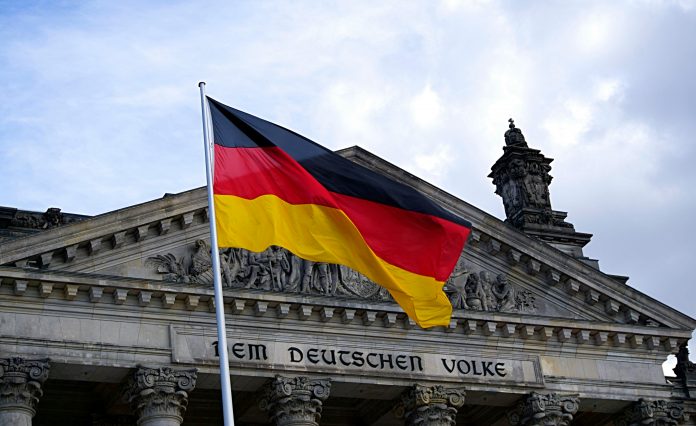
Recent surveys and economic data confirm that German small and medium-sized enterprises (SMEs, often called “Mittelstand”) are feeling a significant economic crunch from US trade policies, particularly the tariffs and unpredictable measures implemented under President Donald Trump’s second term starting in 2025.

A fresh survey highlighted in reports from March 14, 2026 via dpa and others, shows that policies under US President Donald Trump are having a negative impact on more than half of German SMEs with business ties to the United States. This aligns with broader trends where US tariffs—such as baseline rates around 15% on many EU imports following adjustments from initial higher threats, plus elevated duties on sectors like steel, aluminum, autos, and machinery—have disrupted transatlantic trade.

German exports to the US fell sharply in 2025, by about 9.4% (January-November compared to 2024), totaling around €136 billion, according to Germany’s federal statistics office (Destatis). Sectors hit hardest include automobiles (down 14%), machinery (9.5%), and chemicals—areas where many SMEs operate as suppliers or specialized exporters.

Over two-thirds of companies cite trade policy uncertainty as a major obstacle, with 54% reporting rising costs from customs procedures and bureaucracy per DIHK surveys. Many SMEs face higher administrative burdens and reduced competitiveness in the US market.

German investments in the US dropped nearly 45% in Trump’s first year back driven by tariff fears and a weaker dollar. This affects not just large firms but also SMEs reliant on US markets or supply chains. Among German companies with US operations, expectations have soured dramatically—only 14% anticipate economic improvement in the near term down from 38% in late 2024, while 44% foresee a downturn.

While some larger German firms with US manufacturing presence report mixed effects; 86% negatively impacted by tariffs but some benefiting from local advantages, SMEs—often more export-dependent and less able to relocate production—are disproportionately vulnerable. Many are shifting focus to the EU single market or other regions to mitigate losses, but overall, these policies contribute to Germany’s ongoing economic challenges, including stagnation risks.

Intra-European trade has provided some offset, helping total German exports hold up better despite the US slump. However, the “zigzag” nature of US policy continues to foster uncertainty, hampering investment and growth for these vital backbone companies of the German economy.

SMEs, often more export-reliant and less able to absorb costs or relocate than large corporations, focus on cost reduction, risk diversification, and adaptation rather than full confrontation. A top response, with over half of affected firms (per DIHK surveys) planning to scale back US operations or redirect sales.

Many shift emphasis to the EU single market, Asia including surging investments in China for local production to serve that market, or other regions like Latin America or emerging economies. This helps offset the ~9% drop in US exports seen in 2025 by tapping intra-European trade and non-US growth areas. Companies review and reconfigure supply chains to minimize tariff exposure, such as sourcing components from non-tariffed countries, using third-party assemblers in lower-tariff regions, or increasing local content in products exported to the US.

For those with resources, nearshoring or even limited reshoring reduces import duties. Detailed supply chain mapping is often the first step recommended by consultants like KPMG to identify vulnerabilities and optimize flows.

Innovation plays a big role: companies like Implantcast (high-tech prosthetics) offset hikes by emphasizing advanced, irreplaceable products (e.g., growing tumor prostheses) that justify premium pricing despite duties. Many redirect efforts to bolster sales within Europe, where no tariffs apply, and advocate for stronger EU policies.

Business associations push for unified EU responses, including potential countermeasures, to protect industries. This includes exploring financial hedging tools to manage currency and cost volatility from trade uncertainty. Pursuing tariff refunds or exemptions where possible, reviewing contracts for force majeure or price adjustment clauses, and minimizing bureaucracy through better customs compliance.

Some explore US-based partnerships or distributors to establish a more local presence without full relocation. While many suspend or reduce US investment, others with existing footprints increase them modestly in 2026—focusing on workforce development, digital transformation including AI, and local manufacturing advantages to bypass import tariffs. Larger SMEs or those in protected niches benefit from this, as US production shields against duties.

These strategies reflect a pragmatic shift: accepting some short-term pain while building long-term resilience through diversification and efficiency. Uncertainty from “zigzag” US policies remains a top burden, so flexibility is key. Larger German firms sometimes absorb costs or expand US plants, but SMEs lean more on market pivots and innovation due to limited scale. If tariffs ease or new deals emerge, many expect a rebound—but for now, adaptation dominates.

Gold Slips As Oil Shock From Iran War Fuels Inflation Fears And Complicates Central Bank Outlook

0

Gold prices edged lower on Monday as investors reassessed the economic consequences of surging oil prices triggered by the war involving Iran, with growing concern that the resulting inflation shock could force major central banks to keep interest rates higher for longer.

Spot gold fell 0.3% to $5,001.61 per ounce by 11:10 GMT, while U.S. gold futures for April delivery declined 1.1% to $5,007.20, as traders shifted focus from immediate geopolitical tensions toward the longer-term implications for inflation and monetary policy.

The retreat comes after a strong rally in bullion in recent months, driven by geopolitical tensions and expectations that global central banks—particularly the Federal Reserve—would begin easing interest rates as inflation cooled.

Analysts say the latest oil-driven inflation risk is forcing markets to rethink that outlook.

“The gold market has moved its focus from looking at the implications of the Hormuz trade closure, and towards implications of longer-term inflation,” said Bernard Dahdah, an analyst at Natixis.

“Higher oil prices mean higher inflation and this has repercussions on the Fed. The Fed could pivot, stop cutting rates and that puts downward pressure on gold prices,” he added.

Energy markets have been at the center of the latest volatility. Oil prices have climbed above $100 per barrel, rising more than 40% this month to their highest level since 2022 after military strikes by the United States and Israel on Iranian targets triggered retaliatory action from Tehran.

Iran subsequently halted shipments through the critical Strait of Hormuz, a narrow maritime corridor between Iran and Oman that normally handles roughly one-fifth of global oil and liquefied natural gas shipments. The disruption has rattled global energy markets and revived fears of an oil supply shock similar to past geopolitical crises in the Gulf region.

For financial markets, the spike in crude prices has immediate implications. Higher energy costs typically feed into transportation, manufacturing, and consumer goods prices, pushing inflation higher across economies. That dynamic complicates the policy outlook for central banks that had only recently begun to see progress in their fight against inflation.

Central Banks Face Critical Week

The inflation risk tied to the Iran conflict arrives just as several of the world’s most influential central banks prepare to make policy decisions this week. The Federal Reserve begins a two-day policy meeting, with investors widely expecting officials to hold interest rates steady. Markets will closely watch the central bank’s statement and economic projections for clues about how policymakers view the impact of higher oil prices.

At the same time, the European Central Bank, Bank of England, and Bank of Japan are also holding policy meetings this week, making it one of the most important weeks for global monetary policy this year.

The simultaneous meetings underscore how the Iran conflict is rapidly becoming a global economic concern, forcing policymakers to weigh the risk of renewed inflation against the possibility that geopolitical tensions could slow economic growth.

Central banks now face a delicate balancing act.

On one hand, rising energy costs could push inflation higher and potentially require tighter monetary policy to prevent price pressures from spreading across the economy. On the other hand, a prolonged conflict in the Middle East could weigh on global growth, disrupt trade flows, and undermine business confidence—factors that would normally argue for looser policy.

Analysts at UBS said policymakers are likely to tread carefully.

“But we expect central banks to be watchful of inflation risks without making knee-jerk policy rate hikes,” the bank said in a note.

The outcome of these deliberations will be closely watched by investors, particularly in markets such as gold that are highly sensitive to interest rate expectations.

While rising interest rates typically weigh on gold—because the metal does not generate interest income—geopolitical instability often pushes investors toward bullion as a store of value. That competing dynamic explains why gold prices have remained near historic highs even as markets debate the future path of interest rates.

If the conflict involving Iran intensifies or spreads across the region, analysts say safe-haven demand could offset the pressure from higher yields.

UBS noted that prolonged instability could ultimately support the precious metal.

“In addition, the longer the U.S.-Iran conflict goes on, the higher the risk of negative economic impacts, which should support hedging demand for gold,” the bank said.

Precious Metals Show Mixed Performance

Other precious metals moved in different directions during Monday’s trading session as investors adjusted positions ahead of the wave of central bank decisions.

Spot silver dropped 2.1% to $78.86 per ounce, tracking broader weakness in metals markets. Meanwhile, platinum climbed 2.6% to $2,076.23, supported by expectations of tighter supply in industrial markets, while palladium slipped 0.3% to $1,547.14.

For global investors, the coming days could prove decisive. Monetary policy signals from the world’s leading central banks, combined with developments in the Middle East conflict, are likely to determine whether gold resumes its upward momentum or faces further pressure from shifting expectations around inflation and interest rates.

Nvidia and Palantir’s Partnership Delivers AI Operating System for Unbreakable Sovereignty 

0

Nvidia and Palantir Technologies announced a partnership to deliver what they’re calling a Sovereign AI Operating System Reference Architecture often referred to as an “AI operating system” or AI OS reference architecture.

This is not a traditional consumer OS like Windows or macOS, but a reference blueprint for building complete, production-ready AI infrastructure—essentially a turnkey AI data center stack. It combines: Nvidia’s hardware and infrastructure: Based on Nvidia Enterprise Reference Architectures, featuring Blackwell Ultra systems (with eight GPUs per setup) and Spectrum-X Ethernet networking for high-performance AI training and inference.

Palantir’s software suite: Fully integrated and tested to run Palantir’s platforms, including AIP (Artificial Intelligence Platform), Foundry, Apollo, Rubix, and AIP Hub. The focus is on sovereign AI—enabling governments, enterprises, and organizations to deploy AI systems with full data control and sovereignty.

This allows end-to-end management from hardware procurement to application deployment, emphasizing security, control, and independence. This builds on their earlier collaboration, where Palantir integrated Nvidia’s accelerated computing, CUDA-X libraries, and open-source Nemotron models into its Ontology framework for operational AI in enterprises and government contexts.

The announcement came during Palantir’s AIPCon 9 event, highlighting applications in defense, national security, supply chains, and complex industrial operations. It’s positioned as a way to operationalize AI at scale while maintaining sovereignty over data and infrastructure.

Reactions on X range from excitement about the tech stack’s potential to concerns about its implications for control, privacy, and power given Palantir’s history with government and intelligence work and Nvidia’s dominance in AI comput. Some view it as a step toward an “AI-first” foundational layer, akin to how OSes shaped past computing eras.

This deepens the integration between Nvidia’s compute leadership and Palantir’s data and intelligence platforms, targeting massive opportunities in sovereign and enterprise AI infrastructure.

Sovereign AI refers to the ability of nations, governments, enterprises, or organizations to develop, train, deploy, and control AI systems using their own infrastructure, data, workforce, models, and governance frameworks—rather than relying heavily on foreign cloud providers, third-party platforms, or external dependencies.

This approach, emphasized in partnerships like the recent Nvidia-Palantir Sovereign AI Operating System Reference Architecture, enables full-stack control from hardware to software while prioritizing data residency, security, and independence. Sovereign AI addresses growing concerns around data control, geopolitical risks, compliance, and economic competitiveness in an AI-driven world.

Sensitive data (personal, national security, intellectual property, or proprietary business information) stays within national borders or controlled environments. This minimizes risks of breaches, unauthorized access, foreign surveillance, or data leakage to external providers.

It enables tailored security measures like zero-trust access, encryption, and isolated processing—crucial for regulated sectors like healthcare, finance, defense, and government. Sovereign AI makes it easier to meet strict local and international laws. Organizations can demonstrate full visibility into data handling, model training, and decision-making processes, avoiding penalties, fines, or market access restrictions.

This is especially valuable in cross-border operations or highly regulated industries. By owning or controlling the AI stack, entities avoid disruptions from geopolitical tensions, vendor lock-in, service outages, export controls, or changes in foreign policies. This builds business continuity and strategic independence—protecting against “compute divides” where access to advanced GPUs or cloud resources is limited.

AI models can be trained on local languages, cultures, histories, datasets, and needs—leading to more accurate, relevant, and effective applications e.g., preserving indigenous languages, addressing region-specific challenges in healthcare or supply chains. This drives better performance, user trust, and innovation aligned with national or organizational values.

Sovereign AI keeps economic value domestic rather than flowing to foreign tech giants. It fosters local ecosystems, talent development, high-tech industries, and compounding GDP growth e.g., projections of trillions in global AI value, with sovereign approaches capturing more locally. First-movers gain differentiation, trust from stakeholders, and the ability to customize AI for strategic goals.

For governments and critical infrastructure, sovereign AI safeguards against external influence, ensures control over mission-critical applications e.g., defense, intelligence, energy grids, and aligns AI deployment with national priorities—positioning countries as leaders in the global digital economy.

In the context of the Nvidia-Palantir partnership, this “AI operating system” reference architecture delivers a turnkey, production-ready stack for on-premises, edge, or sovereign cloud deployments—emphasizing speed, efficiency, trust, and total control over data, models, and applications. It’s particularly targeted at defense, national security, enterprises with latency-sensitive or distributed needs, and entities requiring unbreakable sovereignty.

While sovereign AI requires significant investment in infrastructure and talent, its proponents argue the long-term payoffs in security, autonomy, and value capture far outweigh the costs—especially as AI becomes foundational to economies and societies.

UniCredit Launches Offer to Cross 30% Threshold in Commerzbank, Signaling Potential Path Toward Greater Influence Without Full Takeover

0

UniCredit SpA has announced that it intends to build its stake in Commerzbank AG above the critical 30% threshold that would trigger a mandatory offer for all remaining shares under German takeover law.

The move positions UniCredit to gain significant influence over Germany’s second-largest commercial bank while carefully navigating the regulatory and capital implications of a full takeover.

UniCredit already holds approximately 28% of Commerzbank, consisting of 26.04% in direct shares and the balance through total return swaps. The new offer is structured as an exchange ratio of 0.485 UniCredit shares per Commerzbank share, implying a price of €30.80 per Commerzbank share — a 4% premium to the pre-announcement closing price.

UniCredit CEO Andrea Orcel emphasized that the bank does not intend to push its stake “significantly above 30%.” A full takeover scenario, he said, remains “remote,” as acquiring 100% of Commerzbank would consume approximately 200 basis points of UniCredit’s CET1 capital ratio — a material hit to its regulatory buffer.

Orcel reiterated this stance in comments reported by Reuters and echoed remarks he made to CNBC in June 2025, when he described Commerzbank’s then-share price as too high for a merger.

The offer is expected to formally launch at the beginning of May, subject to regulatory approvals. UniCredit has scheduled an Extraordinary General Meeting on May 4 to seek shareholder authorization for the capital increase required to fund the exchange offer.

Commerzbank’s ownership structure adds complexity to the transaction. The German government remains the largest shareholder with a 12.72% stake, followed by BlackRock (5.73%) and Norges Bank Investment Management (3.14%). Under German takeover rules, crossing 30% triggers a mandatory bid for all outstanding shares at a fair price — a mechanism designed to protect minority shareholders. UniCredit’s carefully calibrated approach aims to cross the threshold without triggering immediate full control, preserving flexibility while increasing its board-level influence.

The German Federal Financial Supervisory Authority (BaFin) and the European Central Bank (ECB), as joint supervisors for significant institutions, will scrutinize the transaction for financial stability and competition implications. The European Commission may also review the deal under EU merger rules if it meets turnover thresholds.

UniCredit shares have declined 10.5% year-to-date, while Commerzbank’s stock has fallen more than 18% in 2026, reflecting broader pressures on European banks, including higher funding costs, geopolitical uncertainty, and slower loan growth. The proposed €30.80 per-share offer represents a modest premium but could be viewed as opportunistic given Commerzbank’s depressed valuation relative to book value and peers.

Analysts see the move as a continuation of Orcel’s long-standing interest in consolidation within European banking — a theme he has pursued since taking the helm in 2021. Previous attempts at mergers or stake-building in other European banks have faced political and regulatory resistance, particularly in Germany, where Commerzbank retains significant symbolic importance as a domestically rooted lender with deep ties to the Mittelstand (mid-sized enterprises).

UniCredit has long argued that European banking remains fragmented and inefficient compared with U.S. and Asian peers. A meaningful stake in Commerzbank would give UniCredit influence over a major player in Germany — Europe’s largest economy — potentially enabling cost synergies, cross-border product offerings, and enhanced scale in corporate and investment banking.

However, risks remain substantial:

  • Political opposition in Germany, where a foreign takeover (even partial) could face resistance from policymakers and unions.
  • Capital consumption, with a full takeover requiring significant equity issuance or asset sales.
  • Integration challenges, given differences in business models, corporate cultures, and regulatory environments.
  • Market volatility, with both banks’ shares under pressure from macroeconomic headwinds and geopolitical uncertainty.

Orcel’s comments suggest UniCredit is pursuing a controlled, incremental approach rather than an outright acquisition — a strategy that minimizes capital strain while maximizing strategic leverage.

The offer’s formal launch in May will mark a critical milestone. If it successfully crosses 30%, UniCredit would gain a board seat and veto rights on certain strategic decisions, significantly deepening its footprint in Germany without the full financial and political burden of a takeover.

For now, the deal remains in the early stages, with shareholder approval, regulatory clearance, and market conditions all potential hurdles. But the outcome is expected to shape the future of European financial services.