

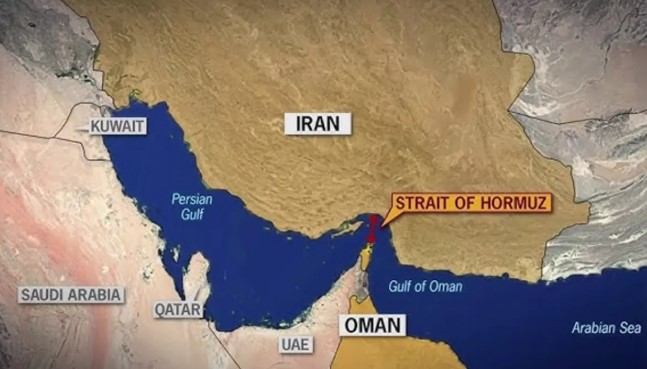
The United States is stepping up efforts to assemble an international maritime coalition to reopen the Strait of Hormuz, but the initiative is unfolding against a backdrop of strained alliances and mounting skepticism over the war that triggered the crisis.
According to a State Department cable approved by Secretary of State Marco Rubio, the initiative, called the Maritime Freedom Construct (MFC), is being positioned as the foundation of a broader, post-conflict security architecture for the region. Washington is seeking partners to restore shipping through one of the world’s most critical energy corridors.
“The MFC constitutes a critical first step in the establishment of a ?post-conflict maritime security architecture for the Middle East. This framework is essential ?to ensuring long-term energy security, protecting critical maritime infrastructure, and maintaining navigational rights and ?freedoms in vital sea lanes,” the cable said.
Register for the next Tekedia Mini-MBA.
Register for Tekedia AI in Business Masterclass.
Join Tekedia Capital Syndicate and co-invest in great global startups.
The Strait, which previously handled roughly a fifth of global oil and gas flows, has been effectively paralyzed since Iran imposed a blockade following U.S.-Israeli strikes earlier this year.
The State Department would act as the central coordinating hub between participating governments and the commercial shipping industry, while the Pentagon, operating through United States Central Command, would oversee real-time maritime coordination, including direct communication with vessels navigating the strait.
U.S. embassies have been instructed to approach partner nations with flexibility on participation. Contributions could range from diplomatic backing and intelligence sharing to sanctions enforcement and naval deployments.

“We welcome all levels of engagement and do not expect your country to shift naval assets and resources away from existing regional maritime constructs and organizations,” the cable said, suggesting Washington is seeking broad alignment without forcing allies into costly redeployments.
Notably, the outreach excludes strategic rivals, including China, Russia, Belarus, and Cuba, reinforcing the geopolitical fault lines shaping the response. That exclusion could limit the initiative’s global reach, particularly given China’s role as a major importer of Gulf energy and its growing naval presence in the region.
But the initiative highlights a more fundamental challenge confronting President Donald Trump: the difficulty of rallying traditional allies behind a conflict many did not support from the outset.

European governments, including Germany, Spain, and Italy, have already ruled out immediate military participation in securing the waterway, favoring de-escalation and diplomacy instead. The reluctance points out a broader unease with the origins of the conflict, widely viewed in diplomatic circles as a unilateral escalation that bypassed NATO consultation.
That tension is now playing out openly between Washington and Berlin. German Chancellor Friedrich Merz has reaffirmed his country’s commitment to transatlantic ties, but stopped short of endorsing direct military involvement, signaling support only under tightly defined conditions.
Merz had stated that the U.S. is being humiliated by Iran – a statement that got Trump riled up.
“An entire nation is being humiliated by the Iranian leadership, especially by these so-called Revolutionary Guards. And so I hope that this ends as quickly as possible.”
Trump, for his part, rebuked Merz publicly, accusing him of interfering in U.S. policy on Iran. The President has also responded with increasing frustration, criticizing allies for failing to contribute naval resources and even raising the prospect of reducing U.S. troop deployments in Germany.
Analysts have noted that Washington’s inability to secure firm commitments indicates a structural shift in alliance dynamics, where partners are less willing to support military operations perceived as lacking clear legal or strategic justification. Earlier appeals for naval participation were met with outright rejection or non-committal responses, leaving the U.S. largely isolated in operational terms.
However, the continued disruption in Hormuz has pushed oil prices sharply higher and raised concerns about inflation, energy security, and supply chain stability across major economies. Washington’s proposal attempts to frame the coalition as a post-conflict stabilization effort rather than an extension of the war, emphasizing “long-term energy security” and the protection of maritime routes.
Still, that distinction has done little to convince skeptical partners. Many governments view any naval deployment as inherently tied to the broader conflict, increasing the risk of escalation with Iran.
The impasse leaves the Maritime Freedom Construct in an uncertain position. Without meaningful allied participation, the burden of enforcement would fall disproportionately on U.S. forces, raising operational costs and political risks. More significantly, it exposes fractures within the Western alliance at a moment when coordination is critical to managing both the conflict and its economic fallout.