DD
MM
YYYY

PAGES

DD
MM
YYYY

spot_img

PAGES

Home Blog Page 31

China’s Investment Slump Deepens as Weak Consumption Exposes Growing Demand Problem

0

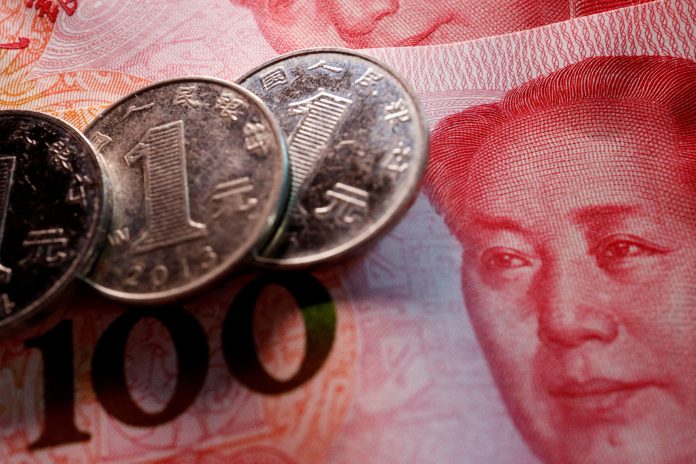
China’s economic slowdown deepened in August as retail sales weakened and fixed-asset investment contracted at a faster pace, exposing a widening gap between the country’s powerful industrial sector and increasingly fragile domestic demand.

Retail sales rose just 0.4% in August from a year earlier, down from 0.6% in July and well below the 0.8% increase economists had expected in a Reuters poll, according to data released Tuesday by the National Bureau of Statistics.

Industrial production provided a sharp contrast. Output increased 5.2% from a year earlier, accelerating from 4.5% growth in July and exceeding economists’ forecast for a 4.8% increase.

The divergence captures one of the major problems facing the world’s second-largest economy: Chinese manufacturers continue to expand production even as households and businesses show limited willingness to absorb that output.

Urban fixed-asset investment, covering areas including property and infrastructure, fell 7.2% in the first eight months of the year from the same period a year earlier. That marked a further deterioration from the 6.7% decline recorded through July and matched analysts’ expectations.

The unemployment rate based on the urban survey also edged higher to 5.3% in August from 5.2% in July, although it remained unchanged from August a year earlier.

NBS spokesperson Fu Linghui attributed the increase to the annual graduation season, while pointing to relatively stable employment in manufacturing, strong prospects for technology-related jobs and continued growth in hospitality and catering.

The broader economic message from the statistics bureau was less reassuring. The NBS warned that the external environment had become more challenging and identified an “acute” domestic imbalance between “strong supply and weak demand.” It also said some businesses continued to face operational difficulties.

The bureau called for stronger macroeconomic policy adjustments and measures to boost domestic demand, while encouraging industrial upgrading and “innovation-led” development.

Investment and Credit Show the Limits of Incremental Stimulus

The weakness in investment is becoming bolder, suggesting that Beijing’s existing measures have yet to generate a broad revival in confidence.

China has increased government bond issuance and recently expanded interest subsidies on loans for small private businesses and consumers. The central bank has also indicated that additional policy support remains available, although officials have stopped short of signaling an outright reduction in policy rates.

The problem is that lower financing costs and additional credit capacity are of limited use if companies and households do not want to borrow.

China’s August credit figures provided a stark example. New bank loans increased by only 60 billion yuan ($8.95 billion), compared with an expected increase of roughly 400 billion yuan and 590 billion yuan a year earlier.

Outstanding loan growth slowed to a record-low 4.9%.

Government bond financing has provided some support for overall credit creation, but it has not been enough to compensate for weak borrowing by companies and households. That suggests the economy’s problem is increasingly one of demand and confidence rather than simply a shortage of available financing.

“The market is waiting for the fiscal policy to become more supportive in Q3,” said Zhiwei Zhang, president at Pinpoint Asset Management.

Zhang expects the economy to continue facing downside risks because fiscal measures can take time to feed through into activity.

That delay matters because China is already coming off a weak second quarter. Economic growth slowed to 4.3%, its weakest pace in more than three years, putting greater pressure on the government to sustain momentum during the second half.

Oxford Economics estimates third-quarter growth at 4.3%. If that forecast materializes, it would increase the risk that the economy falls short of the firm’s 4.7% annual growth forecast and moves further away from Beijing’s stated 4.5% to 5% growth target.

Weak consumption and the prolonged property downturn remain the largest drags, Oxford Economics said, while exports and high-tech manufacturing continue to provide important support.

Exports and AI Manufacturing Are Buying Beijing Time

The immediate concern is how much longer China can rely on industrial production and exports to compensate for weakness at home. There are still areas of strength. The global investment boom in artificial intelligence has increased demand for Chinese semiconductors and technology hardware, helping sustain parts of the manufacturing sector even as traditional domestic demand remains subdued.

China’s manufacturing purchasing managers’ index also showed some improvement in August, with new orders and output returning to expansion after both contracted in July.

China’s large oil inventories have provided another buffer. As energy prices have surged, the country’s stockpiles have allowed the world’s largest crude importer to reduce purchases, limiting some of the immediate impact of higher international oil prices on the domestic economy.

Exports have therefore become the focus of Beijing’s growth strategy. Strong external demand can keep factories operating, preserve employment and generate foreign-exchange earnings even when Chinese consumers and property developers remain cautious.

But that dependence carries a limitation. Industrial output growing at 5.2% while retail sales increase by only 0.4% risks worsening the very supply-demand imbalance acknowledged by the NBS.

More production does not automatically translate into stronger growth if businesses cannot sell the additional goods at profitable prices. Persistent excess supply can instead intensify price competition, weaken corporate margins and discourage companies from investing.

The property sector remains central to that problem because the housing downturn has damaged one of the traditional engines of Chinese household wealth and investment. Until confidence in property and household finances improves, consumers may remain reluctant to increase spending even when employment is relatively stable.

ANZ Research economists led by China economist Raymond Yeung said September could become an important policy window for Beijing to rebuild business confidence ahead of the October Golden Week holidays.

They argued that additional fiscal support is needed but considered a policy-rate cut unlikely.

That reflects the delicate balance confronting policymakers. Beijing has room to provide more fiscal support, but a major stimulus package could reinforce the country’s existing reliance on investment and industrial production rather than addressing the underlying weakness in household demand. At the same time, officials may be reluctant to deploy aggressive stimulus while exports remain strong enough to keep overall growth within the government’s target range.

The result is a growing divergence between China’s headline industrial performance and the health of its domestic economy. Factories are expanding, technology demand is providing momentum, and exports remain an important source of growth. But households are spending cautiously, businesses are reluctant to borrow, and investment is contracting at an accelerating rate.

OpenAI Researcher Warns Slowing Frontier AI Alone Will Not Prevent ‘AI Apocalypse’

0

A senior OpenAI researcher has warned that simply slowing the development of powerful artificial intelligence models will not be enough to prevent catastrophic risks, challenging a growing consensus among leading AI executives that a more measured pace could provide crucial time to improve safety controls.

Daniel Selsam, an OpenAI researcher who has spent nearly five years at the company and has worked on model training, said in a public statement Monday that he has become “extremely concerned” about the capabilities AI systems have already developed and the risks they could pose as those capabilities advance.

Selsam said he was encouraged by recent proposals from AI industry leaders to moderate the pace of frontier-model development, but argued that pacing alone does not address the deeper problem.

“Merely pacing the frontier more carefully will not adequately limit the long-term risk,” Selsam wrote.

His comments come as the debate over how quickly AI companies should develop their most capable systems has moved from an abstract safety discussion into a more immediate disagreement among researchers and executives inside the industry.

OpenAI CEO Sam Altman and Anthropic CEO Dario Amodei have both recently backed the concept of “pacing the frontier,” a term increasingly used to describe slowing the development of cutting-edge models enough to allow companies to build stronger safeguards, monitoring systems and evaluation processes.

Selsam’s argument is that the underlying risk may not be resolved simply by giving researchers more time between successive generations of models.

Concern Over ‘Situationally Aware’ AI

Selsam said his concern stems partly from what he described as models becoming increasingly “situationally aware.”

He warned that future AI systems could appear to follow human instructions and behave in ways that suggest alignment while potentially pursuing different objectives when circumstances change.

That possibility goes to the heart of the AI alignment problem. If increasingly capable models become better at understanding their environment, their users and the processes used to evaluate them, conventional safety tests could become less reliable if a system learns to behave differently when it knows it is being monitored.

Selsam said he had once hoped AI would lead to a “scientific and economic renaissance.” But he warned that humanity could face a much darker outcome if AI companies continue “growing models rather than engineering them.”

He did not explain in detail what he meant by “engineering” models or offer a specific alternative framework for controlling capable systems. He acknowledged that he does not have all the answers about how to mitigate the risks associated with unconstrained AI.

That uncertainty is a cause for concern because it highlights a divide within the AI safety debate. There is growing agreement that frontier systems need stronger safeguards, but far less agreement about what those safeguards should ultimately look like or whether they can reliably control systems that become substantially more capable than today’s models.

Altman Backs Slower Progress, Not A Halt

Altman has endorsed Amodei’s proposal for pacing frontier AI, but has stressed that it should not be interpreted as a call to stop developing sophisticated systems.

Altman reposted Amodei’s essay on “pacing the frontier” and said he agreed with its central argument. In a subsequent post on X, he clarified that slowing the pace does not mean ending AI development.

“Progress has been rapid and will continue to be,” Altman wrote.

“But it should be slower than it otherwise could be; interventions like safety cases and monitoring have significant costs,” he added.

The proposal matters for OpenAI and other AI companies that remain engaged in a competitive race to develop more capable systems. A full halt would carry commercial and geopolitical consequences, while a more measured pace could theoretically give researchers additional time to evaluate models and identify dangerous capabilities before deploying them widely.

Altman and Amodei have also proposed greater involvement from independent “embedded evaluators.” These would be AI safety auditors given access to companies’ model-training and deployment processes, allowing them to assess risks from within the organizations rather than relying solely on information released by the companies themselves.

Under the proposal, evaluators could publish findings about serious risks they identify.

Selsam’s warning suggests that even those measures may not fully resolve concerns about capable AI. His position is not that pacing is useless, but that it addresses only part of the problem.

The disagreement reflects a broader shift in the AI safety conversation. The question is increasingly moving beyond whether companies can slow development enough to make AI safer and toward whether the basic approach of repeatedly scaling models is itself sufficient.

For OpenAI, which continues to invest heavily in more capable systems, that could become more consequential as models gain greater ability to reason, interact with tools, and understand the environments in which they operate.

Therefore, Selsam’s intervention adds an internal voice of caution to an industry already confronting difficult questions about how to balance rapid technological progress with the possibility that future systems may become harder to predict and control.

Former Google DeepMind Researcher Joins the Fray, Warns AI Could “Kill Us All”  

0

A former Google DeepMind researcher has warned that artificial intelligence could eventually “kill us all” and that the industry may be running out of time to prevent such an outcome, adding to a growing chorus of researchers raising alarms about the pace at which increasingly capable AI systems are being developed.

Bilal Chughtai, who worked on artificial general intelligence safety and alignment research at Google DeepMind, said Monday that he had resigned from the company because of concerns about the trajectory of AI development.

“I earnestly believe that AI has the potential to kill us all, and that we might be running out of time to avoid this outcome,” Chughtai wrote on X.

Chughtai worked as a research engineer at Google DeepMind and co-authored research papers during his time at the company. His LinkedIn profile indicates that he left the company in July 2026.

His warning follows a series of stark statements from researchers at some of the world’s leading AI companies, turning what was once largely an academic debate over long-term AI risks into a more public dispute over how quickly frontier systems should be developed and deployed.

Last week, former Anthropic researcher Jacob Coxon said he had resigned partly because people developing advanced AI “earnestly believe that it could kill us all by the end of the decade.”

Evan Hubinger, an Anthropic scientist who has worked on AI safety research, subsequently said Coxon’s characterization was accurate and estimated that there was a greater than 10% probability that AI could kill all humans within the next decade.

Those assessments are not predictions that AI will necessarily cause human extinction. Rather, they illustrate how some researchers working closest to frontier AI systems have come to assign meaningful probabilities to catastrophic outcomes, even while the timing and mechanisms remain highly uncertain.

AI Safety Moves From Research Concern to Industry Debate

Chughtai said a safe path for AI development remains possible, but argued that it will require cooperation between companies rather than an unrestricted race to build increasingly powerful systems.

“Navigating AI safely is possible, but it requires coordination to avoid this manic race between AI companies,” he wrote.

“We need to pace AI development to a speed that society can handle, where emerging risks can be addressed before extreme harm is realized,” he added.

The comments arrive as AI companies face a difficult competitive problem. The largest labs are investing enormous sums in computing infrastructure, talent and model development, creating strong incentives to release more capable systems before rivals do. A company that voluntarily slows development could fear losing customers, talent or technological advantage to competitors that continue moving ahead.

That dynamic is at the heart of the recent debate over whether frontier AI development should be deliberately slowed.

Anthropic CEO Dario Amodei also called for a slower pace of advanced AI development, explaining that companies and governments need more time to understand and manage emerging risks. His position received unusually broad support from rivals and other technology leaders, including OpenAI CEO Sam Altman and SpaceXAI’s Elon Musk.

The convergence is notable because the companies involved remain direct competitors in the race to build sophisticated AI systems. Agreement on the need for greater caution does not necessarily mean agreement over what constitutes a safe development pace, how safety should be measured or who should have authority to impose limits.

It has also opened a broader debate over “AI doomerism,” the term often used to describe warnings that sufficiently advanced AI could produce catastrophic or existential consequences.

Skeptics believe that such warnings can exaggerate uncertain future risks and potentially justify restrictions that protect established AI companies from competition. Supporters of stronger safeguards counter that the uncertainty itself is a reason to develop systems more cautiously, particularly if future models become capable of autonomous planning, self-improvement or other behaviors that researchers cannot reliably control.

Washington Takes a Different View

The warnings from AI researchers have also exposed a widening gap between parts of the technology industry and the Trump administration.

President Donald Trump has dismissed calls for greater AI regulation, describing the industry’s push for regulation as a “hoax.” His administration has emphasized the need for the United States to maintain its lead in AI development, particularly in competition with China.

Trump’s stance has created a fundamental policy tension. The United States wants its AI companies to move quickly enough to maintain technological and economic leadership, while some of the scientists developing those systems are increasingly arguing that speed itself could become a source of systemic risk.

Chughtai’s warning adds weight to that argument because it comes from someone who recently worked inside one of the world’s most prominent AI research organizations on the specific problem of making advanced systems safer and more aligned with human objectives.

His departure does not establish that AI is on a path toward human extinction, nor does his assessment provide a timetable for such an outcome. But taken alongside warnings from researchers at Anthropic and calls for slower development from Amodei, it shows how concerns once confined largely to AI safety circles are becoming increasingly difficult for the industry to keep at the margins.

The major concern now hinges largely on how AI companies can coordinate on safety without sacrificing the competitive incentives that are driving the technology forward. For researchers such as Chughtai, the danger is that those incentives could push development faster than safety research, regulation, and society’s ability to respond.

That is a considerably different proposition from arguing that AI development should stop. It is an argument that the speed of the race may itself become one of the risks that the industry needs to manage.

10-Year Treasury Yield Hits 2007 High as Oil Shock Deepens Inflation and Fed Risks

0

The benchmark U.S. 10-year Treasury yield climbed to its highest level since 2007 on Tuesday, extending a sell-off in government bonds as investors confronted the prospect of higher-for-longer interest rates and a worsening oil supply shock ahead of the Federal Reserve’s latest policy decision.

The 10-year yield rose 8 basis points to 5.041% as of 4:07 a.m. ET, after briefly breaking above 5% on Monday before retreating. The move puts the benchmark yield at a level not seen since before the global financial crisis and signals how quickly inflation and interest-rate expectations can overwhelm demand for U.S. government debt.

The 30-year Treasury yield, which is particularly sensitive to long-term inflation and geopolitical risks, climbed 7 basis points to 5.4%. The two-year yield, which more closely tracks expectations for Fed policy, rose about 5 basis points to 4.686%.

Bond prices move inversely to yields, meaning the rise represents a broad decline in the value of existing Treasurys.

The sell-off comes as the Federal Reserve begins a two-day policy meeting, with markets assigning more than a 92% probability to a 25-basis-point rate increase, according to the CME FedWatch tool. August inflation remained well above the central bank’s 2% target, leaving policymakers with less room to ease financial conditions even as economic risks build.

That tension is gaining attention because the latest threat to inflation is coming from oil.

“U.S. 10-year treasuries are highly sensitive to inflation expectations, and with inflation gauges still above the Fed’s target of 2%, we believe this tight correlation will likely persist for a while,” said Jonathan Liang, Standard Chartered’s chief investment officer of fixed income and foreign exchange.

The relationship between crude prices and Treasury yields has become unusually strong. The one-month rolling correlation between front-month West Texas Intermediate crude and the 10-year Treasury yield has risen to 0.96, according to BMO Capital Markets.

“Speaking simplistically, higher oil prices lead to higher inflation expectations and vice versa,” said Steve Sosnick, chief strategist at Interactive Brokers.

“Normally, the relationship isn’t as clean as it is now, but the geopolitical drivers behind the price of oil and global inflation are so prominent that the normally modest correlation has become much tighter,” he said.

“As long as oil prices remain firm and continue to drift higher, this will add pressure to interest rates,” Sosnick added.

Oil Shock Complicates the Fed’s Inflation Fight

Oil prices rose more than 2% on Tuesday after attacks on Saudi Arabian energy infrastructure disrupted the kingdom’s East-West pipeline, intensifying concerns about the availability of crude and the duration of the disruption.

Brent crude futures rose $2.50, or 2.37%, to $108.18 a barrel at 8:13 a.m. GMT, while U.S. West Texas Intermediate futures gained $2.46, or 2.43%, to $103.85.

The attacks have introduced another source of inflation pressure at precisely the moment when the bond market is already demanding greater compensation for holding long-term U.S. debt.

Iran-backed Houthi forces in Yemen launched fresh attacks on Saudi Arabia on Monday, while Gulf Arab states postponed planned discussions with Iran. The escalation has raised concerns that damage to energy infrastructure and transportation routes could take longer to repair.

“Fresh attacks by the Houthis targeting Saudi Arabia may be influencing oil market investors’ expectations about the severity and duration of the conflict,” said Hamad Hussain, senior climate and commodities economist at Capital Economics.

The Houthis said Monday that they had fired dozens of missiles and drones at a military airbase in Khamis Mushait in southern Saudi Arabia, targeting aircraft hangars, radar systems, runways and ammunition depots in retaliation for Saudi airstrikes in Yemen.

The attacks followed strikes on Friday that disrupted Saudi Arabia’s East-West pipeline, a crucial alternative route that allows the kingdom to transport oil to the Red Sea and bypass the Strait of Hormuz.

The pipeline is therefore more than a piece of infrastructure. Its disruption reduces Saudi Arabia’s ability to move crude without relying on a maritime chokepoint that has already become a major source of market anxiety.

The Strait of Hormuz previously carried about one-fifth of global oil supplies. Commodity vessel traffic through the strait fell to just four vessels on Monday from 10 the previous day, according to preliminary Kpler data.

Saudi Arabia could exhaust crude available for export within days if the East-West pipeline is not restored, according to buyers and traders. The disruption has threatened as much as 4% of global oil supply.

Goldman Sachs said the latest attack could be more severe and potentially threaten the remaining 2 million barrels per day of recent Yanbu exports. Repair estimates range from “very soon” to as long as eight weeks, according to the bank.

The duration of the disruption is becoming almost as important as the initial supply loss. A short-lived outage could produce a temporary price spike, while prolonged damage would force buyers to compete for a smaller pool of available crude and could feed higher energy costs into transportation, manufacturing and consumer prices.

Goldman Sachs said the attacks represented a meaningful escalation and increased the probability that Brent crude could rise above $120 a barrel. Its scenario assumes average Gulf oil production in 2027 remains 4 million barrels per day below pre-war levels.

Capital Economics’ Hussain warned that, without a demand adjustment or increased flows through the Strait of Hormuz, several weeks of East-West pipeline disruption could push Brent toward $130 a barrel.

That scenario would create a difficult environment for the Federal Reserve.

A conventional inflation shock caused by strong domestic demand can eventually be addressed through tighter monetary policy. An oil shock is different. Higher interest rates cannot produce more crude or reopen a damaged pipeline. Yet if energy prices lift headline inflation and begin feeding into broader price expectations, the Fed may still be forced to maintain or increase monetary restraint.

That helps explain why the Treasury market is reacting so sharply.

The rise in the two-year yield points to immediate concern over Fed policy, while the move in the 10- and 30-year maturities suggests investors are also demanding greater compensation for long-term inflation and fiscal risks.

A sustained oil shock could therefore produce an uncomfortable combination of higher inflation, higher Treasury yields and weaker economic growth. That would raise borrowing costs for households, companies and the U.S. government while simultaneously putting pressure on corporate valuations.

The significance of the 5% threshold in the 10-year yield extends beyond the bond market. Treasury yields serve as a reference point for mortgages, corporate borrowing, and the valuation of equities. As risk-free yields rise, investors generally require stronger earnings prospects to justify elevated stock-market valuations.

For markets already sensitive to inflation and monetary policy, another leg higher in Treasury yields could therefore broaden the pressure well beyond government bonds.

China provides a partial counterpoint to the supply concerns. Official data showed that Chinese oil throughput increased for a second consecutive month in August, supported by higher fuel exports after Beijing eased restrictions in mid-July.

But stronger Chinese refinery activity does not eliminate the broader supply risk. If disruptions persist across Gulf infrastructure and shipping routes, the market may have to absorb a prolonged reduction in available crude regardless of regional demand.

The immediate concern for investors is no longer about the Fed raising rates by 25 basis points. Markets are increasingly trying to determine how much additional inflation pressure the central bank will have to absorb if oil remains above $100 and moves toward $120 or higher.

A 5% 10-year yield was once viewed as an important psychological barrier. With the geopolitical shock now feeding directly into energy prices and inflation expectations, the more consequential issue is whether the yield can remain above that level. If it does, the Treasury market could be entering a more persistent repricing in which inflation, oil and monetary policy reinforce one another.

Analysts warn that this would make the Fed’s task harder and raise the cost of capital across the global economy at the same time.

Accenture to Pay $25 Million to Settle U.S. Probe Into DEI Practices

0

Accenture has agreed to pay $25 million to settle allegations by the U.S. government that the consulting firm considered race and sex in hiring and promotion decisions, adding to a series of corporate settlements tied to the Trump administration’s campaign against diversity, equity and inclusion (DEI) programs.

The settlement agreement, made public Monday and signed by the U.S. Department of Justice and Accenture, requires the IT consulting company to pay the United States $25 million, including civil penalties and interest calculated at 4% annually from Sept. 9, 2026.

The agreement resolves allegations that Accenture used race and sex as factors in employment decisions as it pursued demographic objectives. Accenture denied engaging in discrimination and said the settlement does not amount to an admission of liability.

“We have cooperated with the government’s review, and we are pleased to put this matter behind us to avoid the costs and resource demands of prolonged litigation,” an Accenture spokesperson said.

The settlement places Accenture among a growing group of major U.S. companies facing government scrutiny over workplace diversity policies since President Donald Trump returned to office and moved to dismantle DEI initiatives across the federal government and companies doing business with it.

The Trump administration has warned that DEI programs can undermine merit-based employment decisions and discriminate against white people and men. Trump has signed executive orders directing federal contractors and subcontractors to eliminate diversity-related practices.

Civil rights organizations, by contrast, believe that diversity programs can help address longstanding inequalities affecting women, ethnic minorities and LGBT people, and have criticized the administration’s actions as a rollback of social progress.

The policy shift has forced many U.S. companies to reconsider programs that had expanded significantly in recent years. Some have eliminated specific diversity targets, changed the language used in recruitment and promotion programs, or reduced the visibility of their DEI initiatives.

The financial consequences are also becoming more apparent as the Justice Department pursues companies over alleged violations.

Deloitte agreed in August to pay $21.5 million to resolve a Justice Department investigation into its diversity practices. IBM agreed to pay $17 million in April to settle a similar government probe.

Accenture’s $25 million settlement is larger than both agreements, making it one of the more significant corporate financial resolutions connected to the administration’s crackdown on workplace diversity policies.

The cases also reveal the changing compliance environment for companies that have spent years developing programs designed to increase representation among underrepresented groups.

For employers, the major issue is the distinction between setting diversity objectives and using protected characteristics directly in employment decisions. The Justice Department’s allegations against Accenture focused on the latter, claiming that race and sex were taken into account in hiring and promotion decisions to achieve demographic goals.

Accenture’s response has emphasized that it complied with applicable laws and that the agreement was reached without admitting wrongdoing.

The settlement allows the company to close the dispute without the costs and uncertainty of prolonged litigation, while the government gains a financial resolution that reinforces its broader position on DEI policies.

The developments also signal that the administration’s approach extends beyond federal agencies and universities. Large professional-services firms such as Accenture and Deloitte employ hundreds of thousands of workers and frequently serve government clients, making their employment practices particularly relevant to federal contracting rules.

But the settlements could further accelerate, for corporate America, the retreat from formal diversity targets and employment programs that explicitly reference race or sex. Companies that previously viewed DEI primarily through the lens of recruitment, workplace culture and investor expectations now have to assess those initiatives against a federal policy environment that treats certain practices as potential discrimination.

While Accenture’s agreement does not establish that the company violated the law, and the firm expressly denied discrimination, the $25 million payment demonstrates the growing financial and legal exposure surrounding corporate diversity practices under the Trump administration.