DD
MM
YYYY

PAGES

DD
MM
YYYY

spot_img

PAGES

Home Blog Page 3141

Moniepoint Unveils USSD Service to Enhance User’s Mobile Transaction And Combat Fraud

0

Nigerian fintech company Moniepoint has recently launched its Unstructured Supplementary Service Data (USSD) service, to enhance customers’ mobile transaction and combat fraud.

The newly rolled-out code (*5573#) will offer users a fast, secure, and user-friendly platform to conduct their banking activities with ease, from any mobile device without the need for an internet connection.

According to the managing director of Moniepoint Mr. Babatunde Olofin, he disclosed that the new code aims to improve convenience and accessibility, demonstrating the bank’s dedication to financial inclusion and bolstering safety and security within the digital payment ecosystem.

He noted that the USSD banking suite includes a variety of services such as funds transfer, airtime and data purchase, account balance and details inquiry, PIN management, and account security measures like blocking and unblocking access for oneself or others.

He further added that the introduction of *5573# was a security measure against unauthorized access, safeguarding customer funds in case of loss or theft of mobile phones, ATM Cards, or hardware tokens, and in situations where account details may be compromised.

In his words,

“This code empowers customers to secure their accounts promptly from any mobile device, without needing to contact the bank, especially in cases of suspected fraud. At Moniepoint MFB, our top priorities are delivering exceptional customer service through digital innovation and ensuring the highest security standards.

“We have always been guided by our mission to create a society where everyone experiences financial happiness, and in these times, what that looks like for us is increasingly empowering consumers to take charge of their bank accounts, even as we curate a seamless and secure banking experience”.

Existing customers, encompassing business and personal accounts, can initiate transactions and manage their accounts, by navigating to USSD banking settings on their mobile banking app in order to activate this feature while new users will have the feature activated by default upon sign up.

It is worth noting that the USSD code feature remains Africa’s most popular payment channel despite growing alternatives such as apps and QR codes. The feature has been key in facilitating transactions that go beyond traditional mobile money services, including transactions between different financial institutions.

It also presents a cost-effective solution for delivering financial services, especially in areas with limited smartphone usage and high data costs. Unlike other options, USSD does not rely on expensive data plans, making it accessible to a broader range of individuals.

Notably, the feature plays a very crucial role in enhancing security and trust among users, ultimately increasing their willingness to adopt and utilize mobile financial services with minimizing the risk of fraud.

BlockDAG’s Potential For 20,000x Gains Wows Market Amid 60 Billion Milestone For Solana DEX & Catcoin’s Future Looks Bright

0

The Solana blockchain’s decentralized exchange, Solana DEX, has achieved an impressive feat with transactions amounting to $60 billion in March, highlighting its widespread acceptance and scalability. At the same time, the meme cryptocurrency, Catcoin, is generating significant buzz with over 30,000 discussions online, leading to optimistic forecasts about its price trajectory.

Furthermore, the introduction of BlockDAG Network (BDAG) innovative layer 1 blockchain technology, featuring the PHANTOM protocol and GHOSTDAG algorithm, as outlined in its most recent technical paper, is drawing attention to its potential to revolutionize blockchain architecture. The excitement surrounding this new cryptocurrency is palpable with predictions pointing towards a staggering 20,000x return on investment for BlockDAG’s investors.

Solana DEX Achieves New Heights with $60 Billion in Transactions

The decentralized exchange operating on the Solana blockchain, Solana DEX, recently broke records by facilitating $60 billion in cryptocurrency transactions in the month of March, setting a new benchmark. This milestone underlines the platform’s escalating appeal and solid foundation. Solana DEX’s success in managing such a vast amount of transactions showcases the Solana blockchain’s scalability and effectiveness.

The exchange’s competitive edge is further strengthened by its lower fees and quicker transaction times, attracting users looking for alternatives to other decentralized exchanges. As the cryptocurrency market grows, Solana DEX is expected to become a key player in the decentralized finance landscape.

Optimistic Projections for Catcoin’s Value

The prediction of Catcoin’s value has become a topic of widespread interest as this meme coin continues to attract attention, evidenced by over 30,000 posts on X. The influx of traders to Catcoin is driving its rapid growth, leading to speculative forecasts about its future value.

Although the cryptocurrency market is known for its volatility, the considerable buzz and trading activity surrounding Catcoin suggest a potential increase in its value. However, given the unpredictable nature of meme coins, which are often influenced by market sentiment and hype, investors are advised to proceed with caution and conduct comprehensive research before making any investments.

BlockDAG’s Presale and Technical Whitepaper Catalyze Excitement

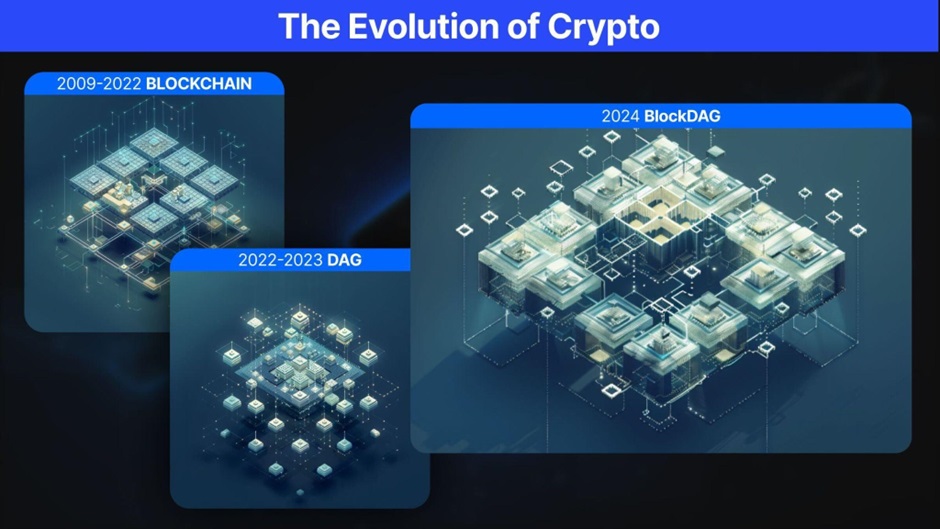
The release of BlockDAG’s latest technical whitepaper and the success of its presale, which surpassed $12.4 million, have marked a significant milestone for this pioneering blockchain project. The excitement generated by the technical whitepaper’s launch has considerably boosted presale figures, with projections indicating a 20,000x profit increase for BlockDAG. This surge in interest stems from BlockDAG’s innovative departure from traditional blockchain models, opting instead for a Directed Acyclic Graph (DAG) architecture.

The technical document provides an in-depth explanation of the algorithms that underpin BlockDAG, detailing the creation, organization, and protection of blocks within the DAG. It introduces advanced concepts such as k-clusters and addresses the maximum k-cluster SubDAG problem, along with the selection and sorting mechanisms essential for ensuring network stability and scalability.

BlockDAG’s introduction of the PHANTOM protocol and GHOSTDAG algorithm for consensus within its DAG structure promises a network that is secure against attacks and capable of efficiently processing transactions. With the presale already achieving $12.4 million, selling over 6.3 billion BDAG, and the price of coins in its 6th batch at $0.0035 each, BlockDAG’s growth momentum is evident.

Key Insights

BlockDAG stands out in the blockchain sector with its technical breakthroughs and the potential for a 20,000x increase in profits. While Solana DEX and Catcoin have garnered significant attention for their recent achievements and bullish price predictions, BlockDAG’s unique layer 1 blockchain technology has impressed the crypto community. Its PHANTOM protocol and GHOSTDAG algorithm are set to offer secure, efficient transactions that challenge conventional blockchain models.

As the industry continues to evolve, BlockDAG’s innovative concepts and solid infrastructure position it as a pivotal figure in decentralized finance. Stakeholders in the crypto space should keep a close watch on BlockDAG’s advancements, as its disruptive technology has the potential to alter the blockchain landscape significantly.

Join BlockDAG Presale Now:

Website: https://blockdag.network

Presale: https://purchase.blockdag.network

Telegram: https://t.me/blockDAGnetworkOfficial

Discord: https://discord.gg/Q7BxghMVyu

Singapore’s Progressive Stance on Crypto Regulation, as Deribit secures Conditional VASP License in Dubai

0

Singapore Enacts Licensing Requirements for Crypto Custody Services.

In a significant move to strengthen its financial regulatory framework, Singapore has enacted new licensing requirements for cryptocurrency custody services and other related activities. This development is part of the city-state’s ongoing efforts to establish itself as a global hub for financial innovation while ensuring the stability and security of its financial system.

The Monetary Authority of Singapore (MAS), the nation’s central bank, has expanded the scope of regulated cryptocurrency-related activities to include custodial services, cross-border money transfers, and the facilitation of crypto transactions between accounts and exchanges. This regulatory update follows the amendments to the Payment Services Act (PS Act) passed in 2021, which aimed to provide a comprehensive framework for payment service providers.

The amendments to the PS Act were initially set to be enacted in the fourth quarter of 2021. However, the MAS has only recently made these changes operational. The delay can be attributed to the need for a thorough preparation phase to ensure that the new regulations would be effectively integrated into the existing financial system.

The recent turmoil in the cryptocurrency sector, highlighted by the crash of FTX, has underscored the importance of robust regulatory measures. Singapore’s response has been to introduce user protection and financial stability-related requirements for digital payment token (DPT) or cryptocurrency service providers. These requirements include segregating customers’ assets, maintaining proper books and records, and implementing effective systems and controls.

Entities currently engaged in crypto-related activities under the PS Act must initiate a transition process within 30 days and submit a license application within six months from April 4, 2024. This allows them to continue their operations temporarily until their applications are reviewed. A crucial aspect of the application process is the submission of an attestation report of compliance with anti-money laundering and countering the financing of terrorism requirements, verified by an external auditor within nine months.

Non-compliance with these new regulations will result in entities having to cease all crypto-related activities. This firm stance by the MAS reflects Singapore’s commitment to preventing the misuse of cryptocurrencies for illicit purposes while fostering a secure environment for legitimate crypto transactions.

The introduction of these licensing requirements is a testament to Singapore’s proactive approach to managing the risks associated with the burgeoning crypto market. By doing so, Singapore not only protects its financial ecosystem but also positions itself as a responsible and forward-thinking leader in the global financial landscape.

As the crypto industry continues to evolve, Singapore’s regulatory framework will likely serve as a model for other nations seeking to balance innovation with financial security. The MAS’s actions demonstrate a clear understanding of the complexities of the crypto market and a willingness to adapt its regulations to meet the challenges of a rapidly changing financial sector.

The expansion of regulated cryptocurrency-related activities by the MAS is a testament to Singapore’s dynamic approach to financial regulation. It demonstrates a clear recognition of the importance of adapting to technological advancements while ensuring that the integrity of the financial system is preserved. As the digital asset space matures, the MAS’s measures will undoubtedly play a crucial role in shaping the future of cryptocurrency regulation, not only in Singapore but across the globe.

Deribit secures Conditional VASP License in Dubai

The cryptocurrency landscape is witnessing a significant shift as Deribit, a leading crypto options exchange, secures a conditional Virtual Asset Service Provider (VASP) license for its Dubai-based unit, Deribit FZE. This development marks a pivotal moment for the exchange and highlights the evolving regulatory environment for digital assets.

Dubai has rapidly emerged as a global hub for the cryptocurrency industry, attracting some of the world’s leading crypto exchanges. This surge is largely attributed to the city’s progressive regulatory stance and its ambition to become a blockchain and Web3 technology center. Here’s a look at some of the prominent crypto exchanges that have established a presence in Dubai.

Deribit’s journey began as a Panama-based platform, renowned for its robust infrastructure that facilitated low latency trading and deep liquidity. With over 85% of the global crypto derivative activity, Deribit has established itself as a trusted name in the market, offering a range of products including bitcoin, ether, and Solana options, as well as bitcoin and ether perpetual futures.

The conditional VASP license, granted by Dubai’s Virtual Asset Regulatory Authority (VARA), is a testament to Deribit’s commitment to compliance and governance standards. The license remains non-operational until all conditions set by VARA are met, but once fully operational, it will enable Deribit FZE to serve institutional and qualified investors, while continuing to cater to retail investors through its Panama-based broker affiliate.

This strategic move is accompanied by the appointment of Luuk Strijers as the new CEO, who brings a wealth of experience from his tenure as Chief Commercial Officer. Under his leadership, Deribit aims to raise the quality and governance standards of its platform, having already obtained ISO and SOC2 certification and appointed non-executive directors to its board.

Dubai’s progressive regulatory framework presents a fertile ground for innovation in the digital asset space. A year ago, VARA introduced a comprehensive regulatory framework for crypto, requiring companies to secure licenses to operate legally within the country. The VASP license is mandatory for conducting virtual asset business in Dubai and reflects the city’s ambition to become a global hub for blockchain and Web3 technologies.

Deribit’s decision to relocate its global headquarters to Dubai is a strategic move that aligns with the city’s vision. The exchange’s commitment to security and transparency is further underscored by its ISO 27001 certification, which sets international standards for information security management systems.

The conditional VASP license is more than a regulatory milestone; it signifies Deribit’s unwavering dedication to providing a secure, transparent, and innovative platform for its users. With the addition of two Non-Executive Directors, Dennis Dijkstra and Willem Meijer, Deribit is poised for strategic growth and long-term success.

As the crypto industry continues to mature, the importance of regulatory compliance cannot be overstated. Deribit’s move to Dubai and the acquisition of the conditional VASP license are giant strides towards realizing an ambitious vision, steering the crypto industry to new horizons. This is a clear indication that the future of crypto is not just about technological innovation, but also about integrating into the global financial regulatory framework.

Oil Price Rises to $92pb, $14 Above Nigeria’s Budget Benchmark: But It’s Not Good News

0

Nigeria stands a chance to boost its crude oil revenue from a potential windfall emanating from geopolitical conflicts that have seen oil prices soar in recent days.

Recent attacks on Russian refineries by Ukraine and escalating tensions in the Middle East have sparked concerns over crude and fuel supplies, driving prices upwards.

The recent drone strike by Ukraine on a Russian refinery has exacerbated fears of supply disruptions, given Russia’s significant role as one of the world’s top oil producers. Similarly, tensions in the Middle East, particularly between Israel and Iran, raise the specter of further supply interruptions, as Iran, the third-largest producer in OPEC, supports Hamas in Gaza against Israel.

Moreover, an internal memo from Mexico’s state energy corporation, Pemex, indicates a halt in crude exports, adding to supply concerns. This memo follows reports of declining crude inventories in the United States, the world’s largest oil consumer, indicating tightening supply conditions globally.

This has boosted Nigeria’s position in the global market as its crude oil trade is higher than the federal government’s budget benchmark.

Brass River and Qua Iboe, key Nigerian crude grades, traded close to $92 a barrel, while Brent Crude stood at $89 per barrel on Wednesday. Bonny Light, another Nigerian grade, fetched $91.37 per barrel late Tuesday, underscoring the robust demand for Nigerian crude in the international market.

At the current price of $91.67 per barrel, Nigeria records additional revenue of $13.71 per barrel, surpassing the country’s 2024 budget benchmark of $77.96 per barrel. However, despite the surge in oil prices, challenges persist in meeting budgetary targets, particularly the daily production quota of 1.78 million barrels.

While Nigerian oil commands a premium in the market, it faces stiff competition from American suppliers, who have penetrated markets previously dominated by OPEC countries. Rising US oil production, coupled with declining output from OPEC and Russia, underscores the shifting dynamics in the global oil market.

Is this good or bad for Nigeria?

For Nigeria, the rising oil prices present a double-edged sword. With the oil benchmark at $77.96 per barrel, the nation is facing a dilemma as the oil prices rise. Although in May last year, Africa’s largest economy announced that the petrol subsidy is gone, the government is understood to have silently returned to paying subsidies, reportedly paying around N17 billion per day to keep the pump price of petrol not above N670 per liter.

Against this backdrop, analysts have noted that an increase in fuel prices will do more harm than good to the Nigerian treasury. Also, the country is still grappling with the issue of oil theft and infrastructure vandalism that have ensured that oil output is placed around 1.3mbd, below the 1.78mbd budget benchmark.

This shortfall is highly tied to the crisis in the oil-producing Niger Delta region of the country. Though efforts to combat oil theft have intensified, the country still needs to ramp up production to meet budgetary goals. This has extended to the insufficient supply of feedstock for newly commissioned refineries set to come online this year, adding to market anxieties.

Nigeria finding itself at a critical juncture once again has elicited calls for balancing the benefits of soaring oil prices with the challenges of sustaining production and managing fiscal pressures.

Crypto Market setup looks positive for Second Quarter, Says Coinbase

0

The cryptocurrency market is showing signs of a positive setup as we enter the second quarter, according to a recent report by Coinbase. The leading digital currency exchange highlighted that many of the headwinds faced in the previous periods have now been navigated, setting the stage for potential growth in the coming months.

Coinbase’s analysis indicates that the total crypto market cap’s significant growth in the previous year could be a harbinger of sustained positive momentum. The “crypto winter,” a period marked by stagnation and bearish trends, appears to be in the rear-view mirror as the market transitions into a more dynamic phase.

The report highlights several factors contributing to this cautiously optimistic outlook. One of the key elements is the diminishing downside pressures that have plagued the market in the past. Additionally, potential rate cuts and macroeconomic shifts could create a supportive environment for cryptocurrencies, particularly Bitcoin.

Coinbase’s analysis suggests that the positive momentum may become more evident in the latter half of April. This optimism is partly based on the upcoming Bitcoin halving event, expected to occur between April 16th and 20th. The halving is a significant event in the cryptocurrency world as it reduces the reward for mining new blocks by half, effectively decreasing the rate at which new bitcoins are generated.

The report also points to the conclusion of the 90-day review period employed by wirehouses for new financial offerings, such as spot Bitcoin ETFs, which could wrap up as early as April 10th. This could potentially unlock significant capital for U.S.-based spot Bitcoin ETFs over the medium term, further bolstering the market.

Institutional interest remains a strong driver for the market, as evidenced by the record high levels of leveraged short positions in Chicago Mercantile Exchange (CME) bitcoin futures recorded on March 19th. Additionally, the total value locked (TVL) in on-chain derivatives has reached an all-time high of $3.4 billion, despite the broader decentralized finance (DeFi) TVL being approximately 50% off its previous cycle highs.

The report also touches on the volatility in the market, attributing some of it to investors shorting shares of companies like MicroStrategy, which has strategically invested in Bitcoin, versus those taking long positions on the cryptocurrency itself.

Overall, the Coinbase report provides a cautiously optimistic outlook for the cryptocurrency market in the second quarter of 2024. With several key events on the horizon and sustained institutional interest, the market could be poised for a positive trajectory. However, as with all investments, especially in the volatile crypto space, potential investors should approach with caution and consider a wide range of factors before making any financial decisions.

Coinbase analysts also point to the upcoming Bitcoin halving event in mid-April 2024 as a pivotal moment. Historically, halving events, which reduce the reward for mining new blocks, have preceded significant price increases for Bitcoin. This cyclical occurrence is closely watched by the market, as it tends to influence supply and demand dynamics.

Coinbase’s research also delves into the evolving landscape of ETFs within the crypto space, discussing their potential impact and the new dynamics and products they might introduce. Special attention is given to DEPIN and the burgeoning area of Data Availability, highlighting how these elements could reshape the digital asset environment for the better.