DD
MM
YYYY

PAGES

DD
MM
YYYY

spot_img

PAGES

Home Blog Page 3158

Wave of Unsung Africapitalism Spurring in Africa

0

The African continent, with its diverse cultures and economies, is experiencing a unique wave of capitalism that is largely unsung in the global narrative. This new wave is characterized by a blend of traditional capitalist values and a deep understanding of local contexts and needs. It’s a capitalism that is not just about profit but also about creating social wealth and aligning with the continent’s development needs.

The concept of Africapitalism, coined by Nigerian banker and entrepreneur Tony Elumelu, encapsulates this movement. Africapitalism is an economic philosophy that emphasizes the private sector’s commitment to Africa’s economic transformation through investments that generate both economic prosperity and social wealth. It’s a call to action for African businesses to play a pivotal role in the development of the continent, not just for their own success but for the upliftment of the societies in which they operate.

However, the journey of capitalism in Africa has not been without its challenges. The type of capitalism introduced by colonialists was not always aligned with the needs of Africans, often being driven by external agendas focused on exploitation for profit. This has led to a call for a rethinking of capitalism in Africa, to ensure that it serves the collective interests of its people rather than just individual or foreign entities.

One of the most prominent examples of Africapitalism in action is the Tony Elumelu Foundation (TEF). Founded in 2010, the foundation has been instrumental in promoting entrepreneurship across Africa. Through its Entrepreneurship Programme, TEF has empowered thousands of entrepreneurs with training, mentorship, and funding, contributing significantly to economic development and job creation.

Another example is the Ugandan agribusiness company Good African. This company exemplifies the Africapitalism ethos by striving to create financial and social wealth for all stakeholders, not just shareholders. Good African connects local coffee farmers directly with international markets, ensuring fair prices and reinvesting profits into community development.

The feasibility of this reimagined capitalism in Africa is being explored through various studies and discussions. One such study involves a partnership between nine universities, focusing on the role of business leaders, investors, and entrepreneurs in the continent’s development, particularly in countries like Cote d’Ivoire, Kenya, Nigeria, and South Africa.

The failure of traditional capitalist models in Africa to deliver inclusive development has sparked a debate on the need for a new approach. This approach must consider the unique political, economic, and social contexts of African nations. It must foster a capitalism that is productive, sustainable, and beneficial to all, rather than the non-productive forms that have been prevalent.

Governments and legislators in African nations are encouraged to act as enablers of capitalism, supporting free market competition, private ownership, and investment while ensuring that these mechanisms contribute to the broader social good.

The wave of unsung capitalism in Africa is a testament to the resilience and innovation of its people. It represents a hope for a future where economic systems are not just imported and imposed but are homegrown and tailored to the specific needs and aspirations of the continent. It’s a future where capitalism in Africa is not just a means to an end but a driver of genuine progress and prosperity for all its inhabitants.

US Elections in 2024 To Affect Crypto Policies

0

As the 2024 United States elections approach, cryptocurrency has emerged as a pivotal policy issue, capturing the attention of voters, policymakers, and presidential candidates alike. The integration of digital assets into the political arena signifies a transformative period in both finance and governance, reflecting the growing importance of cryptocurrency in the public discourse.

The return of Carole House, a former crypto advisor, to the White House as a cybersecurity advisor underscores the administration’s focus on digital assets ahead of the elections. This move signals a recognition of the need for expertise in an area that is becoming increasingly relevant to national security and economic policy.

The crypto industry has also demonstrated its political clout, with key election primaries revealing voter interest in candidates who hold crypto-friendly views. This trend is indicative of the broader shift towards a more nuanced understanding of cryptocurrency’s role in the economy and its potential to influence legislative outcomes.

A report from POLITICO highlights the “huge moment” for the crypto industry, with recent legislative victories showcasing its growing influence in Washington. The bipartisan support for crypto-friendly legislation suggests a shift in the political landscape, with traditional party lines being redefined by the emerging digital economy.

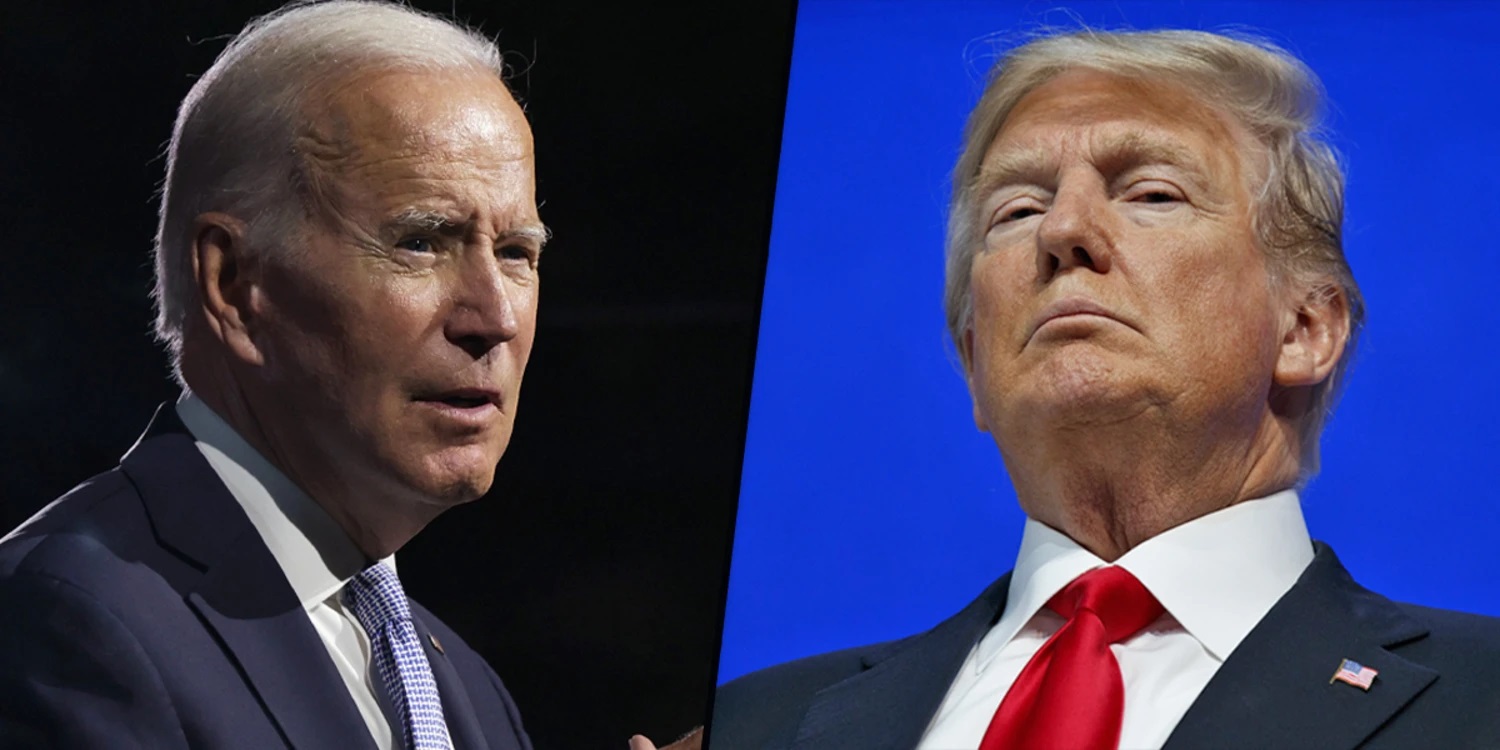
The intersection of cryptocurrency and politics is poised to shape the next US presidential election significantly. Candidates’ stances on crypto regulation and blockchain innovation could sway voters, especially as digital currencies gain mainstream traction. The acknowledgment of cryptocurrencies by presidential campaigns reflects the inevitability of digital assets becoming a fixture in political strategy and policy formulation.

The crypto industry’s influence is evident in the political arena, with significant financial contributions to campaigns and the strategic positioning of candidates on crypto policies. Former President Donald Trump’s acceptance of campaign contributions in crypto and his efforts to align with the industry reflect a broader trend of politicians recognizing the potential of digital assets.

On the other side of the political spectrum, Democrats are also grappling with the implications of cryptocurrency on their policy platforms. The approval of Bitcoin and Ether spot exchange-traded funds (ETFs) and the growing investor interest in digital currencies are forcing presidential candidates to consider the impact of crypto policies on their electoral prospects.

The debate over cryptocurrency regulation is not just a matter of financial policy but also a reflection of broader ideological divides within the political parties. The stance of candidates on issues such as central bank digital currencies (CBDCs) and blockchain innovation could sway voters who are increasingly aware of the potential of cryptocurrencies as both an investment and a hedge against inflation.

As the 2024 elections draw nearer, it is clear that cryptocurrency will be more than just a policy issue; it will be a symbol of the evolving relationship between technology, finance, and governance. The candidates’ positions on crypto regulation, their engagement with industry leaders, and their ability to navigate the complex landscape of digital assets will be critical factors in their campaigns.

The intersection of cryptocurrency and politics is poised to redefine campaign strategies and potentially alter the outcome of the elections. With the industry’s growing clout and the electorate’s heightened interest in digital assets, the 2024 US elections may well be a turning point in the integration of cryptocurrency into the fabric of American political and economic life.

Remittance Flow to Sub-Saharan Africa Records Slight Decrease in 2023, From Previous Year

0

In a recent report, remittance flows to Sub-Saharan Africa in 2023 reached $54 billion, marking a slight decrease of 0.3 percent from the previous year.

This moderate growth reflects slower growth in the United States and a weak rebound in Europe. The economic growth rate in key remittance-sending regions, which includes Canada, Europe, and the United States, is forecasted to decline slightly from 1.6 percent in 2023 to 1.5 percent in 2024.

Despite this decline, remittance in the Sub-Saharan region is projected to rise by 1.3 percent in 2024. The continent is reportedly facing a funding squeeze, amplified by a reduction in Official Development Assistance (ODA) as a percentage of GDP.

In 2023, remittance flows to the region were nearly 1.5 times the size of Foreign Direct Investment (FDI) flows, and relatively more stable. FDI to the region reached $38.6 billion, driven primarily by greenfield project announcements in Kenya and Nigeria.

Key Recipients and Impact of Remittances in Sub-Saharan Africa

In the sub-Saharan African region, Nigeria emerged as the country with the largest recipient of remittances in 2023, measured in US dollars, followed closely by Ghana, Kenya, and Zimbabwe.

It is worth noting that in several other African countries, remittances have become the most important source of foreign exchange. For example, in Kenya, remittances surpass the country’s key exports, including tourism, tea, coffee, and horticulture.

On the other hand, there are also countries more dependent on remittances as a proportion of GDP, including the Gambia, Lesotho, Comoros, Liberia, and Cabo Verde, with remittances contributing more than a fifth of GDP in the first three countries. The regional growth in remittances in 2023 was driven by significant increases in Uganda (15 percent to $1.4 billion), Rwanda (9.3 percent to $0.5 billion), Kenya (2.6 percent to $4.2 billion), and Tanzania (4 percent to $0.7 billion).

However, remittances to Nigeria, which accounts for around 35 percent of total remittance inflows to the region, decreased by 2.9 percent to $19.5 billion. It is however interesting to note that  Sub-Saharan Africa remains the region with the highest remittance costs globally.

In Q4 2023, the average cost to send $200 to African countries was 7.9 percent, up from 7.4 percent in 2022. Notably, intra-regional remittance costs also remain very high, for example, sending $200 from Tanzania to Kenya, Uganda, or Rwanda cost over 33 percent in Q4 2023.

Banks charge the highest costs, highlighting the importance of cross-border mobile money transactions. Limited interoperability among telecommunications and money transfer operators in Kenya, Rwanda, Tanzania, and Uganda further constrains these transactions. A notable development in April 2024 was an agreement between Kenya’s M-PESA and Onafriq, Africa’s largest digital payments network, to facilitate remittances to Ethiopia.

The growth of remittances to Sub-Saharan Africa is projected to recover slightly from a decline of 0.3 percent in 2023 to an increase of 1.5 percent in 2024. Risks to this outlook include lower-than-expected growth in developed countries, which could reduce remittances sent by the African diaspora, an escalation of the Israel-Gaza conflict disrupting supply chains, security risks in several African countries, and climate risks such as severe drought in southern Africa.

Conflicts in the region have increased cross-border movements. The conflict in Sudan is reported to have created a large flow of displaced populations, with 6.8 million internally displaced persons and 1.9 million forcibly displaced in neighboring countries.

In summary, while remittances to Sub-Saharan Africa face challenges, they remain a crucial financial lifeline for many countries in the region. Therefore, efforts to reduce remittance costs, improve regulatory frameworks, and enhance financial inclusion remain very crucial and essential to support this vital economic flow.

OpenAI And Microsoft Face Legal Action as News Industry Intensifies Scrutiny on AI-Generated Content

0

Artificial Intelligence Research organization OpenAI and tech giant Microsoft are currently embroiled in legal action after being sued by the Center for Investigative Reporting (CIR), as the news industry intensifies scrutiny of AI-generated news content.

The CIR lawsuit centers on the use of copyrighted news content by AI models developed by OpenAI and supported by Microsoft. It accused OpenAI of copyright infringement, alleging that the tech company copied used, abridged, and displayed CIR valuable content without its permission or authorization, as well as lack of compensation.

In a press release Monika Bauerlein, CEO of the nonprofit, accused the defendants of free rider behavior.

She said,

“OpenAI and Microsoft started vacuuming up our stories to make their product more powerful, but they never asked for permission or offered compensation, unlike other organizations that license our material. This free-rider behavior is not only unfair, it is a violation of copyright. The work of journalists, at CIR and everywhere, is valuable, and OpenAI and Microsoft know it.”

The CIR therefore stated that it’s seeking actual damages and Defendants’ profits, or statutory damages of no less than $750 per infringed work and $2,500 per DMCA violation, referring to the Digital Millennium Copyright Act.

OpenAI and Microsoft are yet to respond on the matter. Both tech companies are expected to defend their use of Al technologies and the measures they have in place to respect intellectual property rights.

The CIR lawsuit comes at a time when the news industry is increasingly vocal about the implications of Al on their business models. Several of these organizations argue that Al-driven platforms, which often aggregate and summarize news content, undermine their revenue streams. They also express concerns about the potential for Al to spread misinformation and erode public trust in journalism.

Recall that in December 2023, the US news organization the New York Times sued ChatGPT maker OpenAI over copyright infringement claims. The lawsuit claims “millions” of articles published by the New York Times were used without its permission to make ChatGPT smarter, and claims the tool is now competing with the newspaper as a trustworthy information source.

The suit further alleged that when asked about current events, ChatGPT will sometimes generate verbatim excerpts from New York Times articles, which cannot be accessed without paying for a subscription.

Also, fast forward to April 2024, Eight daily newspapers reportedly sued OpenAI and Microsoft, accusing the tech companies of illegally using news articles to power their A.I. chatbots.

The newspapers which include; The New York Daily News, The Chicago Tribune, The Orlando Sentinel, The Sun Sentinel of Florida, The San Jose Mercury News, The Denver Post, The Orange County Register, and The St. Paul Pioneer Press, filed the complaint in federal court in the U.S. Southern District of New York.

In the complaint, they accused OpenAI and Microsoft of using millions of copyrighted articles without permission to train and feed their generative A.I. products. The lawsuit however did not demand monetary damages, but only asked for a jury trial and said the publishers were owed compensation for the use of the content.

With all these legal battles against OpenAI and Microsoft, it is likely to set a precedent for how Al technologies interact with copyrighted content and the responsibilities of tech companies in ensuring credible dissemination of information.

Additionally, AI technology also has a significant aspect on web accessibility in the form of screen readers. Screen readers are essential tools for individuals with visual impairments, enabling them to navigate digital content through auditory feedback or Braille displays. As AI evolves, ensuring that screen readers provide accurate and comprehensive access to information becomes crucial. This not only highlights the importance of compliance with accessibility standards but also underscores the need for tech companies to prioritize inclusivity in their innovations.

As the news industry continues to adapt to the digital age, this lawsuit highlights the critical need for permission and regulation to balance innovation with the protection of intellectual property and the sustainability of quality journalism.

A Major Analyst Notices a New Meme Coin That Looks Promising, Just Like Pepe (PEPE) and Dogecoin (DOGE) Did

0

Pepe (PEPE) and Dogecoin (DOGE), among many others, have demonstrated the capabilities of meme coins by captivating traders globally. However, the rookie Angry Pepe Fork (APORK), has attracted the interest of significant market analysts who see it as the next $1 meme coin in 2024. Let’s see what makes this Stage 1 presale sensation so captivating.

Angry Pepe Fork (APORK): One of the Best New Meme Coins

Angry Pepe Fork (APORK) has captured the attention of numerous prominent analysts. For example, Mai_eth is one of them. In his X post, he states that APORK has a massive earning structure and huge rewards for early adopters. According to him, this meme coin looks very promising.

The factor that has contributed to APORK’s popularity is the “Conquer-to-Earn” system. This system allows individuals within a community to come together and conquer/eliminate “zombie” meme coins on the blockchain. Participants gain APORK tokens and other rewards by completing these activities. This approach shows APORK’s community focus.

Unlike 99% of meme coins, which are hype-driven, APORK has actual real-world utility. You may even stake it during its presale, something quite rare in the meme coin market. Currently, there are three staking periods: 30 days, 60 days, and 90 days—the longer the staking period, the higher the earnings in the end.

This meme coin is worth just $0.014 since it is in Stage 1 of its presale. Demand is high as Angry Pepe Fork has already raised over $170K and is on track to reach $250K before June 2024 ends. Given its fixed token supply of 1.9B (just like Bitcoin’s 21M), its value will increase as demand rises. Experts predict a rise to $1 once it hits Tier-1 exchanges in Q3 of 2024.

Pepe (PEPE): A Breakout Occurring

Pepe (PEPE) is one of the top meme coins right now. According to CoinMarketCap data, the Pepe price increased by nearly 700% in the past year alone. Crypto analyst Mags also made a bullish statement for this meme coin. Per his X post, PEPE is now seeing a breakout that could soon push it past $0.000045.

The technical analysis of the Pepe coin supports this statement. For instance, PEPE trades above its 21 and 50-day EMAs while having 16 green technical indicators. Thus, in their Pepe price predictions, market analysts foresee its value reaching $0.0025 before the end of Q2 2024.

Dogecoin (DOGE): On Track To Reach $1

As a member of the meme coin titans, Dogecoin (DOGE) has been making a name for itself in this space for quite some time now. Over the past 12 months, the Dogecoin price surged over 85%, according to CoinMarketCap data. According to another prominent analyst, Bitcoin Trapper, the road to $1 for DOGE is less than 10x away.

When looking at the Dogecoin technical analysis, this meme coin’s future also looks bullish. Notably, around seven technical indicators are in the buy zone for DOGE while it trades above its 100 and 200-day EMAs. Therefore, experts have made a bullish Dogecoin price prediction. They forecast a surge to $0.17 for DOGE within Q2 of 2024.

Will Angry Pepe Fork Outshine Pepe and Dogecoin?

Pepe and Dogecoin were meme coins with considerable community backing, resulting in their prices skyrocketing. Angry Pepe Fork is on a similar path, except that it has real-world utility and a lower market cap. This means its value will rise faster and higher than its rivals. If you wish to buy one of the best meme coins, follow the link below to get a 10% bonus on each purchase.

Website: https://angrypepefork.com/

Presale: Visit Angry Pepe Fork Presale

Telegram: https://t.me/AngryPepeFork

Twitter: https://x.com/AngryPorkCoin