DD
MM
YYYY

PAGES

DD
MM
YYYY

spot_img

PAGES

Home Blog Page 3161

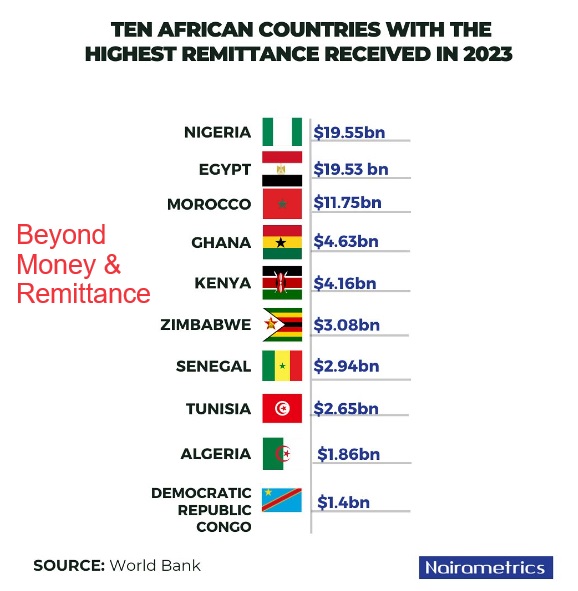
Africa Must Go Beyond Remittance from Its Diasporas to Advance

0

At close to $20 billion, the Nigerian diaspora group is the largest investor in Nigeria. It sends more money into the Nigerian economy than any organization. Yet, it is also the least consequential “group” before the Nigerian government. If the World Bank plans a $2 billion loan, it will send us a sermon. If the IMF wants to ship a $1 billion loan, it will ask for reforms. Yet, a group of people wire close to $20 billion, and cannot get a simple shift on how the leaders and the governments act or behave. That is unfortunate!

The funds to rebuild Africa are already available. The lineage of the first generation African diasporas (Robert Smith, Tiger Woods, etc)  and the recent diasporas have the capacities to fund Africa. The challenge, unfortunately, is that no one has a vehicle, on how that could be executed at scale.

We like to quote these “monetary figures” as success. Sure, remittance is great. But it is a limited gain. About 90% of my Chinese PhD school mates in Johns Hopkins are now in China (using their LinkedIn profiles). The government has this secondictor fund which is now worth about $100 billion, and if you have ideas, you can apply and the government will fund your mission.

So, what do they do? You work for AMD, Nvidia, ADI, Intel, etc for 4-6 years, you send a proposal to the government, and within months, the government will help you relocate with $10m in the bank to build products!

Our continent needs to explore how to build such enablers even as the diasporas drop their leftovers for their homelands. Get me right: remittance is great, but it has to go beyond that. There needs to be a framework around this money in the homelands.

Comment on Feed

Comment: “Remittance is not investment.”

My Response: Noted, but you can remit money and the receiver can invest it.  People build houses and the funds are remitted and counted as remittance. So, while it is not an investment in the typical sense, the funds are also invested. That said, in my usage, while it cannot be classified as an asset class in the typical investment framework, when you send money into an economy, you are investing in that economy.

That is why cities compete to host sports games because when people come, they help the local economy. If you agree that customers are investors, you can extrapolate that when you sell to that person, that person is investing in your business. So, when diasporas send funds into Nigeria, they’re investing in the Nigerian economy but that would be spent!


Colonial Estates vs. Contemporary Modern Homes

0

The architectural landscape is a canvas that reflects the evolution of society’s tastes, technological advancements, and cultural heritage. Two distinct styles that stand out in this vast panorama are colonial estates and Contemporary modern homes. Each carries its own historical significance, design philosophy, and aesthetic appeal, catering to diverse preferences and lifestyles.

Colonial architecture, with its origins deeply rooted in the American colonial period, is characterized by symmetry, formality, and grandeur. These homes often feature a central front door flanked by multi-paned windows, gabled roofs, and classic decorative elements such as columns and pediments. The interior layout typically follows a strict sense of order, with public living spaces on the ground floor and private quarters above. The charm of colonial estates lies in their timeless elegance and the sense of history they evoke.

On the other hand, Contemporary modern homes break away from traditional forms to embrace minimalism, open spaces, and innovative use of materials. The design philosophy here is “form follows function,” with an emphasis on simplicity, clean lines, and integration with the surrounding environment. Large windows and open floor plans are hallmarks of this style, inviting natural light to become a central design element. Contemporary homes often incorporate sustainable materials and technologies, reflecting a growing consciousness towards eco-friendly living.

The choice between Colonial and Contemporary modern homes is more than just a matter of aesthetic preference; it’s a reflection of one’s lifestyle and values. Colonial estates appeal to those who appreciate classic design and the craftsmanship of a bygone era. In contrast, Contemporary modern homes resonate with those who seek a more dynamic, fluid living space that aligns with the pace of modern life.

When deciding between these two architectural styles, potential homeowners must consider their daily needs, long-term goals, and personal taste. Colonial estates may offer the charm of yesteryear with their rich materials and intricate details, while Contemporary modern homes provide a blank slate for self-expression and a lifestyle unencumbered by the maintenance of traditional homes.

Ultimately, the debate between colonial estates and Contemporary modern homes is not about which is superior, but rather about finding the right fit for an individual’s unique vision of home. Whether one leans towards the historical allure of colonial architecture or the sleek pragmatism of modern design, both styles offer distinct advantages and the promise of a home that reflects the owner’s identity and aspirations.

As we continue to build and inhabit spaces, the conversation between these two architectural styles will persist, reminding us that our homes are more than just shelters—they are expressions of our collective history and individual stories waiting to be told.

Colonial homes appeal to those who appreciate classic design, historical context, and a sense of formality. They offer a connection to the past and a certain stateliness that is hard to replicate. On the other hand, Contemporary modern homes resonate with individuals who prioritize efficiency, sustainability, and a seamless flow of living spaces. These homes are tailored for the modern dweller who values simplicity, natural light, and a minimalist aesthetic.

PEPE Down 30% and Dogecoin (DOGE) 25% Over Past 30 Days; Rollblock Price Has Continued To Surge From June into July

0

Over the past month major coins such as Dogecoin (DOGE) and Pepe (PEPE) have seen huge declines. Both meme coins are currently in the red, a trend followed by other meme coins, and there is no indication of recovery anytime soon. Unsurprisingly, market participants are pessimistic, not holding up much hope for a bullish trend.

However, Rollblock could be a stronger alternative. Rollblock (RBLK) is emerging as a trailblazing altcoin with a tempting sale price of $0.0154. The first casino-backed Play-to-Earn token has experienced a 54% increase in its initial price and experts believe it could see a 25x rally in upcoming weeks. 

PEPE’s Price Crashes In June

Pepe has been one of the market’s worst performing meme coins, with a price decline of 30% over the past month. The current trading price for a PEPE coin is  $0.000000934, which represents a 45% decline from its highest price in 2024 of $0.00000147. Most experts believe the coin will continue to trade at this bearish rate, which has caused Pepe to fall out the top 3 ranked meme coins. 

The bearish stance and rise of new coins, such as $PORK are undermining PEPE’s legitimacy. However, the entire meme coin market is in a slump and Pepe could see returns once the market starts to recover. 

DOGE Price Decline Signals No Short Recovery

Dogecoin experienced a 25% price decline in 2024. Attempts of a bounce back have been halted by bearish pressure, and a further decline might be on the horizon. July is shaping up to be even worse for Dogecoin, with its price going down over 5.13% in less than a week. Dogecoin is now trading at $0.1043. 

The turbulence experienced by Dogecoin is not surprising during a period of crypto market crash. This is exacerbated by Dogecoin’s lack of real-world utility, which has been a key criticism among holders. Nonetheless, Dogecoin enjoys huge support from celebrities and a massive community, giving it a solid network to stage an upset in the future.

Rollblock Outperforms Major Meme Coins 

Rollblock is emerging as a gem to investors seeking greater gains in a turbulent crypto market. The price of RBLK is rapidly increasing, indicating the growing confidence in this project. With a price surge of 54% in less than two months, it’s no surprise that some analysts think RBLK can be the top DeFi token of 2024.

Rollblock (RBLK) is gaining traction in the GambleFi market by offering a mix of decentralized and centralized gaming via a licensed online casino. It’s perceived as a disruptor in the online gambling industry, offering significant value to gamers, cryptocurrency enthusiasts, and investors. 

One of the reasons for the appeal among investors is the platform’s revenue share system, which distributes up to 30% of its online casino weekly profits to RBLK token holders. The full-fledged gaming hub offers over 150 casino games sourced from reputable software vendors, regularly adding new titles. These include classics like blackjack and slots, as well as new digital games. Sports betting will soon be added to the platform, which could further drive up Rollblock’s popularitY. 

Another star feature is Rollblock’s removal of KYC requirements. Players can register using their email or decentralized crypto wallet instead of needing to pass numerous checks. All bets on the platform are secured using blockchain technology. This makes changing bets impossible and offers full transparency as all bets are recorded on the blockchain. 

Rollblock has already sold over 110 million $RBLK tokens during its presale. With just 60% of its 1 billion token supply being sold during its presale, investors are running out of time to capitalize on one of the fastest growing altcoins in the market. According to experts, Rollblock’s returns could pass 800% by the end of 2024, outperforming major altcoins like Solana. 

Investors who get involved today will be able to benefit from numerous sign-up rewards, which will allow them to maximize their returns! Invest today and buy $RBLK for its lowest ever price. 


Discover the Exciting Opportunities of the Rollblock (RBLK) Presale Today!

Website: https://presale.rollblock.io/

Socials: https://linktr.ee/rollblockcasino 

Interest Grows for Top AI tokens Render and Superintelligence Alliance, But This New Crypto Offers Massive ROI Opportunity

0

With the crypto market battling the bear trend, Render is presently at the tail end of the price chart; however, with increased interest from investors, it has a strong potential for growth in the coming weeks. Meanwhile, Artificial Superintelligence Alliance, a recently merged AI token, is retracing after witnessing massive rallies a few days ago. However, for crypto investors seeking a huge ROI opportunity, Angry Pepe Fork could be a better option. Having started presale a few weeks ago, the team has raised almost $200K in a short timeframe, signaling massive investor interest.

Angry Pepe Fork – The Top Choice for Investors Seeking High Returns

Angry Pepe Fork is a Solana-based revolutionary cryptocurrency that aims to lead the crypto market. Based on its current success in presale, it will be impossible for AI cryptos like Render and Superintelligence Alliance to catch up. In just a few weeks of the presale, Angry Pepe Fork has already raised over $195k in presale.

As such, analysts are projecting $600k before the month runs out. One of the attractive factors is the community-driven approach. The Angry Pepe Fork ecosystem is designed to incentivize users through quests. The ecosystem recently joined the TaskOnCampaign, where a $50K giveaway is shared with users who complete epic challenges and quests.

Also, there is the amazing conquer-to-earn model where members of the APORK army earn together by defeating zombie meme coins, but also they can earn individually by engaging in the community. Users can lock their tokens for a minimum of 30 days and maximum of 90 days and earn notable APY rewards.

At the current stage 1 of the presale, the token is sold for $0.014 with an ongoing 10% discount for new users who use the promo code APORKS1. Notably, the ecosystem has a strict supply of 1.9B tokens like Bitcoins 21M cap. Overall, analysts project 10x rallies before the end of presale and 40x on the listing.

Render Price Backed To Hit Triple-Digits by Top Analyst

Render (RNDR) is a crypto-enabled platform that allows users to contribute their unused GPU power to improve graphics and visual-related projects. As one of the AI tokens, the Render price has surged in recent weeks as the AI market booms. According to AMCryptoAlex, a popular crypto analyst, it is one of the best AI cryptos to buy today.

The analyst believes that Render has turned its resistance zone into a support zone. As such the token could hit 3 digits in this cycle. While the Render market sentiment remains bearish, the Render trading volume is surging as investors move to buy the dip.

Artificial Superintelligence Alliance Price Expected to Rebound Amid Market Volatility

Artificial Superintelligence Alliance (FET) is a recently merged crypto project between singularityNet, Fetch.ai, and Ocean Protocol. It is primarily aimed at hastening the development of AI innovations and blockchain efficiency.

As per CoinMarketCap data, the Artificial Superintelligence Alliance price soared by 385% in the past year but dropped 44% in the past month. While key market indicators such as the Artificial Superintelligence Alliance trading volume and market cap are showing mixed signals, popular crypto analyst Whale of City backs the token to hit double digits in the coming weeks.

What is the Top Crypto Pick for July?

Making a smart investment choice can turn average investors into millionaires. While Render and Artificial Superintelligence Alliance has the potential for future growth, Angry Pepe Fork’s unique staking model gives it an edge. With the growing momentum, it could set a new record soon.

Website: https://angrypepefork.com/

Presale: Visit Angry Pepe Fork Presale

Telegram: https://t.me/AngryPepeFork

Twitter: https://x.com/AngryPorkCoin


Examining Africa’s Digital Landscape

0

The digital sector in Africa, while not as prominent as its Western counterparts, is a burgeoning field with immense potential and unique challenges. The continent has witnessed a significant transformation in recent years, driven by a young, innovative population and an increasing penetration of internet connectivity.

Despite the progress, the digital divide remains a stark reality. As of 2022, only 36% of Africa’s population had access to broadband internet. This is compounded by a digital gender gap, with a notable disparity in internet usage between men and women. The infrastructure reach and the quality of services available are still catching up with global standards, with many living beyond the reach of high-speed internet connections.

However, the narrative is not solely one of challenges but also of resilience and innovation. The digital technology industry in Africa has grown organically, with incubators, startups, tech hubs, and data centers sprouting across the continent without significant government aid. This growth is a testament to the entrepreneurial spirit prevalent among the youth, who are leveraging digital technology to address the challenges posed by COVID-19 and beyond.

In the fintech sector, startups like Lidya in Nigeria and Flash in Egypt are revolutionizing financial services. Lidya provides quick loan approvals and personalized financial insights, catering to the needs of small and medium-sized enterprises (SMEs) and helping them grow. Flash, on the other hand, is enhancing financial accessibility for underserved populations, offering secure and convenient alternatives to traditional banking.

The healthcare sector is also witnessing innovation with startups such as Helium Health in Nigeria and Maisha Meds in Kenya. These companies are improving access to quality healthcare services through electronic medical records and telemedicine consultations, addressing the healthcare accessibility barriers, especially in remote areas.

Renewable energy and sustainable practices are being promoted by startups like SunCulture in Kenya, which is using renewable energy to address agricultural challenges and enhance food security in the region.

Other notable startups include Kobo360, a logistics company that is optimizing the supply chain network in Nigeria and beyond; Flutterwave, a payments technology startup that has reached a valuation of $3 billion; and Yoco, a South African fintech startup providing point-of-sale solutions to small businesses.

These startups are not just business ventures; they are a testament to the entrepreneurial spirit and innovative prowess of Africa’s youth. They are creating jobs, fostering inclusive growth, and reshaping the future of Africa’s digital economy. The success stories of these startups serve as an inspiration and a blueprint for future entrepreneurs across the continent and the world.

The rise of these tech startups in Africa is a clear indicator that the continent is on a steadfast path towards a robust digital economy. With continued support, investment, and the right policies, the African tech ecosystem is poised for even greater success, making a global impact and transforming the lives of its people.

The World Bank’s Digital Economy for Africa (DE4A) initiative aims to digitally enable every individual, business, and government in Africa by 2030, aligning with the African Union’s Digital Transformation Strategy 2020-2030. This ambitious goal reflects a commitment to laying the foundations for a robust digital economy, with necessary policy and regulatory frameworks to encourage investment and effective competition.

The private sector’s role is pivotal in achieving this vision. A harmonized environment that guarantees investment and financing is essential to close the digital infrastructure gap and achieve accessible, affordable, and secure broadband across demographics, gender, and geography.

While the digital sector in Africa may not currently exhibit the same level of flamboyance as its Western contemporaries, it holds a promise of a dynamic and inclusive digital future. The path forward involves not only addressing infrastructural and regulatory challenges but also harnessing the continent’s human capital to foster a digital ecosystem that is resilient, innovative, and equitable. The journey towards a digitally empowered Africa is underway, and it is one that carries the hopes and aspirations of its people towards a brighter, more connected future.