DD
MM
YYYY

PAGES

DD
MM
YYYY

spot_img

PAGES

Home Blog Page 3165

Blast team recovers 17.5K ETH or $62m from Munchables contract exploits

0

The crypto gaming community was shaken by the recent exploit of the Munchables game contract, which resulted in a staggering loss of 17.5K ETH, equivalent to approximately $62.5 million. This incident serves as a stark reminder of the vulnerabilities that exist within the digital asset space, particularly in emerging sectors like GameFi and decentralized finance (DeFi).

Munchables, a game built on the Ethereum Layer-2 solution Blast, was designed to offer players an engaging experience with NFT-based creatures, allowing them to stake tokens and earn rewards. However, the security breach has highlighted the risks associated with smart contracts and the importance of rigorous auditing and security measures.

According to reports, the exploit was executed through a sophisticated attack that involved manipulating the game’s contract. The attacker was able to assign themselves a large balance of Ether before upgrading the contract to a new implementation that appeared legitimate, subsequently withdrawing the funds.

The developer, known by the alias “Werewolves0943,” was initially linked to a significant security breach that drained over $62.8 million in Ether from the Ethereum-based NFT game Munchables. The hack sent shockwaves through the crypto world, raising alarms about the vulnerability of blockchain systems and the increasing sophistication of cyber-attacks, often linked to state-sponsored entities like North Korea.

However, in an unexpected twist, the developer engaged in negotiations with the Munchables team and, within an hour, agreed to return the stolen funds. The developer shared all the private keys involved in the hack, which held a substantial amount of Ether and the owner key containing the rest of the funds.

The Blast blockchain, on which Munchables is built, played a crucial role in the recovery process. Pacman, the pseudonymous creator of Blast, expressed gratitude towards blockchain investigators, particularly ZachXBT, for their support in recovering the funds. The community’s response has been overwhelmingly positive, with many praising the developer’s decision to return the funds without any ransom—a decision that is all too rare in the world of cybercrime.

This incident not only highlights the inherent risks associated with digital assets and decentralized platforms but also underscores the importance of ethical conduct in the face of wrongdoing. It serves as a reminder that the crypto community can come together to resolve crises and that, sometimes, individuals do choose to do the right thing, even when facing the temptation of immense financial gain.

The aftermath of the exploit has sparked a debate within the crypto community regarding the appropriate response to such incidents. Some have called for a rollback of the blockchain to reverse the transactions and recover the stolen funds, a move that would be controversial and could undermine the principles of decentralization and immutability that are foundational to blockchain technology.

This event underscores the need for continuous improvement in the security protocols of blockchain projects. Developers, auditors, and the broader community must collaborate to establish best practices and implement safeguards that can prevent similar exploits in the future.

As the Munchables team and the crypto community grapple with the fallout of this exploit, it is crucial to reflect on the lessons learned and work towards creating a more secure and resilient ecosystem for all participants.

For those interested in the technical details of the exploit and the ongoing discussions about potential solutions, further information can be found through the provided references. The Munchables incident is not just a loss of funds but a valuable lesson in the importance of security in the ever-evolving landscape of crypto gaming and DeFi.

Two KuCoin founders facing Criminal Charges in the US

0

The recent indictment of KuCoin and its founders by the U.S. Department of Justice marks a significant moment in the ongoing dialogue between cryptocurrency exchanges and regulatory authorities. The charges, which allege unlicensed money transmission and violations of the Bank Secrecy Act, highlight the complex landscape of legal compliance that digital currency platforms must navigate.

KuCoin, a prominent global cryptocurrency exchange, along with its founders Chun Gan and Ke Tang, are accused of operating without the necessary licensing and failing to implement an adequate anti-money laundering (AML) program. This case underscores the importance of adherence to regulatory frameworks designed to prevent money laundering and terrorist financing within the financial sector, including the burgeoning field of cryptocurrencies.

The allegations suggest that KuCoin took advantage of its substantial U.S. customer base to grow into one of the world’s largest cryptocurrency exchanges, all while allegedly neglecting the legal obligations imposed by U.S. law. The indictment alleges that the exchange facilitated the movement of over $5 billion in suspicious funds, raising serious questions about the role of digital currency platforms in the financial ecosystem.

However, the Commodity Futures Trading Commission’s (CFTC) recent classification of Bitcoin, Ethereum, and Litecoin as commodities marks a significant moment in the evolving landscape of cryptocurrency regulation. This decision emerged from the CFTC’s legal action against the KuCoin exchange, which has been charged with conducting illegal off-exchange commodity transactions without proper registration.

By defining these digital assets as commodities, the CFTC aligns them with other tradable goods like oil, gold, and agricultural products, rather than treating them as securities, which are typically subject to more stringent regulatory standards.

This move by the CFTC could potentially streamline the regulatory process for cryptocurrencies, providing clearer guidelines for exchanges and traders. It also reflects a growing recognition of the unique nature of cryptocurrencies and the need for a regulatory framework that adequately addresses their distinct characteristics.

The classification of these cryptocurrencies as commodities rather than securities may also have implications for investor protection, market integrity, and financial stability. It suggests a shift towards a regulatory approach that prioritizes the trading aspects of cryptocurrencies, focusing on aspects such as transparency, fair trading practices, and the prevention of fraud and manipulation.

As the regulatory environment for cryptocurrencies continues to develop, the CFTC’s stance is likely to influence future decisions and policies. It’s a pivotal development that stakeholders in the cryptocurrency space will be watching closely, as it could shape the future of digital asset trading and regulation.

The balance between fostering innovation in the financial technology sector and ensuring robust legal compliance is delicate and essential. The outcome of this case could set a precedent for how cryptocurrency exchanges engage with regulatory bodies and manage their operations to prevent illicit activities.

The broader implications for the cryptocurrency industry are clear: exchanges must prioritize transparency and compliance to maintain the integrity of the financial markets. As the legal landscape evolves, so too must the practices of these digital platforms, ensuring they do not become conduits for financial crime.

The KuCoin situation is a developing story, and its resolution will likely have far-reaching consequences for the cryptocurrency community and its relationship with global regulatory frameworks. It is a pivotal moment that may define the future of digital currency regulation and the measures exchanges must take to secure their place in the legitimate financial world.

Crypto Bull Run 2024: Altcoins Like JASMY And AIOZ See Surprising Price Jumps; BlockDAG’s Presale Hits $9.8M, Targets $600M

0

Despite the recent adjustments in the cryptocurrency market, a number of lesser-known coins have seen their prices skyrocket in the past month. Specifically, JASMY has seen an increase of 59%, while AIOZ has impressively climbed by 242.88%. Meanwhile, BlockDAG (BDAG) is quickly becoming a prominent figure in the cryptocurrency presale arena, with aims to reach a lofty presale goal of $600 million, already making significant headway with $9.8 million raised. 

59% Growth for JasmyCoin After Announcing Partnership with Panasonic

JasmyCoin’s value has risen by 46% in the last week and 59% over the last month, a surge that came right after revealing a new partnership with Panasonic. This collaboration seems to have ignited investor interest, leading to a notable increase in JASMY’s price and trading activity. This boost reflects the market’s optimism about the potential benefits of combining blockchain and IoT technologies through the JASMY-Panasonic collaboration.

AIOZ’s Value Skyrockets

In the recent 30-day period, AIOZ’s price experienced a substantial leap of 242.88%, with an extraordinary year-on-year increase of 3,189.58%. This trend is expected to persist if the current favorable market sentiment continues. The bullish forecast is bolstered by numerous indicators suggesting a buying opportunity and a high Fear & Greed Index score of 74, indicating a strong optimism among investors.

BlockDAG: A Top Contender for the 2024 Crypto Bull Run

BlockDAG has become a standout in the presale market, having already raised an impressive $9.3 million in its fifth batch of presale, with a goal of reaching a $600 million presale. With over 5.4 billion coins sold thus far, BDAG is on a fast track, paralleling giants such as Solana and Ethereum with its decentralized offerings, including smart contracts. BlockDAG also offers developers convenient APIs and tools for creating DApps across various applications, promoting secure, speedy, and interoperable blockchain technology.

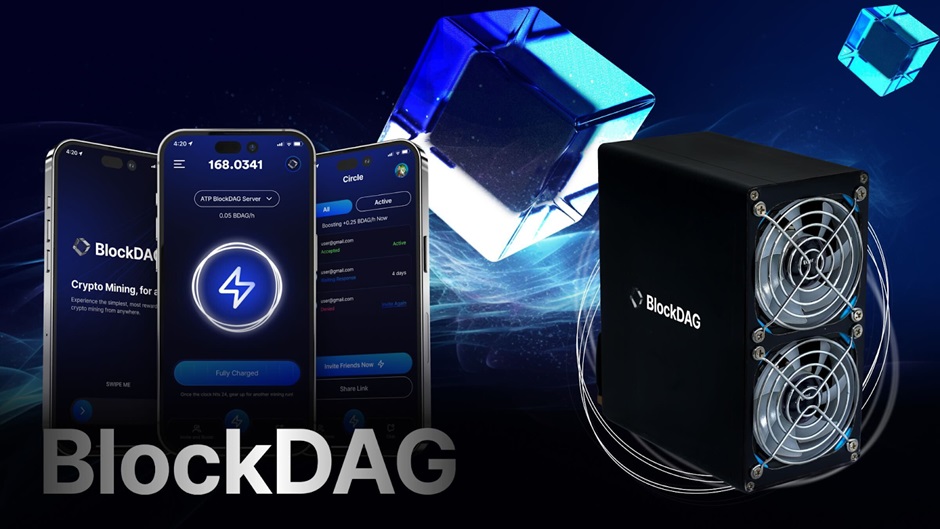
In addition, BlockDAG is making crypto mining more accessible through its innovative solutions, including the X-series mining rigs, a cloud mining service, and a mobile mining app available on the Apple Store and Google Play.

Following the remarkable interest from early investors and the swift $9.8 million raised, BlockDAG, priced at $0.003 during its fourth presale batch, has announced a $2 million mega giveaway for 50 members of its community, further encouraging participation and engagement.

Overview

JasmyCoin has marked substantial progress with a 46% increase in the past week and 59% over the past month, following the Panasonic partnership announcement. AIOZ has surged by 242.88% in the monthly chart, with expectations of continued upward momentum. BlockDAG (BDAG), with $9.8 million raised in its presale, is ambitiously aiming for a $600 million target, setting the stage to compete with leading DApp development platforms like Solana and Ethereum.


Join BlockDAG Presale Now:

Website: https://blockdag.network

Presale: https://purchase.blockdag.network

Telegram:https://t.me/blockDAGnetworkOfficial

Discord: https://discord.gg/Q7BxghMVyu

How To Launch AI Startups and Why Amazon is Investing $4 billion in Anthropic

0

In a Tekedia classnote on AI, I noted three ways to launch an AI startup:

(1) Partner with a company with a large user base. OpenAI’s ChatGPT partnered with Microsoft which has millions of users, with Microsoft providing the feedstock (yes, the data) to advance ChatGPT at scale.

(2) Spend a huge amount of money via promos and advertisements to get data which will improve your AI models as quickly as possible. Chinese ecommerce startup, Temu, uses AI to power shopping in its ecosystem., and it has been spending on adverts to gather data to improve the game.

(3) Bake AI into existing in-house data. If you are lucky, and you have the data as Google does, you can launch Bard, Gemini, etc once your code is ready.

Yes, if you want to do this, one of these playbooks will do. Amazon has the data and Anthropic has the tech, so Amazon and Anthropic are coming together, in the same way ChatGPT and Microsoft, Twitter and Grok, came together:

“Deepening our commitment to advancing generative AI, today we have an update on the announcement we made to invest up to $4 billion in Anthropic for a minority ownership position in the company. Last September, we made an initial investment of $1.25 billion. Today, we made our additional $2.75 billion investment, bringing our total investment in Anthropic to $4 billion”.

The AI era is the tech era in which the upstarts will need the incumbents to make any impact, because the competitive advantage does not just come from algorithms, but from data feedstock.

Amazon concludes $4 billion investment in AI Startup Anthropic, Its Largest Venture Investment

Amazon concludes $4 billion investment in AI Startup Anthropic, Its Largest Venture Investment

0

Deepening our commitment to advancing generative AI, today we have an update on the announcement we made to invest up to $4 billion in Anthropic for a minority ownership position in the company. Last September, we made an initial investment of $1.25 billion. Today, we made our additional $2.75 billion investment, bringing our total investment in Anthropic to $4 billion – Amazon statement.

In a move that signals Amazon’s determination to compete in the artificial intelligence (AI) race, the e-commerce giant has announced its largest outside investment to date, pouring $2.75 billion into Anthropic, a San Francisco-based startup renowned for its groundbreaking work in generative AI.

This investment comes amid the AI buzz that has seen tech giants unveiling their own chatbots and investing in general AI, spurring the rapidly emerging industry.

Anthropic, recognized as a frontrunner in generative AI, has been making waves with its innovative products, particularly its foundation model and chatbot Claude, which directly compete with industry giants like OpenAI and ChatGPT. The infusion of capital from Amazon marks the second tranche of funding in a partnership that began with an initial $1.25 billion investment in September, per CNBC.

According to sources close to the deal, Amazon will maintain a minority stake in Anthropic, refraining from securing a board seat in the company, CNBC reported. The investment was structured based on Anthropic’s last valuation, which stood at a substantial $18.4 billion, highlighting the confidence both parties have in the startup’s potential.

Over the past year, Anthropic has been on a fundraising spree, closing five significant deals totaling approximately $7.3 billion. With Amazon’s latest injection of capital, the total investment in Anthropic exceeds a staggering $10 billion, firmly establishing the startup as a major player in the AI arena.

Founded by former executives and employees of OpenAI, Anthropic has quickly risen to prominence, posing a formidable challenge to established industry leaders.

The announcement of Amazon’s investment comes hot on the heels of Anthropic’s unveiling of Claude 3, its most advanced suite of AI models yet. Claiming superior performance to OpenAI’s GPT-4 and Google’s Gemini Ultra on industry benchmark tests, Anthropic’s latest offering underscores the company’s relentless pursuit of innovation and excellence.

In response to the news, Swami Sivasubramanian, vice president of data and AI at Amazon Web Services (AWS), expressed enthusiasm about the strategic collaboration.

“Generative AI is poised to be the most transformational technology of our time, and we believe our strategic collaboration with Anthropic will further improve our customers’ experiences, and look forward to what’s next,” he said.

Amazon’s significant investment in Anthropic mirrors a broader trend among cloud providers, who are aggressively investing in AI capabilities to maintain their competitive advantage. This move also reflects the intense competition within the tech industry, where companies vie for dominance in emerging fields like AI.

The partnership between Amazon and Anthropic is characterized by mutual benefits, with Anthropic committing to utilizing AWS as its primary cloud provider and leveraging Amazon’s cutting-edge chips for training, building, and deploying its AI models. Amazon’s foray into designing its own chips further underscores its commitment to innovation and staying ahead of the curve.

While Amazon’s investment in Anthropic marks a milestone in the AI industry, it also raises questions about the potential risks associated with increasingly complex AI models. Recent incidents, such as Google’s decision to take its AI image generator offline due to inaccuracies and questionable responses, highlight the challenges inherent in deploying advanced AI technologies.

Despite these challenges, Anthropic remains optimistic about the future of generative AI, underlining its commitment to developing safe and capable models.

“Of course no model is perfect, and I think that’s a very important thing to say upfront,” Anthropic co-founder Daniela Amodei told CNBC earlier this month. “We’ve tried very diligently to make these models the intersection of as capable and as safe as possible. Of course there are going to be places where the model still makes something up from time to time.”

Amazon’s venture into AI investment extends beyond Anthropic, with previous significant investments including electric vehicle maker Rivian. These strategic partnerships underscore Amazon’s multifaceted approach to innovation, leveraging external expertise to drive growth and maintain its competitive edge.

However, such investments have drawn scrutiny from regulators, particularly regarding the potential for anticompetitive behavior and revenue manipulation. The Federal Trade Commission (FTC) has launched an inquiry into AI investments and partnerships between major tech companies and startups, signaling increased regulatory scrutiny in this rapidly evolving space.

Despite regulatory challenges, Amazon’s investment in Anthropic reaffirms its commitment to leading the AI race and underscores the pivotal role of startups in driving innovation in the tech industry.