DD
MM
YYYY

PAGES

DD
MM
YYYY

spot_img

PAGES

Home Blog Page 3187

The Next Big Thing in Crypto: 3 AI Platforms Set to Dominate 2024

0

The AI crypto sector is currently running on a bullish schedule, and Internet Computer (ICP) and Injective (INJ) have joined the high-performing coins in the market. The coins leverage development and innovation on their platforms to land profits, making them very stable sources of income in the crypto market.

Now, we have a new token that is bringing action to the DeFi sector. RCO Finance (RCOF) has AI solutions ready, and traders will experience a different side of trading in the crypto-verse.

The RCOF presale is also ongoing, and that’s what the investors are pulling over for.

RCO Finance Is Matching Up with the Fast-Growing AI Market

The RCO Finance platform has seen potential in the AI sector, and the project is already well-positioned to become a key player in the industry. Its Robo Advisor is a game-changer for traders, as the algorithms are designed to enhance profitable trading in a bullish market.

Robo Advisor’s main feature is the machine learning setup that allows it to familiarize itself with users’ unique trading preferences. The AI then leverages its insights and in-depth analysis of the market to provide traders with better-informed tips instead of offering generic trading advice.

For instance, you might be locked in on an ETH/DOGE pair while the Robo Advisor drops tips on a derivative option, entering bullish patterns. Traders can even set Robo Advisor to execute certain trades on their behalf after evaluating predictions from the assistant.

In addition to having a phenomenal trading assistant, RCO Finance removes regional restrictions, allowing users to trade in markets that might have been unavailable to them on other platforms. Also, there is no need for a KYC verification.

Internet Computer Gets Bullish Forecasts

Not many tokens are looking bullish at the moment. The crypto bull run has hit a pause for the past two weeks, as Bitcoin’s decline and a massive sell wave have left the top crypto coins in a slump.

The ICP price was also hit, but their price predictions and market sentiments remain high. Also, the recent news of NVIDIA becoming the most valuable company in the world has caused a spike in the Internet Computer network. Even amid bears and sellers, analysts still believe ICP is on its way to closing 2024 on net gains.

Some analysts’ predictions put Internet Computer in line for a maximum valuation of $17.45 before the year ends. There will be a lot of volatility in the next few months, but Internet Computer has the experts’ backing to land profits.

Injective Lands Web3 Milestone Despite Token Dip

INJ has been on quite the low for a while, succumbing to six-month lows on Wednesday. Injective sports is an interesting chart, as the token is trading at 30% losses, but the investors still demand more.

The reasons might be plausible. Injective recently sealed a deal with DEGA, a Web3 game builder platform that operates across the top blockchains. Injective’s developer-friendly network will allow builders to launch Web3 apps from the INJ chain.

With the Web3 gaming sector set to spike significantly shortly, Injective could benefit from the development. This and the potential airdrops to be launched on the blockchain are the major drivers of greed on Injective.

Don’t Miss the RCOF Presale!

RCO Finance has even more features in store, but you can only access them by owning some RCOF. And the presale is the best time to get your RCOF.

RCOF tokens cost just $0.0127, as they are still in Stage 1 of the presale. If you need more push, the tokens will come with 3000% profit, which will be cashed when RCO Finance goes live. This means a $1000 investment would give you $30,000.

The project will continue to attract users with its game-changing AI technology and SolidProof-audited smart contract, making it a viable investment in the long term.

Again, make sure to take advantage of RCOF today!

For more information about the RCO Finance Presale:

Visit RCO Finance Presale

Join The RCO Finance Community

A Look at Trump’s Green Card Proposal for Foreign Graduates

0

In a surprising turn of events, former President Donald Trump has proposed a policy that would grant green cards to foreign graduates from U.S. colleges, marking a significant shift from his previous stance on immigration. This proposal has sparked a wide range of reactions and discussions about the future of immigration in the United States.

Trump’s suggestion, which came during a podcast interview, would potentially allow hundreds of thousands of noncitizen graduates to remain in the country, providing them with a pathway to citizenship. This move is a departure from his earlier policies that aimed to limit legal migration and is indicative of the evolving landscape of American politics and its approach to immigration.

The former president’s proposal seems to be targeting the “best and brightest,” aiming to retain the talent that foreign students bring to American educational institutions. The idea is that by allowing these graduates to stay, the U.S. can benefit from their skills and contributions to various sectors, especially in high-tech industries where there is a constant demand for skilled workers.

During his presidency, Trump’s administration had proposed curbs on legal immigration, including family-based visas and the visa lottery program. However, his recent statements suggest a recognition of the value that foreign graduates can add to the American workforce and economy. This proposal could represent a significant expansion of the U.S. immigration system, which has been a central topic in Trump’s 2024 bid to return to the White House.

The response to Trump’s proposal has been mixed, with some viewing it as a positive step towards a more merit-based immigration system, while others are skeptical, recalling the former president’s previous anti-immigrant rhetoric and actions. Critics point out the contrast between this proposal and his past comments on immigrants, raising questions about the consistency and reliability of his policies.

The potential benefits of granting green cards to foreign graduates are numerous and can have a significant impact on both the individuals involved and the broader U.S. economy.

Here are some key advantages:

Enhanced Career Opportunities: Green card holders can access a wider job market without the restrictions typically placed on work visas. This allows them to pursue long-term career goals and contribute to the U.S. economy more effectively.

Educational Advantages: With a green card, graduates have the flexibility to continue their education in the U.S. without facing international student visa limitations. This could lead to higher educational attainment and, consequently, a more skilled workforce.

Financial Benefits: Eligibility for federal financial aid and access to in-state tuition rates can significantly reduce the cost of education for green card holders, making higher education more accessible and affordable.

Stability and Security: Permanent residency provides a sense of stability and security, allowing individuals to make long-term plans and investments in their future in the U.S.

Contribution to Innovation: Retaining talented graduates can foster innovation and research, driving technological advancements and economic growth.

Cultural Diversity: Encouraging students from diverse backgrounds to remain in the U.S. enriches the cultural fabric of the nation and promotes global understanding.

Demographic Benefits: As the U.S. faces an aging population, young, skilled immigrants can help balance the demographic scales and support the social security system.

The debate over Trump’s green card proposal for foreign graduates is a reflection of the broader conversation on immigration reform in the United States. It underscores the need for a balanced approach that addresses the country’s economic needs while ensuring fair and humane treatment of immigrants. As the 2024 election approaches, immigration is likely to remain a hot-button issue, with proposals like Trump’s adding new dimensions to the discourse.

The proposal to offer green cards to foreign graduates of U.S. colleges by former President Donald Trump has introduced a new dynamic to the immigration policy debate. It highlights the complexities of the issue and the importance of developing policies that both support the nation’s economic interests and uphold its values. As the conversation continues, it will be crucial to monitor the implications of such proposals on the future of immigration in America.

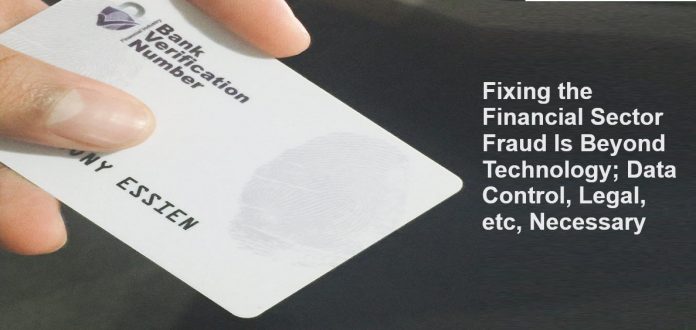
Fixing the Financial Sector Fraud Is Beyond Technology; Data Control, Legal, Enforcement Necessary

1

Great feedback on the piece on how to fix our broken digital security regime in Nigeria. Let me also add that the playbook must not necessarily be anchored on technology alone. Yes, there must be a non-tech component which must be deployed to address some of these issues.

Good People, Nigeria should declare a financial state of emergency on “Cyberfraud, Identity Theft & Wire Fraud” in the nation. In the last three years, many fintech startups have failed, not because of market conditions, but because of this fraud vector. 

I posit that we may even have to redesign the architecture of our financial and banking infrastructures. Look at OTP; it is a magnificent innovation which does reduce fraud. But note that OTP is mainly checking for access, and when you do not have full control of your data, as a user, OTP will bring surprises. 

Today, in Nigeria, you can get any government data of any citizen, starting from a mere phone number. One site, reported by Paradigm Initiative Nigeria (PIN), claims: “We provide millions of our users reliable and quickest services to verify people’s identity using their NIN, BVN, International Passport, Driving License, Voter’s Card and do much more.” Simply, with one stolen or not ID, bad actors can download all your data, and can use that data, to recreate an identity for you. The illusion for most of these services is that the real owner has provided approval; that is not always the case.

One of the biggest frauds in Nigeria a few months ago, which affected many startups, happened because they can now set up accounts of REAL companies by cloning the identities of their owners, and some banks will fail to detect them! You ask for a passport, they provide; BVN, they give; etc. (Solution: always use real-time automatic photo verification).

Nigerians do not have full control of their data as websites are morphing, selling and distributing our data. I expect ONLY the government to be the repository of my data and should prevent others from scrapping to commercialize access to it. Today, if someone calls you, you can use that number to pull information that person submitted when getting that SIM number. We must challenge that. I commend PIN for leading that charge.

Finally, when was the last time you collected N100,000 from a POS agent and the amount was complete? What are we doing to ensure that cheating is stopped in that sector? In the old banking days, an Inspection unit would have taken those bad actors out within weeks. 

Can EFCC help by having a task force to fish out those bad actors as the old banking Inspectorate Unit used to do it? Nigerians are losing money on this selling and buying Naira business called agency banking through this fraud vector. We must stop it!  We do not need to import tech for that. Yes, someone must get annoyed and save the common citizens.

Naira became a “commodity” when Nigeria scaled POS agency banking. When that happened, the Naira, among other features, became a “product” or “service” which could be purchased and resold for “gain”. That is not new since we exchange US dollars for Naira and vice versa, but in this case, you are exchanging digital Naira for cash, and vice versa, within the context of the same currency. Endogenously, it means there are many frictions in the availability, velocity and transmissibility of Naira for POS agents to have imposed a fee to fix them.

Standard Chartered-backed Trading Desk for Bitcoin and Ethereum Spot Options

0

The world of finance is witnessing a significant transformation as traditional banking institutions begin to embrace the digital currency space. A prime example of this shift is the recent announcement by Standard Chartered about the launch of a new spot trading desk for Bitcoin and Ethereum. This move marks a pivotal moment for the integration of cryptocurrencies into mainstream financial services.

Standard Chartered, a leading international bank, has confirmed its plans to establish a spot trading desk for Bitcoin and Ethereum, catering to the growing demand from institutional clients. The London-based desk will be part of the bank’s foreign exchange (FX) trading unit, indicating a strategic alignment with traditional financial markets.

This initiative is not the first of its kind for Standard Chartered. The bank has previously shown a keen interest in the digital asset space, being a backer of digital asset custodian Zodia Custody and its exchange arm, Zodia Markets. Their involvement extends beyond mere trading, with services that encompass access, custody, tokenization, and interoperability within the digital asset ecosystem.

The decision to launch a spot trading desk comes at a time when the cryptocurrency market is maturing, with increased participation from institutional investors. Despite the volatile nature of digital currencies, the establishment of such a platform by a reputable bank like Standard Chartered is a testament to the growing legitimacy and acceptance of cryptocurrencies as a viable asset class.

The bank’s approach to this venture has been cautious and regulatory-compliant. Standard Chartered has worked closely with regulators to ensure that the trading desk meets the necessary standards and provides a secure environment for institutional clients to trade Bitcoin and Ethereum. This careful planning reflects the bank’s commitment
to supporting clients across the wider digital asset ecosystem.

The introduction of the spot trading desk is expected to provide several benefits:

Enhanced Liquidity: By facilitating direct buying and selling of Bitcoin and Ethereum, the desk will contribute to the overall liquidity of the cryptocurrency market.

Institutional Participation: It will enable institutional clients to engage with digital currencies more directly, potentially leading to increased investment and adoption.

Market Stability: The involvement of established financial institutions can lend credibility and stability to the cryptocurrency market, attracting more conservative investors.

Innovation and Growth: Standard Charteris’s move could spur other banks to develop similar offerings, fostering innovation and growth within the financial sector.

Interestingly, Michael Saylor’s MicroStrategy has made headlines once again with its substantial acquisition of Bitcoin. In June 2024, the company added 11,931 BTC to its holdings, investing a staggering $786 million. This purchase increases MicroStrategy’s total Bitcoin holdings to 226,331 BTC, valued at just under $15 billion.

MicroStrategy’s strategy of accumulating Bitcoin has been a topic of discussion among investors and industry observers alike. The company’s aggressive investment in Bitcoin reflects a strong belief in the cryptocurrency as a reliable store of value and a hedge against inflation. This move comes at a time when the market is witnessing increased interest from institutional investors and corporations, looking to diversify their portfolios with digital assets.

The launch of Standard Charteris’s spot trading desk is a clear indicator of the evolving landscape of financial services, where traditional banking and digital currencies are beginning to converge. As the cryptocurrency market continues to grow and mature, we can expect to see more financial institutions exploring ways to integrate these digital assets into their offerings, shaping the future of finance in the digital age.

Nigeria’s Naira Performance Against Other Currencies and Its Impact on Regional Trade

0

The Nigerian Naira has experienced significant fluctuations in its value against other African currencies, which has had a profound impact on regional trade within the continent. The Naira, which is the official currency of Africa’s largest economy, plays a pivotal role in the Economic Community of West African States (ECOWAS) and by extension, the entire African economy.

In recent times, the Naira has seen a steep decline in its value, ranking as one of the worst-performing currencies globally. This depreciation has been attributed to a variety of factors, including increased demand for dollars, uncoordinated policy interventions, and foreign exchange controls.

One of the primary reasons for the Naira’s depreciation is the high demand for the US dollar, driven by various needs such as school fees payments, medical bills, tourism, and the importation of goods and inputs. This demand often outstrips the supply, leading to pressure on the Naira.

Another significant factor is the shortage of dollars in the economy. The Central Bank of Nigeria (CBN) highlighted that oil revenue, Nigeria’s major source of dollars, has drastically reduced, contributing to the foreign exchange shortage.

The dwindling foreign reserves of Nigeria also play a role in the Naira’s depreciation. The reserves, which are necessary for meeting forex demands, saw a decline of 8.46 percent in 2022, affecting the CBN’s ability to stabilize the Naira. Furthermore, the exit of foreign portfolio investors (FPIs) from Nigeria in late 2023 and Q1 has contributed to the decline in foreign reserves, exacerbating the Naira’s depreciation.

The devaluation of the Naira has had a ripple effect on the cost of imports into Nigeria, leading to a decrease in purchasing power and an increase in the cost of goods and services. This situation has inevitably affected Nigeria’s trade with other African nations, as the reduced value of the Naira means less money is available to spend on imports from neighboring countries.

The depreciation of the Naira also poses challenges to the African Continental Free Trade Agreement (AfCFTA), which aims to create a single market for goods and services across 54 nations, intending to boost trade and economic growth across the continent. The performance of the Naira is crucial in this regard, as Nigeria’s participation is vital for the success of the AfCFTA. However, the success of such measures depends on the coordinated efforts of monetary and fiscal policies to stabilize the currency and control inflation.

Moreover, the weak Naira has implications for inflation rates within the region. As the value of the Naira falls, the cost of importing products into Nigeria rises, which can lead to inflation not only in Nigeria but also in other ECOWAS countries that rely heavily on trade with Nigeria. This situation can lead to a vicious cycle where inflation leads to further devaluation of the currency, which in turn leads to more inflation.

The performance of the Naira against other African currencies is a critical factor influencing regional trade. While it presents challenges, particularly in terms of import costs and foreign investment, it also offers opportunities for export growth. The situation underscores the importance of prudent economic management and effective policy interventions to navigate the complexities of regional trade in Africa.