DD
MM
YYYY

PAGES

DD
MM
YYYY

spot_img

PAGES

Home Blog Page 3202

Why Nations Remain Poor and the Power of Capital

0

Below, I share a video on why some nations are poor, and why others are rich. It turns out that rich nations operate on CAPITAL while poor ones are configured around money. In those poor nations, money is supreme, with largely nonexistent capital, making it harder to unlock critical enablers to drive growth and prosperity.

Money is a subset of Capital, and companies and nations which allow Money to rule over them underperform. In Nigeria, we’re pursuing too much money, with limited efforts designed to advance Capital. That must change.

Until Nigerian policymakers focus on creating systems for Capital development and evolution over our fixation on Money, we will continue to struggle. When I read our policies on land, agriculture, etc, I see policies geared towards Money, when what we should focus on is how to stimulate Capital, even as we pursue the scaling of money.

Money is a subset of Capital, and companies and nations which allow Money to rule over them underperform. In Nigeria, we’re pursuing so much money, with limited efforts designed to advance Capital, triggering a system where there are many farmlands but no capital market product for farmlands. And without Capital, we scale poverty. When South Africa’s stock (capital) market has close to $1 trillion value, and Nigeria’s is hovering around $50 billion, you can see that we have a lot of money in Nigeria, but limited Capital. That must change.

National Debt, American Wonders and the Wisdom from Uwadiegwu

0

It is an anomaly: the nation with the largest debt is also the one that is seen as the most developed and richest. The US national debt  is the total amount of outstanding borrowing by the US Federal Government accumulated over the nation’s history. Today, that number is about $34.75 Trillion.

It is a real economic mystery when you think deeper: Nigeria does not even have a lot of debts, but it is “poor”, and experts will tell you not to over-borrow because it can put you in trouble, if you are unable to pay. So, how can a New Yorker who has thousands of dollars of debt on his head, better than an Ovim man who has no debt? That is where the mystery is solved! Yes, the magic of capital, over money, making the United States better and richer.

First, some experts have modeled that the United States interest payment will hit $1.6 trillion by year end, making it the largest US Government outlay. In nearly every other nation in the world, that would be an economic apocalypse. But for the United States with the custodial of the dollar, the impact would be muted.

Why? In an Igbo novel, Uwadiegwu, the author dropped a great hint: when you borrow, go to your kinsman so that if the debt goes bad, he may lock you up, but at the same time he would be expected to take care of your family since he is your kinsman! That is how debts work: pains are lesser when the debt is home. America borrows dollars and they’re responsible for printing dollars. No other country enjoys that combo.

So, provided the US has those special printers, they can print US dollars, and if necessary, flood the world with dollars. Like the Igbo name “Nwaoha” – a child is born to the community, not just to the parents – the US dollar is a currency for the world, and not just for America. So, when the US prints, and triggers inflation, everyone shares the fun!

Of course, the US companies which hold these debts cannot wish for the US to have pains since if the US goes, companies like Blackrock, State Street, etc will fade. That is possible because these debts are all localized.

Contrast with Nigeria. Nigeria has to earn US dollars to pay its US dollar-denominated debts, and the debts are not with Nigerian companies or entities. Magically, that burden pushes Nigeria to make decisions which must help it earn US dollars to service those debts. Consequently, the agriculture policy focuses on things which can be exported to earn US dollars, and not necessarily what people need for dinner, lunch and breakfast in Ovim, Ibadan, Uyo, and Yobe.

Money is a subset of Capital, and companies and nations which allow Money to rule over them underperform. In Nigeria, we’re pursuing so much money, with limited efforts designed to advance Capital, triggering a system where there are many farmlands but no capital market product for farmlands. And without Capital, we scale poverty. When South Africa’s stock (capital) market has close to $1 trillion value, and Nigeria’s is hovering around $50 billion, you can see that we have a lot of money in Nigeria, but limited Capital. That must change.

Helium Mobile’s Licensing Tech Stack

0

In the rapidly evolving landscape of wireless connectivity, US operating Helium Mobile has emerged as a trailblazer with the launch of its tech stack licensing program, aimed at device manufacturers. This strategic move marks a significant milestone in Helium Mobile’s mission to revolutionize the $3.1 trillion global wireless network infrastructure industry.

Helium Mobile’s licensing program is designed to empower device manufacturers by providing them with access to a comprehensive suite of tools and technologies that streamline the integration of advanced, decentralized connectivity solutions. By leveraging Helium Mobile’s tech stack, manufacturers can bypass the complexities of navigating the Web3 tech environment, allowing them to focus on their core competencies and innovation.

Key Features of Helium Mobile’s Licensing Tech Stack:

Seamless Integration: The Helium Mobile Builder App compatibility ensures that end-customers can effortlessly onboard and manage their hardware, facilitating new devices’ connection to the Helium Network.

Advanced Security: Incorporating robust security features such as TrustZone, Secure Boot, and Full Disk Encryption, the tech stack prioritizes the protection of user data and device integrity.

Trusted Partnership: Helium Mobile offers support and customer-facing management tools, granting license holders a competitive advantage in the fast-paced market of decentralized connectivity.

Continuous Firmware Updates: Access to the firmware that powers Helium Mobile Hotspots, along with ongoing updates, ensures that devices remain at the forefront of technology, delivering optimal performance and security.

Hotspot Dashboard Management: End-customers are provided with a real-time management and monitoring dashboard for their Helium Mobile Hotspots, enhancing the user experience and control over their devices.

The licensing program is not just a technological advancement; it’s a step towards a more connected world. Amir Haleem, CEO of Helium Mobile / Nova Labs, emphasizes that “access to the internet is a basic human right,” and through this initiative, Helium Mobile aims to deliver accessible and cost-effective wireless connectivity to communities globally.

The Helium Mobile Technology Licensing Program is a significant initiative that allows hardware manufacturers to integrate Helium Network-compatible technology into their products. This program is crucial for expanding mobile coverage and building a robust, decentralized network.

While specific names of companies participating in the program are not provided in the available information, it is clear that the program is designed to attract a diverse range of manufacturers. These manufacturers can benefit from advanced firmware, continuous updates, and comprehensive support provided by Helium Mobile.

By joining the program, manufacturers can deliver products that contribute to the expansion of the Helium Network, thereby playing a vital role in diversifying the number of available devices and promoting network growth. The program offers a seamless solution for network builders, enabling them to save time and focus on their core competencies without the distraction of navigating the complex Web3 tech environment.

By expanding the Helium Network through this tech stack licensing program, Helium Mobile is broadening access to community-powered connectivity and affordable wireless service. This is a game-changer for device manufacturers looking to enter the decentralized field with a partner committed to driving progress and empowering individuals and communities. As the first device manufacturer to integrate Helium Mobile’s tech stack, MNTD. sets a precedent for others to follow, showcasing the potential for collaboration and innovation in building a more connected future.

For manufacturers interested in joining the program, it’s recommended to fill out the application form provided by Helium Mobile. Upon approval, completing the necessary documentation, such as W-9, vendor onboarding, and partner agreement, will be the final steps before embarking on this collaborative journey.

Helium Mobile’s Licensing Program is more than just a technological partnership; it’s a commitment to building a more connected world. By participating, manufacturers are contributing to a larger vision of accessible and cost-effective wireless connectivity for communities worldwide.

Register for Tekedia Startup Masterclass: from Start-Up to Unicorn

0

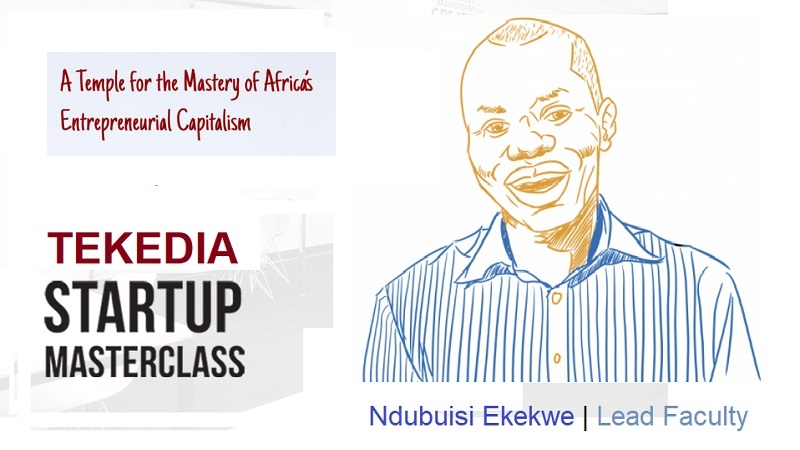
Come to the temple. Yes, “Tekedia Startup Masterclass: from Start-Up to Unicorn” is designed to help founders, entrepreneurs, and those generally working in the startup ecosystems, to master the mechanics of building category-king companies. The program runs for 8 weeks. Besides pre-recorded courses for the 8 weeks, the program includes live one-on-one Zoom sessions with Ndubuisi Ekekwe.

Participants can enroll and begin anytime. In other words, there is no specific start date as it is customized for the learner via the one-on-one live Zoom sessions. If you pay today, you will begin immediately.

The goal of the Masterclass is to help the participant master modern business mechanics which are used to scale and blitzscale ideas into great companies. Register here

Fintech Funding in Africa Declines, as Climate Tech Takes up Major Funding in 2024

0
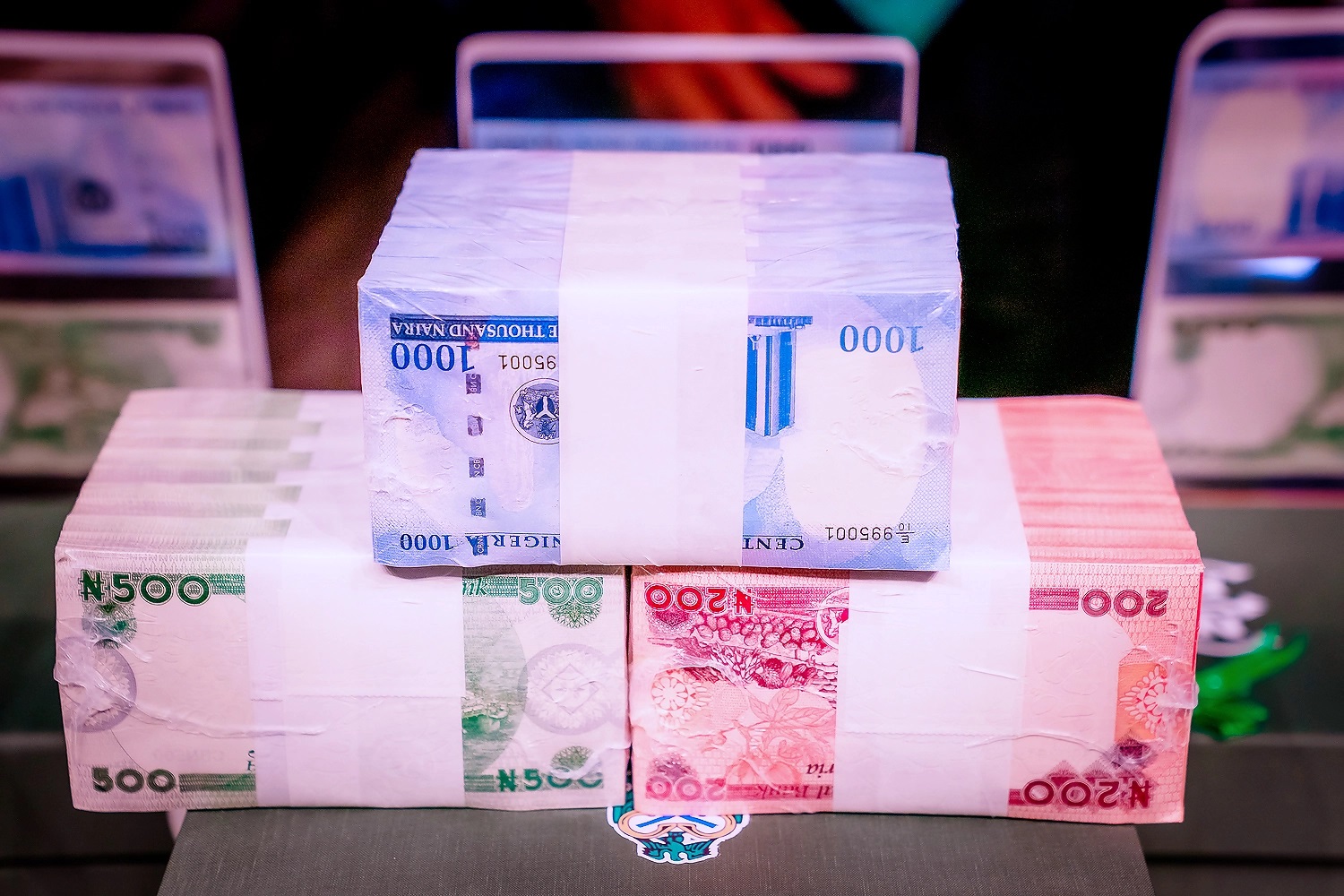
Fund, money cash dollar

In a report by Africa: The Big Deal, it presented a significant shift within the African startup ecosystem, as Climate Tech edges Fintech to attract most of the funding in Africa in 2024.

According to the funding numbers, Climate tech startups in Africa have raised $325 million so far, which represents 45% of all start-up funding in Africa in 2024.

While Climate Tech funding has been growing in absolute numbers in the past 5 years ($340m in 2019, $344m in 2020, $613m in 2021, $959m in 2022, and $1.1b in 2023), the investment boom in 2021 and 2022 did not benefit this space as much as other (such as Fintech), resulting in a drop in its share of total investments: from 25% in 2019 and 32% in 2020 to 14% in 2021 and 21% in 2022.

This share started to pick up again in 2023 (36%) and seems on track to grow again in 2024 (45% so far). Climate tech startups are increasingly capturing the attention of investors, driven by the urgent need to address climate change and its impacts on the continent. These startups are working on a range of solutions, from renewable energy and sustainable agriculture to waste management and water conservation.

The surge in funding for climate tech is a clear indicator of the sector’s rising importance and the recognition of its potential to drive sustainable development. It also reflects a broader global trend where investors are prioritizing environmental, social, and governance (ESG) factors in their investment decisions.

Despite this growth in the sector, there has been a great decline in the total share of investments in tech startups on the continent. In 2024 so far, the Logistics & Transport have raised $215 million.

On the other hand, the fintech sector which usually takes the major part of the funding, experienced a significant drop in investments, with $158 million of funding raised so far this year in Africa, representing only 22% of the funding raised on the continent.

Fintech, previously the dominant sector in African startup funding, has seen a relative decline in investment. The shift towards climate tech signifies changing investor priorities, but it also reflects broader market conditions.

“In 2024 so far, start-up funding in Africa is not quite what it was in previous years, in line with a global context that remains quite gloomy. One of the key reasons is the significant drop in investments in the Fintech space. Indeed, Fintech only represents 22 percent ($158m) of the funding raised this year so far in Africa, while at the same time last year, it made up more than half of the total ($852 million out of $1.7 billion)”, part of the report reads.

Despite climate tech’s recent success in attracting significant investment, the broader African startup ecosystem is experiencing a funding slowdown. With a few encouraging signs, the ‘funding winter’ is still in full swing with no signs of slowing down yet.