DD
MM
YYYY

PAGES

DD
MM
YYYY

spot_img

PAGES

Home Blog Page 3222

The Grand Business Trajectory – Tekedia Mini-MBA

0

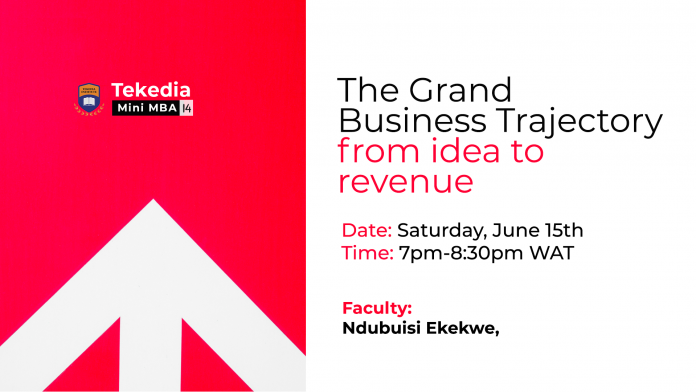
Throw that projectile of ideas and let us track the path for you. In tomorrow’s lecture, at Tekedia Mini-MBA, I will explain the grand business trajectory, positing on the paths taken from an idea phase to revenue state, in companies.

That idea to open a new product, a new branch, a new subsidiary, a startup, etc: what needs to happen, to bring that idea to fruition. We will discuss the paths.

After the lecture,  Tekedia AI Lecture Companion will summarize the session and send it via WhatsApp.

Tekedia Institute >> the #best school. Registration continues here

The Lesson from EU and US On Protecting National Brands, The Case of Ovim Tablet

0

From LinkedIn News: “China has overtaken the U.S. for the first time to become the world’s No. 2 seller of EVs, behind No. 1, Japan. Not only did Chinese brands, led by cheaper BYD, sell more new vehicles last year — 13.4 million vs. 11.9 million for the U.S. — they made more money doing so, according to Jato Dynamics. U.S. sales growth of 9% dropped behind China’s 23% for one reason, the researcher said: consistently high prices charged by American manufacturers. Yet, even as China makes inroads to emerging markets, it faces steep new protectionist tariffs in the U.S. and EU.”

There is nothing like a FREE market system when it comes to the global arena. I hope Nigeria understands that, and builds necessary protections in our economy. I was among those who began the business of mobile tablets. But one by one, Nigeria opened the floodgate, and the Chinese brands took over. Ovim tablet was knocked out of business. Yes, Tecno took down Ovim tablet – the magical device for work and play, named after my village!

Sure, I am not asking anyone to protect our lesser innovative product. My point is that Nigeria did not care for the efforts we have put in place. I used two generators in Owerri, and we could not surmount the ferocious price competitiveness the Chinese brand enjoyed.

See here, the US and the EU are building iron gates to protect Tesla and others, from the blazing innovative rage of BYD and China. Yet, Harvard and Oxford are still teaching free markets, globalization and multinationalism in the market system. Good People, there are many Chinese brands in Nigeria; someone needs to be concerned how we open our ports for everything. Can we learn from the US and EU?

BlockDAG Secures Prominent Influencer Endorsement As Presale Skyrockets By 1120%, Overshadowing PEPE Coin & Floki Price Trends

0

Floki Inu recently celebrated a significant uptick following a hefty investment from DFW Labs, while PEPE coin’s substantial market cap of $6 billion stirs discussions on its future trajectory. Amid these movements, BlockDAG has captured significant attention, propelled by glowing endorsements from leading YouTube crypto influencers.

Recently, ‘2Bit Crypto’ cast a spotlight on BlockDAG’s latest Keynote 2 video, emphasizing the project’s ambitious goals and cutting-edge technology, which catalyzed an 1120% spike in its value. With robust influencer support and pioneering initiatives, BlockDAG isn’t just eclipsing other crypto presales in June 2024; it’s also establishing new standards, positioning it as a top pick for crypto investors. 

PEPE Coin News: Journey from Skepticism to Stability

Initially viewed as a fleeting trend, PEPE has surprised many by securing a $6 billion market cap. Despite initial doubts, long-term investors have vindicated their faith in the token, witnessing a 68% jump on the monthly chart and a 6% rise weekly. These figures suggest PEPE might be nearing its peak saturation.

Floki Inu Price: Insights into Recent Volatility

Floki Inu (FLOKI) has recently soared to new heights, fueled by a $12 million investment from DFW Labs. This dog-themed token enjoyed a 15% rise, reaching a record high of $0.0003491. The partnership with DFW Labs has significantly influenced its price dynamics. However, despite these gains, Floki Inu underwent a recent 8% price correction, with its current price at $0.0003164. This volatility highlights the risks inherent in the crypto market, advising investors to tread carefully.

Crypto Influencer Reviews BlockDAG’s Keynote 2

BlockDAG’s popularity surge is largely thanks to strategic endorsements from notable influencers. ‘2Bit Crypto’ recently reviewed BlockDAG’s Keynote 2 video, applauding its substantial progress and visionary plans. This endorsement has notably enhanced BlockDAG’s appeal in the crypto community.

The Keynote 2 video reveals plans for BlockDAG’s imminent mainnet launch and ecosystem expansion, along with multiple development updates, playing a crucial role in the presale’s dramatic rise. BlockDAG has also maximized its visibility through strategic appearances at iconic locations like Shibuya Crossing in Tokyo and Piccadilly Circus in London. This clever marketing tactic not only boosts its visibility but also stimulates investor interest, enhancing its presale activity. Currently, BlockDAG’s presale has amassed $50.2 million, demonstrating robust community support and a bright future for this budding crypto.

The influencer also highlighted BlockDAG’s innovative adoption of Directed Acyclic Graph (DAG) technology, distinguishing it from conventional blockchain projects. This technology boosts scalability and efficiency, enabling simultaneous transaction confirmations. The extensive global marketing efforts and the upcoming mainnet launch further highlight BlockDAG’s dedication to innovation and community engagement. With projections to raise $5 million daily in the presale as the mainnet launch nears, BlockDAG is set for substantial growth.

Wrapping Up

BlockDAG emerges as a formidable contender in the June 2024 crypto presales. While the trends surrounding PEPE Coin and Floki Inu garner interest, BlockDAG’s strategic endorsements and innovative technology set it apart. Its use of DAG technology and the significant momentum of its presale illustrate its potential for substantial returns. With over $50.2 million gathered in its 18th batch, reflecting an 1120% surge in value, BlockDAG offers a compelling opportunity for those scouting promising crypto investments this June.


Join BlockDAG Presale Now:

Website: https://blockdag.network

Presale: https://purchase.blockdag.network

Telegram: https://t.me/blockDAGnetworkOfficial

Discord: https://discord.gg/Q7BxghMVyu

Tax Evasion: Nigerian Court Drops FIRS Charges Against Binance Executives

0

Federal High Court in Nigeria has dropped tax evasion charges by Nigeria’s Federal Inland Revenue Service (FIRS), against Binance Executives, Nadeem Anjarwalla and Tigran Gambaryan.

The court struck out the charges after Binance and the FIRS confirmed the appointment of Ayodele Omotilewa as the company’s representative, with the FIRS filing a fresh charge listing Binance as the sole defendant. 

The drop in charges is coming after both executives were charged with tax evasion on March 25, 2024, after the FIRS alleged that they failed to pay taxes on cryptocurrency transactions worth billions of Naira.

Fast forward to May 2024, the FIRS  amended its lawsuit, alleging that Binance failed to collect and remit various categories of taxes to the federation, particularly the Value Added Tax (VAT) and  Company Income tax (CIT), as stipulated by Section 40 of the FIRS Establishment Act 2007 as amended

It also disclosed that the crypto exchange failed to register with the FIRS, for tax purposes, an offense punishable under section 8 of the Value Added Tax Act of 1993. Binance was also accused of aiding customers to evade taxes through its platform.

In the FIRS fresh charge as seen by Tekedia, Binance is now listed as the sole defendant implying Gambaryan and Nadeem are no longer associated with its case. 

In the charge, the crypto exchange platform was accused of offering services, which involved the buying and selling of cryptocurrencies and the remittance and transfer of those assets to Nigerians while failing to deduct the necessary Value Added Taxes(VAT), arising from its operations. 

Part of the charges read,

“That you BINANCE HOLDINGS LTD on or about the 1st February 2024, in Abuja, FCT within the Jurisdiction of this Honourable Court, whilst involved in the offering of services to subscribers on your trading platform, known as Binance did aid and abet those subscribers on your trading platform to unlawfully refuse to pay taxes, or neglect to pay those taxes and in so doing committed an offense contrary to and punishable under the provisions of S.94 of the Companies Income Tax Act (as amended),” Count 4 of the four-count charge reads.

Speaking on the drop of tax charges against Binance Executives, a Spokesperson at the company Ivy Shirinda said,

We are relieved that the Federal Inland Revenue Service (FIRS) has served and filed amended charges today, resulting in tax charges against Tigran Gambaryan being dropped, further illustrating that Tigran is not a decision-maker at Binance and does not need to be held in order for Binance to resolve issues with the Nigerian government”.

She added “we are deeply disappointed that Tigran Gambaryan, who has no decision-making power in the company, continues to be detained”.

It is however worth noting that last week, 16 U.S. members of Congress, including the chair of the Foreign Affairs Committee, Michael McCaul, wrote to U.S President Joe Biden, highlighting that Tigran is a “U.S. citizen wrongfully detained by a foreign government, urging him to do more to secure his release.

Nigerian House Committee Recommends Purchase of New Presidential Aircraft Fleet

0

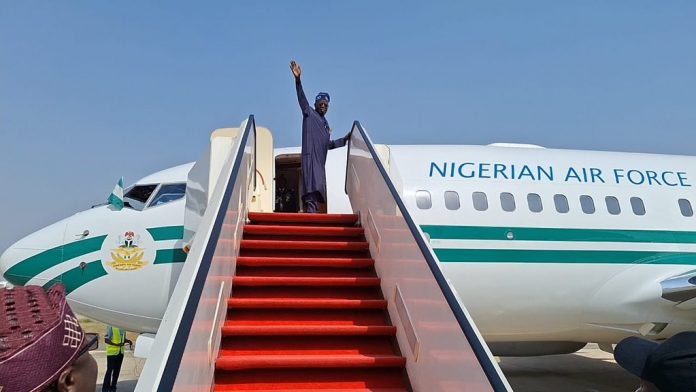
The House of Representatives Committee on National Security and Intelligence has urged the federal government to purchase new aircraft for President Bola Tinubu and Vice President Kashim Shettima.

This call was made in a report following a technical subcommittee hearing on the current state and airworthiness of the Presidential Air Fleet (PAF), per Premium Times.

The committee emphasized the need for new planes, citing the fragile nature of the Nigerian federation and the potential consequences of any technical or operational failures within the fleet. The report underscored the importance of ensuring the safety and reliability of the aircraft used by the nation’s top leaders, stating that procuring two additional aircraft would be a cost-efficient and prudent measure.

“The Committee is of the strong and informed opinion that considering the fragile structure of the Nigerian federation and recognizing the dire consequences of any foreseen or unforeseen mishap that may arise as a result of technical/operational inadequacy of the Presidential Air Fleet, it is in the best interest of the country to procure two additional aircraft as recommended,” the report stated.

Current Fleet Condition

According to the report, the Presidential Air Fleet currently includes six aircraft: a Boeing 737, a Gulfstream G550, a Gulfstream GV, two Falcon 7Xs, and a Challenger CL605. Of these, three are unserviceable. The fleet also comprises six helicopters, including two Agusta 139s and four Agusta 189s, with the Agusta 139s being unserviceable.

The report detailed the specific issues with the aircraft, highlighting that the president’s 19-year-old Boeing 737 is undergoing maintenance, and the 23-year-old Gulfstream GV is unserviceable. In contrast, the vice president’s 13-year-old Gulfstream G550 and the 12-year-old Challenger CL605 are both serviceable. Only one of the two Falcon 7Xs is operational.

The committee noted that maintaining the aging aircraft is increasingly costly, leading to extended downtimes and higher overall fleet costs. As such, the panel concluded that procuring new aircraft for the president and vice president is the most viable solution. The high cost of maintaining these aircraft was underscored by reports indicating that between $1.5 million and $4.5 million was spent annually on each plane’s maintenance by 2022.

Backstory

Former President Muhammadu Buhari had pledged to reduce the number of planes in the fleet by selling some aircraft. However, this did not materialize, and the cost of running the fleet rose by 190% between 2016 and 2020. The current administration under President Tinubu has inherited these challenges, further complicated by recent policy decisions.

In March, the House Committee’s chair, Ahmed Satomi, moved a motion to investigate the breakdown of planes in the presidential fleet, following incidents where President Tinubu’s plane malfunctioned during a trip to the Netherlands, and Vice President Shettima canceled a U.S. trip due to aircraft issues. Despite opposition from some lawmakers, the committee proceeded with its investigation.

The investigative hearing, conducted on May 20, involved briefings from senior officials, including Major General M. Galadima from the Office of the National Security Adviser and Air Vice Marshal Olayinka Oyesola, the commander of the Presidential Air Fleet. Based on these briefings, the committee resolved that the government should prioritize the safety of the president and other VIPs by overhauling the presidential air fleet.

The committee’s subpanel completed its assessment on June 4, recommending that new aircraft be procured for the president and vice president. The panel suggested that a new aircraft akin to the USA’s Air Force Two should be acquired for the vice president, which could also serve other high-ranking officials.

Aircraft amidst a heavy economic downturn

This recommendation comes at a time when Nigeria is grappling with significant economic challenges that began under former President Buhari’s administration and have been exacerbated by recent policy decisions under President Tinubu.

Thus, this recommendation is perceived by many as a significant misstep, compounding the already dire economic situation and highlighting a stark disconnect between the government and the populace’s struggles.

Nigeria’s economy has been on a downward trajectory for several years, significantly affecting the standard of living for millions of Nigerians. Under the administration of Buhari, the country faced numerous economic challenges, including a recession, rising unemployment, and high inflation rates.

These issues have been compounded by recent policy decisions under President Tinubu’s administration, such as the removal of fuel subsidies and the unification of the exchange rate, which have led to further devaluation of the naira and skyrocketing inflation.

The economic policies implemented by the current administration have intensified the financial burden on Nigerians. The removal of fuel subsidies, for instance, led to a sharp increase in fuel prices, impacting transportation costs and the prices of goods and services across the board. The unification of the exchange rate, while aimed at stabilizing the economy, resulted in a dramatic fall in the value of the naira, further eroding the purchasing power of the average Nigerian.

Inflation has reached unprecedented levels at 33.69% in April, making basic necessities unaffordable for many and pushing more Nigerians into poverty.

Amidst these economic difficulties, the Nigerian government has struggled to address the minimum wage issue. The current monthly minimum wage of N30,000 (approximately $25) is widely considered inadequate, failing to meet the basic needs of workers in an economy where the cost of living continues to rise. There have been persistent calls from labor unions and civil society organizations for the government to increase the minimum wage to a living wage that can provide for workers’ basic needs. However, progress on this front has been slow and fraught with challenges.

In contrast to the economic hardships faced by ordinary Nigerians, the government’s lifestyle appears extravagant. The recommendation to purchase new aircraft for the President and Vice President is believed to typically exemplify this extravagance.

The current fleet, despite its maintenance issues, still represents a significant investment. The proposal to acquire new planes, estimated to cost millions of dollars, is seen as a misuse of resources that could be better allocated to address more pressing economic issues, such as improving public services, infrastructure, and social welfare programs.

Against this backdrop, there is a growing demand for the government to cut the cost of governance and demonstrate fiscal responsibility. The perception that government officials continue to enjoy a lavish lifestyle at the expense of the populace has fueled public discontent and calls for greater accountability and transparency in government spending.

With many struggling to make ends meet, the recommendation to buy new aircraft appears out of touch with the reality on the ground. This move, coupled with reports of other extravagant government expenditures, such as the N21 billion spent on the renovation of the Vice President’s residence, underscores the disconnect between the leadership and the citizens, further eroding public trust in the government’s ability to manage the economy effectively.