DD
MM
YYYY

PAGES

DD
MM
YYYY

spot_img

PAGES

Home Blog Page 3227

BlockDAG Captivates Polygon and Litecoin Investors After Remarkable Moon Keynote 2 Launch and a $49.5M Presale

0

BlockDAG is swiftly emerging as a frontrunner in cryptocurrency thanks to its revolutionary Moon Keynote, which has set a vibrant outlook for 2024. As Polygon (MATIC) remains steady within its trading boundaries and Litecoin (LTC) encounters resistance nearing the $90 mark, BlockDAG’s pioneering technologies and strategic promotional efforts draw substantial investor attention.

The Moon Keynote was a launchpad for over 45 new features, including a beta version of the X1 app and forthcoming initiatives like Metamask integration and EVM compatibility. With a staggering 1120% rise in price and $49.5 million accumulated from the presale, BlockDAG is on track to reach a market price of $1 by 2024, positioning it as a highly attractive investment, overshadowing its competitors with its rapid growth potential.

Polygon (MATIC) Positioned for Potential Breakout

Currently, Polygon (MATIC) finds itself in a consistent trading range that has lasted two months, even amid positive market vibes following Bitcoin’s ascent past $70,000. The price of MATIC oscillates between $0.75 and $0.62, with a pivotal level at $0.685 to watch. Investors should approach with caution due to the potential high liquidation levels at $0.762 and $0.8.
Despite a failed attempt in March to overcome the $1 mark, leading to a drop to $0.6, the Relative Strength Index (RSI) shows subdued momentum, stabilising around 50. Nevertheless, a rise in On-Balance Volume (OBV) hints at an impending breakout. Investors should keep an eye on the $0.685 level for potential buying opportunities, as MATIC offers promising prospects for a breakout and should be closely monitored this June.

Litecoin’s Challenge to Surpass $90 Despite Favorable Trends

Litecoin has seen more than a 6% increase, briefly climbing over $80 but struggling to maintain support beyond $90, typically hovering around $84 in recent days. However, a 10% surge in trading volume, as noted by CoinMarketCap, signals a spike in investor interest.

Although market sentiment remains positive, Litecoin’s inability to breach the $90 threshold has led some investors to pull back, slowing its growth momentum. The ongoing battle between bullish and bearish forces renders Litecoin’s market behaviour quite volatile. Market analysts believe that while increased investor activity could propel Litecoin beyond $90, caution is advised as a downturn in market conditions could trigger a decline in the upcoming weeks.

BlockDAG’s Ascent to $1 Following an Impressive Moon Keynote

BlockDAG is quickly becoming a top choice among altcoins for 2024, spurred by its recent Moon Keynote, which was extraordinarily broadcast from the moon. The presentation unveiled over 45 new updates, emphasising BlockDAG’s advancements in terms of speed, accessibility, security, and scalability.
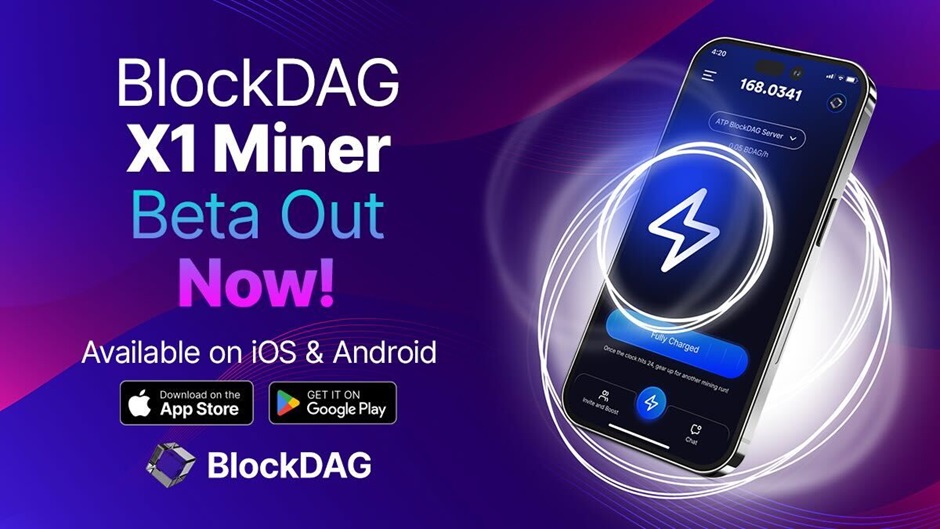
The keynote also introduced the X1 app beta. It highlighted several blockchain enhancements, showcasing BlockDAG’s effective marketing techniques, including powerful global campaigns and endorsements from prominent entities like Forbes, Cointelegraph, and Bloomberg. Ambitious future projects were outlined, such as a Peer-to-Peer Engine, Metamask Integration, Block plus DAG Algorithm, and EVM Compatibility, with plans aiming for $5M in daily profits leading up to a much-anticipated mainnet launch.

Following the keynote, BlockDAG’s website experienced a massive surge in traffic, leading to an 1120% price increase. Over 11.4 billion coins were sold, and $49.5 million was raised in funding. The introduction of the X1 beta app for Android and Apple has further boosted its appeal, facilitating easy cryptocurrency mining via smartphones. Experts forecast that BDAG’s price could climb to $1 in 2024 from its current presale price of $0.0122, making it an enticing investment choice.

Key Takeaway

BlockDAG’s forward-thinking advancements and strategic implementations distinguish it as a standout investment in the dynamic cryptocurrency market. While Polygon seeks to achieve a market breakout and Litecoin deals with volatility, BlockDAG’s successful presale and ambitious roadmap underscore its superior potential. For investors aiming for significant returns, BlockDAG presents an opportunity to lead the market with scalable solutions and groundbreaking technology.

Join BlockDAG Presale Now:

Website: https://blockdag.network

Presale: https://purchase.blockdag.network

Telegram: https://t.me/blockDAGnetworkOfficial

Discord: https://discord.gg/Q7BxghMVyu
The World Bank’s Postulation on How To Tame Inflation in Nigeria

0

The World Bank has joined the postulation that Nigeria’s central bank is wasting time by thinking that it could tame inflation through an interest rate hike: “The World Bank has cast doubt on the Central Bank of Nigeria’s (CBN) recent monetary policy measures, suggesting that they may not effectively curb inflation as anticipated by analysts..Despite an aggressive increase in interest rates by a combined 750 basis points since the beginning of the year, inflation remains a persistent issue…”

I have been shouting and the World Bank’s observation mirrors my point; I wrote last year: “I call on the apex bank to also do something new: instead of raising rates to lower inflation in Nigeria, lower interest rates to boost production and supply. I guarantee you that if you lower interest rates in Nigeria, you will improve the Supply side in the market, and if that happens, inflation will drop. Our inflation is driven by low supply, and when we raise rates, we reduce supply [higher productive cost depresses supply] even though the policy has no impact on Demand since our consumer lending is largely nonexistent.

“If you cannot try it across Nigeria, use Ovim, and you will see how inflation will drop in Oriendu Market, Ovim, Abia State.”

Good People, rate hike works in America/Europe where there is a developed consumer credit system. In Nigeria, we use “cash”, and rate hikes have limited impacts on demand (consumer spending). What rate hikes do in Nigeria is to increase cost of production (via higher interest rates on bank loans) which ends up reducing Supply of goods, with the unfortunate impact of pushing inflation higher.

Raising interest rate will not curb Nigeria’s inflation – World Bank

0

The World Bank has cast doubt on the Central Bank of Nigeria’s (CBN) recent monetary policy measures, suggesting that they may not effectively curb inflation as anticipated by analysts.

In its latest report, “Global Economic Prospects,” which outlines the economic outlook for 2024 and 2025, the World Bank projects Nigeria’s economic growth rate to be 3.3% in 2024, maintaining its earlier forecast. Additionally, the bank foresees a slight improvement in Nigeria’s GDP growth to 3.5% in 2025.

The World Bank attributes the projected economic growth to the current administration’s reforms in the petroleum and foreign exchange sectors. Following a recorded growth of 2.9% in 2023, these reforms are expected to stimulate a gradual improvement in economic conditions, leading to sustained, albeit modest, growth in the non-oil economy.

The oil sector, which has faced significant challenges, is also anticipated to stabilize as production levels recover.

However, the report highlights significant risks to this optimistic outlook, particularly the potential ineffectiveness of the CBN’s monetary tightening measures in controlling inflation. Despite an aggressive increase in interest rates by a combined 750 basis points since the beginning of the year, inflation remains a persistent issue.

The CBN’s recent monetary policy has seen interest rates jump dramatically. Governor Yemi Cardoso, in his first Monetary Policy Committee (MPC) meeting, raised the interest rate by 600 basis points from 18.75% to 22.75%. Subsequent hikes have pushed the rate further to 26.25%. The bank also increased the Cash Reserve Ratio (CRR) of banks to 45%, one of the highest rates globally.

These measures were aimed at taming inflation, but the results have been underwhelming. Inflation rose from 29.90% in January 2023 to 33.69% in April 2024, defying expectations that higher interest rates would slow it down.

Various stakeholders, including members of the Nigerian business community such as the Centre for the Promotion of Private Enterprise (CPPE), the Nigerian Association of Chambers of Commerce, Industry, Mines, and Agriculture (NACCIMA), and the Manufacturers Association of Nigeria (MAN), have criticized the CBN’s approach. They argue that the high interest rates are ineffective in combating inflation and instead harm the real economy by raising the cost of accessing capital.

Economists have also pointed out the contradictions in the CBN’s strategy. While the bank is increasing the MPR to combat inflation, other policies appear to counteract these efforts. For instance, the currency in circulation, a crucial factor in controlling inflation, has risen to N3.87 trillion at the end of March, up from N3.69 trillion in February and N3.65 trillion in January.

This increase indicates that a significant portion of currency is being held outside the banking system, which can compound inflationary pressures.

The CBN’s own data shows that over 90% of the currency in circulation is outside the banking system. This trend of hoarding cash poses a challenge to the bank’s efforts to control inflation.

Muhammad Abdullahi, a member of the MPC, acknowledged in the March meeting that high currency outside banks is one of the key monetary drivers of inflation. He said that while domestic food prices driven by supply shortages and high logistics costs are major inflationary pressures, monetary policy tools need to target money supply growth, exchange rate depreciation, and the high levels of currency outside banks to mitigate these pressures.

In January 2024, at the height of the currency redesign policy, the currency in circulation was N1.386 trillion, with 57% of this amount (N792.184 billion) held outside the banks. By March, this percentage had risen to 85.8%, with N1.445 trillion of the N1.683 trillion in circulation outside the banking system.

The World Bank report also touches on the broader economic context, noting that President Tinubu’s reforms, including the removal of the fuel subsidy and the unification of the foreign exchange market, have significantly impacted the economy.

The naira depreciated sharply, closing 2023 at N907/$, almost a 100% decline. This depreciation continued into 2024, with the naira weakening to around N1,400/$ and peaking at about N1,600/$ in February. These changes have driven inflation to its highest level in 28 years, with food inflation soaring to 40.53%.

While the World Bank’s projections offer a cautiously optimistic view of Nigeria’s economic growth, substantial risks remain, particularly concerning the CBN’s monetary policy effectiveness. The CBN has been advised to augment its monetary policy tightening by mopping up excess cash in circulation.

The Dangote Steel Is A Huge Vision for Nigeria

0

“We want to make sure every single steel that we use will come from Nigeria,” Aliko Dangote said.

Nigeria: Dangote is going into steel. The wailers will not match him on productivity, but as soon as he begins to deliver alpha, the noisemakers, siddon-think-talkers and siddon-think-tankers will start saying  “Dangote gets help from the government”.

I want to commend Alhaji for his services to Nigeria. From food to cement to…to refinery to steel, and when he is done with steel, he will come for electricity. Today, he generates about 50% of Nigeria’s total electricity capacity for the Group. This means the expertise is already in-house.

Good People, it takes the killing of one leopard to be called a killer of leopards, the elders will say. Dangote has killed many leopards, and ALL Nigerians must commend this man. I do not even understand how he gets the motivation and energy to keep building considering what he has accomplished.

Dangote Steel – to power the pillars and beams for industrialized Nigeria. Congratulations for the NEW vision.

Dangote Offsets $2.4bn of Refinery’s $5.5bn Debt, Targets $30bn Revenue Amid Plan to Venture into Steel Production

Dangote Offsets $2.4bn of Refinery’s $5.5bn Debt, Targets $30bn Revenue Amid Plan to Venture into Steel Production

1

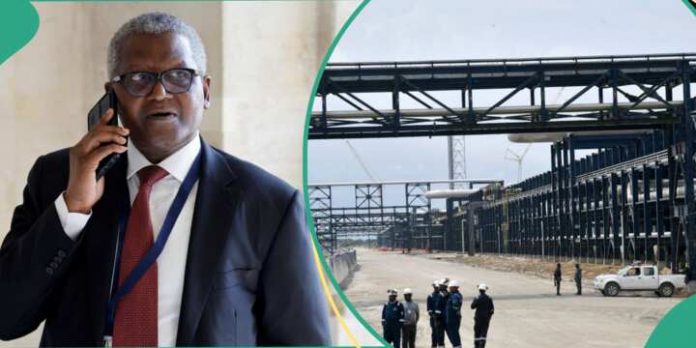
Africa’s richest person and founder of the Dangote Group, Aliko Dangote, announced on Monday that he has paid off approximately $2.4 billion of the $5.5 billion borrowed to build his $19 billion refinery located near Lagos.

This disclosure was made during the Afreximbank Annual Meetings (AAN) and the AfriCaribbean Trade & Investment Forum.

The 650,000 barrels-per-day capacity refinery, which is one of the largest in the world, faced significant hurdles during its development. Dangote revealed that both local and foreign entities made concerted efforts to sabotage the project, with many skeptics believing it was destined to fail. He credited the support of Afreximbank and Nigeria’s Access Bank for keeping the vision alive. Without these financial institutions, Dangote asserted, the refinery project might have collapsed.

Highlighting the crucial role of African financial institutions, Dangote said that organizations like the African Finance Corporation (AFC) and Afreximbank understand the unique challenges of the continent. He criticized foreign banks for their lack of interest in Africa’s growth, noting that some even attempted to push his company into loan default during the COVID-19 pandemic.

“We borrowed the money based on our own balance sheet. I think we borrowed just over $5.5 billion. But we paid also a lot of interest as we went along, because the project was delayed due to lack of land and the time-consuming sand-filling process. Almost five years or so we didn’t do anything,” Dangote explained.

He noted that since beginning actual construction in 2018, they have managed to pay off about $2.4 billion in principal and interest, leaving approximately $2.7 billion remaining.

Challenges with International Oil Companies

Addressing whether he was receiving enough crude oil as feedstock for the refinery from International Oil Companies (IOCs), Dangote acknowledged resistance from entities accustomed to significant profits over the past 35 years. He suggested that these entities would naturally resist changes that threatened their revenue streams.

“In a system where for 35 years people are used to counting good money, and all of a sudden they see that the days of counting that money have come to an end, you don’t expect them to pray for you. Of course, you expect them to fight back. And I think that is the process that we’re now really going through,” he stated.

Dangote expressed confidence that despite the current non-supply of crude and non-purchase of products, these issues would be temporary.

Dangote described the extent of opposition he faced as unexpectedly severe. “I knew that there would be a fight. But I didn’t know that the mafia in oil, they are stronger than the mafia in drugs. I can tell you that. Yes, it’s a fact,” he said, noting the numerous attempts by both local and foreign entities to derail the refinery project.

He said he remained resolute against all odds, describing himself as someone who has fought all his life and expressing confidence in ultimately winning this battle.

Dangote stressed the importance of Africa producing what it consumes, pointing out that there is currently no support coming from Western countries. He revealed that during the COVID-19 period, some international banks actively sought to push his company into loan default to kill the project, a move thwarted by support from banks like Afreximbank.

Future Export Plans

The entrepreneur also highlighted the potential of the Dangote fertilizer plant, which currently exports 25% of its production to the US and can fully meet the urea needs of Caribbean countries. He pointed out that Nigeria lacks strategic oil reserves, a situation he described as dangerous.

However, he said that with the Dangote refinery, the country can now establish a strategic reserve of petroleum products.

“So, we are not living from hand to mouth anymore. And the country doesn’t have strategic reserves in terms of petrol, which is very dangerous. It is. But in our own plant now, we have only 4.78 billion liters of various tankage capacity. But right now we’re adding another 600 million,” Dangote explained, adding that the refinery will produce and export top-quality products, addressing the issue of previously imported dirty fuels that had health implications like cancer.

Emphasizing the role of domestic investment, Dangote urged Africans not to be deceived into thinking that foreign investors will make the continent great.

“It must be the domestic investors. Because domestic investment is what actually attracts foreign investment,” he noted.

Power Generation and Plan to Venture into Steel

Looking ahead, Dangote stated that the Dangote Group targets revenue in excess of $30 billion and plans to venture into the steel industry soon.

“We want to make sure every single steel that we use will come from Nigeria,” he said.

Dangote also mentioned that the Dangote Group currently produces about 1,500 megawatts of power for self-consumption, thereby reducing dependence on the national grid and mitigating its impact on the broader energy infrastructure.

Dangote’s journey to build one of the largest refineries in the world has been fraught with challenges, but as the refinery nears full operation, it promises to significantly boost Nigeria’s refining capacity, enhance energy security, and provide substantial economic benefits to the country and the broader region.