DD
MM
YYYY

PAGES

DD
MM
YYYY

spot_img

PAGES

Home Blog Page 3230

Vitalik Buterin’s vision is to make Ethereum quantum resilient

0

Vitalik Buterin, the co-founder of Ethereum, has recently announced his ambitious goal for the Ethereum blockchain: to achieve quantum resilience. Quantum resilience refers to the ability of a cryptographic system to resist attacks from quantum computers, which are expected to surpass the computational power of classical computers in the near future.

Quantum computers could potentially break some of the encryption schemes that secure the blockchain, such as elliptic curve cryptography and hash-based signatures. This would compromise the integrity and security of the network and expose users’ funds and data to theft or manipulation.

Buterin’s vision is to make Ethereum quantum resilient by implementing a new type of signature scheme called Lamport signatures, which are based on one-time use keys that are immune to quantum attacks. Lamport signatures are already supported by some Ethereum clients, such as Geth and Parity, but they are not widely used due to their large size and high gas costs.

Buterin proposes to reduce these drawbacks by introducing a new layer of abstraction called signature aggregation, which allows multiple Lamport signatures to be combined into a single compact signature that can be verified by anyone on the network. This would significantly reduce the storage and bandwidth requirements, and make Lamport signatures more feasible and attractive for Ethereum users.

Buterin acknowledges that achieving quantum resilience is not an easy task, and that it will require a lot of research, development, testing, and coordination among the Ethereum community. He also admits that there are some trade-offs and challenges involved, such as the increased complexity of the protocol, the loss of backward compatibility, and the potential impact on scalability and interoperability.

However, he believes that these issues can be overcome with enough innovation and collaboration, and that quantum resilience is worth pursuing as a long-term goal for Ethereum.

Buterin’s announcement has sparked a lot of interest and debate among the crypto enthusiasts and experts. Some have praised his vision and leadership, while others have questioned his motives and feasibility. Some have argued that quantum resilience is not a pressing concern for Ethereum, as quantum computers are still far from being practical and widely available.

Other have pointed out that quantum resilience is not a binary property, but a spectrum that depends on various factors, such as the type and size of the quantum computer, the type and strength of the encryption scheme, and the type and value of the data being protected. They have suggested that instead of aiming for absolute quantum resilience, Ethereum should adopt a more flexible and adaptive approach that balances security and efficiency.

Regardless of the opinions and perspectives, it is clear that Buterin’s proposal has opened up a new frontier for Ethereum’s development and innovation.

Quantum resilience is not only a technical challenge, but also a strategic opportunity for Ethereum to differentiate itself from other blockchains and to position itself as a leader in the crypto space. Whether or not Buterin’s goal will be achieved remains to be seen, but it is certainly an exciting and inspiring one to watch.

There Is A New Market Beast With Bullish Energy! Is KangaMoon Outshining Bonk and Hedera?

0

Bonk (BONK) grew over 6,000% in the past year and at this rate could soon reach even further gains. Alongside it, Hedera (HBAR) experienced an explosive climb of 103.2%, and could soon breach a major price barrier.

Another crypto has the potential to outshine both of them however, as KangaMoon (KANG) has already blown up in value by 125%, and is positioned to become the next dominant meme coin with an upswing to $1 by Q2, 2024. Today, we will analyze all of the aspects behind the potential price growth of all of these altcoins to see which one can explode the most and why.

Bonk (BONK) Grows Over 6,000% YTD – Can It Reach Further Up?

Bonk (BONK) witnessed an explosive year, with its value spiking significantly, by 6,075.6% in the past year alone. While the annual performance was massive, the monthly Bonk price growth cannot be understated, as the crypto spiked 231.7%. 

During the past week, the Bonk crypto witnessed a 42.4% increase. This is because its value spiked from $0.00002199 to a maximum value of $0.00004302. According to the Bonk price prediction, it can end 2024 at $0.000045. 

Hedera (HBAR) Spikes 103.2% – Price To Spike To $0.1893

Hedera (HBAR) is another cryptocurrency that has seen explosive performance during the past trading sessions. Within the past year, the price of Hedera moved upwards by 103.2%. 

Moreover, during the past week, the Hedera crypto exploded from $0.10 to $0.13. Now it needs to move past the $0.15 price barrier in order to reach new heights. According to the Hedera price prediction, it’s bound to end 2024 at $0.1893.

KangaMoon (KANG) Grows 125% And Can Dominate The Meme Coin Market in 2024

KangaMoon (KANG) is an upcoming meme coin ecosystem that will be completely innovative in the sector, by not just having vast utility but by rewarding each ecosystem participant in various ways. Specifically, this Ethereum-based platform will revolutionize the industry through featuring a community-driven approach and Social-Fi elements. 

These aspects can help it revolutionize the meme coin space.Moreover, the ecosystem will reward anyone for their commitment to its growth, as users can comment or retweet on X, or even participate in the various gameplay elements. Those who do not want to directly battle can also just spectate battles, place bets and earn that way.

During its presale period, the KangaMoon token spiked from $0.005 to $0.01125. This is indicative of a 125% jump in its value throughout the blockchain ICO. As a result, analysts are optimistic about its future and project that its value can spike by $1, especially once it’s listed on Tier-1 exchanges.

Summary

It’s clear that both Bonk and Hedera are dominant cryptocurrencies and have experienced a major level of growth. Yet, analysts are the most optimistic about the future of KangaMoon, as it has entered the market with bullish energy and shows no signs of stopping. These aspects position it as one of the best meme coins to buy now.

Discover the Exciting Opportunities of the KangaMoon (KANG) Presale Today!

Website: https://KangaMoon.com/

Join Our Telegram Community: https://t.me/KangaMoonofficial

BlockDAG Keynote: Shaping the Future of Blockchain in 2024

0

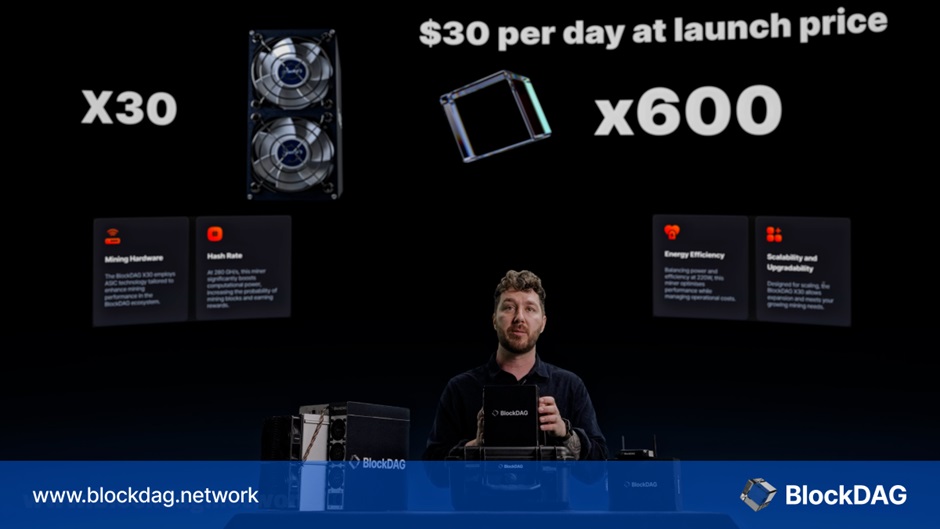
The unveiling of the BlockDAG keynote has electrified the cryptocurrency community, positioning 2024 as a pivotal year that might transform the blockchain technology scene. BlockDAG‘s (BDAG) keynote, which has rapidly spread across social networks, challenges existing blockchain paradigms by forecasting a revolution in blockchain’s efficiency and scalability. This isn’t merely a strategy outline; it’s an audacious declaration aiming for a $600 million valuation by the end of the year, signifying BlockDAG’s ambition to lead a new digital economic era.

BlockDAG’s Promise: A Challenge to Bitcoin and Kaspa?

The keynote casts BlockDAG as a beacon of innovation, setting it apart within the blockchain ecosystem. By paralleling its trajectory with those of groundbreaking ventures like Bitcoin and Kaspa, BlockDAG showcases its potential for extraordinary growth and development. Bitcoin’s ascent from an obscure idea to a value surge of millions exemplifies the transformative journey BlockDAG envisions. Kaspa and Helium have also demonstrated significant market wins, forecasting the ambitious path BlockDAG intends to tread.

Central to BlockDAG’s strategy is its novel hybrid consensus mechanism—a blend of Directed Acyclic Graph (DAG) and Proof-of-Work (PoW) frameworks—alongside its robust smart contract functionality and intuitive user interface. These innovations pave the way for BlockDAG to potentially outpace the early success stories of Bitcoin and Kaspa, targeting over a 5000% value increase in its presale phase and aiming for even more explosive growth upon full launch.

Charting the Future with BlockDAG’s Strategic Roadmap

BlockDAG’s keynote not only celebrated its presale triumphs but also articulated a dynamic vision supported by a detailed roadmap. This roadmap underscores a commitment to growth, transparency, and strategic planning, with a launch timeline for its mainnet set within six months. The roadmap illustrates BlockDAG’s ambitious $600M goal, highlighting initiatives to enhance mining technologies, expand merchant and exchange networks, and continuously push blockchain innovation boundaries.

A New Chapter Begins with BlockDAG’s Shibuya Debut

The strategic unveiling of the BlockDAG keynote in Shibuya Crossing, Tokyo, has sparked widespread enthusiasm, drawing a global audience to the BDAG mining opportunity. This well-orchestrated launch has generated significant interest and firmly positioned BlockDAG at the centre of blockchain community discussions, heralding a new chapter in cryptocurrency mining and investment. With its visionary approach and strategic milestones, BlockDAG is setting new standards in the blockchain industry, indicating the start of an innovative era in cryptocurrency.


Invest In BlockDAG Now

Website: https://blockdag.network

Presale: https://purchase.blockdag.network

Telegram:https://t.me/blockDAGnetworkOfficial

Discord: https://discord.gg/Q7BxghMVyu

The Revelation from the Economist Intelligence Unit (EIU) on the Naira and Its Future

0

“For most of this year, the naira will be highly volatile, leading to regulatory erraticism that can affect businesses, especially those holding foreign currency. The CBN lacks the liquidity to support the naira itself; out of US$33bn in foreign reserves, a large share (estimated at nearly US$20bn), is committed to various derivative* deals,” – Economist Intelligence Unit (EIU)

You see the reason why I wrote that people should forget those Wall Street banks which are predicting how the Naira will appreciate. All of them are conflicted because they’re managing Nigeria’s funds while also consulting for Nigeria, dropping mindless opinions. The implication is that they can never write anything that will offend Nigeria as those funds could be moved. In other words, how can you write a bad opinion on a client you are keeping his/her $5 billion?

I will only believe Wall Street banks when they posit and also help Nigeria improve our FDI (foreign direct investment). With that, I will then believe that they’re very confident of the Naira to convince their investing clients to make Nigeria an investment destination. Today, that is not happening and that says it all.

When I was a kid in primary school, then Imo State Governor, Sam Mbakwe, used to show a piece of paper on the television (I was later told that he was explaining the economic status of the state, and why people needed to donate funds to the state for projects). Nigeria’s President should come clean on where things stand in Nigeria. Until he does, he may struggle to fix things. I do hope he does so that from ASUU to NLC, everyone will get the memo.

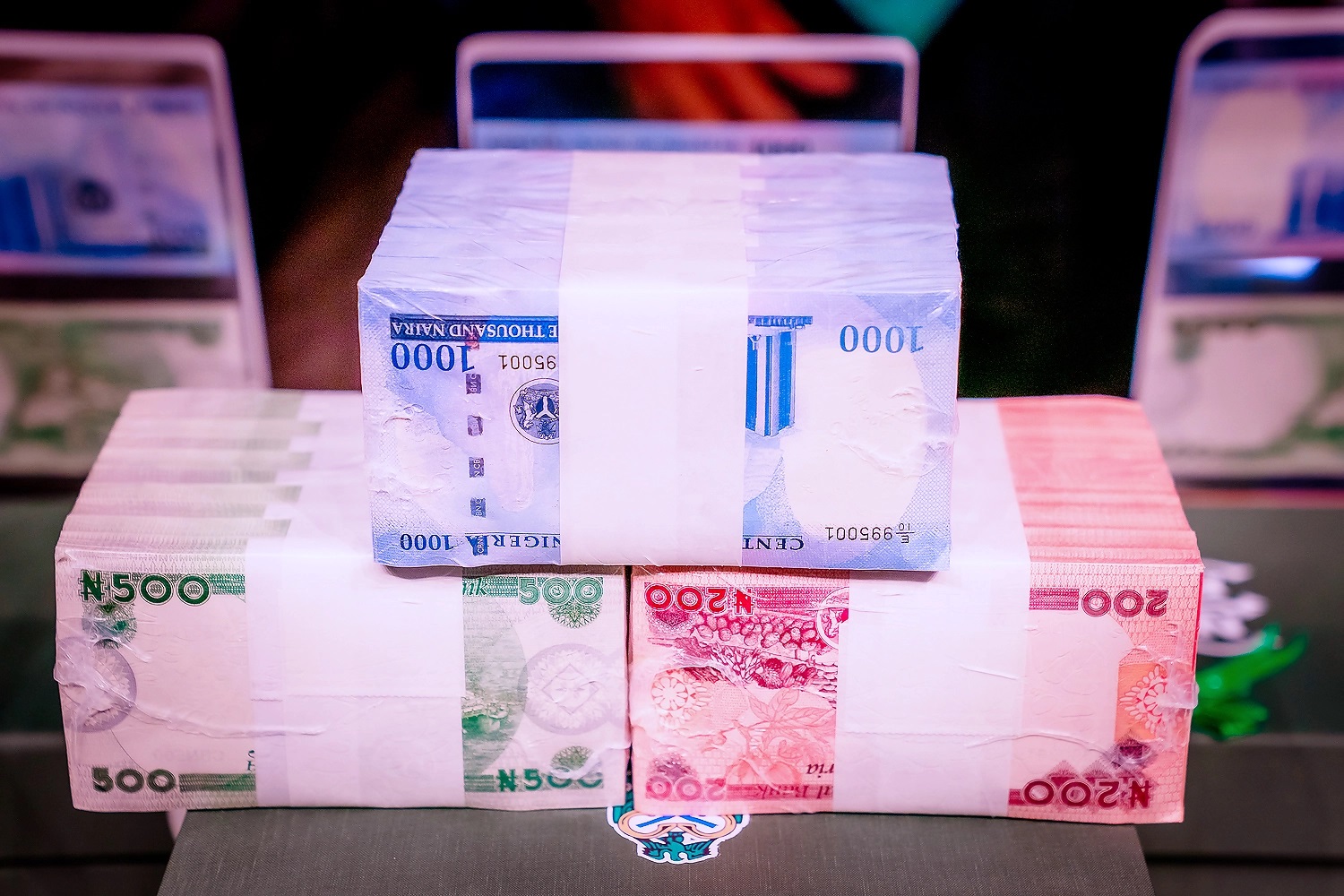
$20bn of Nigeria’s $33 billion foreign reserves is entangled in derivative deals – EIU

0

The Central Bank of Nigeria (CBN) is confronting a daunting liquidity crisis, posing a grave threat to the stability of the Nigerian naira and the nation’s economy as a whole.

Findings from a recent report by the Economist Intelligence Unit (EIU), disclosing that approximately $20 billion of the nation’s $33 billion foreign reserves is entangled in derivative deals, underline the severity of the situation. This staggering revelation leaves the CBN with severely constrained resources to boost the naira.

A derivative is a financial contract that derives its value from an underlying asset, commodity, or index. The value of a derivative is based on the performance of underlying market factors, such as interest rates, currency exchange rates, and commodity, credit, and equity prices.

The EIU’s comprehensive Country Report on Nigeria paints a bleak tableau for the naira, forecasting heightened volatility throughout the year. The report sounds an alarm on potential regulatory fluctuations that could severely impact businesses, particularly those reliant on foreign currency reserves.

The heart of the matter lies in the CBN’s liquidity crunch, necessitating recourse to foreign borrowing to resuscitate its reserves and instill confidence in the naira. The EIU’s prognosis suggests that this arduous process might extend until the latter part of 2024, signaling an enduring period of economic turbulence.

“For most of this year, the naira will be highly volatile, leading to regulatory erraticism that can affect businesses, especially those holding foreign currency.

“The CBN lacks the liquidity to support the naira itself; out of US$33bn in foreign reserves, a large share (estimated at nearly US$20bn), is committed to various derivative deals,” the report said, emphasizing the need for Nigeria to seek loans.

Nigeria has already embarked on a trajectory of foreign borrowing, securing substantial loans from eminent financial institutions such as the African Export-Import Bank and the African Development Bank, while concurrently seeking additional financial assistance from the World Bank.

However, the path to financial recuperation remains fraught with formidable challenges, necessitating a concerted and strategic approach to stabilize the currency.

The EIU’s projections offer a nuanced outlook, envisaging a gradual convalescence of foreign reserves spanning the period between 2024 and 2028. Yet, it maintains a cautious stance on the naira’s valuation, citing persistent inflationary pressures and negative real short-term interest rates as critical determinants exerting a downward force on the currency.

Projections ominously indicate a potential nosedive to N2,381/$ by 2028. However, it predicts an end-2024 rate of N1,770/$ and N1,817/$ by the end of 2025.

Despite modest prognoses for short-term recovery, concerns loom large concerning the long-term trajectory of the naira. The report attributes the currency’s inherent fragility to a precarious mix of lax monetary-fiscal policies and the capricious oscillations in global oil prices, which could precipitate a protracted depreciation.

Imminent threats to the naira’s stability emanate from looming restrictions on the repatriation of earnings by oil conglomerates and plausible convertibility constraints. Such regulatory alterations could further exacerbate the currency’s volatility, thereby posing formidable impediments to businesses operating within Nigeria.

The report sheds light on the conundrum facing the CBN, as it grapples with the delicate balance between monetary policy imperatives and the broader economic vision articulated by President Bola Tinubu. The President’s ambitious mandate, encapsulating a fervent desire to double the nation’s GDP by 2031 while simultaneously harboring a palpable aversion to high interest rates, presents formidable obstacles to attracting foreign investment through conventional monetary tightening.

“Deficit monetization and high inflation will undermine the currency. A possibility is that monetary policy will be tightened to a point at which foreign investors view the naira more favorably,” it said.

“The CBN’s independence has been heavily eroded in recent years; because fiscal firepower is so limited, the government will continue to rely on monetary policy to achieve job-creation and development objectives.”

Moreover, the specter of deficit monetization and stubbornly high inflation rates looms large, casting a pall over the efficacy of monetary measures aimed at stabilizing the currency. The encroachment upon the CBN’s autonomy, coupled with the government’s proclivity to rely on monetary mechanisms to fulfill its developmental objectives, further exacerbates the challenges confronting currency stabilization efforts.

Despite the prevailing adversities, recent reforms instituted by the CBN have yielded promising results, reigniting investor enthusiasm in Nigeria. Overseas remittances have surged, catapulting to $1.3 billion in February 2024, compared to a meager $300 million in the preceding month, according to the CBN. Similarly, foreign investors have demonstrated a renewed appetite for Nigerian assets, with portfolio flows surging to $2.3 billion in the early months of 2024, a marked improvement from the previous year.

The recent recalibrations in benchmark interest rates have acted as a potent catalyst, stimulating investor interest in short-term sovereign debt and thereby bolstering foreign exchange inflows. The CBN hiked interest rate by 400 basis points to 22.75% last month.

These positive developments offer a glimmer of hope amidst the prevailing economic uncertainty, albeit against a backdrop of formidable challenges. The path to currency stability remains fraught with obstacles, necessitating judicious and resolute policymaking to safeguard the future trajectory of the naira.