DD
MM
YYYY

PAGES

DD
MM
YYYY

spot_img

PAGES

Home Blog Page 3240

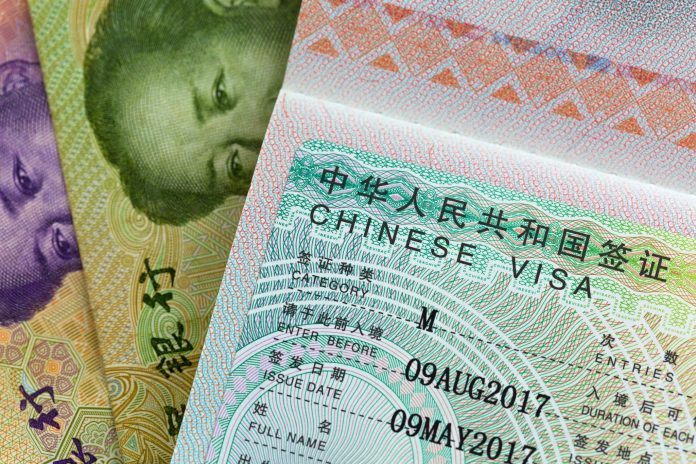
China to waive visas for more European countries

0

In a move to boost tourism and trade, China has announced that it will waive visas for more European countries starting from April 1, 2024. The new policy will allow citizens of 15 European countries to visit China for up to 30 days without a visa, as long as they have a valid passport and a return ticket.

The 15 countries that will benefit from the visa waiver are: Austria, Belgium, Czech Republic, Denmark, Estonia, Finland, France, Germany, Hungary, Latvia, Lithuania, Luxembourg, Netherlands, Poland and Sweden. These countries join the existing list of 10 European countries that already enjoy visa-free access to China: Albania, Bosnia and Herzegovina, Bulgaria, Croatia, Cyprus, Greece, Malta, Romania, Serbia and Slovenia.

According to the Chinese Ministry of Foreign Affairs, the visa waiver is aimed at promoting people-to-people exchanges and cooperation between China and Europe. It is also expected to increase the number of tourists and business travelers from Europe to China, which has been hit by the global pandemic and trade tensions in recent years.

The visa waiver is also seen as a gesture of goodwill from China to Europe amid the ongoing negotiations for a comprehensive agreement on investment (CAI), which has been stalled by human rights and labor issues. The CAI is intended to create a level playing field for European and Chinese investors and to open up new opportunities for market access and cooperation.

The visa waiver is welcomed by many European travelers and businesses who see China as an attractive destination for leisure and commerce. However, some critics have raised concerns about the security and privacy risks of traveling to China without a visa, especially in light of the recent crackdowns on dissent and the surveillance system in the country. They also question the sincerity of China’s outreach to Europe and its commitment to uphold the values and standards of the CAI.

Taiwan defense minister refuses to engage in arms race with China.

Taiwan’s defense minister, Chiu Kuo-Cheng, has reiterated his country’s commitment to peace and stability in the region, while rejecting the idea of engaging in an arms race with China. In a recent interview with the BBC, Chiu said that Taiwan does not seek confrontation or provocation, but rather seeks to maintain a sufficient and credible deterrence against any potential aggression from Beijing.

Chiu’s remarks come amid rising tensions across the Taiwan Strait, as China has increased its military activities and pressure on the island, which it considers a renegade province. China has repeatedly warned that it will not tolerate any attempts by Taiwan to declare formal independence and has not ruled out the use of force to achieve its goal of reunification.

Taiwan, on the other hand, has insisted on its sovereignty and democratic values, and has sought to strengthen its ties with like-minded countries, especially the United States.

According to Chiu, Taiwan’s defense strategy is based on three principles: first, to prevent war; second, to defend the homeland; and third, to counterattack if necessary. He said that Taiwan does not intend to match China’s military spending or capabilities, which would be unrealistic and unsustainable, but rather to focus on developing asymmetric and innovative ways to counter China’s advantages. He also said that Taiwan welcomes international support and cooperation, but ultimately relies on its own people and forces to defend itself.

Chiu also expressed his gratitude to the US for its continued arms sales and security assistance to Taiwan, which he said have helped enhance Taiwan’s defense capabilities and confidence. He said that Taiwan hopes to deepen its partnership with the US in various fields, including intelligence sharing, joint training, and research and development. He also said that Taiwan is willing to work with other countries in the region to uphold the rules-based international order and to safeguard the freedom and openness of the Indo-Pacific.

Court revives class action suit against Binance

0

A group of cryptocurrency traders who claim they lost millions of dollars due to Binance’s negligence have won a major victory in their legal battle against the exchange. On Friday, the U.S. Court of Appeals for the Second Circuit reversed a lower court’s decision that dismissed their case for lack of jurisdiction.

The plaintiffs, led by Aaron Leibowitz, allege that Binance failed to protect them from a “flash crash” that occurred on April 18, 2018, when the price of a digital token called Viacoin (VIA) spiked by more than 10,000% in minutes on Binance’s platform. The plaintiffs claim that the flash crash was caused by a hacker who manipulated Binance’s trading system and placed fraudulent orders for VIA at inflated prices.

According to the complaint, the hacker also used phishing attacks to gain access to the accounts of some Binance users and sold their holdings of other cryptocurrencies to buy VIA, driving up the demand and price of VIA. The hacker then sold his VIA tokens at artificially high prices and withdrew the proceeds from Binance.

The plaintiffs claim that they were victimized by the hacker’s scheme because they had placed stop-loss orders for their cryptocurrencies on Binance. A stop-loss order is a type of order that automatically sells an asset when it reaches a certain price, to limit the potential loss in case of a market downturn. However, because of the flash crash, the plaintiffs’ stop-loss orders were triggered at much lower prices than they had set, resulting in huge losses for them.

The plaintiffs accuse Binance of breaching its fiduciary duty and violating various federal and state laws by failing to prevent or stop the flash crash, failing to investigate or remedy the situation, failing to safeguard their funds and personal information, and failing to provide adequate customer service. They seek to represent a class of all U.S. residents who suffered losses due to the flash crash and demand compensatory and punitive damages, as well as injunctive relief.

Binance, which is incorporated in the Cayman Islands and has no physical presence in the U.S., moved to dismiss the case for lack of personal jurisdiction, arguing that it did not have sufficient contacts with New York, where the case was filed. Binance also argued that its terms of service, which all users had to agree to, contained a clause that required any disputes to be resolved by arbitration in Hong Kong.

In March 2020, U.S. District Judge Denise Cote granted Binance’s motion and dismissed the case, finding that Binance did not have enough ties to New York to justify haling it into court there. Judge Cote also found that the arbitration clause in Binance’s terms of service was valid and enforceable, and that the plaintiffs had waived their right to sue Binance in court.

However, on appeal, a three-judge panel of the Second Circuit disagreed with Judge Cote and revived the case. The panel held that Binance had purposefully availed itself of conducting business in New York by allowing New York residents to access and use its platform, by operating servers in New York, and by promoting its services through online and offline media in New York.

The panel also held that the arbitration clause in Binance’s terms of service was unconscionable and unenforceable because it was “hidden in a footnote” and “buried in fine print” on Binance’s website, and because it imposed excessive costs and fees on the plaintiffs that would deter them from pursuing their claims. The panel noted that Binance’s terms of service were “a classic example of an adhesive contract” that gave users no opportunity to negotiate or reject its terms.

The panel concluded that exercising jurisdiction over Binance would not violate due process and that the case should proceed in New York. The panel vacated Judge Cote’s order and remanded the case for further proceedings.

The plaintiffs’ lawyer, David Silver of Silver Miller Law, hailed the decision as “a huge win” for his clients and for “all Americans who trade cryptocurrency on offshore exchanges.” He said that he looked forward to pursuing discovery and moving for class certification.

Binance’s lawyer, Peter Pizzi of Walsh Pizzi O’Reilly Falanga LLP, is yet to comment on the recent court developments.

US: Wyoming grants legal structure for DAOs

0

Wyoming has become the first state in the US to recognize decentralized autonomous organizations (DAOs) as a new type of legal entity. This is a major milestone for the blockchain and crypto industry, as it opens up new possibilities for innovation and governance.

DAOs are organizations that are governed by smart contracts on a blockchain, rather than by traditional legal structures and human intermediaries. DAOs can have various purposes, such as managing funds, coordinating collective action, or providing public goods. DAOs are often seen as a way to achieve more transparency, efficiency, and democracy in organizational decision-making.

However, until now, DAOs have faced significant legal uncertainty and regulatory challenges. Without a clear legal status, DAOs could not enter into contracts, own assets, or sue or be sued in court. This made it difficult for DAOs to operate and interact with the real world and exposed them to potential liabilities and risks.

Wyoming’s new law, which was signed by Governor Mark Gordon on March 4, 2024, aims to address these issues by creating a framework for DAOs to register and operate as legal entities in the state. The law defines a DAO as “an organization that is formed for any lawful purpose or business that is governed by smart contracts on a distributed ledger technology platform”. The law also specifies the requirements and procedures for DAO formation, governance, dissolution, and taxation.

According to the law, DAOs can choose to register as either limited liability companies (LLCs) or nonprofit corporations. DAOs that register as LLCs will enjoy the same benefits and protections as traditional LLCs, such as limited liability for members and managers, flexibility in governance and taxation, and access to courts and contracts.

DAOs that register as nonprofit corporations will have similar advantages but will also have to comply with additional rules regarding their charitable purpose and activities.

The law also allows DAOs to adopt any governance model that suits their needs, as long as it is consistent with their smart contracts and articles of organization. DAOs can use any distributed ledger technology platform that supports smart contracts, such as Ethereum, Tezos, or Cardano. DAOs can also amend their smart contracts and articles of organization by following their own procedures or the default rules provided by the law.

The law also clarifies some of the rights and responsibilities of DAO members and managers. For example, the law states that DAO members have the right to inspect the records of the DAO, to vote on matters affecting the DAO, and to receive distributions from the DAO. The law also states that DAO managers have the duty to act in good faith and in the best interest of the DAO, to avoid conflicts of interest, and to disclose any material information to the members.

The law also provides some guidance on how to resolve disputes involving DAOs. The law states that any claim or action against a DAO must be brought in Wyoming courts, unless the parties agree otherwise. The law also states that any arbitration or mediation involving a DAO must be conducted in accordance with the rules of the American Arbitration Association or another reputable organization. The law also encourages DAOs to use online dispute resolution platforms that are compatible with their smart contracts.

The law also addresses some of the tax implications of DAO registration. The law states that DAOs that register as LLCs will be subject to Wyoming’s favorable tax regime, which does not impose any corporate income tax or franchise tax on LLCs. The law also states that DAOs that register as nonprofit corporations will be exempt from Wyoming’s sales and use tax but will have to apply for federal tax exemption if they want to enjoy other benefits such as deductibility of donations.

The law also creates a sandbox program for DAOs that want to experiment with new ideas and technologies without being subject to all the regulations and requirements of the law. The sandbox program will allow eligible DAOs to operate in Wyoming for up to three years with reduced oversight and compliance costs. The sandbox program will also provide feedback and guidance to help DAOs improve their operations and governance.

Wyoming’s new law is expected to attract more innovation and investment to the state’s blockchain and crypto sector, which has already been growing rapidly in recent years. Wyoming has been a pioneer in creating a friendly environment for blockchain and crypto businesses, by enacting laws that recognize digital assets as property, create special purpose depository institutions for crypto banking, and establish a fintech sandbox for testing new products and services.

Wyoming’s new law is also expected to inspire other states and countries to follow suit and create their own frameworks for recognizing and regulating DAOs. As more jurisdictions adopt similar laws, DAOs will have more opportunities to expand their reach and impact across different markets and domains.

Wyoming’s new law is a historic step forward for the blockchain and crypto industry, as it recognizes DAOs as legitimate entities that can contribute to social and economic development. By granting DAOs new legal structure, Wyoming has opened up new horizons for the future of organization and governance.

The role of Blockchain Technology is Becoming Increasingly Significant

0

Blockchain is a technology that enables the creation of distributed, decentralized and immutable records of transactions. Blockchain can be used to enhance the security, transparency and efficiency of various digital infrastructures, such as identity management, supply chain management, e-government, e-health and e-voting.

Identity management is a process of verifying and authenticating the identity of individuals or entities in a digital environment. Blockchain can provide a secure and decentralized way of storing and sharing identity information, without relying on centralized authorities or intermediaries. Blockchain can also enable self-sovereign identity, where individuals have full control over their own identity data and can choose how to share it with others.

Supply chain management is a process of managing the flow of goods and services from the source to the destination. Blockchain can improve the traceability and visibility of supply chain activities, by creating a shared ledger of transactions that can be accessed by all participants. Blockchain can also reduce the costs and risks of fraud, corruption and human error, by ensuring the authenticity and quality of the products and services.

E-government is a process of delivering public services and information to citizens and businesses through digital channels. Blockchain can enhance the efficiency and accountability of e-government, by enabling secure and transparent transactions between the government and its stakeholders. Blockchain can also improve the participation and trust of citizens in e-government, by allowing them to verify the validity and integrity of public records and decisions.

E-health is a process of providing health care and wellness services through digital platforms. Blockchain can improve the interoperability and accessibility of health data, by creating a distributed network of health records that can be shared among different health care providers and patients. Blockchain can also protect the privacy and security of health data, by encrypting it and giving patients the right to consent to its use.

E-voting is a process of conducting elections or referendums through electronic means. Blockchain can enhance the reliability and verifiability of e-voting, by creating a tamper-proof record of votes that can be audited by anyone. Blockchain can also increase the convenience and inclusiveness of e-voting, by allowing voters to cast their ballots from anywhere and anytime.

Blockchain is a powerful technology that can transform various digital infrastructures, by providing them with more security, transparency and efficiency. Blockchain can also empower individuals and organizations to have more control and trust over their digital interactions, by enabling them to verify and validate their own data and transactions.

Despite the hype and promise of blockchain technology, many projects failed to deliver on their goals or meet the expectations of their users and investors. Some projects suffered from poor design, execution or governance, while others faced scalability, security or usability issues. Many projects also struggled to find a viable business model or a clear value proposition for their users.

As a result, many projects became obsolete or irrelevant, or were abandoned by their developers or communities. The blockchain industry also faced a challenge in attracting and retaining talent, as many developers and experts left the industry for more lucrative or stable opportunities in other sectors.

Africa has the potential to become a major player in the Global Pharmaceutical Market

0

Africa imports 800% of medicines, says AFDB.

Africa is the world’s second largest and second-most populous continent, with a population of over 1.3 billion people. It is also home to some of the most diverse and rich cultures, languages, and natural resources. However, Africa also faces many challenges, such as poverty, conflict, disease, and climate change.

Africa is heavily dependent on imported medicines, according to a recent report by the African Development Bank (AFDB). The report, titled “Pharmaceutical Manufacturing in Africa: Status, Challenges and Prospects”, reveals that the continent imports about 80% of its pharmaceutical needs, with some countries importing as much as 95%. This situation exposes Africa to various risks, such as supply disruptions, price fluctuations, substandard products and counterfeit medicines.

The report argues that developing a local pharmaceutical industry in Africa is not only vital for ensuring access to quality and affordable medicines, but also for creating jobs, enhancing skills, boosting innovation and fostering economic growth. It identifies several challenges that hinder the growth of the sector, such as weak regulatory frameworks, inadequate infrastructure, limited financing, high production costs and low competitiveness.

It also proposes some policy recommendations to address these challenges, such as strengthening regional integration, enhancing public-private partnerships, promoting research and development, and improving human capital.

The report calls for a collective action from all stakeholders, including governments, development partners, private sector, civil society and academia, to support the development of a sustainable and competitive pharmaceutical industry in Africa. It also highlights some success stories and best practices from countries that have made significant progress in this area, such as Ethiopia, Ghana, Kenya, Morocco, Nigeria and South Africa.

This means that Africa is highly dependent on external sources for its pharmaceutical needs, which exposes it to various risks, such as:

High prices: Importing medicines from abroad increases the cost of drugs for African consumers, who often have to pay out-of-pocket for their health care. According to a study by the United Nations Economic Commission for Africa (UNECA), the average price of imported medicines in Africa is 2.5 times higher than the international reference price.

Low quality: Importing medicines from abroad also raises concerns about the quality and safety of the drugs, as they may not meet the standards and regulations of the African countries. According to a report by the WHO, about 42% of substandard and falsified medicines reported globally between 2013 and 2017 were from Africa.

Supply chain disruptions: Importing medicines from abroad also makes Africa vulnerable to supply chain disruptions, such as delays, shortages, or stock-outs, due to factors such as political instability, trade barriers, natural disasters, or pandemics. For example, during the COVID-19 crisis, many African countries faced difficulties in procuring essential medicines and medical supplies from abroad, as global demand surged, and export restrictions were imposed by some countries.

The implication of this situation is that many Africans are unable to access the medicines they need for their health conditions, which leads to increased morbidity and mortality rates, reduced productivity and economic growth, and increased inequality and social unrest.

To address this challenge, Africa needs to develop its own pharmaceutical industry, which can produce locally relevant, affordable, and quality medicines for its population. This would not only improve the health outcomes and well-being of millions of Africans, but also create jobs, stimulate innovation, enhance regional integration, and foster self-reliance and sovereignty.

Some of the steps that can be taken to achieve this goal include:

Investing in research and development (R&D) to discover and develop new drugs that are tailored to the specific needs and preferences of African patients, such as drugs for neglected tropical diseases or drugs that are suitable for tropical climates.

Strengthening the regulatory capacity and harmonization of African countries to ensure that the medicines produced in Africa meet the highest standards of quality, safety, and efficacy.

Promoting public-private partnerships and collaboration among African countries and stakeholders to leverage their complementary strengths and resources, such as human capital, infrastructure, technology, markets, and financing.

Enhancing the local production capacity and competitiveness of African pharmaceutical manufacturers by providing them with incentives, subsidies, tax breaks, preferential procurement policies, technical assistance, and access to raw materials.

Improving the distribution and access of locally produced medicines by expanding the coverage and affordability of health insurance schemes, strengthening the supply chain management systems, reducing tariffs and non-tariff barriers, and raising awareness among consumers and health workers.

Africa has the potential to become a major player in the global pharmaceutical market, which is expected to reach $1.5 trillion by 2023. By developing its own pharmaceutical industry, Africa can not only improve its health security and resilience but also contribute to its economic development and social transformation.

The report is part of the AFDB’s efforts to promote industrialization and economic transformation in Africa, as outlined in its High 5 priorities. The AFDB believes that a vibrant pharmaceutical sector can contribute to improving the health and well-being of the African population, as well as to achieving the Sustainable Development Goals and the African Union’s Agenda 2063.