DD
MM
YYYY

PAGES

DD
MM
YYYY

spot_img

PAGES

Home Blog Page 3243

Join us to Master How To Build a Multinational Career

0

How do we make careers multinational? What are the ingredients in the 21st century knowledge economy? How do you begin in the village and land in the trading halls of New York City? How can we go international in this age?

Yes, you like to give speeches which pay $5,000 per hour. How can you expand that business, from Lagos, Nairobi, etc to Tokyo, London, etc. You sing in the community. Any aspiration to sing for the world? The world pays!

Join me at 7pm WAT tomorrow for Tekedia Mini-MBA Personal Economy class, focusing on Planning a Multinational Career, as we continue how you can build your own economy, not your company’s or Nigeria’s economy, but yours. That is why Tekedia Mini-MBA is unique: you are not just trained to make the company better. We put efforts on YOU and your Personal Economy.  Advance your leadership ascent and go global!

Zoom link in the board – this is the #best school and the winner of Mhagic Velocity  $60,000 Global Prize for Innovation in Business Education. Register for the next edition here. It remains N90k or $170 if you beat the early bird deadline. Join us.

Moroccan Fintech Tookeez Secures $1.5 Million to Bolster Technical Capabilities

0

Tookeez, a Moroccan fintech startup, has successfully secured $1.5m in funding to bolster its technical capabilities and expansion efforts.

The investment round was led by Azur Innovation Fund, a prominent public-private seed capital fund based in Casablanca.

The startup announced plans to use the funds to expand further into Morocco its base, as well as the MENA region. The funds will also be used to develop its blockchain technology system.

With this strategic investment, Tookeez aims to establish itself as a leading force in Africa’s loyalty program landscape, targeting a reach of 4 million active users by 2028.

CEO of Tookeez Siham Elmejjad expressed gratitude for the investors’ trust, emphasizing the fundraising as a crucial step in their development. The goal is to reach 4 million active members by 2028, positioning tookeez as a genuine ecosystem for economic and financial inclusion in the region.

Also Speaking on the funds raised, lead investor Azur Innovation Fund expressed strong support for Tookeez, recognizing its potential to revolutionize the customer loyalty landscape.

President of Azur Innovation Fund Adnane Filali said,

“We are proud to partner with Tookeez, a company redefining the way businesses and consumers interact through loyalty programs. Their vision perfectly aligns with our mission of supporting impactful entrepreneurs who are shaping the future”.

Founded by Hicham Amadi, Tookeez facilitates interoperability between different loyalty programs, allowing users to effortlessly convert their points across a diverse array of partners. This interoperability not only enhances user flexibility but also encourages broader engagement with loyalty initiatives.

Tookeez offers a user-friendly solution by aggregating loyalty points from various programs into a single, secure digital wallet. This empowers users to seamlessly transact across a vast network of partner stores and brands using their accumulated points. Businesses, on the other hand, benefit from a streamlined system that allows them to offer point-based redemption options to their customers.

The financial landscape in Africa and the Middle East is witnessing remarkable growth, with the loyalty market projected to reach $6.48 billion by 2024. A steady compound annual growth rate (CAGR) of 12.1% from 2019 to 2023 underscores the region’s burgeoning potential, with expectations of continued expansion at a CAGR of 9.7% between 2024 and 2028.

While the North African market boasts a burgeoning landscape of loyalty program startups, the Moroccan arena sees stiff competition from contenders like WaR and Advantages Entérprises. However, tookeez stands out with its innovative approach and strategic partnerships.

As Tookeez secures substantial backing for its technical advancement, it is poised to further disrupt the fintech space, offering a transformative solution to streamline loyalty programs and enhance the user experience across the region.

Benefits of Climate-Smart Agriculture in Nigeria

0

Climate change is one of the most pressing challenges facing the world today, especially for developing countries like Nigeria that depend largely on agriculture for food security, income, and employment. According to the World Bank, Nigeria is among the most vulnerable countries to climate change impacts, such as rising temperatures, erratic rainfall, droughts, floods, and pest infestations.

These impacts threaten to undermine the productivity and profitability of the agricultural sector, which contributes about 25% of the country’s GDP and employs about 70% of the labor force.

To cope with these challenges and ensure sustainable development, Nigeria needs to adopt climate-smart agriculture (CSA), an integrated approach that aims to increase agricultural productivity, enhance resilience to climate variability and change, and reduce greenhouse gas emissions.

CSA is not a one-size-fits-all solution, but rather a context-specific set of practices and technologies that can be tailored to different agro-ecological zones and socio-economic conditions. Some examples of CSA practices and technologies include:

Climate-resilient crop varieties: These are crops that have been bred or genetically modified to withstand drought, heat, salinity, pests, and diseases. For instance, researchers from the International Institute of Tropical Agriculture (IITA) have developed improved varieties of cassava, maize, cowpea, yam, and banana that can cope with climate stress and yield more than conventional varieties.

Conservation agriculture: This is a set of techniques that aim to conserve soil health and water resources by minimizing soil disturbance, maintaining soil cover, and diversifying crop rotations. Conservation agriculture can improve soil fertility, water retention, erosion control, and carbon sequestration, while reducing labor and input costs.

Agroforestry: This is a system that integrates trees with crops and/or livestock on the same land. Agroforestry can provide multiple benefits such as enhancing soil quality, diversifying income sources, providing fodder and fuelwood, creating microclimates, and sequestering carbon.

Precision farming: This is a system that uses information and communication technologies (ICTs) such as sensors, drones, satellites, mobile phones, and artificial intelligence to monitor and manage crop production. Precision farming can help farmers optimize inputs such as seeds, fertilizers, pesticides, and water, while increasing yields and reducing environmental impacts.

Water management: This is a set of strategies that aim to improve water availability and efficiency for irrigation and other purposes. Water management can include rainwater harvesting, drip irrigation, mulching, water recycling, and watershed management.

The benefits of CSA in Nigeria are manifold. First, CSA can boost food production and security by increasing crop yields and quality, diversifying food sources, and reducing post-harvest losses. According to a study by the International Food Policy Research Institute (IFPRI), CSA could increase Nigeria’s cereal production by 24% by 2050 compared to a business-as-usual scenario.

Second, CSA can enhance resilience and adaptation by reducing exposure and sensitivity to climate risks, strengthening coping and recovery capacities, and diversifying livelihood options. For example, a project by the World Bank-supported West Africa Agricultural Productivity Program (WAAPP) has helped over 200,000 farmers in Nigeria adopt CSA practices such as improved seeds, conservation agriculture, and agroforestry, resulting in increased incomes and reduced vulnerability to climate shocks.

Third, CSA can mitigate greenhouse gas emissions by reducing deforestation, enhancing carbon sinks in soils and biomass, and promoting low-carbon energy sources. According to a report by the Food and Agriculture Organization (FAO), Nigeria has the potential to reduce its agricultural emissions by 34% by 2030 through CSA interventions.

However, despite these benefits, CSA adoption in Nigeria faces several barriers such as lack of awareness among farmers and policymakers; lack of supportive policies and incentives; lack of access to finance; lack of extension services; lack of infrastructure; lack of markets; lack of research; lack of coordination; and socio-cultural factors. To overcome these barriers and promote uptake and integration of CSA into policy and practice in Nigeria.

Flutterwave Shuts Down Barter, Shifts Focus to Enterprise And Remittance Business Segments

0

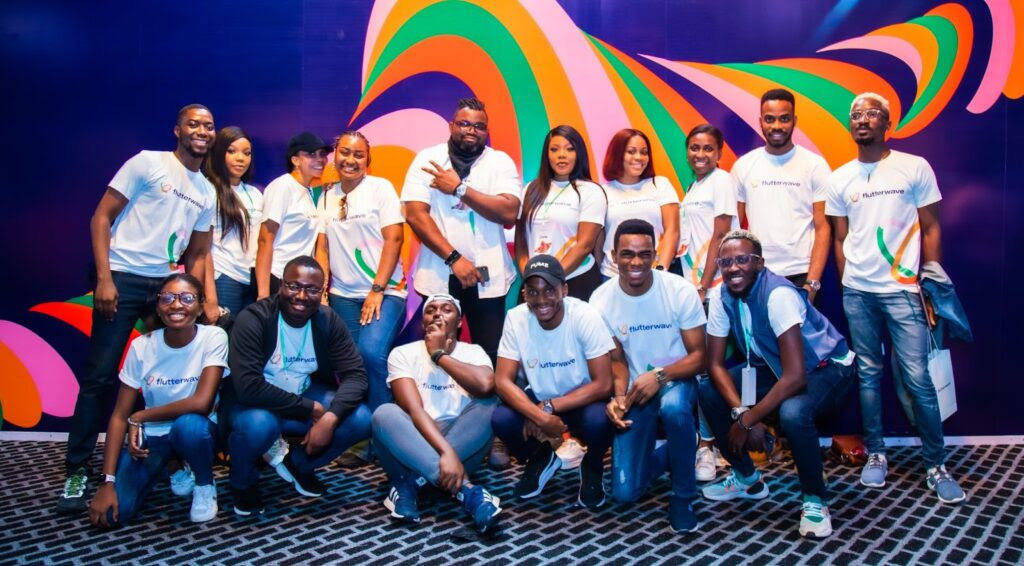
Nigerian fintech Unicorn Flutterwave has shut down its consumer payment platform Barter, as it shifts focus on its business and remittance segments.

While retail remains important to us, our immediate focus is optimizing services for businesses and remittance solutions”, the startup said.

In 2017, Flutterwave launched Barter as a consumer product that facilitated personal and small merchant payments within Africa and across its borders. Flutterwave was one of the first tech startups to offer Nigerians the ability to make international payments following the roll out of Barter.

According to the startup CEO Olugbenga Agboola, he said during the launch call that the app was rolled out to simplify digital payments so that more Africans can be included in the payment revolution. This was evident in the design of the app, which helped users manage their finances and earn endless benefits from merchants.

The shutdown of Barter is coming after Flutterwave in 2022, announced plans to revamp Barter to become a platform servicing platform and money transfer needs.

In July 2022, a temporary halt occurred due to internal issues at its card provider Union54. Reports revealed that startups who had previously issued virtual Visa dollar cards provided by Barter noted that it was not reliable enough.

Last month, in an email to customers the fintech notified users to withdraw their money stating that their Barter accounts will become inactive and accessing their funds will be impossible.

Before the shutdown of Barter, the app was a lifestyle payment solution that operated globally with an initial user base in Nigeria, Kenya, Ghana, and South Africa.

The app enabled Visa cardholders to initiate payments within the app and make online and mobile payments by attaching their card details to their GetBarter app profile while non-card carriers can generate a virtual card upon registration.

The app also enabled Visa users to receive money from any Visa card account either domestic or international.

With the shutdown of Barter, Flutterwave is doubling down on proven winners by focusing on remittance and enterprise. In October last year, the fintech disclosed that its biggest revenue driver was the enterprise segment. In comparison, Barter only accounted for about 1% of the company’s $2 billion worth of transactions.

Over the last few years, Flutterwave has doubled down on consumer payment services with new products such as Send App and Swap. The fintech remittance product aims to capture a significant market share in Africa’s $54 billion remittance market. It however remains unclear how much progress both products have made.

Tribalism is Unfortunately a Reason Why Identity Politics has Found Success

0

One of the challenges that modern societies face is the rise of identity politics, which is the tendency to form groups based on shared characteristics such as race, gender, religion, or ideology.

Identity politics is a term that refers to the political movements and ideologies that are based on the social identities of certain groups, such as race, gender, sexuality, religion, etc. Identity politics aims to empower and represent the interests and perspectives of these groups, especially those that have been marginalized or oppressed by the dominant culture.

Identity politics can have positive effects, such as empowering marginalized communities and promoting diversity and inclusion. However, it can also have negative consequences, such as creating divisions, conflicts, and polarization among different groups.

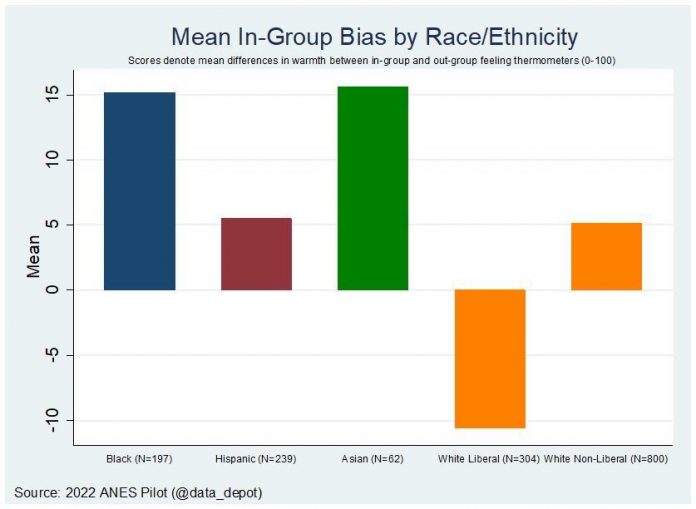
One of the factors that contributes to the emergence and success of identity politics is tribalism, which is the instinctive loyalty to one’s own group and hostility to others. Tribalism is a natural and ancient human behavior that evolved to help us survive in a hostile environment.

However, in today’s complex and interconnected world, tribalism can be counterproductive and harmful. It can prevent us from seeing the common humanity and interests that we share with others, and it can blind us to the flaws and biases of our own group.

Tribalism can also distort our perception of reality and make us more susceptible to misinformation and propaganda. It can make us ignore or dismiss facts and evidence that contradict our group’s beliefs or narratives, and it can make us accept or amplify claims and rumors that support our group’s agenda or identity. Tribalism can also make us more intolerant and aggressive towards those who disagree with us or challenge our group’s views or values.

Therefore, it is important to recognize and overcome the influence of tribalism on our thinking and behavior. We should not let our identity define our entire personality or worldview, nor should we let it determine who we associate with or oppose.

Some examples of identity politics are:

The civil rights movement in the United States, which fought for the legal and social equality of African Americans and other racial minorities.

The feminist movement, which advocated for the rights and opportunities of women in various spheres of life, such as education, work, health, and politics.

The LGBTQ+ movement, which campaigned for the recognition and acceptance of diverse sexual orientations and gender identities. The indigenous rights movement, which sought to protect the cultural heritage and autonomy of native peoples around the world.

The environmental movement, which raised awareness and action on issues such as climate change, pollution, biodiversity, and sustainability.

We should be open-minded and curious about other perspectives and experiences, and we should seek to understand and respect the differences and similarities among different groups. We should also be critical and humble about our own opinions and assumptions, and we should be willing to revise them when new information or evidence emerges.

By doing so, we can foster a more constructive and cooperative dialogue among different groups, and we can find common ground and solutions for the challenges that we face as a society. We can also enrich our own knowledge and experience by learning from others and appreciating their contributions. Ultimately, we can transcend the limitations of tribalism and identity politics, and we can embrace a more inclusive and universal vision of humanity.